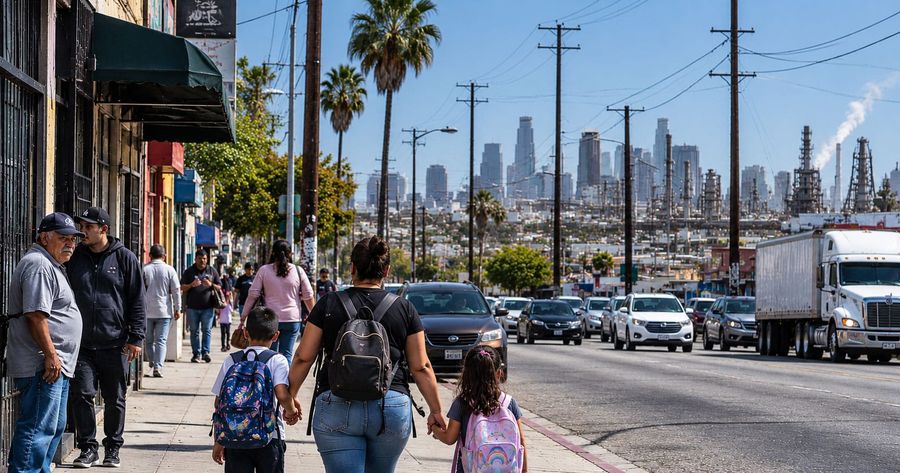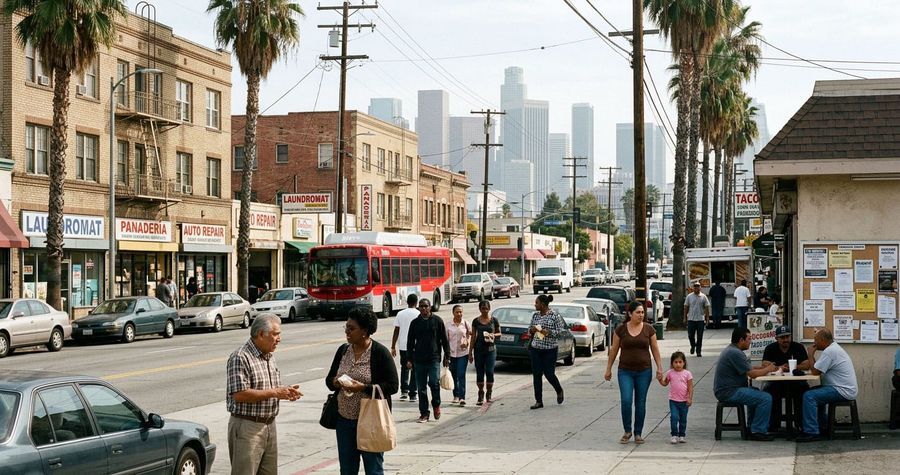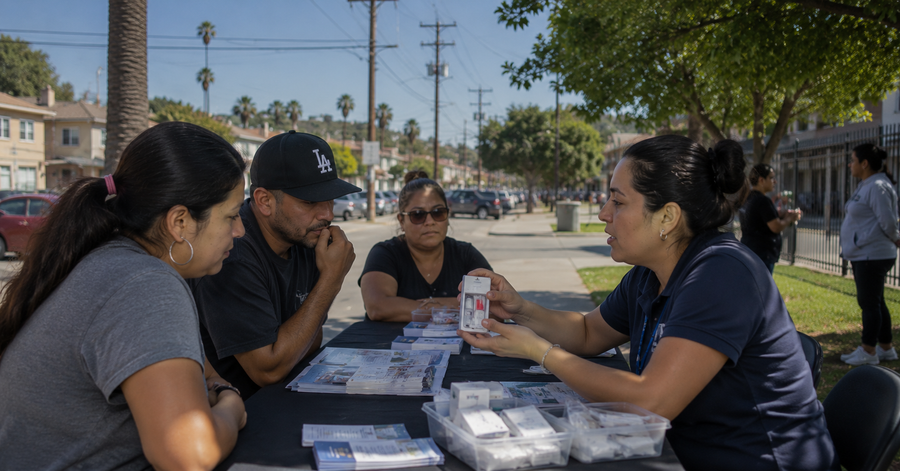
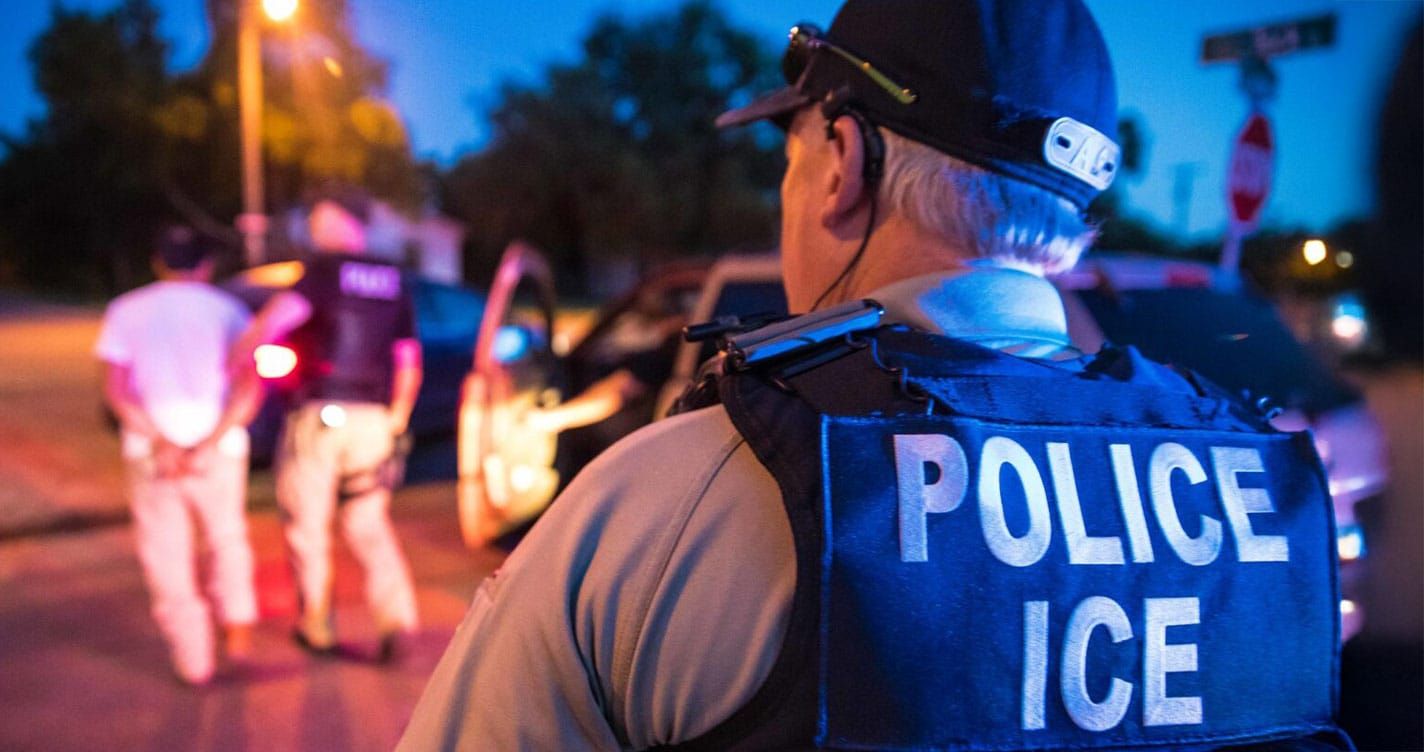
From Venezuela's uncertain political transition to California's budget battles and new UCLA research on immigration enforcement, this episode of The Signal follows how power shapes everyday lives. We examine the future of Venezuela six months after Maduro's removal, the fight over immigrant healthcare and the governor's race in Sacramento, and new evidence showing how immigration enforcement is reshaping Latino communities across the United States. Aired live on KPFK 90.7 FM Los Angeles, on June 20, 2026.

This is viewer supported news. Please do your part today.
This is a rush transcript. Copy may not be in its final form.
TRANSCRIPT
00:00:00:00 - 00:00:15:16
MUSIC INTRO
The whole run by a handful of greedy bankers and CEOs who nobody elected. What cannot possibly last. And I'm going to tell you the number.
00:00:15:18 - 00:00:42:07
DINO
But you really only have to. Good afternoon, Los Angeles, and welcome to The Signal. News, information and analysis. I'm your host, Dino. Coming up on today's show, six months after Maduro's removal. We go live to Venezuela to ask what's actually changed. Then we head on over to Sacramento for the latest on the budget, immigrant health care funding and the California race, which we now know who's running into November.
00:00:42:09 - 00:01:13:18
DINO
And then we close out the program with new research coming out of UCLA on how immigration enforcement is impacting Latino communities nationwide. But first, let me welcome all our listeners from the not only the 98.7 FM signal in Santa Barbara, but the 93.7 FM signal in San Diego. And my friends over in Ridgecrest, China, late listening on 99.5 FM on this beautiful or maybe not so beautiful.
00:01:13:20 - 00:01:37:18
DINO
Actually, if the word is right, slide smoky. Saturday afternoon. Please be careful out there as many of you have seen the latest. It is quite an experience right now in greater metro L.A., as we seem to have been taken over by one stubborn fire. One stubborn. So what is a warehouse fire that has left us all up in smoke?
00:01:37:19 - 00:02:19:06
DINO
Pun intended. And of course, ahead of the now, forthcoming Father's Day, I want to wish all the papers out there, including my own father, a very, happy Father's Day tomorrow. For those of you who are celebrating and for the the moms who also play that role as a father. So, listen, you know, as I said, lots going on here in L.A., especially with this top headline of the fire happening in the Boyle Heights community that has now been, for a couple of days, a stubborn warehouse fire that seems to have engulfed the entire city with what I can only describe as nauseous, smell, smoke.
00:02:19:08 - 00:02:49:14
DINO
So, you know, our team here at the signal, our overcaffeinated team of interns and staff decided to put together a list of of headlines. We were talking about the importance of sometimes sharing headlines with you all. And as such, we want to introduce a new segment here on the Signal, in which we'll bring you some of the headlines that are catching our attention, because it is often times, through this process that we identified some of the topics that we'll be covering, on the program in the days and weeks ahead.
00:02:49:19 - 00:03:25:02
DINO
And with that, I do want to highlight some of the issues that we're looking at as part of the headlines from this week. Starting with June 20th and the first that that caught our attention, of course, is the California. Excuse me, the the Supreme Court struck down a gun law in a unanimous ruling, on Thursday with a 9 to 0 ruling that the federal government cannot automatically strip gun rights from someone solely for occasionally using illegal drugs or illicit drugs, rather citing with a Texas man prosecuted under the law.
00:03:25:08 - 00:03:53:17
DINO
The decision comes as the court races to resolve a stack of high profile cases, including Trump's bid to limit birthright citizenship before its term ends. Now this matters, folks. The ruling now is a federal gun law and signals how the court's conservative majority is approaching Second Amendment cases, with several more consequential rulings expected any day now. Back in California, California lawmakers passed budget a heavy constitutional deadline.
00:03:53:17 - 00:04:22:14
DINO
On Monday, the legislature passed a budget of more than 350 billion to meet the constitutional June 15th deadline. The real negotiating between lawmakers and Governor Newsom now begins with billions in disputed education and health care funding still unresolved ahead of the July 1st start of the new fiscal year. Now, this, once this gets finalized in the coming days, it will shape funding for schools, health care and safety net programs state wide.
00:04:22:16 - 00:04:49:23
DINO
Additionally, coming out of California, the legislature pushes back on Newsom's proposed Medi-Cal cuts for immigrant communities. As part of the week's budget action, lawmakers rejected several of the governor's proposed restrictions on health care coverage for immigrants, including holding the line on eligibility rules Newsom had previously sought to tighten. The outcome of this will directly affect health care access for hundreds of thousands of Californians.
00:04:50:01 - 00:05:31:08
DINO
As a final budget talks continue. Now, the biggest news, perhaps for us and our team here at The Signal came out of the L.A. City Council, where this week, the L.A. City Council essentially punted the ball down the road, down to the field on expedite, expanding rather city council size, drawing some serious criticism. On Wednesday, council members declined to act on a recommendation from the city's charter reform Commission to grow the council from 15 to 25 seats, instead forming yet a new committee to study the idea even further, with any decision now unlikely.
00:05:31:08 - 00:05:56:19
DINO
According to some sources, before 2028. Council President Marquis Harris Dawson, who, by the way, we've extended an invitation to come talk to us about this, said the city should should do it right rather than rush it. Reform advocates called it a missed opportunity after years of work. Now, supporters say that a larger council would better represent allies, diverse communities.
00:05:56:21 - 00:06:29:03
DINO
Critics say the delay shows how hard structural reform is to achieve in City Hall here now late. Staying in L.A. Council advances now LAPD oversight measure. Also on Wednesday, the council approved a measure clarifying its policy authority over the LAPD while sending a broader police accountability, set of proposals, including expanded fire authority, to to committee for further review.
00:06:29:05 - 00:06:59:20
DINO
The L.A. Police Protective League says the city failed to legally meet and confer with the union before moving forward. Now, that seems to be something we've heard in this show before, that there wasn't enough engagement with all the stakeholders at play. Now, this dispute could delay or reshape police oversight reforms, in the days or years rather, to come and raises questions about whether the city followed its own labor rules.
00:06:59:22 - 00:07:28:15
DINO
And lastly, out of city of L.A. on Wednesday, council members voted 10 to 5 to advance a measure that would let noncitizen residents with legal status, including dark, on TPS holders, to vote in city and school board elections. Council Member Augusto Martinez, who introduced the proposal, framed it as a fairness issue for long term residents. Opponents raised issues of costs and election administration concerns.
00:07:28:16 - 00:07:58:04
DINO
Now, if it reaches the ballot and voters approve it, it would expand. Who has a formal voice in city elections in the city of L.A.? Now, those are some of the stories making the rounds here at the, Signal studio, in L.A. and across the country. And those are the stories that we'll be looking at in the coming days as we look at new segment ideas for our programing here on The Signal on Kpfk.
00:07:58:06 - 00:08:07:08
DINO
With that, stay with us. We'll be right back as we head to Caracas, Venezuela, and get an update on what's happening six months later.
00:08:07:08 - 00:08:08:14
DINO
welcome back.
00:08:08:15 - 00:08:37:07
DINO
Six months after the dramatic and military removal and detention of Nicolas Maduro in Venezuela, the country finds itself at a crossroads. Supporters of the transition point to a renewed foreign investment increase oil production and improve relations with the United States. While critics argue that every day Venezuelans have yet to see any meaningful improvements. Well, many of the same political structures remain intact.
00:08:37:09 - 00:08:54:22
DINO
The question we're asking today is where does Venezuela stand and how or what does the future hold for it? Joining me now from Venezuela is Ricardo Moreno, contributor to The Signal. Ricardo, welcome back to the signal.
00:08:54:23 - 00:09:01:00
RICARDO MORENO
Thank you for having me, Armando. And greetings to all the people in Los Angeles and California.
00:09:01:02 - 00:09:20:07
DINO
Wonderful. So, Ricardo, let's, let's let's start off with, you know, the basic reminder, right? The big picture, many observers expected immediate and dramatic changes after Maduro's removal six months later. How would you describe the overall state of Venezuela today?
00:09:20:09 - 00:10:02:03
RICARDO MORENO
Well, I would say is a really complex, volatile, situation. We live now in a rural landscape, even when a lot of people like to talk about transition. Transition? I think, right now, three main forces are playing out. One, I would say the what I call the restoration people. Who wants to go back to the old times, favoring their interests, the US Capitol in the country.
00:10:02:05 - 00:10:32:17
RICARDO MORENO
Thanking you. Chavez. And then that that's one force, you know, the people that want to go back to the old days before Chavez, when the U.S. capital was the main, you know, the main interest for these groups. Then the second broke, I will say, a fractured but still powerful military apparatus which seeks to preserve, its economic and political privilege.
00:10:32:18 - 00:11:05:23
RICARDO MORENO
And then Aquino broke, which I will say is the majority of the country. But he had really dispersed. And talking about the grassroots movements, the communal councils, the worker movements, the composition of farmworkers, the organizations that they must seize or refuse to go back to the old times before Chavez. And they don't want to be spectators in, in in what is going on in the, in the country.
00:11:06:01 - 00:11:55:08
RICARDO MORENO
But they are really, dispersed. You know, there is no one really cohesive national, organized, force beyond them. And what we have now is the state which is still still together by a pact, that was able to neutralize the hardline Maduro loyalists of the borders. But basically, it's still in place. They they they they brought estrutura back and we we will have we now Venezuela, where we specialize in the between years 18 1920.
00:11:55:10 - 00:12:17:01
RICARDO MORENO
The scarcity of of food. But what we have now is a lot of, imports, but with high prices, which most of the ordinary Venezuelans can afford. So that that's what's going on right now.
00:12:17:03 - 00:12:43:17
DINO
So this sounds like what you're saying is that the country, at least for me, a social contract perspective, right. If we're going to apply some sociological understanding of it, you're saying that it's breaking down into three broad categories. Those that are looking to return back to the ways in which, the pre Chavez era, the pre socialist era, that benefited mostly elites and the rich.
00:12:43:19 - 00:13:09:06
DINO
That's one sector. The, the old school, the old guard chavistas there's still many will remain, but the overwhelming majority of the country is looking to, move forward and resist. I think if I understood correctly, a little of both elements, a little bit of both elements, and I'll look into Forge Forward a path that sounds to me is really a genuine path by the people.
00:13:09:07 - 00:13:12:14
DINO
Would that be accurate in describing.
00:13:12:16 - 00:13:15:12
RICARDO MORENO
You're right that that that was my analysis.
00:13:15:14 - 00:13:39:06
DINO
So, Ricardo, on the issue of economic recovery versus daily reality, you touched on that already. You know, the government points to increase oil production. The government is now saying foreign investment is beginning to flow. And the lifting of sanctions as evidence that the economy has begun to recover. At the same time, many Venezuelans are reporting that, food prices, inflation.
00:13:39:06 - 00:14:04:11
DINO
Again, you touched on that and the cost of living remain overwhelming is one of the ways in which this was characterized by, to one of our researchers. What hasn't the economy recovered from? What is the one area that, in your observations, still needs a lot of work?
00:14:04:13 - 00:14:14:16
RICARDO MORENO
I always say that. The three gloom down economic theory, you know that.
00:14:14:17 - 00:14:43:20
RICARDO MORENO
You read more in. You get in the case of Venezuela, you get more oil production. I think the throne administration is focusing in that. Venezuela was one of the larger point producers. We used to produce up to 3 million barrels of oil per day in Chavez times. It went down to less than a couple million under Maduro regime.
00:14:43:22 - 00:15:18:22
RICARDO MORENO
You know, there are many explanations to that. One is the U.S. broke eight right on on course correction. And now we are, producing producing like 1 million off of oil per day. The idea is that, with the new foreign investment and the US, oil companies coming to the country, that that can be go off up to one, 1.5 million within a few months and then up to two millions within 1 to 2 years.
00:15:19:00 - 00:15:22:15
DINO
Okay. So that would be a significant growth actually back to the.
00:15:22:15 - 00:15:23:06
RICARDO MORENO
3 million.
00:15:23:06 - 00:15:25:03
DINO
During the Chavez period.
00:15:25:05 - 00:15:59:13
RICARDO MORENO
Yes. The idea is that we would go up to two, now the, the, the current administration, the, the the president in charge of the interim president. She's making a lot of pragmatic, Bible to to all the for investment. Of course, she has a really complex situation because she needs to balance the interests of the, the national capital, but then also how that will go down to the media for the survival of working families.
00:15:59:15 - 00:16:22:10
DINO
Sure. Which which actually, I'm glad you bring that up, because one of the questions when we were thinking about this topic and we were planning this, this, story, one of the things that came up to us, of course, is that as we look at the rebuilding of the economy, in particular the oil sector, as you point out, critics worry that, it.
00:16:22:10 - 00:16:23:09
DINO
Could very.
00:16:23:09 - 00:16:39:23
DINO
Well once again concentrate wealth among political insiders and foreign corporations. Therefore simply enriching maybe a new group of elites and leaving the the people out. Is that a sentiment that you're seeing and experiencing in Venezuela?
00:16:40:01 - 00:17:24:06
RICARDO MORENO
Yes. And especially, many of the or the all new elites that we're forming there and especially people in the military now, they are trying to be power brokers, with the oil, companies coming to the country. So I think the challenge for president, the second biggest will be how that came, chief, to, more solidarity economy, how you can estrange more communal production, how you can increase, and develop more community cooperatives, how the state and the investors came by from the small producers.
00:17:24:08 - 00:17:46:02
RICARDO MORENO
How that new income will translate into social programs. So the, the macroeconomic, the macro economic growth will not only go to the new elites, but really will benefit, the ordinary people. I think that that's the challenge.
00:17:46:04 - 00:18:26:11
DINO
My guest is Ricardo Moreno. Contributed to The Signal calling us live from Caracas, Venezuela, as we discuss Venezuela six months later. What has changed after the, kidnaping the military attack on the Capitol, in which the then president Nicolas Maduro, was taken in a nighttime raid by, military personnel, at the direction of the Trump administration. And, you know, Ricardo, one of the things that the, you know, I'm dying to know, and I know that you and I discussed a short while back about maybe revisiting, Venezuelan it's an idea that's still lingering in my mind.
00:18:26:11 - 00:18:59:23
DINO
But, you know, I can think back to my time working there, both in media and other in other, industries. And, you know, there wasn't a place you didn't go. Now I'm that I'm talking about 2000 789 at the height of Chavez more. And, you know, the communities everywhere you went. There was a vibrant invocation of El Senor Presidente, the, Hugo Chavez, that I suspect has weathered over the years, obviously, especially during the Maduro administration.
00:19:00:01 - 00:19:16:09
DINO
So many Venezuelans expected a complete break from the Maduro era. Yet many government ministries, judges, military leaders and some of the bureaucratic infrastructure remain in place. How much of the old Chavez Vista system remains there?
00:19:16:10 - 00:19:18:20
RICARDO MORENO
Well.
00:19:18:22 - 00:19:52:08
RICARDO MORENO
I wouldn't make a difference when we talk about Chavez Mall. The reason I, a painful but honest answer, from a leaf point of view, will be that much of the old bureaucratic, authoritarian, parasitic structures, they're are still there in back, because, you know, Maduro removed was imposed by a foreign power, was not the result of a popular insurrection.
00:19:52:10 - 00:20:27:15
RICARDO MORENO
You know, that will sweep away all the government apparatus. It was a negotiation between, you know, key military, elites and also the U.S.. So Maduro's out of the much of the structure is still in place. For example, a lot of the high command military associates, they used it control a lot of the food distribution, the mining, the banking, the ports.
00:20:27:17 - 00:21:09:10
RICARDO MORENO
So they become the, the stability factors, in with their economic power. So there is, you know, all the clean, the machinery, the that the companies allied with the oil industry in Venezuela, that is still controlling a lot of the pollution. They are still in place. So we have, a long way to go to, to, to, to to get you know, reforms, that can be meaningful democratic reforms, that will bring institutional change.
00:21:09:12 - 00:21:33:05
RICARDO MORENO
Change. I will finish with this. Tell me what's still there. You know, when you work with people and in the bottom, you stay in the hooch, you talk to the people, and they remember Chavez, and they remember the old good times or Chavez. Yeah. So there is there is a force in this, in the popular sentiment of the people.
00:21:33:07 - 00:22:09:06
RICARDO MORENO
Of course, many people were really disappointed by by the Maduro regime, by his, you know, way of conducting business in Venezuela. There is hope that somehow we are not going back to the old days, but Chavez, you know, which might represent the right wing strain. And also people are waiting for a better, politics are coming from the left, the, the east west as they started at the beginning, that all those movements are dispersing all over the country.
00:22:09:08 - 00:22:10:23
DINO
You know, the story of Venezuela today is.
00:22:10:23 - 00:22:11:12
Speaker 1
One of.
00:22:11:15 - 00:22:49:01
DINO
Many contradictions. Economic indicators may be moving in one direction, but daily life seems to be, for many, at least still very, very difficult political prisoners. Some have been released. Others remain. And we're hearing that power structures are indeed in the same location, functioning in the same way as before. The question facing Venezuela is whether these changes represent the beginning of a more democratic and economic renewal, or simply a new chapter in the long struggle over power, legitimacy, and the future of the nation.
00:22:49:03 - 00:23:02:01
DINO
Ricardo, thank you very much for joining us. From Venezuela, from Caracas. We always appreciate you, and the contributions you make to the signal. Hope to have you back soon. Thanks for being with us.
00:23:02:03 - 00:23:04:06
RICARDO MORENO
Thank you for having me, Armando.
00:23:04:08 - 00:23:23:18
DINO
Thank you. Stay with us, folks. We're going to take a short break. And when we return, we come back. We come back home to the state of California and to the Capitol, where, our friend Andrea, all of this reporter out of California's who covers the Capitol will give us an update on key developments coming out of Sacramento.
00:23:23:18 - 00:23:52:05
DINO
Welcome back. We now here to. We come back home to Sacramento for the latest news and political developments coming out of the state capital, where our friend Andrea Vallance joins us on the line from a reporter with Gallo News. And Angelo, this week has been tracking how California lawmakers are responding to federal immigration enforcement, the ongoing debate over funding, health care and support services for the immigrant community here in California.
00:23:52:05 - 00:24:07:04
DINO
And the latest twist in California's now two man race for governor. Andrea, Andrea, Andrea, welcome back to the signal. Como estas?
00:24:07:06 - 00:24:29:07
DINO
Andrea and I don't, do we have Andrea on the line? Okay, so let's, you know, as we get her on the line, you know, we're working on it. Hang in there, Andrea. I see you on the telephone line. I think we're just going to got a raise up. That volume.
00:24:29:09 - 00:24:33:06
DINO
And I know you there.
00:24:33:08 - 00:24:34:03
DINO
Stand by. Folks,
00:24:34:03 - 00:24:43:15
DINO
So let me reintroduce Andrea as we get her on the line. I do see her on here.
00:24:43:17 - 00:25:17:11
DINO
So this week, some of the stories that are being covered by Andrea, include the California lawmakers, turning to tax policy to challenge immigration enforcement. As federal immigration enforcement actions continue across California, Democratic lawmakers are increasingly looking at tax policy as a tool of resistance and how one proposal would prohibit California taxpayer dollars from being used to support family separation efforts and other immigration enforcement activities.
00:25:17:13 - 00:25:20:01
DINO
Supporters argue that the state has both a.
00:25:20:01 - 00:25:21:03
DINO
Moral.
00:25:21:05 - 00:26:01:08
DINO
And fiscal responsibility to protect immigrant families, while critics question whether the state is overstepping its authority and challenging federal actions. Now, the debate reflects California's broader effort to push back against the Trump administration's immigration agenda through state policy. Now, this is a strategy and a tactic that we've seen develop, over the last 12 months as California's start state, California state lawmakers have increasingly become much more strategic and nuance and their legal approach to challenge the Trump administration's attack on communities.
00:26:01:08 - 00:26:32:20
DINO
Now, a year in since the, attacks began here in California and L.A. in particular, we've now seen, you know, by last record and this is nationwide, well over 700 lawsuits filed against the Trump administration, that seek to mitigate some of the direct and collateral consequences being caused by the draconian, the draconian actions by the Trump administration.
00:26:32:22 - 00:26:58:00
DINO
The other top story, covered by Andrea Takano, news is, this funding immigrant health care and support services. As California, prepares next year's budget, lawmakers are grappling with how to maintain health care coverage and critical support services for immigrant communities amid significant fiscal pressures. Now, this has been consistent. It seems like, across both state and local.
00:26:58:00 - 00:27:27:07
DINO
If you all recall, we did have significant fiscal pressures here in L.A. and although the city was able to balance a budget and put forward a balanced budget, we were able, to, address some of these issues as well. The debate in California, where at the state level centers on preserving access to care, legal assistance, the community based services, while balancing budget constraints and competing priorities.
00:27:27:08 - 00:28:00:18
DINO
The conversation has become increasingly important as immigrant families face heightened uncertainty related to federal enforcement and economic challenges. Now, these uncertainties, you know, range from everything from, you know, job insecurity, exploitation here in the city. Now, we've covered this extensively where, we have seen the families who have lost a source of income and others are increasingly concerned or afraid to go to work.
00:28:00:20 - 00:28:28:18
DINO
And this has just been a catastrophic, impact on the, communities here in LA. Now, the other story that we're looking to cover, is the California governor's race, which begins to take shape now after months of remaining largely on the sidelines, several major California political figures are now beginning to weigh in on the race to succeed California.
00:28:28:20 - 00:29:06:20
DINO
California Governor Gavin Newsom, who is termed out Newsom himself, who has more and more recently, said some signs of interest in and running for governor of rather for president. Has begun to weigh in on who might very well be the, next governor. Newsom himself recently signaled support for con Tinued Democratic leadership. While candidates and political organizations are increasingly working to secure endorsements and build coalitions.
00:29:06:20 - 00:29:34:03
DINO
Now, look, the activities are are. Just wait and see. You'll soon quickly, begin to see the amount of, ads that are going through left and right and bombarding your, your devices, your televisions and what have you. And looks like we do have Andrea. Now, back on the line. Andrea, welcome to live radio. This is, this is, you know, this is live radio.
00:29:34:03 - 00:29:44:04
DINO
This is what happens sometimes equipment, presents itself with a challenge. Now, here's the irony of it. This is a little secret just between you and I and the 20 million people that are listening.
00:29:44:06 - 00:29:44:21
ANDREA VALADEZ
All right.
00:29:44:23 - 00:29:50:21
DINO
The equipment is brand spanking new.
00:29:50:23 - 00:29:52:06
ANDREA VALADEZ
Never a boring day.
00:29:52:06 - 00:30:16:11
DINO
Never, ever. And there, welcome back to, The Signal. And I was already given a a brief overview of the top three stories that our caffeinated, researchers here said. These are the ones that we should talk to Andrea about. But we started off given those descriptions. Give it to me. Story one California lawmakers turned to tax policy to challenge immigration enforcement.
00:30:16:13 - 00:30:20:23
DINO
Walk us through this proposal. What exactly are lawmakers trying to accomplish here?
00:30:21:01 - 00:30:51:05
ANDREA VALADEZ
Yeah. So that specific bill is Assembly Bill 2465. And essentially it would make it so that any corporations that are involved with federal immigration enforcement. So think companies that own those detention centers, they will not be eligible for state grants, tax credits, state loans, basically anything that's funded by, taxpayers. So the bill, author Liz Ortega, she told me that she did work with the state tax board to you know, sort of figure out the ins and outs of this.
00:30:51:05 - 00:31:00:20
ANDREA VALADEZ
And it sounds like basically anytime one of these corporations goes to apply for these grants or credits, the system will flag them and automatically deny them.
00:31:00:22 - 00:31:12:04
DINO
Well, oh. So you mentioned one author, but who's leading the effort here? And, what are the arguments they're making in support of using state tax dollars this way?
00:31:12:06 - 00:31:36:04
ANDREA VALADEZ
Yeah. So this specific bill is really being championed by Assembly member Liz Ortega. She's a Democrat from the East Bay. She's the vice chair of the Latino caucus. There's a whole bunch of Democrats that support bills like this right now. And the pitch basically is that lawmakers should be doing anything and everything they can to curb the, you know, the Trump administration's immigration crackdown.
00:31:36:06 - 00:31:45:22
ANDREA VALADEZ
And one of the ways to hit them, where it hurts, so to speak, is by withholding those tax dollars from anyone who helps the administration do what they're doing.
00:31:46:00 - 00:32:10:09
DINO
And, you know, many would argue, as they should. Andrea, as California prepares next year's budget, lawmakers are grappling with how to maintain health care coverage and critical support services for our immigrant community. But, you know, we're faced with, fiscal pressures and, of course, the mounting challenges that our communities are experiencing as a result of the attacks by the federal administration.
00:32:10:11 - 00:32:18:12
DINO
What our lawmakers are proposing when it comes to funding health care and support services for immigrants, next year.
00:32:18:14 - 00:32:42:04
ANDREA VALADEZ
Yeah. So the gist right now is that Democrats are trying to basically just delay a whole bunch of cuts for, undocumented immigrants, refugees, people here under asylum. They're trying to just hold back on these cuts until next year for the next governor to deal with. Whereas Governor Newsom wanted to cut these things right now, and on support services for immigrants.
00:32:42:04 - 00:32:59:21
ANDREA VALADEZ
Interestingly, the legislature is proposing roughly 100 million to go towards, these communities, while Governor Newsom again only proposed around 20 million. Back in May. So there is a clear divide between what legislature Democrats want to do and what the governor wants to do.
00:32:59:23 - 00:33:29:12
DINO
Now, hold on a second. I'm doing the math on that. 20 million. Yeah. 80. No, you said 100 million. Yeah, that's an $80 million to find. Yeah. You know. Yeah. Not let me pick oranges over apples. This week. Well, speaking of the California governor, the race has begun to take shape. Take shape? Right. After months of remaining largely on the sidelines, several major political figures here in the state began to weigh in, including, good old Gavin Newsom.
00:33:29:12 - 00:33:36:11
DINO
So at this point, walk us through major candidates. What are the key dynamics shaping this race?
00:33:36:13 - 00:33:57:07
ANDREA VALADEZ
Yeah. So as you said earlier, right now it's, you know, a two man race. So voters are either going to choose between having a Democrat and Steve Hilton who is a Trump endorsed Republican. I think one of the key dynamics here that's the most interesting is that, you know, California has almost double the amount of registered Democrats than Republicans.
00:33:57:08 - 00:34:06:16
ANDREA VALADEZ
So on the surface, it would seem that the center has it in the bag, but you really never know. Hilton has his work cut out for him. So it'll be interesting to see how these next few months go.
00:34:06:18 - 00:34:23:19
DINO
Now, what changed over the past few weeks, then, has the state leaders becoming more active in the governor's race? Is that, what you just referenced? The point that maybe the Democrats are beginning to see that, it's not always peaches and cream as they always thought it was. Is that the case?
00:34:23:21 - 00:34:45:19
ANDREA VALADEZ
Yeah. Well, I mean, they said I really didn't have any establishment support even a few months ago because of how low he was polling. And as we all saw, that can change on a dime. Right. And so now there is a clear frontrunner for Democrats. And that is how it was set up. And so everyone was kind of throwing their weight behind him, because at this point it's either Democrat or Republican that's going to be elected.
00:34:45:21 - 00:34:51:11
ANDREA VALADEZ
And Democrats want it to be another Democrat. So there's a lot of weight behind him now.
00:34:51:13 - 00:35:13:06
DINO
So what should voters and political observers be watching between now and the next major milestone in this campaign, which I think leading into the summer, I could see that perhaps on the next funding cycle for campaign donations. But what should we what should voters be looking at? What should my team of researchers be looking at when preparing the next segment?
00:35:13:06 - 00:35:15:00
DINO
How's that?
00:35:15:02 - 00:35:46:02
ANDREA VALADEZ
Yeah, well, I think it's both candidates are really starting to ramp up their campaign. Steve Hilton has been holding many press conferences here in Sacramento as far as I know. They said he's still engaging with voters. But I think a key thing to look out for is that first debate, right. That's not scheduled yet. But that that will be the first time that voters can actually see these to lay out their plans for California without a stage full of bickering and talking over each other like we saw a few, a few weeks back.
00:35:46:04 - 00:36:06:03
ANDREA VALADEZ
And really, what interests me the most right now for that first debate is how much, if at all, Hilton will try to separate himself from the president, who again endorsed him. And, of course, is extremely unpopular here. And also how much persona will differentiate himself from Gavin Newsom or if he's kind of going to back up what Newsom has done.
00:36:06:03 - 00:36:13:14
ANDREA VALADEZ
And many have said if he will be a Newsom to point home in a way. So it'll be interesting how they both try to stand out.
00:36:13:16 - 00:36:43:09
DINO
Well, it sounds like, we may very well have, a type of election that is designed by candidates who are by default, looking to separate from their respective parties, all the while staying as part of that party. Look, I have already placed that. I've already placed in large order, extra butter popcorn. I'm going to be sitting by, you know, checking the, the drama and politics out under there.
00:36:43:09 - 00:36:57:07
DINO
As always, thank you for joining us and for helping us make sense of what's happening in Sacramento. We appreciate you. We hope to have you back soon. And, hey, listen, when doing live radio, you can always drop off. Thanks for being with us.
00:36:57:08 - 00:36:59:12
ANDREA VALADEZ
Thanks for having me.
00:36:59:14 - 00:37:36:13
DINO
Welcome back. As we continue, we now go to UCLA. I want to welcome to the program. Doctor Melissa Chinchilla, director of research, impact, and her work at UCLA center for Neighborhood Knowledge. Today, we're digging into a new report on how immigration enforcement is impacting Latino communities nationwide. And I'm joined by doctor Ginger to discuss this report, who came out of the UCLA center for Neighborhood Knowledge and partnership with the organization unseen.
00:37:36:13 - 00:38:04:09
DINO
And it's actually the fourth in a series. The first brief, published back in October of 2025, documented a surge in Latino ice arrests during the early months of the second Trump administration. The second of the report, back in January of 2026, found that detentions were increasingly targeting non-criminal, law abiding, immigrants, with people held longer and transferred farther from home.
00:38:04:11 - 00:38:39:12
DINO
And then the third that back in April this year, looked at the deportations specifically, and found Latinos were disproportionately affected with due process increasingly curtailed. And this new report released just last month and extends the analysis with most recent data available, covering ice activity from January 2024 through February 2026. So it takes a window. It looks at a window that matters and lets researchers directly compare the last 13 months of the Biden administration to the first 13 months of the second Trump administration.
00:38:39:14 - 00:38:46:13
DINO
I'm digging that. So let's get into it. Doctor Chinchilla, welcome to the signal.
00:38:46:15 - 00:38:50:07
DR MELISSA CHINCHILLA
Thank you. Thanks so much for having me.
00:38:50:09 - 00:39:08:13
DINO
So let's start this off. This is the fourth, brief. Your team has published tracking ice treatment of Latinos since the start of the second Trump administration. What made you keep returning to this data? And what does a new update share?
00:39:08:15 - 00:39:31:22
DR MELISSA CHINCHILLA
Yeah, well, you know that it's this has been an ongoing issue, and we really wanted to see, was being presented with the numbers. The report is based on data that's been put out by the UC Berkeley School of Law Deportation Data Project, which is covering Ice detentions, and it's based on publicly available data. We wanted to take a look at, you know, what's been happening under the Trump administration.
00:39:31:22 - 00:39:45:21
DR MELISSA CHINCHILLA
And how has how have arrests and deportations shifted under Trump compared to Biden? And you know, really looking at who's being targeted. What are the tactics being used and how are folks being impacted in the community?
00:39:46:00 - 00:39:53:14
DINO
Now walk us through the data itself. Where where does it come from? How did you isolate Latino specific impact from it?
00:39:53:16 - 00:40:16:16
DR MELISSA CHINCHILLA
Yeah. So, as I mentioned, the data is publicly available data. Our partner at UCLA, under the the Center of Neighborhood Knowledge, really led by, Doctor Paul Ong and his team. You know, they looked at the data, they're looking at a number of different factors, including who's being arrested and how they're moving through the detention system.
00:40:16:17 - 00:40:39:03
DR MELISSA CHINCHILLA
So they're looking at, who's been arrested, where arrests occurring once detention occurs, what is happening to individuals? So are they being kept in state? Are they being moved out of state? Are they being deported to their home country or deported to other, other areas? You know, the data really shows a couple of key findings, which I'm hoping we can discuss throughout the segment.
00:40:39:03 - 00:40:49:17
ANDREA VALADEZ
So, you know, one, we're really seeing a shift in terms of who's being targeted and how they're being targeted. So we're really seeing a shift in terms of the profile of folks.
00:40:49:19 - 00:41:01:03
DINO
Right. Because the administration has consistently framed the enforcement around, removing, quote, the worst of the worst. Right. And so tell me, what is that panning out?
00:41:01:05 - 00:41:23:00
DR MELISSA CHINCHILLA
Yeah, exactly. So, you know, the despite President Trump's campaign and his emphasis on saying that is supporting the most dangerous criminals, we're we're really seeing otherwise in the data. So we are not seeing this to be true. Instead, the data is really showing that, as we've seen throughout the Trump administration, there's really been a shift in terms of who's being targeted.
00:41:23:02 - 00:41:52:04
DR MELISSA CHINCHILLA
So we're we're seeing that, these so-called worst of the worst are actually have dropped in the in terms of the proportion of individuals being deported. So our deportation analysis found that the share of individuals classified again, as, as worst of the worst. And these would be, individuals that I has deemed as being the greatest threat. So these that would be any person that's convicted of a violent crime or convicted of two or more felonies.
00:41:52:06 - 00:42:08:01
DR MELISSA CHINCHILLA
These individuals have really dropped, going from roughly one third of deportees early in the period that we looked at the beginning, very, very beginning of the Trump administration to about 1818. Later in the year.
00:42:08:03 - 00:42:51:01
DINO
Well, and your report. So okay, let me actually transition to this other broader issue and concern that continues to come up. Now that we're coming into this year long process, the human impact on families and communities. You know, beyond the statistics, what does the data tell us about the real world impact? I know that you all are taking this from existing data points, but, in your read, as an academic, what, particularly with nearly half the arrests now happening in workplaces, homes, public spaces, what does this say about, the impact on our communities?
00:42:51:02 - 00:43:16:09
DR MELISSA CHINCHILLA
Yeah. No, thanks for that question. And I guess just to reiterate a couple of things from the data. So one, we're seeing that an increasing number of non criminals are being targeted. Two we're seeing that Ice activities are now just are happening more and more in community settings. So folks are impact being impacted in public spaces. They're being arrested in, workplaces as you mentioned.
00:43:16:11 - 00:43:43:23
DR MELISSA CHINCHILLA
You know, we've even seen arrests happened outside of schools, for example. So, those two points and the other point I wanted to make, which is based on the data before I get into some of the impacts, is that we're seeing, that Latinos, Latino, non-criminal detainees are coming primarily from working age adults so that these would be individuals between 18 and 50, 54 years of age.
00:43:43:23 - 00:44:07:06
DR MELISSA CHINCHILLA
So these are individuals that are are working, probably bringing income to their household. So given those three things, you know, what we're really seeing on the ground is that folks are afraid. Folks are afraid to engage in community life. Folks are afraid to go to work. And then this has economic impacts. This has economic impacts on the household that these individuals belong to.
00:44:07:06 - 00:44:40:08
DR MELISSA CHINCHILLA
And then also, throughout the community. So now we've seen a lot of different reports coming out, really analyzing the impact of Ice raids, on local communities, economies. And we're seeing that there's been significant financial impacts, whether this be through reduced labor force participation, loss of revenues for businesses in communities that have large immigrant, large immigrant populations, disruption and spending, because folks are afraid to go out and spend.
00:44:40:10 - 00:45:02:06
DR MELISSA CHINCHILLA
And then we're we're seeing that there's increased economic insecurity for for the households themselves. Right. You know, I work in, housing and homelessness. So a lot of the work that I do is around housing and homelessness, and we're really afraid of what we're going to be seen on the ground as all these economic disruptions are happening actually there.
00:45:02:08 - 00:45:32:08
DINO
Let's get into that a little bit more. If we can go to Ginger, let me read you. My guest is Doctor Melissa Chinchilla, director of research Impact. And we're discussing a, part four. Is it right, of the report of an ongoing report coming out of UCLA's unseen report on Latino ice arrests, detentions and removals. And so, yeah, you know this we've not really begun to see that direct and collateral consequences of this a year end.
00:45:32:10 - 00:45:55:02
DINO
And, you know, you touched on the work that, that you do at the intersection of homelessness. How should we be looking at this in the coming maybe next 12 months? Are we likely to see these economic impacts lead to additional state of homelessness in places like L.A., where it's such a significant problem as is?
00:45:55:04 - 00:46:26:19
DR MELISSA CHINCHILLA
Yeah. You know, that's a great question. I, I really believe that we need to start paying more attention to one prevention, but then to how are you ensuring that folks that do fall into homelessness are getting the resources they need? So even prior to what we've been seeing with the Ice arrests and the economic impacts that, increased Ice enforcement is, is having, we we know that a lot of of immigrant households and mixed status households are households that are already living on the edge of homelessness.
00:46:26:19 - 00:47:01:07
DR MELISSA CHINCHILLA
So these are households that were already struggling to pay the rent. I actually worked on, a report with colleagues of mine, including Molly Richards, who's done some work on doubled up on homelessness. And what we found was that in Los Angeles County, the majority of households that are experiencing double dip homelessness and these would be households that are forced to share living accommodations with other households because they have, lost their, their housing themselves, and cannot afford, to be a primary leaseholder.
00:47:01:08 - 00:47:26:07
DR MELISSA CHINCHILLA
These doubled these doubled up households are primarily Latino in L.A. County. So about 77% of those experiencing what we call double top homelessness are Latino. And one of the factors that is predictive of this is whether or not someone foreign born as well. So we see that a significant number of foreign born Latinos are experiencing doubled up homelessness.
00:47:26:13 - 00:47:50:22
DR MELISSA CHINCHILLA
This was prior again to all of the grants have been ongoing, and the economic impacts that we expect to see from these rates. So I always describe these households as being on the cusp of experiencing street homelessness or, or or homelessness in shelters. So we definitely need to be paying attention to how we are ensuring that folks do not end up on the streets.
00:47:51:00 - 00:48:06:13
DR MELISSA CHINCHILLA
And for those individuals that unfortunately do fall into homelessness, but do we have the resources available? And is our system prepared to ensure that these individuals and families are linked to the resources they need to gain housing stability?
00:48:06:15 - 00:48:35:00
DINO
Doctor Chinchilla, I am I'm aware that you and some of your colleagues have also been doing other trainings and other work in this area and, you know, rapid response, outreach, advocacy trainings, issues at the intersection of for example, homelessness and immigration enforcement. Is there any can you shed a little bit more about some of the other work that's going on and mitigating some of the impacts of these, deportations and detentions?
00:48:35:02 - 00:49:06:17
DR MELISSA CHINCHILLA
Yeah, definitely. So, you know, as you know, a lot of my work and over the past decade or so has really been focused on, on homelessness and specifically Latino homelessness and ensuring there are homeless and housing systems are equipped to meet the need of of our community. One of the things that we've seen, and this is, you know, throughout the the years past has been that oftentimes our systems are not prepared to serve immigrant households because of challenges that may be unique to these individuals and also families.
00:49:06:17 - 00:49:27:22
DR MELISSA CHINCHILLA
And and when I say this, I mean, like things like, you know, we know that, immigrant, immigrant households cannot access federal resources for housing, for example, we know that sometimes language translation may be needed. We also know that, you know, if they're experiencing homelessness as a family, that sometimes our, our resources for families tend to be limited.
00:49:27:22 - 00:49:56:06
DR MELISSA CHINCHILLA
So there's already challenges in terms of how to serve this population. And we've been working on the ground in order to to uplift those. But now with what we're seeing with, tightened immigration enforcement and, and the rhetoric coming from the federal level, we are seeing that organizations that provide homeless services are increasingly, afraid of and may not be prepared to address some of the challenges that are occurring because of increased Ice enforcement.
00:49:56:08 - 00:50:34:06
DR MELISSA CHINCHILLA
So colleagues and I have been working on, I've been working with homeless service providers, I should say, in order to provide increased capacity building training. Regarding like how that how they, as organizations can prepare themselves in order to respond to, potential Ice enforcement in their facilities. So, under the Trump administration, one of the things that's happened has been that there's been an erosion of, what we previously thought of as sensitive locations where ice would not enter and, or individuals could have a sense of, of of safety.
00:50:34:06 - 00:50:53:17
DR MELISSA CHINCHILLA
Right. And these were places like schools, for instance, health centers, also homeless shelters. But we've seen an erosion of those sensitive location protections. And so more and more folks are afraid of what can happen if they are in these areas that previously were thought of that safe.
00:50:53:18 - 00:51:22:14
DINO
That which as we as we wrap this up, you know, I'm thinking about not only the findings that you've shared about this report, but how we're, you know, in community, mitigating some of the challenges that are highlighted by these data points, including the work that you and your colleagues are doing. If listeners take away one thing from not only this report, but your work and the work of your colleagues that seek to again address and mitigate these challenges, what would that be?
00:51:22:14 - 00:51:27:13
DINO
What's the one thing that you want our listeners to fully understand or at least start to understand?
00:51:27:15 - 00:51:47:11
DR MELISSA CHINCHILLA
Yeah. You know, thanks for that question. That's really hard to name just one thing that, yeah, I'd like to name a couple if you, you allow it. So, you know, I think what this report, there's a couple of these reports I should say these series of reports, there's a couple of key takeaways that I want folks to walk away with.
00:51:47:11 - 00:52:15:01
DR MELISSA CHINCHILLA
One is that the administration is really not targeting the worst of the worst. And, in other words, a deportation campaign that has been shaped around public safety. It is not about public safety, to, you know, people should know that the administration is increasingly targeting people in their communities and is using racial profiling to undertake arrests. And then three, which we did not get into in detail, is that the due process is really being eroded.
00:52:15:01 - 00:52:55:23
DR MELISSA CHINCHILLA
And we're seeing that folks are being, deported a lot faster than previous, under previous administrations. And this is in part because of due process. People are not being given due process. So I really want to highlight those three things coming from the report. And, you know, for all the listeners, one of the things that I want to leave in terms of the takeaway is that there's the misconception sometimes that what is happening on the ground doesn't directly impact us if we are not someone who is, foreign born, or if we do not have a foreign born person or undocumented individual in our family or in our network, but it does impact us.
00:52:56:00 - 00:53:29:04
DR MELISSA CHINCHILLA
You know, some of the things that we're seeing, in terms of the human impact that's happening with immigration enforcement is we're seeing increased surveillance happening. We're seeing erosion of rights. And, you know, for folks that say, you know, immigration is not an issue that I should care about. If you are, a person who is is working in the US and hoping to retire one day, you know, it is, you know, one of the things that we see with Social Security is that, the number of, of workers per retiree has really decreased.
00:53:29:04 - 00:53:38:12
DR MELISSA CHINCHILLA
And our birth rate as a nation is not keeping up. So for folks that think immigration does not affect them, it does affect them.
00:53:38:15 - 00:53:38:20
DINO
Well.
00:53:38:20 - 00:53:40:09
DR MELISSA CHINCHILLA
And folks.
00:53:40:11 - 00:54:02:16
DINO
And I appreciate that because, look, there's an economic component to this. And then there's what I like to sometimes remind our audience, specifically those that say, and I don't think that's my audience, but they'll just say, this doesn't, impact me. Listen, it does on a human level. It impacts all of us. And with that, Doctor Gentil, I want to thank you for joining me.
00:54:02:21 - 00:54:23:01
DINO
My guest has been Doctor Melissa Chinchilla. Director of research impact. We discuss as we discuss the unseen report on Latino ice arrest, detention and removals and chinchilla. I want to now extend an invitation to have you come back, because I think we just scratched the surface. Not only of this particular research, but a lot of the work that you and your colleagues are doing.
00:54:23:04 - 00:54:27:22
DINO
So we look forward to bringing you back and maybe, doing a whole series on this.
00:54:28:00 - 00:54:29:21
DR MELISSA CHINCHILLA
Thank you so much. And I look forward to it.
00:54:30:00 - 00:54:53:14
DINO
Fantastic. And with that, folks, we sign off and want to thank all my guests today, including, Ricardo Moreno, who came to us live from Caracas, Venezuela. Carlo, news reporter Andre, all of this out of Sacramento, and Doctor Melissa Chinchilla, here in the LA area, of the, UCLA center for Neighborhood Knowledge and the report on Latino ice arrests and detentions and removals.
00:54:53:16 - 00:55:24:11
DINO
And I leave you with this notes, folks, the today's show, you know, what we did is we were able to trace one thread across three different stories. Power. And who gets to hold it? Accountability. And in Venezuela, a government in transition still hasn't answered whether real change means new faces and new structures. In Sacramento, lawmakers are using the budget itself as a tool to push back against little immigration enforcement, while the governor's race takes shape all around it.
00:55:24:12 - 00:55:50:21
DINO
And at UCLA and this data that we just heard about, you know, we covered and what makes something that makes comes across very clear, regardless of what Washington claims about who it's targeting, working families or not. What we know is that all communities are behind the weight of this enforcement, at least the through line is simple. Accountability doesn't happen on its own.
00:55:51:03 - 00:56:11:06
DINO
It takes pressure, organizing and people willing to keep asking the hard questions. And that's what we tried to do today. And it's with that they will keep doing it here. The scene I want to thank everybody, all my guests, our board engineer Sly rivers and our producer Nala, who is out today and will be back soon.
00:56:11:06 - 00:56:11:22
DINO
Stay with us.