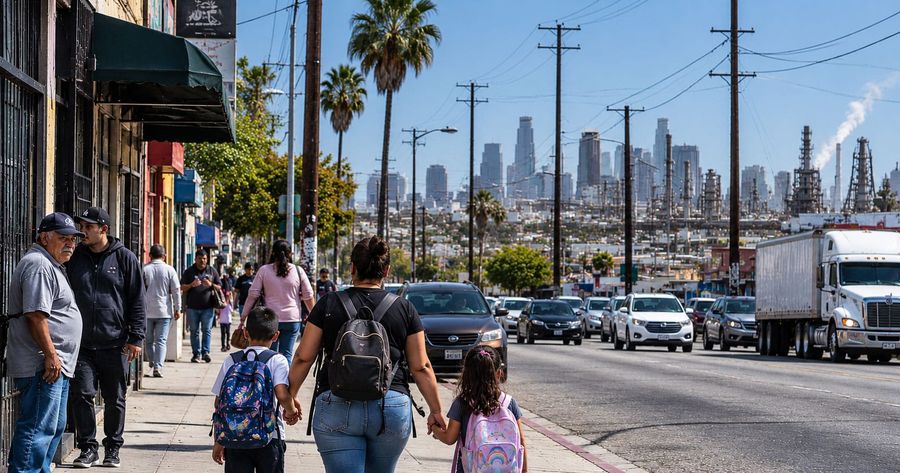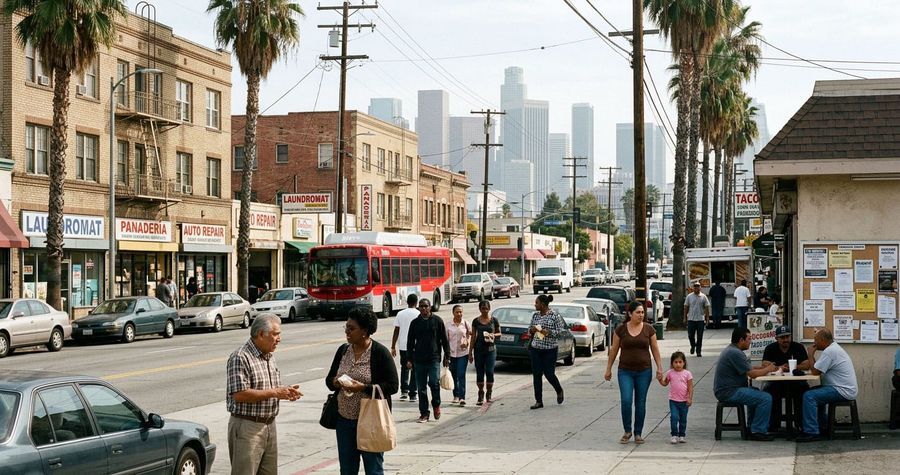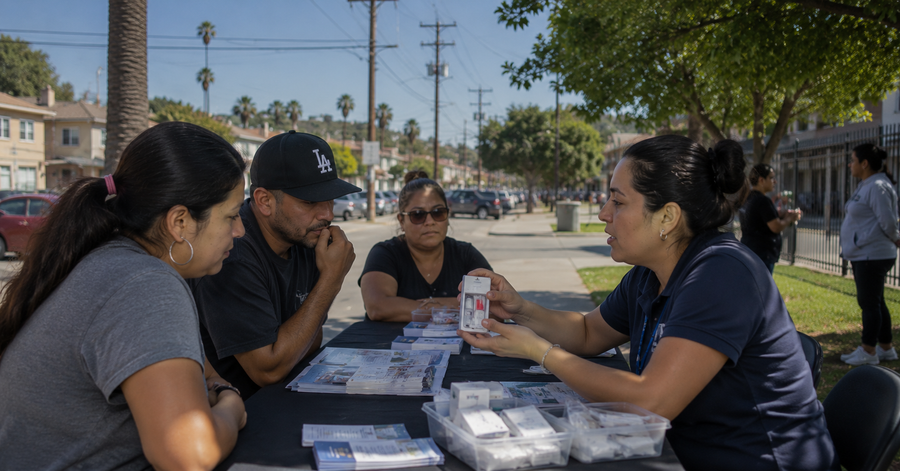

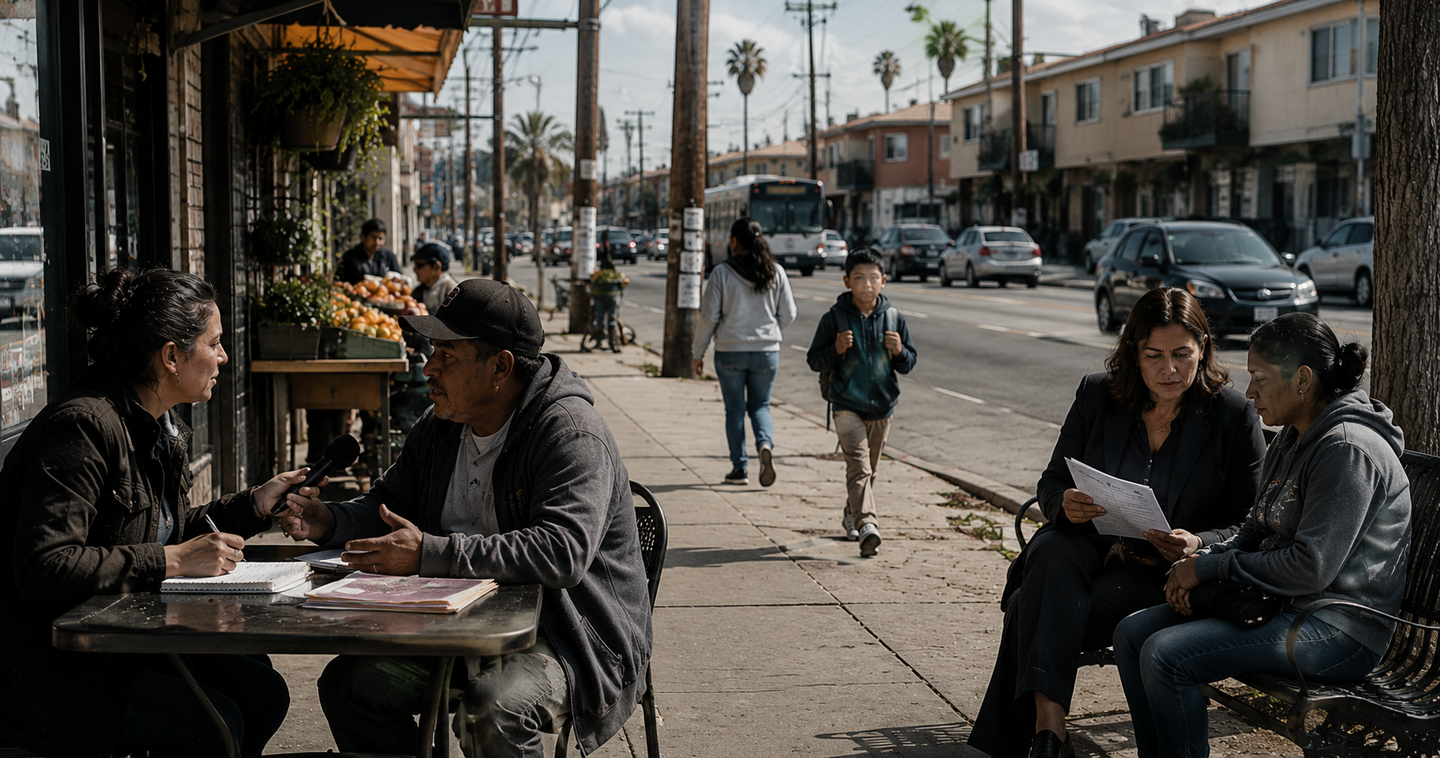
One year after federal immigration enforcement operations intensified across Los Angeles and Southern California, The Signal revisits the legal battles, detention conditions, and community consequences that continue to unfold. ACLU attorney Eva Bitran discusses the landmark Vasquez Perdomo litigation, journalist Ryanne Mena reports on conditions inside Adelanto ICE Processing Center, and Flor Melendrez reflects on the impact of the raids on workers, families, and entire communities. Aired live on KPFK 90.7 FM Los Angeles, on June 13, 2026.

This is viewer supported news. Please do your part today.
This is a rush transcript. Copy may not be in its final form.
TRANSCRIPT
00:00:00:00 - 00:00:10:23
Music Intro
The whole run by a handful of greedy bankers and CEOs who nobody elected. That can't possibly last.
00:00:11:01 - 00:00:18:17
Music Intro
I'm going to tell you the numbers that. But you really only have to remember to tour it.
00:00:18:19 - 00:00:49:02
DINO
Good afternoon, and welcome to The Signal. News, information and analysis. I'm your host, Dino. This week marks roughly one year since the federal immigration enforcement operations intensified across Los Angeles and Southern California, setting off a series of legal challenges, community response, and ongoing debate about the limits of government power. Over the past 12 months, we've witnessed court battles that have reached the highest levels of the judicial system.
00:00:49:04 - 00:01:36:20
DINO
Allegations of unlawful enforcement practices, including the murder of U.S. citizens during said operations. Reports of U.S. citizens being swept into immigration operations, and renewed questions about transparency inside detention facilities at the same time. Federal officials maintain that the immigration enforcement remains a necessary responsibility of government and an essential component of border and public safety policy. What has become increasingly difficult, however, is separating political rhetoric from documented facts beyond the headlines and the competing narratives are fundamental questions about due process, civil liberties, government accountability, and the balance between enforcement authority and constitutional protections.
00:01:36:22 - 00:01:59:07
DINO
Today, we're going to take a step back, folks. We're going to take a step back from the politics and examine where things are one year later, and we're going to do so with three folks, three guests, to today's program. Our first guest will be a veteran of the ACLU of Southern California, who is helping lead one of the most significant legal challenges arising from these enforcement actions.
00:01:59:09 - 00:02:39:09
DINO
Ryanne Mena, reporter and journalist who's been a friend of The Signal. He's been on our program before of the Southern California News Group, whose reporting has documented both the raids themselves and the conditions inside immigration detention facilities like at home. And who will be giving us an update on the recent hunger strike that's happening in Adelanto. And then we'll close out the program with normal entries of clean Car Wash Worker Center, who brings us the perspective of the workers and those directly impacted, impacted by the policies, the draconian policies of the Trump administration and the disappearances that have been occurring now for one year.
00:02:39:09 - 00:03:03:19
DINO
Together, we'll explore what has changed, what remains unresolved, and what the public should understand as this story continues to fold. Stay with us.
00:03:03:21 - 00:03:32:19
DINO
Welcome back. Before we start, one quick programing note coming up next week on The signal news, information and analysis with Dina. We'll be taking a closer look at Venezuela, six months after the dramatic events that reshaped the country's political landscape. And that's, you know, saying it nicely with what I should say. And that is not the dramatic events, but rather the kidnaping of a sitting, president of a foreign independent nation.
00:03:32:21 - 00:04:14:17
DINO
Joining us will be Reverend Ricardo Moreno, who will we'll have a conversation about the current state of the transition, the economy, the release of political prisoners and U.S. Venezuelan relations, as they stand today, six months later again, that'll be here on the signal next week. So make sure you tune in, for that. Joining me now is Eva Bitran of the ACLU of Southern California, who helped lead, who is one of the lead rather on the Vasquez Perdomo case, one of the most significant legal challenges to federal immigration enforcement practices to emerge here from Southern California as a result of the raids that happened one year ago this week.
00:04:14:19 - 00:04:17:15
DINO
About welcome to the signal.
00:04:17:16 - 00:04:20:07
EVA BITRAN
Thank you so much. Good afternoon. Glad to be here.
00:04:20:08 - 00:04:41:19
DINO
So let's start with a brief refresher of, for listeners who may not have followed every development over the past year, and we've certainly covered it here on this program, walk us through the early stages of what not only what happened, but what led up to the Vazquez Perdomo case or what is now known as the Vazquez Perdomo case last summer.
00:04:41:19 - 00:05:11:08
EVA BITRAN
As you all know, we saw the full force of the federal immigration enforcement apparatus really descend upon Los Angeles and Southern California writ large. One of the things that we witnessed was our community members coming together to decry the violence and the pain that immigrants were living and experiencing, and five really brave individuals and three organizations the United Farmworkers, the L.A. Workers Center Network, and Tulare came together to say enough and brought this litigation against the rage.
00:05:11:10 - 00:05:37:02
DINO
Now, as a matter of full disclosure, yours truly is, employed by the Los Angeles Workers Center Network and as such, is involved in that. But in this capacity here, we do cover this issue, with no direct relationship to either the L.A. Worker Center network or its fiscal sponsor. So ever what were the central allegations that were presented before?
00:05:37:04 - 00:05:44:01
DINO
The district court and what that subsequently went to the ninth court? District Court of Appeals?
00:05:44:03 - 00:06:08:01
EVA BITRAN
Yeah. So the case made a few central allegations. The first is that the way the government was carrying out these horrific operations violates people's constitutional rights. Specifically, as you all know, from witnessing it. Ice and Border Patrol were stopping people, detaining people without knowing a single thing about them other than the color of their skin, what they were wearing, and where they happened to be standing.
00:06:08:01 - 00:06:27:22
EVA BITRAN
Right. And we know that the Constitution demands more, that you need an individualized assessment based on specific facts about the person that they're subject to deportation. And second, you need a warrant to arrest them or probable cause to think they're going to flee if you go get one. So so what we did is we went to the court and we sought an order demanding just that.
00:06:27:22 - 00:06:51:05
EVA BITRAN
We wanted the government to stop this unconstitutional practice, stop detaining people just based on their Latino, appearance or the fact that they speak a language other than English. Their location or their perceived occupation. And we want the district court, in a really excellent opinion, called out the practice that was happening really accurately and told the government that it had to stop doing this right.
00:06:51:05 - 00:07:02:11
EVA BITRAN
And and the Ninth Circuit upheld that victory. They heard argument, on an expedited timeline, and they upheld that this order was correct. But then came to Supreme Court.
00:07:02:13 - 00:07:14:02
DINO
And then then came the Supreme Court, which ultimately stayed those protections. What were the government's arguments in seeking that stay, and how did your legal team respond to that?
00:07:14:04 - 00:07:39:02
EVA BITRAN
Yeah. So the government made two central arguments before the Supreme Court. First, that the Constitution permits them to rely on those four factors, right. Race, language, occupation, location, and deciding whom to stop. And then second, they argued that the court's order was too broad and unmanageable and that they couldn't implement it properly. We were actually really surprised to see the government defend its use of racial profiling so aggressively in the Supreme Court.
00:07:39:04 - 00:08:01:07
EVA BITRAN
And we were even more surprised that the Supreme Court would meddle in this case. You know, the order that we had won was temporary and limited just to Southern California and actually was in line with orders we've seen in other Fourth Amendment cases across the country. So these were the arguments that we made in response. And, yeah, as you noted, unfortunately, the Supreme Court agreed with the government and put a pause on our victory.
00:08:01:08 - 00:08:24:03
EVA BITRAN
But one thing that's interesting and that I think maybe hadn't gotten as much coverage, is that they did so in an unsigned and unreasonable opinion. Right. So we actually have no way of knowing why the Supreme Court did what it did. Maybe they didn't love the evidence on this court's timeline, or maybe they wanted to learn more about our plaintiffs, or maybe they didn't like that the court had focused on those four factors and would have preferred a different order.
00:08:24:05 - 00:08:38:09
EVA BITRAN
And there's really just no way to know. As you know, Justice Kavanaugh, writing for himself, basically defended a vision of the U.S. where Brown people are subject to detention to show papers and to just go along. And we know that's not how things lived on the.
00:08:38:09 - 00:08:59:04
DINO
Ground and never for for the for the audience who doesn't understand that this particular, position was put out by way of what's known as the shadow docket. You reference an unsigned opinion, you know, explain to us what exactly does that mean? What is the shadow docket and what happens when you have an unsigned opinion as opposed to a signed opinion?
00:08:59:06 - 00:09:18:00
EVA BITRAN
And so typically, the way the Supreme Court works is they take like 60 to 80 maximum cases a year. That's so many fewer than your average judge. Right. Like your average judge has hundreds of cases that they hear at any given time. And so they do that by really carefully reasoning which cases should they take where they're going to make a big legal impact?
00:09:18:05 - 00:09:44:15
EVA BITRAN
That has been really developed by the courts below, so that they're really ready for the Supreme Court to make an intervention here. That's their typical practice. But they also have this thing called the shadow docket, which is when things have to move more quickly, or at least when some party in the case claims that they have to move more quickly and they can make incredibly impactful decisions without the benefit of time, without the benefit of the courts below having really worked it out.
00:09:44:17 - 00:10:04:05
EVA BITRAN
And often they do so, especially in this administration, to give the Trump administration their victory or their way. They'll just clear the path for any obstruction that's in the way of the Trump administration carrying out its policy goals. That's really a typical, from it's a departure from the past, and it's not the way our government should work.
00:10:04:07 - 00:10:38:05
DINO
My guest is a senior staff attorney with the ACLU of Southern California. We're discussing the, Perdomo. Vasquez litigation that sought to, put a hold stop on the, the disastrous, ice raids that, commenced a year ago this past week that led to the, devastating impacts, across the board, we're talking disappearances, families torn apart, literally, in some cases, families being ripped apart from one another's arms, including those of children.
00:10:38:07 - 00:11:07:04
DINO
And we're discussing what has been the, the update, or what is the update rather of the Vasquez Perdomo litigation that is currently still going through. Now, even before we get to the latest development, the most recent, filing over the past year since the, the, the ruling, so to speak, from the Supreme Court until now, you all have gone through a process of discovery and so much other, developments in this.
00:11:07:04 - 00:11:19:01
DINO
And obviously we know that you can share a lot of that, but what can you share? What have you learned about this, this this policy that is still underway here in the US.
00:11:19:03 - 00:11:38:22
EVA BITRAN
And, over the past year, we've been deep in the phase of the case that we call discovery, which is where we get to ask the government for all of its relevant documents. And we actually get to sit there, agents and our leadership down for questioning. So we've done a bunch of depositions that's those questioning sessions and reviewed a ton of documents.
00:11:38:22 - 00:12:03:23
EVA BITRAN
And this really confirms a lot of our understanding from community on the ground of how these raids are playing out. So learning things about what what instructions are they getting, what training are they getting? How are they being told to look for people other than the people that they're targeting? Right. All of this that we've been learning and that we're looking forward to putting out there in the case and we've in fact used to move the case forward.
00:12:03:23 - 00:12:23:08
EVA BITRAN
So one thing that we've done is we added two new claims to the case that really reflect folks lived reality of what's happening on the ground. So one of those is an equal protection clause challenge that focuses on the fact that Ice and Border Patrol are specifically targeting people based on their race, and the Constitution doesn't allow that.
00:12:23:08 - 00:12:49:10
EVA BITRAN
Right. You simply cannot racially profiled people in this way, especially not in Southern California, where someone's Latino ethnicity tells you literally nothing about their immigration status. And then the second claim we added is about the extreme show of force that we're seeing agents use. You've probably all seen videos of them descending on locations en masse and masked and armed to the teeth and really terrifying our communities.
00:12:49:16 - 00:12:53:20
EVA BITRAN
And the Fourth Amendment doesn't permit those unreasonable tactics either.
00:12:53:22 - 00:13:05:11
DINO
So bringing us, you know, up to date, your team recently filed a new request for injunctive relief. What exactly are you asking the court to do at this point?
00:13:05:12 - 00:13:32:20
EVA BITRAN
So we're asking the court to put a stop to the government's policy and practice of arresting folks without a warrant and without an individualized assessment that the person's likely to escape. So the law typically requires you to get a warrant before you arrest someone, right? That's classic Fourth Amendment in the Constitution. There are a couple of exceptions to that requirement, and one of them is that you can arrest someone without a warrant if you have really good reason.
00:13:32:20 - 00:13:49:17
EVA BITRAN
So probable cause to believe that they're likely to get away before you can go get a warrant. And that makes some degree of sense, right? If you know where someone lives and works or goes to church and you know that they have deep ties to the community, then you can you know that you can go get a warrant and arrest them later.
00:13:49:17 - 00:14:10:06
EVA BITRAN
If the arrest is truly justified and approved by a warrant. But these Ice and Border Patrol agents, they're not doing that. We know from experience that they are not asking any questions that might let them know whether that person is likely to flee or just go back to their lives, their job, their partner, their kids, their community. And that's illegal.
00:14:10:06 - 00:14:28:18
EVA BITRAN
So. So if the court grants our request as courts have done in other, cases across the country, we hope that these random, untargeted collateral arrests that we're seeing will go way down, because that's who's typically subject to the practice. And we ultimately hope we can keep our people safe at home in their communities.
00:14:28:20 - 00:15:05:13
DINO
And, as we as we wrap this segment up, you know, we're marking the one year anniversary, I don't know, maybe sudden, what do we call it other than anniversary, but one year since the raids, that gave rise to this lawsuit, I think one of one of our, one of our, caffeinated, fueled, researchers here, at the signal, shared with me recently that there's something like more than 700 lawsuits in play right now against the Trump administration, which itself was like, wow, you know, mind blown.
00:15:05:13 - 00:15:17:15
DINO
But what do you believe is ultimately at stake here? Not just for immigrants, but on the on the constitutional protections more broadly, what are we looking at here?
00:15:17:17 - 00:15:46:14
EVA BITRAN
I think we're at a real moment, a real inflection point about how we want our government to treat us, whether we are immigrants, undocumented folks, lawful immigrants, citizens, regardless of our race. Do we want to live in a country where the Constitution permits racial profiling and permits the government to stop anybody on really low kind of suspicion, or any where, then just having an inkling that, oh, that person looks out of place.
00:15:46:14 - 00:16:05:00
EVA BITRAN
They don't look like they belong. Right. We're at a turning point about whether the courts are just going to allow this kind of white nationalist vision of America, where everyone is subject to the police power to go forward. That's at issue in our case, and it's an issue in a lot of the litigation against the Trump administration.
00:16:05:00 - 00:16:22:16
EVA BITRAN
So we're hopeful and glad that we've seen so many community members stand up in the last year and say, not in our name. This is not the country we want. And and yeah, I think it's a real, a real pivoting point in the history of, of what the Constitution means when it protects people in the country.
00:16:22:18 - 00:16:47:10
DINO
Ever be Trump is an attorney with the ACLU of Southern California. I'm part of the legal team representing plaintiffs in the Vasquez Perdomo case. Thank you very much for joining us today. And for helping our listeners better understand not only what the status of the cases, but what's at stake. And especially for joining us on a Saturday afternoon here on the signal, if you want to hear if you want to learn more, you can go to their website, ACLU.
00:16:47:10 - 00:16:51:23
DINO
So cwr.org about thanks for being with us.
00:16:52:01 - 00:16:55:01
EVA BITRAN
Thank you so much for having me.
00:16:55:03 - 00:17:27:02
DINO
Welcome back to The Signal. Earlier this month, allegations emerged that detainees who spoke with members of Congress during an oversight visit at the Adelanto Ice Processing Center were later placed in segregation. The claims have sparked renewed questions about transparency, accountability and conditions inside this notorious ice processing center. Here in Southern California, one of the largest or the largest immigration detention facilities.
00:17:27:04 - 00:17:47:20
DINO
Joining me now, I want to welcome back for now, rather, are Ryanne Mena, a reporter with the Los Angeles Daily News and Southern California News Group whose reporting has helped usher, who has helped us shed light on these allegations, ongoing hunger strike and experiences of people currently being held inside Atlanta. Ryan, welcome back to The Signal.
00:17:48:01 - 00:17:49:12
RYANNE MENA
Thank you for having me again.
00:17:49:14 - 00:17:56:19
DINO
So okay, Ryan, let's let's let's take it from the top, right.
00:17:56:21 - 00:18:15:12
DINO
Walk me through the as you know, your article that first caught my attention when I read it, you know, and for those of you that don't know, you know, sometimes for those of us who produce radio, whether it's my producer, the team here or myself, you know, I'll read these folks article and I'm like, I like it. That's dope.
00:18:15:12 - 00:18:35:13
DINO
Let's bring him on the show. Believe it or not, that's a lot of what and how radio operates. But your article centers on three detainees who reportedly spoke directly with members of Congress and were later moved into segregation. What were you able to independently verify and what aspects of the story remain disputed?
00:18:35:15 - 00:19:00:03
RYANNE MENA
So I was able to corroborate with several detained people inside of Adelanto that these three men who were visited, like you said, by three members of Congress, were sent to solitary confinement. Within days of those visits, I heard from about 4 or 5 detained men that, you know, this happened. And when I reached out to Ice and DHS, they they disputed those claims.
00:19:00:05 - 00:19:02:18
DINO
They just said, what? Nope, that's not true.
00:19:02:21 - 00:19:20:03
RYANNE MENA
They said, well, first of all, they said, there was no hunger strike going on inside Al Talento. They've said that repeatedly, and so did Geo Group, the private prison company that owns and operates the Atlanta Ice facility. So, you know, it's a stark difference. You know what they are saying and what people inside Atalanta are saying.
00:19:20:05 - 00:19:45:00
DINO
Now, one thing your reporting does particularly well is to distinguish allegations from confirmed facts. Well explanations now, but I they they disputed that facility officials regarding any anything regarding transfers. Was there any dispute about that. How does those explanations compare with what detainees are telling you? They're inside on the ground.
00:19:45:02 - 00:20:12:09
RYANNE MENA
So I reached out to Ice, DHS, Geo Group earlier this week regarding, the transfers of one of the hunger strike leaders that, the representatives met, early this month, and they responded to my inquiries by not really answering my questions. They confirmed that the leader, Kyron Shaquille Sasso, was transferred to El Paso to a detention center over there.
00:20:12:15 - 00:20:28:04
RYANNE MENA
And, you know, I asked about, you know, was this done out of retaliation? Like people inside think is happening and like what advocates and lawyers are alleging. And they just said, this is, you know, just part of the process to remove him from this country.
00:20:28:06 - 00:21:07:08
DINO
Now, just for those of you who, may not be aware of the representatives in question who visited the facility where Representative Judy Shu from the California 28th district, Representative Pete Aguilar from California's 33rd district, and Representative Jimmy Gomez from California's 34th visited 34th district. And they visited the Adelante Ice Processing Center in San Bernardino County, a notorious facility, and they went there with intention of meeting with detainees participating in this ongoing hunger strike to assess conditions inside one of the nation's most troubled immigration detention facilities.
00:21:07:12 - 00:21:15:17
DINO
Now, you've previously reported on the conditions, of this facility. Ryan, have it has any of that changed in your experience.
00:21:15:19 - 00:21:54:20
RYANNE MENA
In the eight months that I have been looking into Adelanto conditions, what people inside are telling me about the troubles that most concerned them have remained the same. And that's trouble with food, water, and the biggest one of all medical care inside. People, dozens of people at this point have told me that food is often served spoiled and that, you know, the portions are small and insufficient and that water is, you know, it has a funny smell, a funny taste, and that sometimes people go without water for hours because the facility workers don't refill the jugs that are inside for drinking water and for medical care.
00:21:54:20 - 00:22:20:12
RYANNE MENA
People have told me repeatedly that it can take weeks, if not months, to get the medical care that they are requesting. And when there's a medical emergency inside the facility, people say that they need to fall on the floor in order to get prompt medical, immediate medical attention. And it's not even immediate. People have told me, dozens of people have told me that even when someone is on the floor having a medical emergency, it could take like anywhere between 515.
00:22:20:14 - 00:22:25:00
RYANNE MENA
I've heard up to 30 minutes to receive care for medical emergencies.
00:22:25:02 - 00:22:52:02
DINO
You know, the as you describe that, I can help, you know, my my, my my eyes are squinting. I'm just kind of making that discuss, face. Because I can only. You described a jug of just nasty water. Basically what you describe. And, you know, I'm not trying to diminish the the what came in the latter part of your comment, but somebody having to literally get to the point where they collapse.
00:22:52:04 - 00:23:23:07
DINO
But, you know, I want to emphasize the fact that you have spoiled food, that you have bad water and it's not hard to understand why people ultimately end up in the medical crisis, only to find out that, you are, likely not going to get any medical attention in a timely manner. So the more I think about that, it's just like, wow, you know, beyond this incident, you've been you've spent considerable time communicating directly with people, being held at that, at Adelanto.
00:23:23:09 - 00:23:32:04
DINO
I understand you've spoken with detainees involved and or connected to the recent hunger strike. What prompted the hunger strike?
00:23:32:06 - 00:23:52:22
RYANNE MENA
So what prompted the hunger strike that began in mid-May was the California Attorney General's report, their yearly report on California Ice detention centers. It came out on May 15th, and people inside told me that they saw, you know, what was happening on this report, on the news, on the TVs there. And they were like, wow, like this is this is crazy.
00:23:52:22 - 00:24:12:04
RYANNE MENA
Like, that's what's happening. Other facilities is happening in here. And it is unacceptable. This is what they told me the process was like. And they were like, we need to demand better. So we're going to start a hunger strike. And so they contacted me. Several men contacted me, told me what they were doing, and, you know, began my reporting and my story on that.
00:24:12:06 - 00:24:30:12
DINO
So the participants are hoping to accomplish what is obviously is a human right. Right. We're talking, you know, just proper food, you know, clean water, clean facilities. This is exactly what they're describing. No, not exactly rather. But this is what they're asking for.
00:24:30:17 - 00:24:52:06
RYANNE MENA
Yes they are. They started the the hunger strike not just to call out the conditions inside of Otto Long to, but also to demand better. They're demanding nutritious foods. They're demanding better water. And demanding prompt medical care and also mold remediation that, you know, mold is found in the showers. There are also reports of worms being found in the shower.
00:24:52:06 - 00:24:58:00
RYANNE MENA
So they're asking for better conditions overall. But these are the specific areas that they're pointing to.
00:24:58:01 - 00:25:26:18
DINO
My guest is Ryan Manna, reporter, a Southern California news group, and the Los Angeles Daily News, who's been reporting now for months on the other Lantau Detention facility located in San Bernardino, California, and where recent hunger strikes, took place. And, after the visit, representative, Judy Chu, Peter la and Jimmy Gomez, who went to the facility in early June, was in late May, I believe.
00:25:26:19 - 00:25:27:11
RYANNE MENA
June 1st.
00:25:27:12 - 00:25:37:19
DINO
June 1st, after visiting and talking with some of the detainees, some of them were retaliated on. A two of them were put in solitary confinement. I understand.
00:25:37:19 - 00:25:38:13
RYANNE MENA
Actually, all 3.
00:25:38:13 - 00:25:39:14
DINO
Or 3 who are.
00:25:39:14 - 00:25:46:03
RYANNE MENA
Visited were taking the solitary to within the the day after the visits, and then the third the day after that.
00:25:46:05 - 00:26:09:17
DINO
Now, as we look at this issue, Ryan, and you heard our first, I guess, it will be withdrawn from the ACLU, this entire program this week. We've been dedicating it to the issues that have gone on over the last year. Right. Since these devastating, Ice raids and attacks began. In fact, there was, this past Monday was the one year anniversary.
00:26:09:17 - 00:26:30:16
DINO
So this entire week we've been looking at, some of these topics and issues and why this program is dedicated to that theme. But you yourself actually have an other an additional story that attaches this to this. In fact, how I first learned about your reporting, you were reporting on the front lines that first day. Second day.
00:26:30:16 - 00:26:39:12
DINO
In fact, I remember being there myself. And one thing that you and I have in common, although your experience was a lot worse as you were shot.
00:26:39:14 - 00:26:40:08
RYANNE MENA
Two days in a row.
00:26:40:12 - 00:26:46:12
DINO
Two days in a row, as a frontline reporter. Tell us about that day.
00:26:46:14 - 00:27:10:06
RYANNE MENA
Yeah. So on June 6th, you know, that was day one of the intensified ice raids in Southern California. There was a raid at Beyonce Apparel, which, you know, I went to and reported on. I had never seen anything like that. Militarized agents on the streets of downtown only taking people. And later that day, there was a protest at the Metropolitan Tension Center.
00:27:10:08 - 00:27:35:15
RYANNE MENA
People were people were very angry at the community members or neighbors were being taken by these masked, militarized agents. And so during that period, it was at that protest, things were kind of, heating up a little bit. Federal agents brought out less lethal launchers. And, you know, I saw what was happening, and I decided to back up because I was like, all right, I don't want to get shot.
00:27:35:17 - 00:27:47:21
RYANNE MENA
And as I was walking away, I got shot on my left thigh. And, you know, I was wearing two press credentials around my neck on a lanyard. And I was carrying a notepad. Wearing my backpack was very clear. What I was there.
00:27:48:00 - 00:27:51:12
DINO
Right, right right right. And on day to.
00:27:51:14 - 00:28:15:11
RYANNE MENA
Day two, I was sent out to Paramount, California, where there was an anti ice protest. You know, I was reporting there talking to people who had been, shot with less, quote unquote, less lethal by the L.A. County Sheriff's Department. And I was getting ready to leave when I saw a few dozen, eight federal agents come out of this one side street.
00:28:15:13 - 00:28:40:00
RYANNE MENA
And I just thought it was so bizarre because there wasn't really a whole lot going on at that point. It was relatively calm, and I saw them bring out, you know, less lethal launchers. And I'm like, oh, shoot, is this going to happen again? Am I going to get hurt again? And before I have time to hide, I'm hit in the head with what I believe is a rubber bullet an inch above my right ear.
00:28:40:02 - 00:29:01:16
RYANNE MENA
And my friend, my reporter friend, Sean Beckner Carr. Mitchell. He's hit in the head with a tear gas canister which explodes on both of us. And, you know, I've been teargassed before, but nothing like this. And it's, you know, possible to see and breathe. And, you know, we eventually get out of there and flush our eyes out and, a couple of days later, I am diagnosed with the concussion.
00:29:01:18 - 00:29:08:14
RYANNE MENA
Wow. And, wasn't allowed to do my normal job duties for, for that week.
00:29:08:16 - 00:29:32:08
DINO
Well, I'm so sorry to hear you go through that as somebody who's actually had those experiences. And now as I sit here and old man status, comfortable inside the studio, I'm funny. I was at the Paramount. I was at the Paramount incident. And, I now do mostly photography, but there was one photograph I took there that to this day, I still have it in my in my office at home.
00:29:32:10 - 00:30:11:23
DINO
And it was a woman, an elderly Latina woman who had some moment in the middle of this chaos. And as they were shooting tear gas canisters and screaming at people, she got to her knees and started praying. And that is one image having, you know, photograph folks in 30 countries around the world. But that image that it happened in Paramount California, 2025, there's a woman who seemed to have nothing else left but prayer in the middle of tear gas, canister canisters flying in all sorts of direction.
00:30:12:01 - 00:30:35:01
DINO
And I remember getting up enough time just to point the camera and shoot. I was across the street, and there was a young man who was begging her to get down, get up, move out of the way, get behind the car. And she just stood there and prayed. And thank goodness nobody, nobody, shot her. And, but it was a very impactful moment.
00:30:35:02 - 00:30:50:15
DINO
So, you know, right after spending months reporting on day long to speaking directly to the folks in the facility, what's the one thing that you try and get across to the public to better understand what's happening with these individuals who are detained there?
00:30:50:16 - 00:31:20:23
RYANNE MENA
People don't know when they're going to see their family, their friends, see a tree, see the world again. That is what I've been told by dozens of people. One of the most difficult things about being in there, the agonizing uncertainty over what's going to happen next. All right. Over. You know, and recently, in recent months, people have been telling me, like, I don't want to die in here because they're hearing about all these deaths happening, not just stemming from the Atlanta ice facilities, but also from other ice facilities across the country.
00:31:21:01 - 00:31:40:22
RYANNE MENA
They're hearing what's happening and, you know, they're experiencing it and they're worried they're going to die. So and, you know, immigration detention is a civil offense. It is not meant to be punitive, but many people inside there who have been to prison, in jail, who have told me, have told me that I don't want to. It's worse than prison.
00:31:40:22 - 00:31:43:18
RYANNE MENA
In jail.
00:31:43:20 - 00:32:01:02
DINO
Our next guest actually can speak to some of these experiences because some of her folks have been taken. We're talking about Flor Melendrez, executive director of the Clean Car Wash Worker Center. We're going to take a quick break and come back to the floor. Can you hang around and do this interview with me?
00:32:01:04 - 00:32:02:11
RYANNE MENA
Sure.
00:32:02:13 - 00:32:21:10
DINO
I'm going to take advantage free, free labor, you guys. Ryanne Mena, reporter with the L.A. Daily News. Who's actually going to stick around with us here in the studio? We're going to take a short break, and we'll be back with Flor Melendez from the Clean Car Wash worker center.
00:32:21:12 - 00:32:50:12
DINO
Welcome back. For nearly 20 years, the Clean Car Wash Worker Center has organized alongside car wash workers throughout Southern California, fighting for dignity Workplace protections and better wages. But over the past year, the organization has found itself confronting a very different challenge. Car wash workers have become one of the most visible targets of immigration enforcement operations. Immigration attacks, immigration disappearances across all of Southern California.
00:32:50:14 - 00:33:23:00
DINO
Families have been separated. Workers detained, businesses disrupted, in fact, did not only disrupted, some businesses were outright bankrupted and entire communities forced to live with uncertainty and fear. Throughout it all, clean has been on the front lines, providing support, advocacy and a literally a lifeline for workers and their families. Today I want to join. I'm we're joined by Flor Melendez, executive director of Clean Car Wash Workers Center, to reflect on where things are.
00:33:23:05 - 00:33:40:06
DINO
One year later and I'm happy to say that staying with us here in the studio is Ryan Manna, a colleague reporter with the L.A. Daily News. Are we going to get some cheap free labor out of her? Thanks for staying with us, Mina. Floor. Welcome back to the signal.
00:33:40:08 - 00:33:42:17
FLOR MELENDREZ
Hi, everyone. Thank you for having me.
00:33:42:18 - 00:34:07:04
DINO
So for listeners who may not fully remember how all of this began. Take us back to those first few days. What was happening inside the car wash industry when the enforcement actions, the disappearances began? And, you know, how did workers react, and particularly your organization who's been so intimately involved in this process?
00:34:07:06 - 00:34:49:14
FLOR MELENDREZ
Well, I it's hard to even think about it right? Thinking back of a year, and how the raid started, I could only describe it as what people have shared with me, which has been nothing less than like, a feeling of being kidnaped. That that is what it what people describe it as, right. Like being out of work and all of a sudden feeling like, you know, there's a rush of vehicles, people getting off armed, masked, and then just going and grabbing people and no questions, rushing people to the ground, rushing people, putting them in handcuffs, putting them in their vehicles.
00:34:49:14 - 00:35:18:16
FLOR MELENDREZ
Right. Taking them away. And in the beginning of the raids, many times, going 2 or 3 days without knowing where their loved ones were who were detained. So it it's honestly like a kidnaping. It has been very, tragic to the families. And now looking back, we have seen that there's been over 373 confirmed kidnapings at Car wash.
00:35:18:18 - 00:35:37:08
FLOR MELENDREZ
Car washes, from car wash workers. Right. And, you know, there's been a total of what we have seen. I know there's many more, right? This is a number that we have confirmed, like we have been able to speak with the families and follow up with those families, 373 car wash workers. I mean, what.
00:35:37:10 - 00:36:00:19
DINO
Work and let me let me just pause there for a second because I want to really I mean, this is 373 car wash workers who may or may not have families, children's, entire economic hubs for a part of a community. These are families that are literally devastated by the loss of one of the more important economic sources.
00:36:00:19 - 00:36:16:10
DINO
But not only the finances. We're talking. You're separating a family. And that's for the ones that you are aware of, right? That you've been able to connect and confirm. So, you know, it's fair to say that it's a lot higher maybe. Right?
00:36:16:12 - 00:36:26:15
EVA BITRAN
Yeah, definitely. Definitely. We think that that number is higher and this is what we have been able to confirm. But we definitely feel that that number could be higher. Yeah.
00:36:26:17 - 00:36:46:18
RYANNE MENA
So Flor, the carwash industry seems to have been uniquely impacted by these operations. Could you please give us a sense of the scope of what you've witnessed over the last year? How many workers and families have been affected? What trends are you seeing today and what the situation looks like on the ground right now, compared to where it was a year ago?
00:36:46:20 - 00:37:15:04
EVA BITRAN
Well, you know, saying that 373 workers that have been kidnaped, you know, that's a large number for the industry, right. And this kidnapings happened in L.A., L.A. County, Orange County and the Inland Empire. We're talking about over 106 car washes celebrated by federal agents. Right. All across, in those areas that I just mentioned. And I want to say that the industry does look a lot different now.
00:37:15:06 - 00:37:56:00
EVA BITRAN
Why many car washes have closed. We have been able to confirm that at least ten car washes have either closed or converted into Express Wash models, following the rates. You know that the industry has had many effects on, on the workers rights, the entire neighborhoods and our local economies, of course. And even through, you know, this difficult time, I think the only thing that has kept, the Carlos community going has really been that solidarity, that community solidarity that we've had and that we've been able to see and witness communities coming together.
00:37:56:00 - 00:38:34:21
EVA BITRAN
These are families that have been separated. You know, how was mentioned earlier, the 373 workers, you know, they need this was their home and they were taken. And we, you know, through the support of and collaboration between green and other organizations such as NorCal racist, CLU, the O.C. Justice Fund, you know, alongside with immigrant defenders and other private attorneys, 42 of those 373 workers, I think 42 car wash workers have been released from detention.
00:38:34:23 - 00:38:48:03
EVA BITRAN
And, you know, that is a hard number to say. When you think of the number of workers detained to the number of workers that have only been able to come back home, and living has been a struggle.
00:38:48:05 - 00:39:25:19
DINO
Let me ask you, follow this up for you all. And by the way, let me just reintroduce you our guest is, Flor Melendez, executive director of the Clean Car Wash Workers Center here in Southern California, who represents not only car wash workers, but really their families and an entire industry that has been systematically targeted, by these draconian, illegal, ice race to have resulted in not only the disappearance of more than 370 workers, but the catastrophic impact on families, children, households, communities as a whole.
00:39:25:21 - 00:39:56:04
DINO
And, you know, flood your organization has been on the front lines of this. How has your org adapted over the past year? Now, you your org has historically worked with uplifting and empowering workers through education capacity, training a variety of different, you know, mechanisms that are designed to really improve upon a work experience. But now you're also having to adapt to what is literally a humanitarian crisis.
00:39:56:06 - 00:40:01:06
DINO
What changes have you gone through as an organization?
00:40:01:08 - 00:40:41:04
EVA BITRAN
Well, I think, you know, for, for years, clean started in 2007. And for years our main focus has definitely been leadership development, rooted in organizing right to improve the industry. In the last year, I can say, you know, we have had to shift to do, a food bank. We had to shift to doing a lot of, you know, your rights training, walk through through the car washes, you know, doing our outreach with employers and with workers in a way that has shifted to labor rights, to immigration rights, to, health and safety.
00:40:41:06 - 00:41:07:08
EVA BITRAN
Right. Because let's remember that this doesn't only put the workers at risk is our whole communities, right? It's that the clients who are at the car wash is the workers at the car wash is the owner. It's a they're these are our communities. And we have had to shift to do a lot of that responding to look for legal support, to look for immigration attorneys right to learn the system.
00:41:07:08 - 00:41:27:14
EVA BITRAN
A lot of our organizers have had to learn the system on, how do you look for a loved one? What do you how do you get a bond? What's, you know, what's the legal process? How do you search for someone? All of these things that it was unknown to us has become like a daily routine, right?
00:41:27:14 - 00:41:48:18
EVA BITRAN
To be able to really uplift the families, to be really be able to connect the families. The even the simple connection between when somebody is detained and being able to connect to their families, even learning that process, like how do you add funds to have them communicate? How do you out of funds to have somebody have a meal, right.
00:41:48:18 - 00:42:19:00
EVA BITRAN
Like all these, processes that were unknown to us, have really shifted in the way that we work? We have really partner with community, with workers creating what we call phone treats. And it's just a faster system and how we stay together to really alert each other, alert each other if anything's happening. And obviously we continue to do our organizing because we do not want to put our guard down.
00:42:19:02 - 00:42:53:19
EVA BITRAN
That is the last thing we want to do. We want to make sure that we're staying connected, that we're staying with up to date information. You know, our membership, used to meet every other month through the rates. One meeting weekly. Right. Weekly. To ensure that, you know, workers, we're communicating that workers were sharing their experiences, that workers were, sharing what they would have done differently, once they were detained and really informing the process and how workers were preparing themselves and their families.
00:42:53:21 - 00:43:01:13
EVA BITRAN
And I use the word prepare. And I don't know that that is the right word. Right. Because how do you prepare your family for such separations?
00:43:01:13 - 00:43:04:15
DINO
You don't I don't think you can say like, right.
00:43:04:17 - 00:43:05:18
EVA BITRAN
Yeah.
00:43:05:20 - 00:43:29:08
RYANNE MENA
Yeah. So for you, you kind of touched on this, but one thing we've also seen over the past year is an incredible response from community organizations, advocates, labor groups, faith leaders and ordinary residents. So I'm wondering, what does a solidarity solidarity look like from your perspective, and what are some examples of community support that has given you hope during an otherwise difficult year?
00:43:29:10 - 00:43:51:14
EVA BITRAN
Yes, I we have so many examples. We have been, you know, very, very, blessed to have, we pull our call out to community. I remember in the, in the peak of this last summer and we said, we need volunteers. We, you know, we're asking workers to shelter in place, and we need volunteers to, do our foodbank delivery to them.
00:43:51:16 - 00:44:21:18
EVA BITRAN
You know, we don't want to keep on exposing folks. So we, did a call out and I remember from one night to the next, we got the response of, I think, 117 volunteers that were willing to, show up right the next day. And and they did, and they helped us, separate all the groceries, receive donations, made packages, deliver the groceries to, the workers homes, and, you know, we did that a few times, and that is what solidarity looks like.
00:44:21:18 - 00:44:38:08
EVA BITRAN
It's people showing up, donating their time, donating groceries, donating whatever they could to continue to provide. There's legal support, financial support, to these families. And so we have had so many examples of that.
00:44:38:08 - 00:45:07:19
DINO
And I'm looking forward to that opportunity in Florida to to discuss the financial support, because we certainly want to give our space here at a time to, to let folks know how and where they can support. And let me reintroduce you once again, we're speaking with, our guest is flood Melendez, executive director of the Clean Car Wash Worker Center and one of the most impacted communities.
00:45:07:19 - 00:45:45:06
DINO
The car wash industry is who she represents workers, families, children and others, who have been navigating this devastating, draconian, racist policy directed at car washers, and all immigrants, but here in Southern California, the Latino community in particular. And I also want to reintroduce my impromptu guest host, Ryan Manoff, a journalist from the Southern California News Group and the L.A. Daily News who Sly and Darnella and I looked at each other through the glass and said, let's let's keep Ryan here in the studio and aver join us for the rest of the hour.
00:45:45:06 - 00:46:21:19
DINO
So thank you, Ryan, for stepping in floor. I want to take this a little bit more personal, if I can. And, you know, that's this is you look, you have been standing there beside workers families through some incredibly difficult moments. Your staff has been doing the same. One. Has this been here? What has this year been like for you as a director, as a leader, as a community champion who has to stand strong, has to keep providing guidance and direction.
00:46:21:21 - 00:46:46:02
DINO
You know, some of our reporting here on the signal, we've, we've noticed that there is organizational fatigue, not because you're, you know, look, there was organization fatigue before because many nonprofit organizations are exactly that champion and warriors who sometimes run on caffeine and fumes. But what has that impact been like on you as a community leader?
00:46:46:04 - 00:47:17:22
EVA BITRAN
Stephanie, been an impact. It's been difficult. I think, we're lucky to have great support, from other worker centers, from other community leaders, from other volunteers. Right. Our team has been going through it. I, I want to say that it is tiring. It is a lot. It has been a very difficult year. But also seeing the faces of workers when they come home has been very inspiring to us.
00:47:18:00 - 00:47:41:10
EVA BITRAN
You know, our own team has had to, go through one of our protocols. What are our plans to keep our team safe as well as while doing this work? Right. And yes, there is fatigue. I think there is, obviously thinking of how do we plan forward not knowing what is next or what will happen.
00:47:41:12 - 00:48:07:05
EVA BITRAN
It can definitely create that level of uncertainty, for each person and obviously to an organization. But I, I honestly think that the people that are the most impacted are always the people that want to help the most. And I and I see that from our team. And, you know, I think it's important to to do a reset.
00:48:07:05 - 00:48:33:09
EVA BITRAN
I think we're overdue as an organization, right, to, to have some time to disengage and then, to continue, this work, the way that we have been doing so, but yes, it has been difficult. Yes. There is, you know, folks are tired. And I think we continue to run and campaign, but also in a lot of community love.
00:48:33:11 - 00:49:10:15
EVA BITRAN
Because we've been held so, so tightly and so strongly, I cannot tell you how many times our whole team, at different moments, you know, had to break down how to operate on how to, you know, talk it off and, you know, go back on the drawing board and going back to square one and creating a different plan and learning, relearning and learning how the system, the legal system keeps changing and how difficult it is for families to be able to understand that enough to go back to these workers homes and then go through this process with the so to make sure that they understand.
00:49:10:17 - 00:49:27:08
EVA BITRAN
Right. So I think, we've been held with community love and we continue doing the work. And, and we, I like to see how our members see it. Right. My support this year is stronger than yesterday. We definitely feel that.
00:49:27:09 - 00:49:34:00
RYANNE MENA
And as we close, what else would you like listeners to understand about the people behind these headlines?
00:49:34:02 - 00:49:59:00
EVA BITRAN
I will never mind is that we are human beings, right? And that we have those feelings that we go through where that we are now, and only seeing this day to day at the workplace. But even in our own families, right, our very own families have also suffered that separation. Our very own organizers are going through this in more than one way, in not just as a job.
00:49:59:00 - 00:50:27:18
EVA BITRAN
Right. But like, this is our day to day lives. So just reminding folks that, you know, all our organization is human beings. There is no, you get from a can point a to point B, and that said, like, no, we take this home, we live through this. You know, our families have also been impacted. And, you know, the work we do is really the work of of love and, and and organizing is at its root.
00:50:27:20 - 00:50:43:23
EVA BITRAN
And I feel like honestly, our, our team has had to, grow in so many different ways. But it has took in, our team to break down at times to think of past bad and understandable.
00:50:44:01 - 00:50:53:18
RYANNE MENA
And, and for those who want to help, what can they do right now to support car wash workers, support affected families, and support the work that clean is doing?
00:50:53:20 - 00:51:17:06
EVA BITRAN
I would really invite folks to visit us at WW Dot clean Car wash.org and learn more about us and be able to donate there. You know, you could donate your time, you could donate any funds. Everything, any single dollar goes a very long way and it goes directly to our members. It goes directly to our community.
00:51:17:08 - 00:51:44:14
DINO
So folks can join, by can support by going to clean car wash.org. That's again w ww dot clean car wash.org. I'd like to thank you Floyd. Very much for spending. This valuable time on this Saturday afternoon. Floyd Melendez executive director of clean car wash worker center for joining us today and for sharing both the realities facing workers and the resilience that continues to emerge from these communities.
00:51:44:14 - 00:51:48:10
DINO
Flawed. Thank you for being with us on the signal.
00:51:48:12 - 00:51:50:20
EVA BITRAN
Thank you. Thank you for having us.
00:51:50:22 - 00:51:56:14
DINO
Well, folks, as we wind down, well, yeah, I mean, that's kind of rough now.
00:51:56:16 - 00:51:59:16
RYANNE MENA
Yeah, it's pretty crazy historical times we're living in.
00:51:59:18 - 00:52:16:05
DINO
Exactly historical times. And, listen, this is why I applaud folks like you, all right? I mean, you guys are out there on the front line, you know? Oh, man. Sly, myself and, nella, who is not an old person. Status.
00:52:16:07 - 00:52:16:23
DINO
You know, we're here.
00:52:16:23 - 00:52:36:03
DINO
In the cozy studio, but it's, you know, all the journalists that are on the front lines being shot at, being shot, that, really, along with Floyd and other community champions deserve all the applause. I want to thank you for this latter part of, of The signal for co-hosting. Maybe we'll invite you back.
00:52:36:05 - 00:52:36:21
RYANNE MENA
That'd be cool.
00:52:37:00 - 00:52:38:13
RYANNE MENA
Yeah, let me see.
00:52:38:15 - 00:53:07:11
DINO
Let's, notice to the producer who's nodding her head. I want, Yeah. Listen, thank all our audience and every single area. 98.7, Santa Barbara, 93.7 FM, San Diego, and 99.4 FM in Ridgecrest, China Lake. Thank you for being here with us. And as we as we close out, folks, I want to remind you that this has been a year, a year, a year since all of this went down.
00:53:07:13 - 00:53:39:04
DINO
And, you know, unfortunately, it's not, the end of it. Right. This week marks roughly one year since the federal immigration enforcement operations intensified across Los Angeles and Southern California, setting off a series of legal challenges and community responses. Over the past 12 months. Folks, we've witnessed court battles and, we've witnessed unlawful practices. U.S. citizens have been killed along the way.
00:53:39:06 - 00:54:05:21
DINO
It is imperative that for us in community broadcasting, public radio or journalism, that we stay the course and continue to report on these issues. Over the last hour, we've explored how this story, through three different lenses, through the courts, through the questions that journalists and journalist ask and through the journey of, you know, communities on the ground.
00:54:05:22 - 00:54:27:08
DINO
We've realized that it's not just about community or rather, immigration enforcement. This is about people's lives. This is about, you know, the strength and power of a community. And I want to just kind of bring that back to its raw effort. Perhaps the most important takeaway from today's discussion is that this story is far from over.
00:54:27:08 - 00:54:50:03
DINO
The litigation continues, the reporting continues, the human impact continues. And as long as those questions remain unanswered, they remain worthy of public attention. For Kpfk 90.7 and my production team, and producer O'Donnell, about what? Engineer Sly rivers or digital media producer Oliver Quintana, and my guest host.
00:54:50:05 - 00:54:51:16
RYANNE MENA
Ryanne Mena.
00:54:51:18 - 00:55:01:09
DINO
We'll see you next week. I'm your host, Dino. And, thanks for being with us. Stay tuned for the car show, who I listen to while I go back home.
00:55:01:11 - 00:55:09:03
Music Intro
You? Yes, I love being assessed. I still methodically move, just, some.
00:55:09:03 - 00:55:17:21
Music Intro
Holes, get through it at some point. Right away. And listen to me, Anthony. Nice. You know, at least more now.
00:55:17:21 - 00:55:24:22
Music Intro
They have on either of these more.
00:55:25:00 - 00:55:30:07
Music Intro
You look at this and let me get this one with you fat.
00:55:30:07 - 00:55:36:15
Music Intro
And then I go and get this Janice on through him.
00:55:36:16 - 00:55:52:10
Music Intro
Oh, you say no Brazilian get to lose get, get. Incredible. Even when they do not legally they might not the Chicano kids.
00:55:52:11 - 00:55:56:12
Music Intro
But the American people. The point.