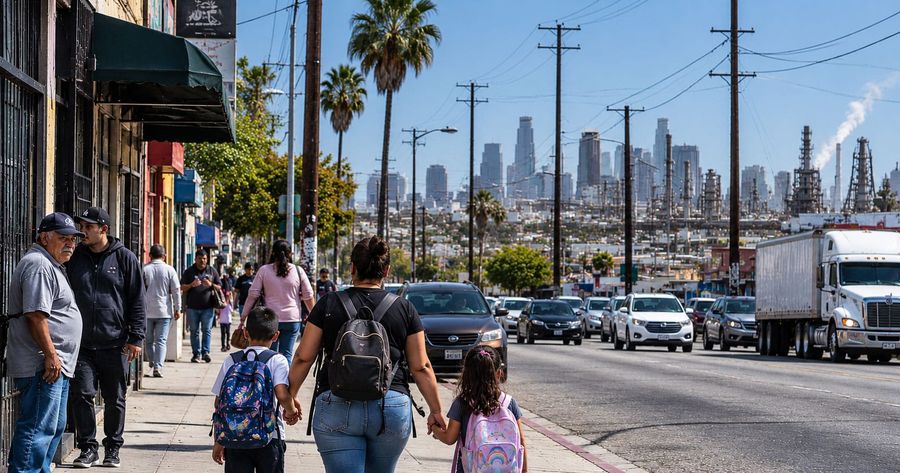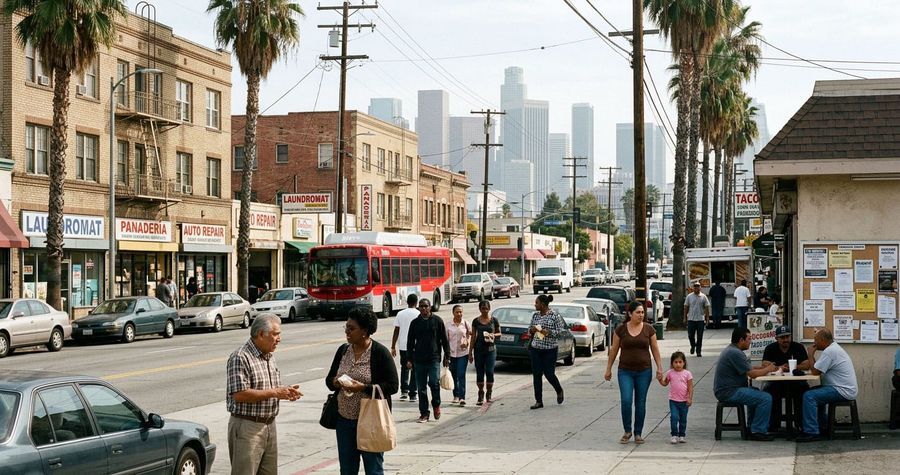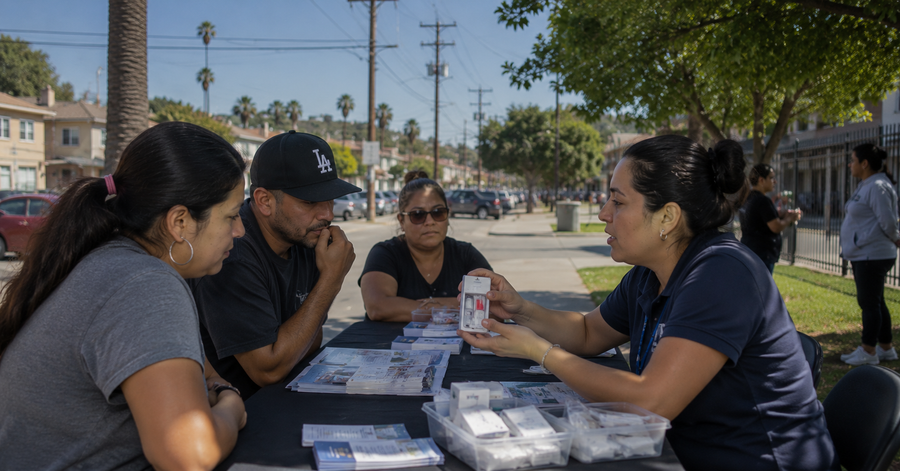
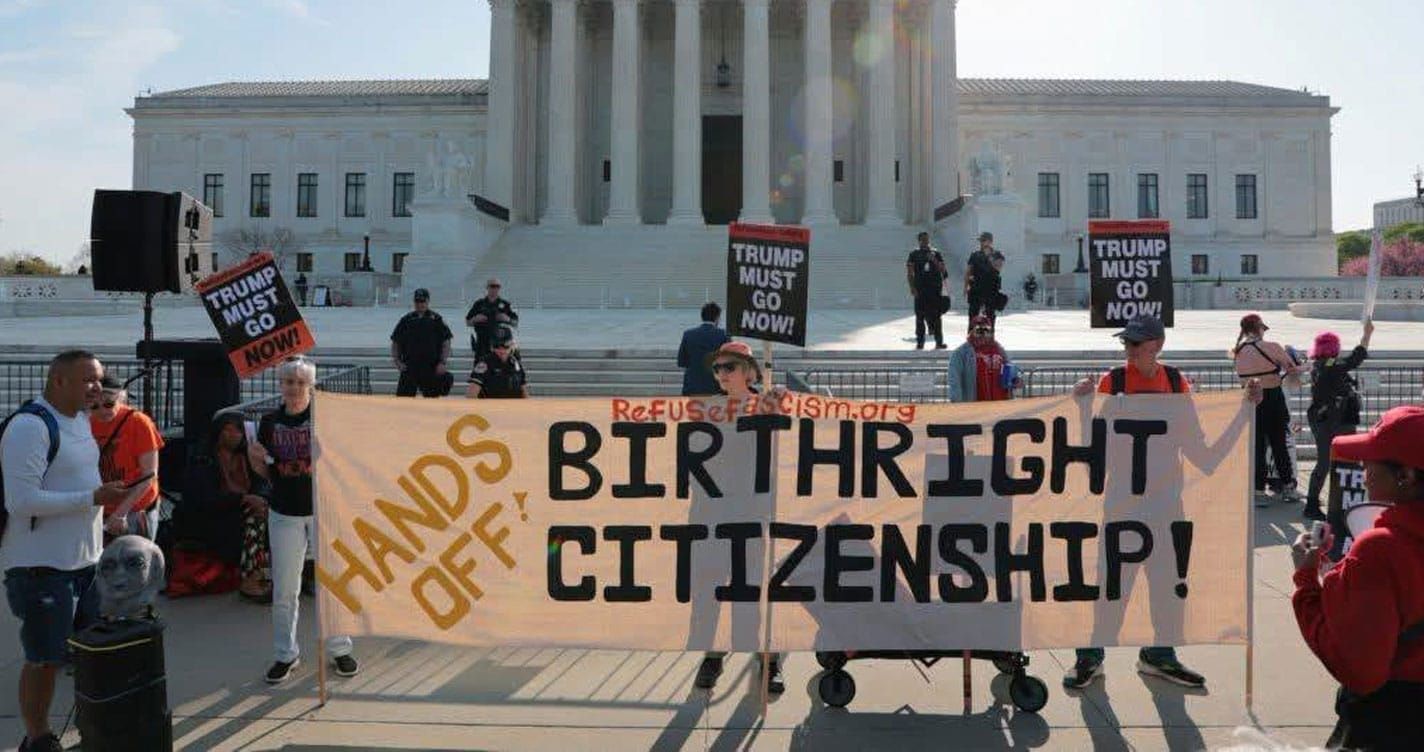
On this Fourth of July edition of The Signal, Dino reflects on the meaning of American democracy amid debates over birthright citizenship, constitutional rights, and rising political extremism. Then, Wolfgang Fernández discusses grassroots earthquake relief efforts in Venezuela, followed by Kristie Hernández on the ongoing environmental and public health challenges facing Boyle Heights and East Los Angeles after the Lineage Logistics warehouse fire. Aired live on 90.7 FM Los Angeles, on July 4, 2026.
This is viewer supported news. Please do your part today.
This is a rush transcript. Copy may not be in its final form.
TRANSCRIPT
00:00:00:00 - 00:00:10:23
MUSIC INTRO
The whole run by a handful of greedy bankers and CEOs who nobody elected. What can possibly last?
00:00:11:01 - 00:00:14:13
MUSIC INTRO
I'm going to tell you the numbers. Strange.
00:00:14:15 - 00:00:15:13
MUSIC INTRO
But you really only have.
00:00:15:13 - 00:00:21:03
MUSIC INTRO
To remember I took two words.
00:00:21:05 - 00:00:44:19
DINO
Good afternoon, and welcome to The Signal. News, information and analysis. I'm your host, Dino. So, listen, folks, let's start off with the obvious. Happy 4th of July. For those of you who are taking the day off of work here in the studios. They, they locked us in and they said, you guys are not going anywhere until you put together another episode of The Signal.
00:00:44:21 - 00:01:27:14
DINO
News, information and analysis. So a couple of us got together. Including, our wonderful, sound engineer, studio engineer, Ozzy. And we were throwing some ideas around and said, okay, let's let's see what we're going to come up with today. And so here's what we have lined up. So we are going to open up the show with a, a commentary, a commentary on behalf of this, this program, this show, yours truly, as your host on what it is to be at a day like this, the 4th of July, and what it represents during this political climate.
00:01:27:16 - 00:01:59:03
DINO
And before I get into that, let me also say that later in the program, we're going to talk to Wolfgang Fernandez, founder of Next Step Ministries, who is, coordinating relief efforts, one of hundreds, if not thousands at this point for the, state of Venezuela, for the country of Venezuela, as folks, literally dig up from, from under the rubble of what were these devastating, horrific earthquakes that happen now, a couple of weeks ago.
00:01:59:05 - 00:02:21:22
DINO
And that has led to so much devastation, so much heartbreak. And unfortunately, with rising death toll numbers, this is far from over. So, Wolfgang, Fernandez, of Venezuela himself, is coordinating some special relief efforts that we're going to talk to him about how you all can help and support and learn a little bit more about that.
00:02:22:00 - 00:02:46:07
DINO
And then we're going to close out the program with Christy Hernandez. She is co-chair of the Maravilla Community Advisory Committee. Mtac, who is, been one of the organizations on the frontlines of what is happening out in the East Side, East Los Angeles, Boyle Heights, as you all know. And those of you who've been following our program, we've been covering this issue since it started.
00:02:46:09 - 00:03:12:19
DINO
And unfortunately, you know that too, like, Venezuela has a long way to go before, folks can start to rebuild and recover from what is an ongoing and consistent problem with how government, how officials and others, treat the communities of Boyle Heights in East L.A.. So we're going to bring a voice to that, continue to bring a voice to that, to that important topic.
00:03:12:21 - 00:03:34:05
DINO
But here's the thing, folks. You know, when we talked about this show earlier in the week, in fact, I think I met with last week, with my producer, Nell, we were talking about, you know, we knew that it was going to be the 4th of July. And again, I want to thank everybody who's in studio and is here giving up their time to allow us to do this live broadcast.
00:03:34:07 - 00:04:08:00
DINO
We weren't going to take the day off because we wanted to do this commentary. I keep calling it a commentary, but it really is a reflection, a reflection of where we are and what I keep describing as a moment to review what this idea of We the People represents, right? Let's not forget the 4th of July is meant to be a holiday that, that marks the Continental Congress adopting a written declaration of independence in 1776.
00:04:08:02 - 00:04:40:23
DINO
This particular 4th of July is the 250th anniversary, and is a major cultural milestone for this country, whatever that means. You can take it as it is, or you can apply different or various meanings to it, but a cultural milestone. Bring it together. Nationwide celebrations, parades absolutely failed. Efforts out in DC sung by the current administration that has resulted in utter waste of resources, taxpayer dollars.
00:04:41:01 - 00:05:08:23
DINO
Putting on this 250, you know, self-praise glorification by the Trump administration that we've now seen has been an utter failure, as has been his entire administration. But then something happened this morning, and it really kind of threw me for a tailspin. On the way into the studio, I was talking to one of my colleagues, in fact, I started getting messages early in the morning from colleagues, including some in DC, who said, have you seen this?
00:05:09:01 - 00:05:50:04
DINO
And when I got here, I was chatting with Ozzy and others. Have you seen this? And some of you already know what I'm talking about New York Times, Newsweek, NBC, political, across all social media platforms. You've been getting these reports, these images, indeed, these, verified descriptions of white nationalist, white racist, bigoted nationalists marching in Washington. Now, look, we're not going to get into the whether or not this is their right as a broadcaster, as somebody who cherishes fundamentally the right to free speech.
00:05:50:06 - 00:06:31:05
DINO
You know, I would never go down that path, even not even for a racist. Indeed. I think everybody has a right to express their positions, opinions or otherwise ignorance, yours truly included. But, you know, these reports started coming on the social media. Reels. And what do you call the other ones, posts? Of course, we now have verified, reports from news media, video, dramatic images of these white nationalists crisscrossing the city of Washington, DC across the monuments.
00:06:31:07 - 00:07:05:22
DINO
Protesting what they're calling the reclaiming of the United States of America. Now, this group in particular is a group that, is called the Patriot. Is it the Patriot Front? Yes. And I think I got that right. The Patriot Front, which, you know, do this. Let me share this for a second. Right. The Patriot Front is actually a Texas based, white nationalist, neo fascist hate group that splintered from the.
00:07:05:22 - 00:07:44:21
DINO
And you got to love these names. Vanguard America and the aftermath of the 2017 Charlottesville Unite the Right rally, led by Thomas Russo, the organization seeks to establish a white ethno state in the United States, championing an ideology of racial and cultural image, image, image and t classified as a hate group by watchdogs like the Southern Poverty Law Center at the Anti-Defamation League, this group take this disguises as explicit fascist, white supremacist agenda under the guise of American patriotism.
00:07:44:21 - 00:08:22:05
DINO
On this day, the 4th of July, Fox members argue that only people of white European descent are truly American and advocate for the preservation of a pan-European identity. The Patriot Front is one of the most prolific distributors of racist, anti-immigrant, anti-Semitic propaganda in the United States. They are responsible for the vast majority of recorded hate flying incidents across this country.
00:08:22:06 - 00:08:49:10
DINO
Beyond flaring, which is a term I just learned this morning, and marching in major cities, members have been tied to vandalism, targeting of black historic murals, attacks on LGBTQ memorials and community centers across the board. These guys, for all intents and purposes, could be described and categorized as all around hating bigots and racists who are today on the 4th of July.
00:08:49:10 - 00:09:29:18
DINO
While you and I are on the radio and Ozzie and I are here in the studio, and many of you are preparing the garden Masada, the barbecues say you're on vacation at the river. These bigots are at the nation's capitol, marching, exercising their freedom of speech and calling for their own state. Essentially, according to the interweb, inherent. Now, originally, I wanted to come on here and open up the program with this reflection on the not only 4th of July, but something else that happened earlier this week that has really caught my attention.
00:09:29:20 - 00:10:04:15
DINO
And that was the Supreme Court ruling, which, ironically, ladies and gentlemen, had everything to do with the issue of birthright citizenship, birthright citizenship, which went before the Supreme Court. And here's part of what I wanted to share on that topic. Every generation has been asked the same question who belongs in this country? Who counts when we say we, the people and every generation has been challenged to expand that circle just a little bit further.
00:10:04:17 - 00:10:30:18
DINO
It took the abolitionist movement, the Civil War, the reconstruction movement to move this country closer to its founding ideals and extend the promise of citizenship and equal protection to formerly enslaved Black Americans. It took generations of immigrants from Asia who endured exclusion, discrimination, and violence, but yet helped build the very railroads, the farms, the businesses, the communities that shape the American West.
00:10:30:20 - 00:10:36:12
DINO
It took generations of Mexicanos, Mexican Americans, Chicanos and Latinos, many of.
00:10:36:18 - 00:10:38:18
DINO
Whose roots.
00:10:38:20 - 00:11:10:00
DINO
On this continent long predate any of these bigoted white boys out here, going around claiming that this country, needs to be reclaimed from them long way before. And yes, it took countless Americans, workers, women's veterans rights, civil rights leaders, labor organizers, ordinary citizens, people who insisted that the words written in 1776 had to mean something more than just aspirations, that they had to become a reality.
00:11:10:02 - 00:11:40:07
DINO
This, ladies and gentlemen, is the American story. This is the 4th of July story, not perfection, progress, not exclusion, expansion, an ever growing understanding of who belongs within the promise of this country we call America. Which is precisely why this week's Supreme Court decision is so significant. On the very week.
00:11:40:09 - 00:12:12:02
DINO
That this country celebrates its birthday, the court confronted one of the oldest constitutional questions imaginable who is an American who gets the protections of the Constitution, and who gets to decide? Those are not merely immigration questions. They are constitutional questions. They are questions about equality. And ultimately, they are questions about what America stands for. The court held that the Constitution, not the president, determines who is an American citizen.
00:12:12:04 - 00:12:45:20
DINO
That's the headline. A president cannot rewrite the Constitution through executive order simply because he disagrees with more than a century of constitutional understanding. If birthright citizenship is ever to change, it cannot happen because one president, one bigot, one racist signs a piece of paper and said so. It would require changing the very Constitution itself, the Constitution that we, in effect, are celebrating today, 250 years later.
00:12:45:20 - 00:13:10:14
DINO
Ladies and gentlemen, that alone makes this one of the most significant constitutional decisions in decades. What concerns me isn't that the court reaffirmed birthright citizenship. It's actually that several members of the court were prepared to reinterpret it. One of our oldest constitutional guarantees.
00:13:10:16 - 00:13:43:17
DINO
In a way that, in my opinion, cannot be reconciled with either the text or the 14th amendment, or more than a century of settled precedent. America has always had conservative judges. Yes, we know that that's not the issue here. The issue here is something totally else. And that is that increasingly, portions of this Supreme Court appear willing to reinterpret longstanding, long settled constitutional principles in ways that consistently advance particular political agendas.
00:13:43:17 - 00:14:13:17
DINO
I can look no further than the bigots and racists who are out there in the streets today, going around saying, we want to reclaim the U.S. as if their founding fathers were here before native peoples, before the people that were here, from other countries. So as we sit here and prepare to celebrate the 4th of July, I share this reflection because.
00:14:13:19 - 00:14:43:12
DINO
When it comes down to who counts as an American, the 14th amendment answers that question with constitutional principle rather than political passion. Which brings us to this issue. Across Los Angeles and throughout California, we've witnessed one of the most aggressive periods of immigration enforcement in history. We've seen workplace raids, families living in fear, allegations of racial profiling and ongoing constitutional challenges, testing the very limits of executive power.
00:14:43:14 - 00:15:06:06
DINO
As someone who has spent years working alongside immigrants and workers and Latino communities, I can tell you these debates are not abstract. They are families. These are workers. These are veterans. These are taxpayers. These are business owners. These are children growing up in American schools wondering whether the country of their birth will continue to recognize them as Americans in the years to come.
00:15:06:11 - 00:15:18:09
DINO
As these conservative efforts continue. And we highlight this because it is the 4th of July, ladies and gentlemen, because it is the 4th of July.
00:15:18:11 - 00:15:47:11
DINO
The legitimacy of the Supreme Court depends not upon whether we agree with every decision. It depends upon believing that the constitutional interpretation is driven by law rather than political preference. And perhaps that is the greatest irony of the 4th of July. As we celebrate the nearly 250 years of American democracy, we also find ourselves debating whether to narrow constitutional protections that generations before us fought to expand.
00:15:47:13 - 00:16:19:02
DINO
Every generation inherits the American promise. Every generation decides whether the promise becomes larger or smaller, more inclusive or more exclusive, more faithful of our ideas, or less. This week, a majority of Supreme Court chose to preserve one of these promises, not because it was political convenience, politically convenient, rather because constitutional rights are supposed to outlast presidents, political parties, and passing moments to that is the real meaning of Independence Day.
00:16:19:04 - 00:16:39:11
DINO
It is not simply celebrating the birth of a nation, it is asking whether we still possess the courage to fulfill the promise that gave birth to it. Because the American experiment experiment has never been without narrowing the circle of we the people and has always been about expanding it. And with that, I say, Happy 4th of July. Stay with us.
00:16:39:11 - 00:16:57:16
DINO
We're going to take a quick break. And when we come back, we're going to talk with, on the Venezuelan earthquake recovery. My guest will be Wolfgang Fernandez, founder of Next Step Ministries, to let us know about some of the efforts that they're undertaken to help our Venezuelan brothers and sisters, and how you can be a part of that.
00:16:57:17 - 00:16:59:04
DINO
Stay with us. We'll be right back.
00:16:59:04 - 00:17:23:13
DINO
Welcome back. On June 24th, two major and devastating earthquake struck in Venezuela, a country with a slew of challenges already and a people who are now facing a growing humanitarian crisis that continues to grow. But for many organizations, that work didn't begin after the earthquake. Our next guest has spent years working throughout Venezuela, building relationships with local communities.
00:17:23:13 - 00:17:55:10
DINO
Long before this latest tragedy through through his organization Next Up Ministries, he's helped develop local leadership, strengthen churches and community organizations, and respond to humanitarian crisis across the country. Today, the same relationships have become the foundation of their earthquake relief efforts. Joining us now is Wolfgang Fernandez, founder of Next Ministries. Wolfgang is also a Venezuelan whose family, friends and longtime allies and partners remain deeply connected to the communities now recovering from this disaster.
00:17:55:11 - 00:17:58:15
DINO
Wolfgang, welcome to The Signal.
00:17:58:17 - 00:18:08:20
WOLFGANG FERNÁNDEZ
Hi, Dino. It's, Yeah, a pleasure to be in your programs. And, greetings to all your listeners throughout Southern California and wherever in the world they're listening from.
00:18:08:22 - 00:18:42:10
DINO
Thank you. Thanks, Wolfgang. So, first of all, you know, let's let me, I know that this is a holiday, but for for you and for many of us, indeed, this is a very difficult time to celebrate anything. Because, you know what happened in Venezuela. And let me just say, as a matter of full disclosure, I myself have spent, a long time in Venezuela over the years, especially during the 2007, 2009, period in which I actually worked some time there and got to meet what are now lifelong friends.
00:18:42:10 - 00:19:06:22
DINO
And there's one wonderful I learned about Venezuela is set aside the politics and set aside the figures, especially back then when I was there, the beautiful people that again, to this day, I hold very dear. And, this has been a devastating thing. But before we get into that work and or to that pass in your work in particular, as a Venezuelan yourself, what are you experiencing now?
00:19:06:22 - 00:19:12:11
DINO
What are you hearing from family members, friends who are back in Venezuela and what they're going through?
00:19:12:13 - 00:19:38:05
WOLFGANG FERNÁNDEZ
Well, I have a very large number of, family members who are they're fortunate. We only lost one family group's one cousin, and her husband and her children all perished in one of the buildings that collapsed and completely destroyed. We haven't heard anything from them and and know no signs of life in the in the building, where they used to live.
00:19:38:07 - 00:19:52:03
WOLFGANG FERNÁNDEZ
We many other of our relatives are engaged, in, in the recovery, rescuing of people. Because that's what has happened in Venezuela. People, are helping people.
00:19:52:05 - 00:20:20:17
DINO
Right, right. I we've seen that. And listen, on behalf of all of us here at the Kpfk in the Pacific Radio Network, our deepest condolences. These things are never, ever easy. And, you know, you you've been working in Venezuela for more than a decade, long before the earthquake occurred. Tell us about Next Step Ministries and why this organization that you helped create, has made such a long term commitment to serving communities throughout Venezuela.
00:20:20:19 - 00:20:49:21
WOLFGANG FERNÁNDEZ
Well, yes. Thank you. You know, our we started fully engaged in Venezuela in 2000. And 16. I have worked in, in 88 countries around the world. And, my attention really was never given to Venezuela. But in 2016, when we were watching, people leaving my foot the country because there was no food and there was tremendous political instability, in the nation.
00:20:49:23 - 00:21:13:14
WOLFGANG FERNÁNDEZ
My wife and I, agreed to, to buy some, some fields and, to grow food. And my cousin, Abby Hale, who was a pastor there, decided to to leave the four walls of his church and get his hands dirty with a number of other partners and plant food, plant vegetables, plant healthy, healthy food for the people.
00:21:13:14 - 00:21:34:07
WOLFGANG FERNÁNDEZ
And we saw, just through that simple act of, of, work, in the, in the dirt sea life coming to people that were very desperate. So that's what got us started. Let us, got us thinking. We need to try to do things in a different way from the traditional means.
00:21:34:09 - 00:21:58:03
DINO
You know? And, Wolfgang, when I first learned about you and your work, through a mutual colleague of ours, friend of ours, Ricardo Moreno, who we had been in contact with in Venezuela, and has reported on our program over the last six months or so. You know, he said to me something that caught my attention. And when I was able to talk to you before this broadcast, it really stuck with me.
00:21:58:05 - 00:22:23:19
DINO
You know, Ricardo says to me, you got to talk to this guy. He's doing something incredible. They have a whole different approach to this issue. And that is, that's something that, again, impressed me when we had our conversation, which is your organization's approach to relief now, rather than simply delivering supplies and, just kind of handing things out as kind of is the standard and not nothing bad with that.
00:22:23:21 - 00:22:30:18
DINO
You're actually transforming churches into what, as I recall, our 24 hour community relief centers. Tell us.
00:22:30:18 - 00:22:53:19
WOLFGANG FERNÁNDEZ
About that. Right. Yeah. Well, in the same way that, I mean, that our, our leader in Venezuela left his the four walls of his church to work on, on the ground. We have realized that, our best, press is our best capacity to to work towards the common good of a nation in distress is to be out in the field.
00:22:53:19 - 00:23:23:04
WOLFGANG FERNÁNDEZ
So, when when this, situation emerged, we we really, felt that, we could envision church pastors to, to recognize that their best service was what would happen if they were to turn the four walls of their building into a place where there would be a power source. There's no electricity, for example, and the whole coast of of like, why then in Venezuela, because of the destruction.
00:23:23:06 - 00:23:45:14
WOLFGANG FERNÁNDEZ
So if you had a generator there, people could just come simply and charge their phone so that they can communicate with their loved ones and get news and updates on what's going on and have some a stove, where they're equipped with pots and pans, where food can be cooked by the church members and, and basically provide food for people have a few, mattresses there.
00:23:45:14 - 00:24:16:16
WOLFGANG FERNÁNDEZ
So people who have no place to sleep can come and sleep. Basically turn the inside out. And of these church buildings, that often are insulated from the regular stream of society to, to, places where people can, can find shelter, can find encouragement, can come and pray, can receive some counseling, can simply have a shoulder to cry on, and, and get some practical things like food, like, power for their cell phones.
00:24:16:18 - 00:24:35:00
WOLFGANG FERNÁNDEZ
So, we, we we've we've made a list of, at this point, 25 like minded churches. Yeah. We believe that there's a lot more, and we're raising, a total of $7,500 to equip these churches on the ground, to provide this service.
00:24:35:04 - 00:24:59:03
DINO
So $7,500 per church to essentially convert these churches, these ministries, which, by the way, this isn't just a I if I if I may and please feel free to correct me. This is an, an effort to, bring the, the, the word of the church to the people. This is an opportunity to be there when a time of need is most.
00:24:59:03 - 00:25:25:22
DINO
If you're not there to provide, spiritual guidance, which is helpful during these moments. This is one of the most important components. But what you're saying to me and what I'm hearing, if what I'm hearing is right, is that, you know, you're taking one of the most trusted concepts, institutions or otherwise, forms of belief. And you're saying, we're opening up our door not just to provide spiritual guidance and support, but also to provide literal support.
00:25:25:22 - 00:25:48:12
DINO
And I can think of how important it is to be able to walk into a place and for a moment, if given the opportunity, maybe feel relevant again by cooking a meal or being a part of that process. That, to me is what stood out when you and I had our first conversation about this. And, you know, one of the other things, Wolfgang, and let me reintroduce you.
00:25:48:14 - 00:26:14:00
DINO
My guest is Wolfgang Fernandez, founder of Next Up Industries. Ivan Solana, who himself has been directly impacted by the devastating earthquakes in Venezuela, which are now, in this recovery, mode. The numbers continue to rise. I'm not going to share where we are at this point, but just to say that, those numbers of loss of life are expected to go up, potentially in the tens of thousands.
00:26:14:02 - 00:26:58:14
DINO
But, you know, just the devastation that we're seeing on news, we're hearing directly from folks, we've covered this issue over the last couple of weeks, and we'll continue to cover it. But we're now ourselves refocusing on those that are doing, the work necessary to help not only rebuild communities, but essentially rebuild lives. And, Wolfgang, one of the things that, again, stood out to me, you know, when we and I was responsible for this, I, you know, for transparency, I was one of those who did this, you know, much of the international attention has understandably focused on Caracas and, like, why the two cities that I've been to myself many times over the years,
00:26:58:14 - 00:27:22:23
DINO
especially when I was working there. Yet what you made me realize and reminded me of is that it's important that we concentrate on other regions and in your case, you shared, your efforts in the region of Meron, which, is closer to the earthquake's epicenter. Tell us about the decision that went into why. Moron.
00:27:23:01 - 00:27:51:13
WOLFGANG FERNÁNDEZ
Yeah. You know, a, you know, I it just it's important to recognize that what we are doing is not something new. We are actually recapturing the spirit of the, early followers of Jesus that, in the first 300 years of Christian history, they stayed behind whenever a pest or a pestilence came through a region, they stayed to care for the people.
00:27:51:13 - 00:28:29:10
WOLFGANG FERNÁNDEZ
And they themselves, many of them died as they contracted the diseases, but they stayed to love and serve the people. And, and so today we hear a lot of people focus on words, but we need to we I think we need to recapture the deeds part. And this is exactly what we're doing in Venezuela. So. So when I first saw this whole, the effects of the, of this tremendous ground shake, and all the news were coming from the main cities, like you said, and Caracas and La Guerra and, and I talked to my team and I said, I think we need to go to the epicenter because that's far away, removed
00:28:29:10 - 00:28:57:07
WOLFGANG FERNÁNDEZ
from the main, the main regions is out in the, in the in the west side of the of the country, very close to the coast, very close to a huge power plant, but really forgotten. So, actually, on on Friday, we, right after the earthquake, two days after the earthquake, we were there and we evaluated we I encouraged the people and we brought the first, items to set up when we had very, very little resources.
00:28:57:07 - 00:29:21:00
WOLFGANG FERNÁNDEZ
We took everything that we had in our bank account and transferred it there so that they can set up this, this concept and that. And the people there received it gladly. The community all came, because there was really literally nothing. They had three days since the earthquake with no power, no electricity, no water. And, and so we brought them water, we brought them food.
00:29:21:00 - 00:29:42:07
WOLFGANG FERNÁNDEZ
We brought them, the generator and, and, so to get them to get them going. So that's when I realized, yes, we have to focus on these areas that are more in the periphery, but in great need. And, we've now have listed 2 or 3 that are in the same in the same place that we are.
00:29:42:09 - 00:30:00:08
WOLFGANG FERNÁNDEZ
Also, immediately planning to, to serve, after we have gotten this, model set up already in the, in the, in the city of, it's a town, really, the district of, like, white I called Karabakh. Yeah. Where, almost 80% of all the existing buildings are gone.
00:30:00:12 - 00:30:22:03
DINO
Wow. And, you know, and indeed, you know, the times that I went to the white House, which, you know, I've always found it to be wonderful, beautiful people. And it's a beautiful region because it is a coastal town. And in fact, I, I had looked up, some of the places I'd stayed at before and indeed, there are all rubble.
00:30:22:03 - 00:30:43:00
DINO
And I, you know, it just just hit home in such a, such a way that I still can't get over it. And of course, like many of us who would have been in that situation, I started digging through old photographs and looking through and and trying to reconnect with friends. There, you know, one of the things before we sign off that I think is very important, Wolfgang.
00:30:43:00 - 00:31:06:17
DINO
And again, my my guest is Wolfgang Fernandez, founder of Next Step Ministries, and we're discussing Venezuelan recovery. Earth, Earth earthquake recovery efforts. And it's important I thought it was important to do this because, look, there's hundreds if not thousands of recovery efforts all over the world right now, as there should be. And unfortunately, we also do have, you know, a lot of challenges with folks who would like to take advantage.
00:31:06:17 - 00:31:36:10
DINO
That is something that we'll always have to contend with, whether it's here at home or in Venezuela. And, you know, those different type of recovery efforts start to develop and arise again as people like to take advantage. One area, a big concern for, for me personally, professionally here at home and, and it's a growing concern for many out there is the directly collateral consequences these type of situations have on children.
00:31:36:12 - 00:31:57:11
DINO
And, you know, you and I had a brief conversation and and you said something that again, you know, stuck with me and that's that one of your greatest concerns isn't simply the damaged buildings or the infrastructure. Yes, we got it. We understand. But the growing number of children who have lost parents become separated from their families or suddenly find themselves without protection.
00:31:57:15 - 00:32:02:06
DINO
They once had an oh man talk about adding fuel to a fire.
00:32:02:11 - 00:32:03:06
WOLFGANG FERNÁNDEZ
Colonel.
00:32:03:08 - 00:32:05:19
DINO
Wolfgang, tell us about that.
00:32:05:21 - 00:32:25:20
WOLFGANG FERNÁNDEZ
Well, the two days after the earthquake, kids, I heard this report of it from a friend that was in a park in Caracas where he said that there were a large number going into the hundreds of kids that had all been brought to this park, because they were alone. So many children have lost their parents, both parents.
00:32:25:22 - 00:32:53:12
WOLFGANG FERNÁNDEZ
And and they're not connected to families because communications are just not really working very well. And so many people are just not even able to travel. So, we realize that's not. And we sounded the alarm, but there are large number of children left behind, and, unfortunately, predators utilize even these moments of great crisis, right, to, to kidnap kids, which are subsequently sold.
00:32:53:14 - 00:33:15:09
WOLFGANG FERNÁNDEZ
And we need to stop that. And we need to do all we can. We we we have a we work with a church that, Ricardo was your previous guest, has mentioned, in the city of Berkshire. Mental. They are they are remote. They're so far from Caracas in the west. They suffered very little damage. But this church feeds, daily.
00:33:15:09 - 00:33:40:16
WOLFGANG FERNÁNDEZ
They feed, 600 kids, from their community. And they've been doing this now for several years. They told us that they were prepared to receive kids, and they don't they don't want to bring them. They don't have an institution, per se. What they do is they have families that will they will bring in the kids to, to care for them until, until things are more organized.
00:33:40:16 - 00:34:14:14
WOLFGANG FERNÁNDEZ
Now, all of this is in the backdrop of a government that is incapable and unable, is not set up to deal with any of this crisis. We have seen that in the news. And so much less to to care for hundreds of kids that are all of a sudden are alone. So this is a major issue. My wife Vivian and I are, really wept, wept over the, the reality of of seeing children, wondering what happened to to, to to their parents and and what what are they going to do next?
00:34:14:14 - 00:34:29:18
WOLFGANG FERNÁNDEZ
So we we definitely want to make a, an emphasis and an effort. We, we plan to go to Venezuela soon and, and, and to be able to address this issue in particular the children that are now left orphans.
00:34:29:20 - 00:35:11:09
DINO
So which brings brings us to perhaps the most important part of this, interview as we close Wolfgang again, my my guest is Wolfgang Fernandes. Next Step Ministries. We're talking about the recovery efforts, some of the recovery efforts, but more importantly, support, and recovery efforts from here, from around the world. Wolfgang, as somebody who has worked, across the globe, as many as 88 countries over, several decades, contributing and supporting ways in which they can support periods or locations that have gone through any variety of disasters or other problems, and which is the million dollar question, right?
00:35:11:09 - 00:35:35:19
DINO
How can we, our listeners, are supporters of the signal and our broadcast operation here support your efforts. This is important because a lot of times, you know, we become very insecure. Who do I give money to? You know, once you you get online and maybe make an inquiry, the algorithm captures you and before you know it, there's 2500 different, folks, trying to get you to donate.
00:35:35:20 - 00:35:58:02
DINO
And this is why, you know, I actually went with folks that I know on the ground. Ricardo Moreno, again, one of our regular contributors to The Signal said, check these guys out. They're legit. I work with them. And we started this conversation about a week ago, and here we are. So where can folks, where can our listeners across Southern California who want to help?
00:35:58:04 - 00:36:04:02
DINO
Where can they go to learn more about your efforts and how can they support you?
00:36:04:03 - 00:36:37:04
WOLFGANG FERNÁNDEZ
Thank you for asking that. Our website is next step, one word, next step, dash. And now.org. Next step-now.org. We have set up a PayPal service. All our direct donations through bank deposits and that's that's available. We are we we have an accountability process. We are reporting how much money we have received and what what has been deployed.
00:36:37:04 - 00:37:11:13
WOLFGANG FERNÁNDEZ
And we are prepared to give full account of everything, 100% of all the money given is transferred to Venezuela, for these efforts. And we are committed to to equip these local churches that, this 25 and, churches and, and perhaps even more as we are capable, to, to enable them to, to do the work on the field right now, the best thing that people can do is simply donate their name to trustworthy organizations, people that they can count on.
00:37:11:13 - 00:37:38:09
WOLFGANG FERNÁNDEZ
And I think the credibility of your program, ascribe us and we receive it with great responsibility, distrust that, they that you are, giving us by being in your program, that that that we are if applying those any any gift, any financial gift to the work, to the rescue, to the care of this people in Venezuela at this moment.
00:37:38:11 - 00:38:04:19
DINO
Well, Wolfgang, I want to thank you very much. And I want to bring this issue home, folks, remember, you know, the latest update, Venezuela earthquake has impacted as many as 6 million people. 680,000 children are in humanitarian need right now. 70,000 people are still missing. Missing, 58,000 buildings have, have been impacted or destroyed, you know, and the toll of this is going to rise well above $10 billion.
00:38:04:23 - 00:38:26:17
DINO
My guest has been Wolfgang. Wolfgang Fernandez. Thank you. Thank you for taking the time to join us today. And thank you. And again, our condolences, to you and your family for the impact that you all have felt directly from the earthquake in Venezuela. We hope to have you back, and continue to promote and support this effort.
00:38:26:19 - 00:38:47:11
DINO
Again, thank you very much for being with us. We're going to take a short break, folks. Stay with us. And when we come back, we're going to come back to another challenging, problem recovery, environmental justice. And what's next for East Los Angeles and Boyle Heights. My guest will be Christy Hernandez, co-chair of the B Community Advisory Committee.
00:38:47:13 - 00:39:20:12
DINO
Welcome back to the Signal. News, information and analysis. I want to welcome all my guests or my listeners, rather, from Los Angeles, Santa Barbara, San Diego, Ridgecrest, China Lake, and everybody around the world on kpfk.org. Especially my producer who is in Vienna, Austria, producing our show directly from there. Who's listening? Online and out gallivanting without me again, if you guys remember, my producer was out in Europe just a couple of weeks ago.
00:39:20:12 - 00:39:54:13
DINO
So, listen, we're not holding against her. She's taking care of business as she should. So, listen, folks, we're going to come back to LA now and continue to cover this issue, that we've covered before it and before we get into this final segment today, I want to take a moment to remind our listeners that this issue of recovery and environmental justice and what's next for the Boyle Heights East L.A. area, is part of our ongoing commitment to cover the issues that matter most to Southern California and in particular, the communities of Los Angeles.
00:39:54:15 - 00:40:29:04
DINO
Too often, once the flames are out, pun intended. You know, and once the emergency has passed, the headlines start to disappear. But for the families who live there, the workers who earn a living wage in that area or not, and the communities directly impacted, the story is far from over. That's why today marks part two of our continuing, coverage of the lineage logistics warehouse, fire recovery phase, or recovery period.
00:40:29:06 - 00:40:59:06
DINO
We're going to continue to cover this issue because for too long, our communities have been neglected and left out when type when these type of issues happen over the past week, the focus in that area has continued to shift from emergency response to recovery. Cleanup crews continue removing millions of pounds of spoiled food and debris from the warehouse, while environmental agencies monitor air quality, runoff and other potential cleanup issues.
00:40:59:08 - 00:41:30:17
DINO
Transparency has become an issue. Long term health impacts continues to be an issue at a time when the fire has become part of the much larger conversation within roughly past two months, East Los Angeles has experienced two major environmental emergencies. First came the crude oil spill that ultimately proved to be far larger than initially reported. We were first told, I think it was like 2000 gallons, and it's now turned out to be it's something like 25,000 gallons or something like that.
00:41:30:19 - 00:42:02:16
DINO
And now the fire, the fire happened. They didn't do a any an emergency evacuation of any sort, and it just led to a whole other slew of problems. Joining us now is Christy Hernandez, co-chair of the Maravilla Community Advisory Committee, or Mtac. I kind of like that. Impact serves as a forum connecting these Los Angeles residents with county agencies, local organizations, and public officials while advocating for the greater civic participation, transparency, and accountability.
00:42:02:18 - 00:42:13:17
DINO
Christy has become an important voice on these issues affecting East Los Angeles, including environmental justice, public health, and community engagement. Christy, welcome to The Signal.
00:42:13:19 - 00:42:18:11
KRISTIE HERNÁNDEZ
Hi. Good morning. Good afternoon everyone. Thank you so much for for having me. I appreciate the opportunity.
00:42:18:13 - 00:42:35:04
DINO
And listen, thank you for being on this holiday weekend. I know that, that, you know, many folks are out and about, on the ozone and I were locked into the studio and they said, you can't leave until you finish this. So, and they brought us a box of cherries, and that's all we've had to eat all day, so it's horrible.
00:42:35:06 - 00:43:08:13
DINO
Let's, let's get into it. Christy, I'd like to begin with where things stand today. I mean, you know, we prepare for this program. We do have some some questions that we're going to ask. And then like, my earlier segment where we were throwing for a curveball with these white bigots out in DC, I learned this morning or maybe late last night that, the lineage logistics, who have been instructed by city officials to clean up their mess up now, said, well, we can't do it because the guys who owned us, the solar panels, want their crap back or something like that.
00:43:08:15 - 00:43:15:17
DINO
Where are things at right now? And the issue of, the cleanup in East L.A..
00:43:15:19 - 00:43:37:01
KRISTIE HERNÁNDEZ
Thank you again. I am definitely going to bring more of a community lens, but I think, as you can see, one of the things that it has exposed is that there is more than meets the eye here. Right? Folks didn't even know that this warehouse first existed. Right. We're now seeing that there's this invisible line as they call it, between the city and the county, which is Boyle Heights, that corporate East L.A..
00:43:37:03 - 00:44:05:00
KRISTIE HERNÁNDEZ
And so for a lot of folks who live in that area, that doesn't even matter for them. It's what can we do to help our families, families that have still remain in their homes. There was never a communication order for them to evacuate. Considering how close they are to this warehouse. And I want to make very clear that although this warehouse is located in Boyle Heights, literally it is on the borderline of unincorporated East L.A. and Boyle Heights.
00:44:05:00 - 00:44:31:10
KRISTIE HERNÁNDEZ
So if you cross the street, you are in unincorporated L.A. and cross back, you're back in Boyle Heights. So when we talk about this environmental emergency, it this warehouse is just feet away from residential homes. So we have heard I mean, I've actually been down to what they're calling now, ground zero. And, this was days after, the fire had started and once it was extinguished.
00:44:31:10 - 00:44:59:07
KRISTIE HERNÁNDEZ
But folks are staying in their homes. They're not coming out. These are older, these elderly folks who, have health conditions. And so when we start hearing about, the needs there have been we've been told that they've received small purifiers, air purifiers for one home. We're hearing that there was no actual in-person communication. They were left fliers in a box of masks.
00:44:59:09 - 00:45:21:10
KRISTIE HERNÁNDEZ
I actually went in with an N95 mask, and I had to go back into the car and put in 100 masks. Because of the smell of the way you could always smell the rotting food. So what we were first told is that, the fire would be out in, you know, possibly weeks, thankfully, was only eight days compared to what we learned about the leakage fire in Washington state.
00:45:21:12 - 00:45:46:18
KRISTIE HERNÁNDEZ
We were told that the removal of and just that perspective. This warehouse is 500,000ft², right? Right. And it houses 85 million pounds of food. So, you know, I was actually in this area with easterly winds who, after four years of food distribution, just celebrated 10 million pounds of food being distributed in four years. We're talking 85 million.
00:45:46:20 - 00:46:05:15
KRISTIE HERNÁNDEZ
And again, I just want to give you perspective of how much food and other items that are spoiling in this area. We're hearing about rodents. We're hearing about maggots. We're hearing about anything that I mean, think about throwing like meat, raw meat into your trash bin for a week in the sun and then opening it up, opening the lid.
00:46:05:15 - 00:46:06:20
KRISTIE HERNÁNDEZ
What is that going to smell like?
00:46:06:21 - 00:46:25:10
DINO
Well, Christy, I got to tell you, I, you know, sometimes, you know, when I, when I travel, whether it's for work or pleasure, and I'll come back and, you know, I'll, I'll stop in with my son and I may know and he might leave, his lunch from two days out, in the refrigerator. I'm like, hey, there's a science experiment going in here.
00:46:25:12 - 00:46:44:09
DINO
And I can tell, you know, 80 million pounds or whatever that is. It's ridiculous. I've actually heard from a colleague of mine who said, I drove by the freeway and I could smell it, and at first I was like, you got to be kidding me. You got to be effing with me. That that can't be. And then I did it.
00:46:44:11 - 00:47:07:10
DINO
I drove out there and I said, oh my God, this is what are you hearing from the community members, from these mom and pops, from folks who are living across the street who is now weeks into this disaster. First, we're talking this horrid smoke, which, you know, we can get into this potential environmental crisis, that it is this public health crisis for our community.
00:47:07:15 - 00:47:11:21
DINO
But what are you hearing from them now? And just how are they coping?
00:47:11:23 - 00:47:32:16
KRISTIE HERNÁNDEZ
Well, yeah, I think one of the things that we have found is they they don't know who to call. And some folks have gone to Boyle Heights and are told, sorry, you're unincorporated LA some people from Boyle Heights have gone to Incorporated East L.A. and they've been told the same thing. You know, I was out catching airport fires, and one lady from the other side of the street was like, well, I need one.
00:47:32:16 - 00:47:47:17
KRISTIE HERNÁNDEZ
But I'm like, okay, well, we didn't finish the street and then we'll come around. And she was so frustrated, like, but it's like you have an other side. Nobody has come like, I want help, I need, I need this air purifier. And I'm like, you know, we were able to call back. I make sure to, you know, that we had delivered it to her.
00:47:47:17 - 00:48:11:15
KRISTIE HERNÁNDEZ
But folks just feel like there's no real communication. I did see that. You know, the mayor went out to speak to the residents of Boyle Heights, which I thought was great for her to hear firsthand. She went out with, you know, East L.A., YMCA and pastoral. But a lot of folks just feel like they're not heard. We I mean, we took the time to to speak with folks in there, like, we we need to think about long term solutions, right?
00:48:11:15 - 00:48:31:09
KRISTIE HERNÁNDEZ
Like every household should have an air purifier year round. We have five freeways that go into our community, as you mentioned, two environmental emergencies in less than one month in the oil spill, 25,000 gallons of crude oil spilled onto our streets or businesses. And now we have this. So there, you know, we're saying, like we need extra fire.
00:48:31:09 - 00:48:36:05
KRISTIE HERNÁNDEZ
So who's going to pay for the electrical bill? Because now we're talking about working class families that have to run.
00:48:36:07 - 00:48:36:12
DINO
That.
00:48:36:14 - 00:48:41:06
KRISTIE HERNÁNDEZ
Fire throughout the day. So can we get electric? You know, can we get subsidy.
00:48:41:06 - 00:48:44:01
DINO
Subsidies for electricity support? Of course, of course.
00:48:44:02 - 00:48:44:22
KRISTIE HERNÁNDEZ
Exactly.
00:48:44:22 - 00:49:07:06
DINO
Christy, you bring up an issue that that you and I chatted about this when we did the pre-interview, which has been an issue that I think has has lingered for years, if not decades. And that's this issue of of representation, right. This thing keeps coming up, that you're so right that you can cross whatever, 50ft to the other side and you're now on county line.
00:49:07:06 - 00:49:29:11
DINO
And just to explain, for those of you who may not quite understand, we're talking about jurisdictional oversight. On the one side of the street is this massive behemoth, that stores food, that, whatever the location of the fire. And then, you know, again, you go back across the street and now you're on county property, county oversight.
00:49:29:11 - 00:49:50:22
DINO
And for those of us that live in incorporated cities, these are small regions, cities that are one point another in history said, hey, we can become our own city. That means that we'll have our own elected officials. We have our own services. If you are a constituent and live within the community, you can come to City Hall and ask or request services.
00:49:50:22 - 00:50:27:16
DINO
In the case of unincorporated regions like East Los Angeles, that responsibility falls, L.A. County and in this case, Representative Hilda Solis, who has, rejected or not rejected, chosen not to participate in our program. Well, every other representative has and I'm not saying that I'm rather stating a statement of fact, but, our residents, the residents who are in the county jurisdiction, when they want to address something, where do they go?
00:50:27:18 - 00:50:49:16
KRISTIE HERNÁNDEZ
Yeah. So they're incorporated community. We live in a county with 10 million people and five L.A. County Board of Supervisors. So you do the math, and each county supervisor represents 2 million people. In our case is unincorporated. East Los Angeles is made up of 120,000 residents. So, as you can imagine, we make up a very small portion of this overall population.
00:50:49:17 - 00:51:12:18
KRISTIE HERNÁNDEZ
So the way that L.A. County supervisors will see, the state is that they are the de facto mayors of these unincorporated communities, which they are over 180 unincorporated communities in the county. And so, in our case, we have a supervisor who has a satellite office in unincorporated East L.A., and you can call that office if you live in the community.
00:51:12:20 - 00:51:35:06
KRISTIE HERNÁNDEZ
The number there is (323) 881-4601 for anyone listening who needs help around this issue, but that is the office. One of the things that I did here was when we did share that number with the folks, they told us that they were really disappointed to hear, that they were only open Monday through Friday from 9 a.m. to 5 p.m., which is business hours.
00:51:35:06 - 00:51:38:17
KRISTIE HERNÁNDEZ
Wow. During what was officially considered a state of emergency.
00:51:38:17 - 00:51:40:07
DINO
State of emergency, right?
00:51:40:09 - 00:51:54:14
KRISTIE HERNÁNDEZ
Yeah, a state of emergency. And the office is not answering. But you can leave a message and we'll get back to you. So that's to give you just an idea of what the community is facing. And I'll share this anecdote with you, please, because I think it's important to share that folks don't know that we live in unincorporated communities.
00:51:54:15 - 00:52:22:08
KRISTIE HERNÁNDEZ
We have a lot of work to do. And that's what the Community Advisory Committee is trying to do is to build out awareness. I had just turned 18 and I had, you know, I had been volunteering for a mayoral candidate, and I was like, yes, when I go vote, I'm going to vote for this candidate. And so I was really excited to vote for the first time, I go into the polling place, and I get my ballot and I'm voting and I'm looking for the, the mayoral candidates on there, and I don't see them.
00:52:22:10 - 00:52:43:16
KRISTIE HERNÁNDEZ
So I go back to the poll worker. The hello worker, working the election there. And I asked her and I'm like, why the mayoral candidates weren't on there. She's like, oh, honey, she's like, you don't live in the city. You live in unincorporated. One other thing. Wait, what? And that was the first time around, though, that I had heard that we were unincorporated.
00:52:43:18 - 00:53:05:02
KRISTIE HERNÁNDEZ
So my question is, why aren't we doing more to build awareness around topics that folks actually know that they're living in a non-corporate community. And what that means, because we we know it because of the way we experience government and governing. But folks don't know to put an end to it because a lot of them actually believe that Mayor Bass is our mayor.
00:53:05:04 - 00:53:27:20
KRISTIE HERNÁNDEZ
But as you stated, an unincorporated community has no city council, has no mayor, has no city hall. So we're missing that buffer. It's like the communities around us of Monterey Park, Montebello Park, or do you have a city council who talks to L.A. County? We talk to our state representatives, our federal representatives. We don't have that. So there's a lot of frustration that they don't feel heard.
00:53:27:22 - 00:53:38:20
KRISTIE HERNÁNDEZ
They don't feel seen. And this emergency has just put a light and has exacerbated something that we have been trying to build awareness on, which is we need hyper local representation.
00:53:38:22 - 00:53:39:22
DINO
Representation, a.
00:53:39:22 - 00:53:50:00
KRISTIE HERNÁNDEZ
Group that is connected to and acknowledged by or now the county Board of Supervisors, made up of people. And this is the most important, made up of people who actually live.
00:53:50:02 - 00:54:14:01
DINO
In the community. Of course, of course. Christy, as we close out, we have a few seconds left. Where can people learn more about maybe a community advisory committee or in contact with you if they want to support and what comes next, right. I mean, we have to start looking ahead. What happens after this? This process? Where can folks learn more about the project you're doing, or your community efforts?
00:54:14:03 - 00:54:19:03
DINO
Give us, plug in the, the socials or and or the website.
00:54:19:05 - 00:54:46:01
KRISTIE HERNÁNDEZ
Yes. You can follow us on Instagram at MKC. So MK underscore East L.A., so MKC underscore East L.A., you can also email us at and tech dot sla at gmail. And, we host, a monthly meeting on the first Tuesday of every month at 6 p.m. and anyone who lives in unincorporated East L.A. is welcome to join us.
00:54:46:03 - 00:55:08:11
KRISTIE HERNÁNDEZ
And I also just want to thank Armando for the opportunity, and to say that our community is really being impacted, and I don't want to leave out our small businesses who are really feeling it worse with Covid than with the Ice raids. And now with these environmental emergencies. And I really want to underscore that, because these are mom and pop shops that have served us, as, you know, fed us for decades and are being impacted.
00:55:08:11 - 00:55:15:16
KRISTIE HERNÁNDEZ
So, you know, organizations like Inner City Struggle to Run riot, L.A. chamber part, and.
00:55:15:16 - 00:55:39:20
DINO
We're going to be bringing many of those on this in the series as we continue, Christy Hernandez, co-chair of the mother BIA Community Advisory Committee, thank you for joining us today and for sharing that important perspective on behalf of East L.A. community. This is exactly why we'll continue following this story. Recovery doesn't end, when the fire was extinguished, it continues through the cleanup, through the public health monitoring, through the accountability phase.
00:55:39:22 - 00:56:05:20
DINO
And with that, I want to thank everybody who's join me today. As we celebrate Independence Day, we're reminded that the strength of a nation isn't measured by its history, but how it responds to the challenges of the present. Today, we heard two very different stories, one from Venezuela, where communities continue rebuilding after a devastating earthquake, and one from right here at home in Los Angeles, where families are still living with the impacts of the lineage logistics fire.
00:56:05:20 - 00:56:26:04
DINO
I want to thank all my guests. I want to thank, our board operator, OSI, who came through in this with held the ground with us here. And of course, Nela, my producer, who is in, Vienna, Austria. And, everybody for listening have a very safe and healthy 4th of July. Stay with us. Stay informed, stay educated.
00:56:26:04 - 00:56:28:11
DINO
Stay tuned. The car show is next.