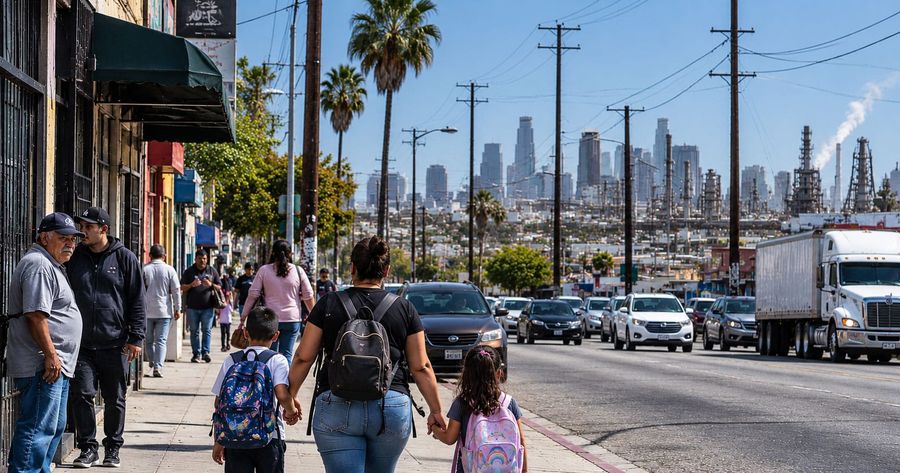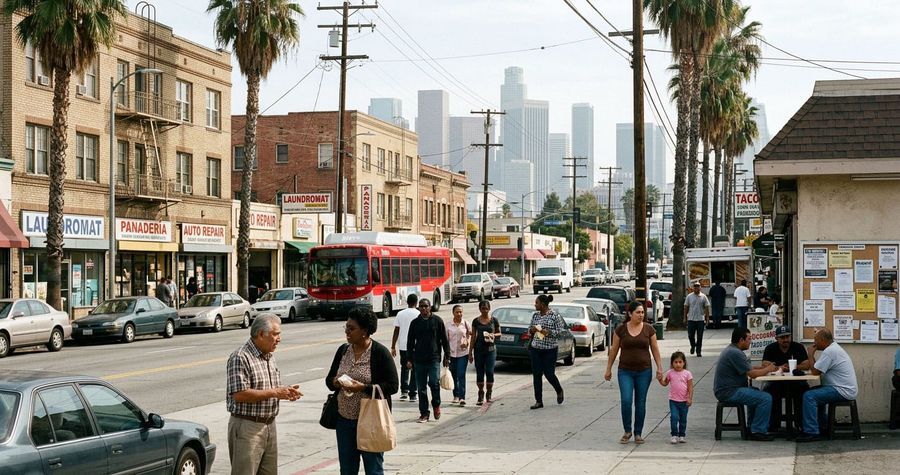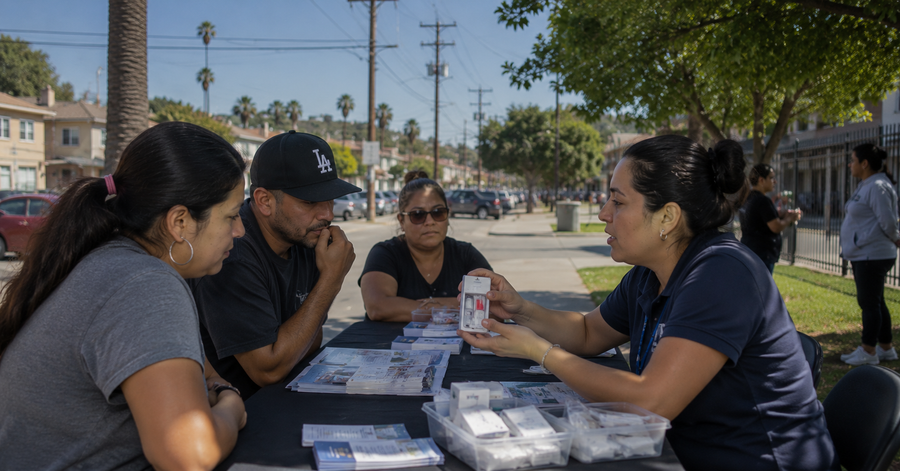
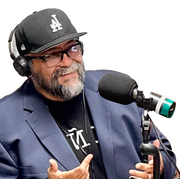
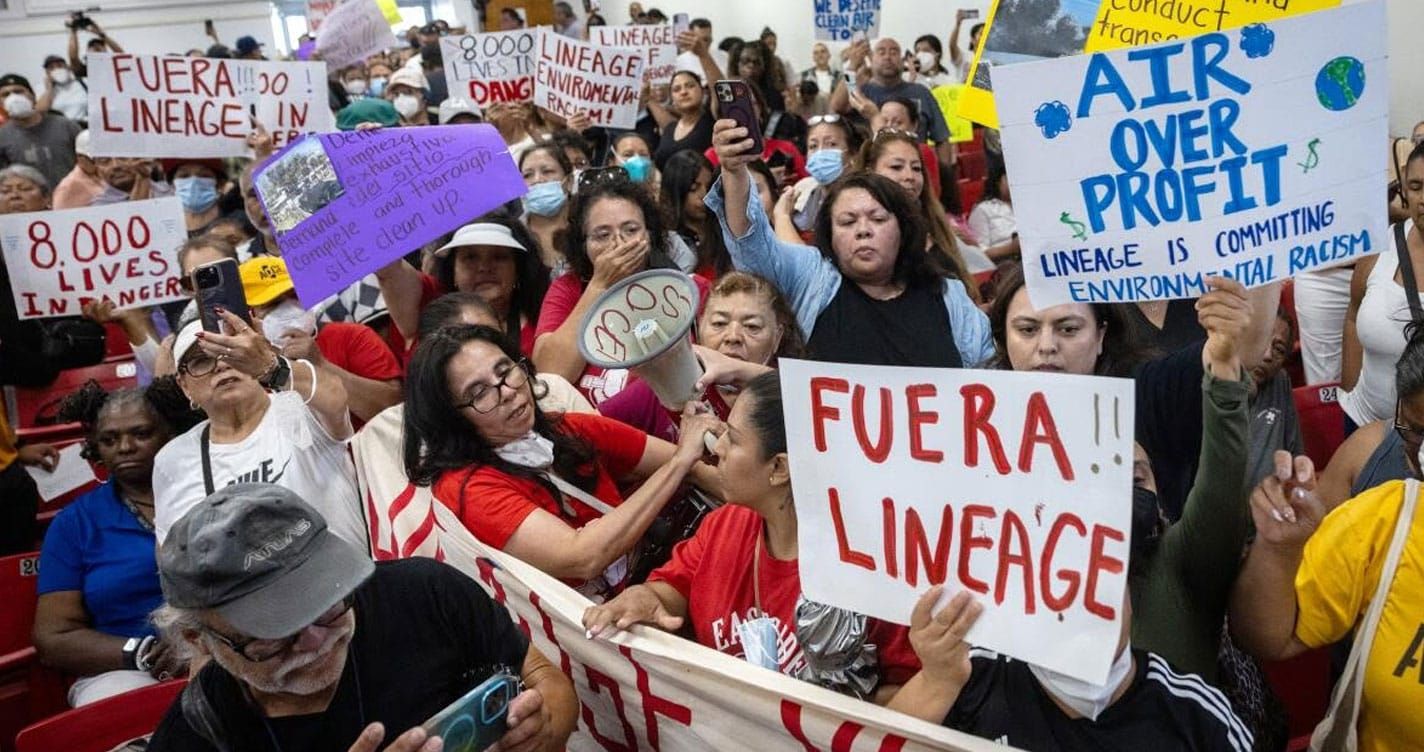
After the Lineage Logistics warehouse fire blanketed Boyle Heights and East Los Angeles with toxic smoke, The Signal brings together state and city leaders, researchers, and community advocates to examine the response. From environmental justice and public health to emergency preparedness and long-term accountability, this episode explores who was affected, what failed, and what recovery should look like after the fire. Aired live on KPFK 90.7 FM Los Angeles, on June 27, 2026.
This is viewer supported news. Please do your part today.
This is a rush transcript. Copy may not be in its final form.
TRANSCRIPT
00:00:00:00 - 00:00:10:23
MUSIC INTRO
The whole run by a handful of greedy bankers and CEOs who nobody elected. What can't possibly last.
00:00:11:01 - 00:00:14:13
MUSIC INTRO
I'm going to take my numbers and.
00:00:14:15 - 00:00:16:16
MUSIC INTRO
Make it really all we have to remember.
00:00:16:18 - 00:00:44:13
DINO
Good afternoon, and welcome to another episode of The Signal. News, information and analysis. I'm your host, Dino. And once again, I want to welcome all our listeners from L.A. to Santa Barbara, San Diego and Ridgecrest, China Lake and all our listeners online across the globe@kpfk.org. Today we have a very jam packed program, and today we're going to actually skip our headlines so that we can get right into it.
00:00:44:18 - 00:01:20:23
DINO
But we are, however, going to take a couple of minutes to show one very important headline that, is affecting our program, specifically. And that is what's happening in Venezuela. So before we begin today, we'd like to take a moment to acknowledge the unimaginable tragedy unfolding in Venezuela. The country is currently reeling from two massive earthquakes that struck on Wednesday, June 24th, and as of today, as of this morning and as of this broadcast time, the latest figures show that somewhere near 1500 people have lost their lives.
00:01:21:01 - 00:01:45:04
DINO
And according to some government accounts, as many as 40 to 50,000 remain unaccounted for. That is an unimaginable, amount of folks that, I think things are likely to become a little bit more challenging to accept in the coming days. The full scope of this disaster is still unfolding, and our hearts go out to every family and every community affected.
00:01:45:06 - 00:02:17:13
DINO
Many of you know that The signal has a close connection to Venezuela. Through our contributor and collaborator Ricardo Moreno, who joins us regularly from Caracas to help us better understand events on the ground there and has been covering Venezuela for us, since the kidnaping of Nicolas Maduro, six months ago. I am very happy to report that I was able to connect with Ricardo, a few hours after the news first broke, and he and his immediate family are safe.
00:02:17:15 - 00:03:01:08
DINO
But like many millions of Venezuelans, they have been deeply impacted by these devastating earthquakes. And today we extend our thoughts and our prayers, and our solidarity to our contributor, Ricardo. And his family and the people of Venezuela during this extraordinarily difficult time over the coming days. We'll continue, following this story closely. And next week we'll be going live to Venezuela to speak with Ricardo and get an update on the latest developments, their ongoing recovery efforts, and what life looks like in the aftermath of this historic disaster in a city and a country that was already indeed, devastated in so many other ways.
00:03:01:14 - 00:03:26:11
DINO
So to our friends in Venezuela, you're in our thoughts and you are not alone. So as we transition back home, we now turn to another story that has dominated local news. On June 17th, a massive fire broke out at the Lineage Logistics cold storage warehouse in Boyle Heights, a facility that is described or I heard described on multiple occasions as one massive cooler.
00:03:26:13 - 00:03:51:14
DINO
The fire burned for more than eight days, sending toxic smoke across the region, prompting both Mayor Karen Bass and Governor Gavin Newsom to declare a state of emergency. As this. As of this past week or as of this broadcast, signal, the fire has now been officially declared extinguished. But the communities of Boyle Heights and East Los Angeles, this crisis is far from over.
00:03:51:15 - 00:04:08:21
DINO
We're now joined by state assembly Member Mark Gonzalez, who represents California's 54th Assembly District, which includes Boyle Heights. He serves as Assembly Majority Whip and has been on the ground since day one of this emergency Assembly member Gonzalez. Welcome to the Signal.
00:04:08:23 - 00:04:10:18
MARK GONZÁLEZ
Hi. Good afternoon and welcome. Thank you for having me.
00:04:10:21 - 00:04:46:03
DINO
Yeah, well, thank you for being. I know that this has been a very busy time for you. I've certainly seen you on the screen many occasions. And, Assembly member, now that the fire is officially out. You know, I actually heard you in a different interview. Raise an important question that I immediately caught my attention. And that's this issue of, you know, allegedly, this fire in particular was started by these large industrial solar panel systems involving, what I now understand to be multiple businesses, leases, owners, contractors, subcontractors.
00:04:46:05 - 00:05:00:13
DINO
Quite an interesting mess there. What does this mean for the future of this particular solar type of industry? Are we? Yeah. Are we talking about, further insight into its regulation?
00:05:00:15 - 00:05:17:04
MARK GONZÁLEZ
Yeah. No, listen, these are very important questions that we have been discussing in the legislature. Literally as the fire prior to the fire even starting and as a continued look, I want to thank you for highlighting this. This is an important issue that really does flag, something as a wake up call, especially for our areas.
00:05:17:04 - 00:05:34:03
MARK GONZÁLEZ
And our first and foremost, want to thank our firefighters, both our county and our city of Los Angeles firefighters who stepped up, stepped in, and so many different levels of government who were able to to take this on and look at a high level. We know that this fire was started as a as a contractor was working on the solar panels.
00:05:34:05 - 00:05:53:19
MARK GONZÁLEZ
We're not certainly sure what specifically went wrong. But as lefty fire investigators, continue, to get in there, we should know more. As as for how these are permitted, it certainly is something that, is quite complex. The permitting is done at a local level, which is in conjunction with the city and with the utility provider.
00:05:53:21 - 00:06:23:01
MARK GONZÁLEZ
They're often the codes that are enforced to ensure that the solar panels do not overwhelm the electric system and are supposed to ensure fire safety compliance. Something certainly went wrong here. So we need to look into what the root of the cause of the issue is. And there's so many layers to it. On the first evening when I got there, you know, the conversation we were having directly with lAFD was you have to keep in mind this is a high rise on its side, basically one number two, it's a cold storage facility.
00:06:23:01 - 00:06:47:01
MARK GONZÁLEZ
So as we suspect in the alleged, solar panels malfunctioned or solar panels malfunction, which creates other issues as to what type of lithium ion, you know, batteries are connected specifically to that per se, but also the solar panels during the day were doing their job. They're collecting energy from the sun, and thus it was keeping, part of that cold storage on.
00:06:47:01 - 00:07:06:22
MARK GONZÁLEZ
And so when firefighters were attempting to to put that out, 45 degrees inside of the cold storage itself. Wow. So you have to be cognitive of when you're fighting that fire, protecting firefighters at all, at all ends, and knowing that they couldn't directly just go in there and put it out without putting themselves in serious harm and danger.
00:07:06:22 - 00:07:23:01
MARK GONZÁLEZ
And so that was something that firefighters really had to tackle from all edges as they continued on. You know, I got many calls from constituents who were like, can't you just put it out? And I wish it was that easy. But at the end of the day, it was about utilizing the newer tools that we have nowadays. Many folks I live near the area.
00:07:23:04 - 00:07:41:03
MARK GONZÁLEZ
We heard helicopters going back and forth every five minutes trying to utilize, the water that they could from the local reservoirs here and being creative as to how they put those out. And so that was certainly something for us to monitor. But it does does flag and highlight the fact that, you know, many folks want to transition to solar, which is great.
00:07:41:09 - 00:07:47:09
MARK GONZÁLEZ
But should something like this happen, what are we going to do to mitigate it and prevent the next Boyle Heights from happening again?
00:07:47:11 - 00:08:08:00
DINO
You know, I really appreciate the I appreciate this because, you know, I was one of those, Assembly member who at first when I saw this as somebody who does use solar, thinking, well, wait a minute, what's the big deal? Okay, you got panels. Why aren't you just, you know, toss some water in there? And as time came on, yes, many of us started hearing some of the details.
00:08:08:00 - 00:08:32:15
DINO
I mean, to your point, this is a 500,000 square foot facility. This is a massive facility that yeah, again, I understood is, an insulated facility with very unique construction because, as you pointed out, it it needs to be kept very cold. And so I appreciate you letting us know this, because I think for a lot of folks in the community, many were dumbfounded.
00:08:32:17 - 00:09:13:03
DINO
They quite didn't understand the composition of this facility and why. And it burned for for what is it, eight days, you know, Assembly member. So with that said, you know, you've been in direct contact with the governor's office and other state agencies throughout this crisis. Now that we're entering this recovery remediation phase, what resources or commitments have been made by the state to ensure that Boyle Heights, a community that has historically, had, various types of environmental and and other challenges associated with its, physiological composition, whether it's freeway constructions, Exide, things of that nature.
00:09:13:08 - 00:09:19:00
DINO
What commitments has the state made to ensure that Boyle Heights is not left in the dark, so to speak?
00:09:19:02 - 00:09:38:21
MARK GONZÁLEZ
No, I appreciate that. Listen, there's there's there's a lot of layers to that. And I'll answer your question in a second. But I think that the larger questions that we've been attempting to address for a long time are why warehouse, complexes are built so close to homes and neighborhoods. Boyle Heights is home to one of the highest asthma rate in the state, and that's because of its pollution.
00:09:38:22 - 00:09:57:18
MARK GONZÁLEZ
You know, I told folks yesterday that and I continue to to to preach that good word today that Boyle Heights is landlocked by five freeways. Right. This is certainly a wake up call for our area that we've been participating. And the air the er air purifier distributions, which I'll get to. But the state has been considering this for decades.
00:09:57:20 - 00:10:23:00
MARK GONZÁLEZ
But we also have to balance jobs, especially since a lot of our local residents also work in these facilities, work nearby. And from an oversight perspective, we need to ensure that our community designs work for us and not the other way around. And working closely with the mayor and with the governor for their leadership. You know, we did last week around this time, I was able to get Ahold of the governor and saying, look, the county and the city have submitted requests.
00:10:23:00 - 00:10:47:11
MARK GONZÁLEZ
I need you to approve, the state of emergency because that'll, allow more resources from the state, specifically from the, Cal Office of Emergency Management to be able to trickle down to our area to provide larger, more commercial air purifiers, to provide water bottles sprayed or provide, state assurance that other inspectors are going to come down and provide, mutual aid.
00:10:47:11 - 00:11:18:05
MARK GONZÁLEZ
So, look, I want to thank the mayor and the governor and many folks who have helped us. His team and I have been in direct communication as this fire evolved. But when the fire reignited and the smoke was getting worse, that conversation, you know, with the governor and his action, we declared that state of emergency. And so when we deployed that public health emergency resources, we, included in that was 5.5 million N95 respirator masks, those commercial grade air purifiers for shelters and air monitoring resources.
00:11:18:07 - 00:11:41:15
MARK GONZÁLEZ
On top of that, I have submitted an additional request for signing with the state, asking for nearly $5 million to be dedicated to the Boyle Heights Fire Relief and Fund for small businesses. All right. I've requested, $2 million to support local efforts to test and remediate the local environmental and neighborhood impacted by the fire, and $2 million to support ongoing efforts to diagnose and treat respiratory illness through mobile clinics.
00:11:41:15 - 00:12:00:00
MARK GONZÁLEZ
And so you're the first person I'll tell you this job. Excellent. We literally we appreciate the budget request on Friday. And I'm working with my colleagues to get that funding secured. As you saw in the news, we are just now, putting those pieces together to make sure that we have the resources to act in our community because, again, because of those massive warehouses.
00:12:00:00 - 00:12:21:14
MARK GONZÁLEZ
I represent the city of Montebello, city of Commerce, city of, Vernon. Those areas are heavily surrounded by not just residents, but by warehouses as well. In other areas. I mean, I love this area. I represent the fifth poorest district in the state. 70% of my district speaks another language other than English. 85% of my district are renters, and we are heavily impacted by that.
00:12:21:14 - 00:12:35:16
MARK GONZÁLEZ
And there was many conversations and and I've let you I know you have another question, but you know, there are there are many folks in our area who we're talking about. Not only that, the time length that it took to put out this fire, but in addition to the air quality, right, you know, whether or not to wear a mask.
00:12:35:16 - 00:13:10:09
MARK GONZÁLEZ
And there was a lot of confusion on that. And I want to remind folks that if you do have respiratory issues, if you do feel like you smell something and you need to be out of the house, you know, please wear a mask. The winds definitely shift and where Boyle Heights at one point around this time last week, the winds had shifted so badly that they had gone further east into the San Gabriel Valley, where my constituents and commerce and Montebello and my colleagues, constituents in the southeast cities or in Rosemead or in other cities, were experiencing far more, smoke from their, smoke in their area and experiencing more respiratory issues as well.
00:13:10:09 - 00:13:29:00
MARK GONZÁLEZ
And so we were working with the county Board of Supervisors, Hilda Solis and Janice Hahn, to make sure that they also got their resources in that area as well. And then the next day, Sunday morning on Father's Day, the air shifted again. Right there was the air quality was bad over Dodger Stadium. So, you know, we wanted to mitigate that as much as we can have taken every step to do that.
00:13:29:00 - 00:13:43:19
MARK GONZÁLEZ
And so it does truly take every level of government to get to this point. It's not done. There's so much more layers to this that we have to continue to monitor. But, you know, we have to be ready. And in case these disasters occur again and where and we know how to mitigate that situation.
00:13:43:20 - 00:14:09:22
DINO
And we'll be covering it as it continues to develop, in the coming weeks. I want to thank you. Assembly member, Mark Gonzalez, California's 54th Assembly District, Assembly majority whip for the California State Assembly. We appreciate you making the time. We thank you for the information and, Assembly member, before we head out, if our listeners are still dealing with health concerns, lost wages, property impacts, you did mention, available resources.
00:14:09:22 - 00:14:12:03
DINO
Where can they go to get more information?
00:14:12:03 - 00:14:40:14
MARK GONZÁLEZ
I wanted to go into that, and I really appreciate you flagging that. So listen, my office is available to help with all of those claims. Obviously assisting with disability payments, emergency housing. We also ourselves have already distributed over 1000 air purifiers, thanks to our folks at, Ultimate White Memorial Hospital at LA, Care Ray's, Coca-Cola bottling, and so many people who've donated and mask up and services water companies in the area.
00:14:40:16 - 00:15:04:23
MARK GONZÁLEZ
We've been able to do that. We've been able to make personal deliveries. No one gets turned away. So we want to make sure that that's first and foremost. Okay. Call my office at 21362046462136204646. Or if you have, access to social media and you send a DM to direct message to my Instagram at Asam. Mark Gonzalez, my team and I do monitor those accounts.
00:15:04:23 - 00:15:23:07
MARK GONZÁLEZ
We do take addresses. I've gotten text messages from friends that I haven't talked to, maybe ten, 15 years, whose mother lives in the area or grandma lives in the area. We were we were able to get them their air purifiers right away. And so don't hesitate to reach out. This is where your government is here for you. We are supposed to be the problem solver, not the problem.
00:15:23:07 - 00:15:24:11
MARK GONZÁLEZ
And that's what we're here to do today.
00:15:24:13 - 00:15:50:07
DINO
Fantastic. Thank you. Assembly member Mark Gonzalez from the 54th Assembly District. We look forward to having you back soon. Stay with us, folks. We'll be right back. We can take a short break. And joining us next is, L.A. City Council member Isabel, who rather, who herself has been on the front lines and represents Council District 14, and she too, has been out there providing resources and will continue to share information for us.
00:15:50:09 - 00:15:51:21
MUSIC INTRO
To work.
00:15:51:23 - 00:16:10:11
MUSIC INTRO
Towards. The signal con el Poderoso Dino Solo por copy of the car no Van Puntos city, FEMA, Los Angeles, Manchester United.
00:16:10:13 - 00:16:16:00
MUSIC INTRO
Governments in general I'm here.
00:16:16:02 - 00:16:16:22
DINO
Welcome back.
00:16:17:00 - 00:16:43:04
DINO
As we continue our special coverage examining the response to the lineage logistics warehouse fire. We've heard about the state's role in responding to disasters like this. We now turn to, more of a local response. Joining us now is L.A. City Council member Isabel Judaism. She represents Council District 14, home to Boyle Heights and several of the communities directly impacted by this disaster.
00:16:43:06 - 00:17:05:04
DINO
Her offices have been on the front lines, like council member, a rather Assembly district member, Mark Gonzalez. Through the duration of this disaster that happened, in Boyle Heights. East L.A. Council member one other. Thank you for joining us. Making the time. We know you're incredibly busy. Welcome to The Signal.
00:17:05:06 - 00:17:07:18
ISABEL JURADO
Thank you so much, I appreciate it.
00:17:07:20 - 00:17:30:12
DINO
So, Councilmember, as we shift to this bigger, broader question now of, what does a life in the Boyle Heights L.A. community look like post-fire? A couple of things come to to to to mind, right. We're talking immediate response, recovery, rebuilding and how do we prepare, if at all, ever we can. And so let me start with that first part.
00:17:30:14 - 00:17:37:12
DINO
What are the most urgent needs you're hearing from residents today? They're on location.
00:17:37:14 - 00:18:04:13
ISABEL JURADO
Yeah. Thank you for that question. I mean, we've been there since, you know, Wednesday at 235. We've been there the since the first day we heard about it and, and and really were there in the front lines and you know, at first people just wanted to know what was happening. Then they wanted supplies, for those that were sheltering in place, whether it's air purifiers or or masks.
00:18:04:13 - 00:18:32:01
ISABEL JURADO
And now people that are living clear, nearest to where the fire was are asking for things to just have their basic needs met, like water and food. Right. And as the emergency phase, you know, may be ending, the recovery is just beginning. And recovery means protecting public health, supporting families and small businesses, and making sure that these folks are not left behind to navigate this alone.
00:18:32:03 - 00:18:35:10
ISABEL JURADO
And the recovery must be shaped by the people living through it. Sure.
00:18:35:10 - 00:19:04:06
DINO
So so which actually, I'm sorry to interrupt you, council member on the recovery issue, because, like, when I think about recovery and especially what I've seen on the ground and through, our colleagues in the media, it seems as if there's two components to this immediate recovery. Right? We're talking about what are the needs now. But then there's that that mid term, you know, mid term recovery session as we start to look at a little further down the road towards a much more long term response.
00:19:04:08 - 00:19:12:13
DINO
But what are what do you see are the biggest, highlights for a mid and long term challenges facing the community there.
00:19:12:15 - 00:19:33:17
ISABEL JURADO
Right. Well, we just hosted a community meeting with the mayor's office last, I think, the two days ago, and we had a various community organizations, tenants, small businesses like, the churches, they were all there. And part of the immediate response, aside from just like food and water is, what are the health issues that people are undergoing?
00:19:33:17 - 00:19:57:20
ISABEL JURADO
What does smoke remediation look like? What about, you know, the public health crisis that's emerging because, you know, the food waste that is, you know, stinking up the air with harness and also the rats and the insects that are coming. And so, the city of Los Angeles, we are at the frontlines of this. We are the, the main, folks that are having to deal with that with the county supervisor.
00:19:57:20 - 00:20:17:18
ISABEL JURADO
And so we've been working and trying to figure out how can we get rid of the pests, what extermination or what how can we abate, you know, this, this huge nuisance. And how are we, working together on this? So the emergency department at the city has been helping the recovery process, and hosting daily meetings about it.
00:20:17:18 - 00:20:42:03
ISABEL JURADO
And so that's kind of, you know, part of the immediate next steps is how are we going to clean this up, making sure that it's not going to, ruin this community and, and become more of a nuisance than it already has? And how can we clean it up without interrupting the lives of the Boyle Heights residents who, you know, can't leave, you know, because they don't have those kind of, finances.
00:20:42:03 - 00:20:48:15
ISABEL JURADO
You know, they they live in a multigenerational home. Like, that's just not an option for them, right? Trying to figure out what that means.
00:20:48:20 - 00:21:20:17
DINO
And certainly sometimes, unfortunately, these type of disasters, you know, being able to find other accommodations is, in fact, a luxury, that, is not afforded to, to many folks, you know, it's I'm glad you brought that up about, brought up the issue of abatement. And I when I was thinking about this and watching the news coverage and, you know, went by there myself a few times, at the time, it never dawned on me that, yeah, there's going to be a gazillion insects and rats and all that kind of stuff.
00:21:20:17 - 00:21:57:07
DINO
And now that this issue is coming up, it's one of those things where you're like, wow, yeah, this makes sense. And what the hell are we going to do about it? You know, Council member, you know, you mentioned something and I want to do a quick plug for our audience so that, those of you that are staying and listening to this segment, coming up after our, council member here, we're going to have the UCLA Latino Policy and Politics Institute, talking to us or with us about a brief that they just released in which they're highlighting how 31,700 workers reside within the smoke advisory zone, and roughly 8 in 10
00:21:57:07 - 00:22:24:16
DINO
are Latino. So that will be coming up next. Council member, how do we prepare, if at all possible, for something like this in the future? Right. Every major disaster provides lessons sometimes that we are able to really hone in on what their lesson is, unfortunately, after the fact. Right. But looking ahead, what, if any, changes should the city be exploring to better be prepared for emergencies like this, if at all possible?
00:22:24:18 - 00:22:57:13
ISABEL JURADO
I mean, honestly, you know, the mayor and I are definitely aligned on this. When the emergency started, our office was standing up an emergency pretty much distribution center and hustling to find masks and air purifiers in the absence of a local emergency being declared and the statewide emergency. And so for us, I mean, it was one of the mayor's directives is how do we make sure that we have these in stock and available and the system in place so that if this happens, which we hope it never does, that we should be prepared for, that.
00:22:57:19 - 00:23:22:11
ISABEL JURADO
We already have the resources available. So when it happens, we don't have to. You know, you know, you don't have to hustle to go find the things that we need, which is where we found ourselves. And the demand was so profound in the initial days. And, starting up something, really quickly was something that was difficult to do considering everything was changing every single day, every hour.
00:23:22:13 - 00:23:48:20
ISABEL JURADO
And, every hour that went by. It was like the the challenge of the fire became different and the firefighters were dealing with it. And we were trying to figure out how do we meet our constituent needs, and given the changing circumstances. So developing that infrastructure is number one. Number two, we're trying to figure out how did this exactly happen, what were we exposed to, what was actually stored there, and what does it mean for our constituents health.
00:23:49:02 - 00:24:20:04
ISABEL JURADO
Right. It shouldn't be that after this disaster, we find out what these warehouses have inside of them when they literally been in the community's backyard this whole time. And so working on legislation and an executive director with the mayor's office to figure out what is in exactly in all of these warehouses. Right. Industrial zoning has, been coupled with multifamily, zoning in communities of color like Boyle Heights and within the, you know, the city's trash bin for way too long.
00:24:20:06 - 00:24:51:20
ISABEL JURADO
And so when things like this happen, we it's kind of like, well, you live there. You have to deal with it. That doesn't sit well with me and my constituents, because we know in well-resourced neighborhoods this would not have been allowed right. And and so trying to make sure that our Boyle Heights residents and the county residents working in coordination with the county get, you know, the response that they deserve and representation that they deserve, because this is an urgent situation that requires a proportional response.
00:24:51:20 - 00:25:15:04
ISABEL JURADO
And I think we're trying to meet that moment where, we're trying to make sure that Boyle Heights residents and the county, East L.A. residents are, are getting the response that's needed of them. Because this is such a huge you know, manmade disaster in some ways. And so trying to make sure that there's equity in the city, service and emergency response in this situation.
00:25:15:07 - 00:25:39:00
DINO
Well, you know, council member, I really appreciate the, the, the way in which you frame that proportional response and ensuring that there's equity. And speaking of which, and by the way, for our audience, initially, this program, was set up and produced by our, amazing producer team here. We were initially going to have a state, county, city, and community response.
00:25:39:02 - 00:26:07:08
DINO
Unfortunately, board, Supervisor Solis, was, not available to join us. And as such, I appreciate you referencing, at the very least, that there was collaboration from the county, although we weren't able to hear from them. With that said, council member. So as we close this out, you know, you probably heard the, Assembly member describe where folks can go to his office.
00:26:07:08 - 00:26:14:03
DINO
Where can folks go to you to get more assistance and support on the city side?
00:26:14:05 - 00:26:37:20
ISABEL JURADO
Yes, yes, yes. I mean, the county has been a super partner, CD 14 and the supervisor's office has been working together with on this specific abatement issue. And so we're definitely working together. And government works best when we all work together. But our website is kde4.la city, dawg. You can visit it for the latest updates, health guidance and resources.
00:26:37:22 - 00:26:57:21
ISABEL JURADO
Residents can call 211 to reach the county and the City of Los Angeles. Residents can also call 311 for assistance. We're working with partners to open mobile health clinics in the affected areas. I know Inner City Struggle, which is one of the nonprofits closest to that site, has a Saint Johns Clinic of the met is, doing various clinics.
00:26:57:21 - 00:27:20:04
ISABEL JURADO
And so we're doing that not just in the Boyle Heights area, but today we have it. And also I know as well, because we know that the air is traveling and, you know, neighboring neighboring neighborhoods are feeling the effects of it as well. And, you know, it does require a city county partnership, because on the street, Indiana, on one side, you're the city, and on the other side you're the county.
00:27:20:04 - 00:27:20:21
ISABEL JURADO
And literally.
00:27:20:23 - 00:27:23:07
DINO
Just across the street, right.
00:27:23:09 - 00:27:41:00
ISABEL JURADO
Now. But the smoke goes right through. So it's just like the the rent and a resident doesn't know, like, hey, which, which, which part of the border, who's responsibility am I? And so we've been working together to make sure that community members and residents can get everything that they need.
00:27:41:02 - 00:28:04:17
DINO
Wonderful. Once again, that's three one, one. You can call 311 to access L.A. City Resources. The, council member, E7, who rather for the 14th district is that CD 14.la city.org. And you can call the county line at 211 Councilmember hood, although we appreciate you making the time. We know this is, a challenging, if not very difficult time, for you and your staff.
00:28:04:17 - 00:28:22:05
DINO
We appreciate you making that time. We thank you. On behalf of The signal and our listeners for, being there. And we look forward to hearing more as things develop. And by the way, inner city struggle is coming up on one of our segments and, very shortly, to talk about, the response as well.
00:28:22:07 - 00:28:49:17
ISABEL JURADO
Amazing. And one last plug, please. The city has opened a community resource center at Costello Recreation Center in Boyle Heights. This is intended to be a one stop shop for the recovery, where residents and businesses can get information in person, connect with services, receive referrals. It's open today and tomorrow from 1 p.m. to 5 p.m.. And so that's kind of going to be our recovery center, Costello Recreation Center in Boyle Heights moving forward.
00:28:49:18 - 00:29:01:15
DINO
Fantastic. Starting at one 1:00. So as soon as you're done listening to our program or you can be on your way listening in your car, check it out. Again. Assembly member. Assembly member. I'm sorry.
00:29:01:17 - 00:29:02:10
DINO
Council.
00:29:02:12 - 00:29:22:19
DINO
Council member. Is someone who rather from the city of Los Angeles. We thank you very much for making the time. Stay with us as we go to our, our friends at LP at UCLA. And the report, coming up on who is impacted by this disaster. Stay with us. We'll be right back.
00:29:22:19 - 00:29:52:10
DINO
Welcome back as we continue our special coverage on, the lineage fire disaster. And it is really a disaster, folks. We now go to, a special brief, a special report that was released by the UCLA Latino Policy and Politics Institute. A report released a rapid response data brief that was titled or that is titled The Lineage Logistics Fire in Boyle Heights.
00:29:52:12 - 00:30:19:22
DINO
Who lives and works in the Smoke Zone. It's a sobering profile of a community that was already overburdened before the fire, ever. Even started. Joining us now is Doctor Michael Mendez, associate professor and chancellor's fellow in the Department of Urban Planning and Public Policy at UC Irvine, and Andrew Carnegie Fellow and a contributor to the UCLA Latino Policy and Politics Institute.
00:30:19:22 - 00:30:26:19
DINO
Rapid response brief. Doctor Mendez do we haven't talked about this on the line?
00:30:26:21 - 00:30:31:00
DINO
It looks like we might have dropped him.
00:30:31:02 - 00:31:11:05
DINO
So yeah. Let me give you a little background on what the brief is stating here. So according to this brief released, earlier this week, at least 31,700 workers living inside the smoke advisory zone. Are are being impacted, with about 81% identifying as Latino. Nearly half of residents workers earn below L.A. county's very low income threshold. We're talking about $3,300 a month or less, which falls way below the county's again, low income threshold.
00:31:11:07 - 00:31:47:14
DINO
Over half the residents may have limited access to paid leave, health coverage or remote work. The brief finds that 58% of workers age 30 and older are in the zone and have high school diploma, or less so this is kind of what we're dealing with here. So now joining me is Doctor Michael Mendez, associate professor chancellor fellow and Andrew Carnegie fellow from the School of Social Ecology, Department of Urban Planning and Public Policy at UC Irvine and a contributor to UCLA's LP Rapid Response Brief.
00:31:47:16 - 00:31:50:19
DINO
Doctor Mendez, welcome to the signal.
00:31:50:21 - 00:31:53:11
MICHAEL MENDEZ
Thank you. Good afternoon. It is a pleasure to be here today.
00:31:53:13 - 00:32:13:00
DINO
So, you know, I was I was given the audience a little background on some of the key findings of the brief. And, you know, we'll power through some of these, for the next couple of minutes, but it found that at least 31,000, plus workers reside within this smoke advisory zone, with roughly 8 in 10 of them being Latino.
00:32:13:02 - 00:32:19:05
DINO
What is this? What is this telling us? About who the vulnerable folks in this community is?
00:32:19:07 - 00:33:02:20
MICHAEL MENDEZ
Yes. I think what's important to remember is that the fire itself in the lineage warehouse did not create these, vulnerabilities. We need to really understand about the pre disaster of marginalized status, Latino workers and residents in the area. And less than a month ago, there was another environmental disaster, a massive oil spill that sent thousands of gallons of, petroleum through the streets of Boyle Heights in East Los Angeles and the existing, environmental inequalities and injustices from freeways, heavy, manufacturing and, and whatnot that has put this, community, at a disadvantage in terms of environmental health.
00:33:03:00 - 00:33:22:14
MICHAEL MENDEZ
And this disaster from the lineage fire really underscores, how it can deepen some of these inequalities. So, workers and particularly Latino workers in this area are the essential workers that keep our economy going. And they're being put at further risk, because of the lineage fire.
00:33:22:16 - 00:33:46:09
DINO
So and I'm glad you brought that up, because indeed, we're talking, the oil spill, which, yes, happened earlier this year. But, you know, even before then, this community has a history of, you know, I think back to the Exide disaster and the millions of people that were affected and impacted by that. Nearly half of residents, and workers actually earn below L.A. county's very low income threshold.
00:33:46:09 - 00:33:54:19
DINO
This was, one of the key findings in this brief that you contributed to, Doctor Mendez. Tell us more about the, low income threshold issue.
00:33:54:21 - 00:34:38:08
MICHAEL MENDEZ
Yes. About half of these workers earn about, less than three, less than $3,000 a month, which falls well below the L.A. County's very low income household, threshold. So when you layer these economic, precarity on top of the public health in an environmental emergency, it only deepens old inequalities. And just to think, some of the equipment that these workers and the residents need, air purifiers, N95 masks and, and and 100 masks, which are even better, respirator masks, for the stench and the toxic, pollutants that they're exposed to if they're not being donated, that's going to cost a lot of money for very low income households.
00:34:38:09 - 00:34:57:21
MICHAEL MENDEZ
So these are added layers that individuals, are experienced, particularly workers, that many of them had preexisting health issues from forms of cancer to most importantly, respiratory, illnesses that would be further exasperated by, these toxic conditions and smells as well.
00:34:57:22 - 00:35:24:19
DINO
You know, I understand from the brief that, at least 58% of the workers are age 30 and older who are at age 30 and older in the zone, have a high school diploma or less, in fact, are often associated with reduced access to paid leave, health insurance, and the ability to work remote, like many of us have, which is today, is a very common thing, but indeed continues to be a luxury for many of us.
00:35:24:21 - 00:35:32:07
DINO
What does a community wide emergency like this do to workers? In those situations.
00:35:32:09 - 00:36:00:06
MICHAEL MENDEZ
It puts it at better risk, and it puts them in a situation where it's much harder to recover and get back to, where they were. They were already living with, a lot less resources and social safety net. Nets, like you mentioned, unemployment insurance, health care as well. And not just, not also factoring in that anywhere between 10 to 25% of the population is likely to be undocumented.
00:36:00:10 - 00:36:35:07
MICHAEL MENDEZ
So they're further marginalized from getting the necessary resources to thrive. While the UCLA, LP study did not look at the direct, work, place, benefits, it really does argue that we need stronger workplace protections, such as paid lead, clear employer guidance during smoke events, and accessible health care. We just seen since the subsidies, from Obamacare disappeared, that, nearly three I believe it's about millions of people, 3 million or so, have left those affordable health care plans.
00:36:35:12 - 00:36:42:17
MICHAEL MENDEZ
So environmental emergencies, other types of emergencies like this only further entrenches, these types of inequalities.
00:36:42:19 - 00:37:10:06
DINO
So, Doctor Mendez, as we as we begin to wrap up, you know, one of the other key and big findings here, was that nearly 9 in 10 jobs in the zone are held by commuters, meaning the fires impact reach is far beyond Boyle Heights. We're talking folks who maybe now are going to be impacted for health reasons, for other physical ailments that come as a result of this, maybe not having access to their vehicles even.
00:37:10:12 - 00:37:35:04
DINO
And, you know, I was talking to our previous guests, one of the council members here from the city of L.A. who talked about the importance of proportional, response and ensuring that there's equity in this game. But with nine out of ten jobs in the smoke advisory zone filled by people commute, in from elsewhere or other or to other locations, this makes it really a regional crisis, not a just a neighborhood.
00:37:35:04 - 00:37:43:02
DINO
One. How should that understanding reshape the public policy response from the city, county, and state?
00:37:43:04 - 00:38:03:03
MICHAEL MENDEZ
Well, definitely. We often think that these disasters are not going to touch us or affect us because we are protected or far away or wealthier. And we we often see places like Boyle Heights being sacrificed. Zones where we place all the environmental bads and environmental privileges are out in other parts of the city in the west of LA.
00:38:03:05 - 00:38:27:22
MICHAEL MENDEZ
But the fact of this fire and the previous fires in California show that smoke transport, port can reach wide, SLAs of, the region and for example, the 2020 fires that we had in California, it reached not only Washington DC and New York, it reached Western, Western Europe because that's how far and how deadly the smoke can be, can reach Western Europe.
00:38:28:00 - 00:38:58:00
MICHAEL MENDEZ
So that tells us that this toxic soup of burning structures, chemicals, food, studies have shown that that type of toxic soup from wildfire smoke, or and burning buildings can be several times more harmful than breathing, car exhaust. So we have to be extra careful. And one thing I would really encourage the city, they did have, two years, 2 or 3 years to establish the Climate Emergency Mobilization Office, which experienced budget cuts.
00:38:58:00 - 00:39:21:05
MICHAEL MENDEZ
And I hope that could be one avenue where we're working with some of the more more under-resourced and disadvantaged communities to prepare them for the inevitable next disaster, because more has to be done. There was a real lack of planning by the city, county and even the state around these environmental emergency. For communities like Boyle Heights and predominantly low income and Latino doctor.
00:39:21:05 - 00:39:49:21
DINO
Michael Mendez, associate professor, Chancellor's Fellow, and Andrew Andrew Carnegie Fellow from the School of Social Ecology, Department of Urban Planning and Public Policy at UC Irvine. Doctor Mendez, we're going to work on that title for next time. We have you on, Doctor Mendez, where can folks learn more about your work? I will pitch the, the website for the UCLA Latino Policy and Politics Institute where you can review this this, this brief@latino.ucla.edu.
00:39:50:01 - 00:39:53:19
DINO
But, give us your website as well. Doctor Mendez.
00:39:53:21 - 00:40:00:12
MICHAEL MENDEZ
It's, ww dot Michael. Mendez. Dot com. UC Irvine.
00:40:00:16 - 00:40:27:03
DINO
At UC Irvine, we hope to have you back soon. Doctor Mendez, thank you for being with us on the signal. This is an issue that's far from over. And, folks, stay with us. We're going to take a brief break and come back with inner city struggle. One of the communities on the front lines, Henry Perez, executive director of Inner City Struggle, joins us shortly, along with one of the residents of the Boyle Heights area, former state assembly member Wendy Carrillo.
00:40:27:03 - 00:40:27:19
DINO
Stay with us.
00:40:27:19 - 00:41:13:04
DINO
Welcome back to The Signal. I'm your host, Dino, broadcasting live on Kpfk Los Angeles, 90.7 FM, 98.7 FM in Santa Barbara, 93.7 FM in San Diego and 99.5 FM in Ridgecrest, China Lake and of course all across the world on kpfk.org. You know, this, this episode, we've been focused on this, you know, environmental, political, socio physical disaster that, has become this, this lineage warehouse fire, which itself, became or started off with a mischaracterization and labeling as folks began to call it, the Boyle Heights fire.
00:41:13:06 - 00:41:40:19
DINO
And indeed, this was not the Boyle Heights fire. This was the lineage warehouse fire, a private corporation that is housing or was housing rather a, half 1,000,000 square foot facility, a big cooler, as has been described by not only our guests, but many authorities across the state. We heard from the state representative, Mark Gonzalez, from the state Assembly.
00:41:40:21 - 00:42:08:09
DINO
We heard from, the city councilperson, Councilwoman Isabel Jurado. As previously mentioned, the county supervisor, Hilda Solis, unfortunately, was not able to join us. But now we're going to go to, I think, what's most important and what our audience really, really needs to pay attention to, and that's our community voices, the organizations on the front line and the local advocates, residents and activists who are there as well.
00:42:08:10 - 00:42:34:10
DINO
So joining me now is Henry Perez, executive director of Inner City Struggle, one of the community organizations that, again, has been there since the beginning, has been there way before and has been fighting the good fight. When it comes down to the various issues that directly, impact the communities of East L.A., Boyle Heights and former state Assembly member Wendy Carrillo, who herself lives in this community and was also directly impacted.
00:42:34:12 - 00:42:37:09
DINO
Welcome to you both.
00:42:37:11 - 00:42:41:19
HENRY PEREZ
Thank you. Dino, thank you for having me on. Thanks for having us.
00:42:41:19 - 00:43:01:21
DINO
Great. Henry, let me start off with you. You've been on the ground throughout this crisis. Your organization has been there for years prior to this, on this later iteration of this disaster. What? You know, what did you witnessed? Walk us through that first impact when you realize, wait a minute, here we go again. Was that the.
00:43:01:21 - 00:43:04:16
DINO
Yeah. Walk us through that.
00:43:04:18 - 00:43:39:22
HENRY PEREZ
Yes. You know, we were just very concerned when all of a sudden we started seeing this huge, plume of smoke, rising, very close to our headquarters. We are less than a mile from where the fire, the lineage logistics warehouse fire, has taken place. So, you know, we were wondering what was going on, and, right away, we saw, community that was, confused, that, was searching for, not just, response, but for answers and information.
00:43:39:23 - 00:44:05:02
HENRY PEREZ
And then as the days, went on, a community that really, became desperate and was feeling, abandoned, because, information and, you know, emergency equipment was not getting to them, quick enough. So that, is, what we are seeing and now, there's a frantic search for air purifiers in the community.
00:44:05:04 - 00:44:27:18
HENRY PEREZ
There's concerns about the long term effects of the smoke and the toxins that, has filled the air and has been inhaled by, the residents. And now that we are in this post-fire, you know, period, in terms of the actual fire burning, there is a lot of concern about the cleanup and the rotting food and the vermin, situation that is happening in the area.
00:44:27:20 - 00:44:49:16
DINO
You know. Yeah, that was brought up and it caught my attention, you know, as I was sharing with one, one of our previous guest, the councilwoman, or maybe it was. Yeah. No, I think it was councilman. You know, it was one of those things that it just never dawned on me as much as, my producer teams here were preparing for this program and generating all this research and information so that we could come up with, you know, a better understanding.
00:44:49:16 - 00:45:07:06
DINO
And it just kind of hit me. I was like, wow, that makes so much sense, right? And of course, you start seeing some of the footage and it becomes even more concerning because, it opens up to a whole other set of problems. Miss Wendy Carrillo, as a former state assembly member and lawmaker, you live in the community.
00:45:07:06 - 00:45:28:04
DINO
You were directly impacted. Walk us through that first part of the experience when you first realized, wait a minute, this is not just your average fire down the street where you smell, something and say to yourself, oh my God, there's a fire. No, no, this was much bigger. Walk us through that first initial moment.
00:45:28:05 - 00:45:50:21
WENDY CARRILLO
Well, it's, it's actually quite devastating because, you know, while the lineage fire is on commercial property in the city of Los Angeles, the people right across the street are in unincorporated East L.A.. And the response has been very different than the conversations that you've had with your other guests from the city of Los Angeles and the coordinated effort within the city.
00:45:50:21 - 00:46:17:23
WENDY CARRILLO
Family calling at the Boyle Heights fire created a lot of confusion in terms of the location and impact, because it erased the community of East L.A., who does not have any local representation and relies solely on the county. I was there first day, second day, third day. I saw, I spoke to residents that I've represented for close to eight years in East Los Angeles, not have any information from the county.
00:46:18:01 - 00:46:48:07
WENDY CARRILLO
And so, again, in perspective, this all happened the day before Juneteenth. Then there's a federal holiday. Then there's the weekend. But environmental disasters and hazardous air smoke doesn't take a break. And it doesn't care whether you live in the city line or the county line. And so it's just the the amount of, of, I don't know, just lack of support for East Los Angeles residents in the early days was very impactful and very disappointing.
00:46:48:07 - 00:47:10:01
WENDY CARRILLO
And however, now as more organizations have gone together, like Inner City Struggle and Proyecto Pastorale, not having it, having a very clear, community focused narrative of we're not turning anybody away based on a district line or a map. Sure, residents of East Los Angeles deserve that same kind of support and representation.
00:47:10:05 - 00:47:37:08
DINO
And, that actually, I'm glad you brought that up. Henry Perez, executive director of Inner City Struggle, your organization, I understand, has partnered with Saint John's Community Health to get masks and purifiers into the hands of residents. And your experience, especially in the days following the initiation of this of this disaster. What were the gaps that your organization, sought to fill that you identified and sought to fill?
00:47:37:12 - 00:48:00:02
DINO
I know that we're talking about, you know, to win this point, it seems as if there was maybe some gaps that came as a result of confusion. Communications, or just overall leadership or lack thereof. Your partnership with Saint John's give us a description of what is going on. How has the community responded where others have failed?
00:48:00:04 - 00:48:24:04
HENRY PEREZ
Yes. So we have to understand that, the location of the fire is in a very, secluded and, segregated part of the city. And, like, Assemblymember Carrillo mentioned, you know, right next to, the county as well, and there are no nearby hospitals, in that area. There isn't access to, major hospitals.
00:48:24:04 - 00:48:46:14
HENRY PEREZ
Those are in other parts of the city. So we, being less than a mile away, partnered with Saint John's to bring a mobile clinic onto the site to provide a lung and health screenings for the residents that have been impacted by the fire. We are also distributing masks and air purifiers. But, we we need more.
00:48:46:16 - 00:49:08:01
HENRY PEREZ
And, the city, is providing, air purifiers and masks, but, what we have been uplifting is that it needs to come much, much closer to the site and the location of the fire. It needs to go where ground zero is basically where the lineage, logistics, warehouse fire. We have a community that lacks transportation means.
00:49:08:01 - 00:49:33:22
HENRY PEREZ
Sure. They are walking to our facility. They're, you know, with walking, elderly people walking, with, walkers and canes, getting their, on their own, and, and arriving to our place, thankful that we have air purifiers, so close to them. And, unfortunately, we don't have enough.
00:49:33:22 - 00:49:55:01
HENRY PEREZ
And when we run out, you just see the desperation in their faces. It's, like, so heartbreaking when we, run out of the air purifiers. We're still continuing to try to get our hands on more air purifiers. But the city and the county need to bring their resources much, much closer to the site.
00:49:55:03 - 00:50:17:18
DINO
You know, coming back to your assemblymember, Wendy Carrillo, you've been an outspoken member of the community early on, ensuring that the narrative, addressed this issue that, Henry just brought up, which was, you know, this issue, that this is not a Boyle Heights fire. This was a lineage logistics fire. Again, not Boyle Heights fire.
00:50:17:18 - 00:50:20:10
DINO
Why was that important?
00:50:20:12 - 00:50:47:00
WENDY CARRILLO
Well, naming it is also gives people an idea as to who's responsible. It wasn't the community of Boyle Heights that lit the fire. It was in the community of East Los Angeles that lit the fire. It was Altus Power that operates the rooftop solar at the lineage Warehouse cold storage facility. Let's call it what it is. This is a corp, two corporations that have failed our community.
00:50:47:02 - 00:51:10:03
WENDY CARRILLO
And we I was very adamant in making sure that media and others and, and our elected officials are calling it the lineage fire so that we address who is actually responsible and who is responsible to community. The fact that Altus Power has not said anything publicly about this, and the focus has been on lineage is is a problem.
00:51:10:04 - 00:51:37:05
WENDY CARRILLO
And so what Henry is saying is absolutely correct in terms of the distance of support has not been at the epicenter. I've spoken to residents I canvased this is right on Union Pacific, Hicks and Alma, the communities right underneath the smoke. Haven't heard from anybody. They haven't received air purifiers. You can't have somebody that's wheelchair bound or an elderly person go to a church.
00:51:37:05 - 00:51:38:01
WENDY CARRILLO
Or city.
00:51:38:01 - 00:52:01:00
WENDY CARRILLO
Terrace park, or then go to a city resource center and then be turned away, which has been documented now, which happened at Council District 14. And so we have to be able to hold our elected officials accountable for making sure that community and those that are most vulnerable have access to resources. The smoke that was there, the toxic air.
00:52:01:00 - 00:52:19:16
WENDY CARRILLO
People were sick, I got sick, I had a headache for two and a half days for being on the ground for a few hours. I can only imagine what those families that are literally at ground Zero have had to breathe for the past eight days, that the that the fire was, was active. And as firefighters try to put it out.
00:52:19:18 - 00:52:38:23
DINO
Henry coming back to you. And as we begin to wind down on the hour and this, by the way, has been, an incredible amount of information, as we, bring this topic to the air, we're going to continue. By the way, I want to make sure that our audience knows this is something we're going to be covering on a regular basis.
00:52:38:23 - 00:53:09:19
DINO
In fact, just before broadcast, I was I had an opportunity to connect with other community members, including, Christy Hernandez, chairperson, the Maravilla Community Advisory Committee, who will be joining us next week. And we'll be continuing to cover this issue for the coming weeks so that we ensure that not only the community has the available information, news and analysis, but also hold those in power accountable so that Boyle Heights East Los Angeles does not fall by the wayside.
00:53:10:01 - 00:53:38:12
DINO
And before I ask what that means, Miss Cardio, let me go back to you very quickly. Henry, you know, Boyle Heights has lived through the Exide disaster. I mentioned that earlier decades of industrial pollution and challenges associated with everything from the 710 freeway, fight, word and so forth. So, you know, for inner city struggle, what's the path forward here?
00:53:38:12 - 00:53:55:13
DINO
What are we talking about in terms of recovery? Not just from this disaster, but how do we start to think about what is in store for the future of these communities so that we can prevent this from happening in the first place?
00:53:55:15 - 00:54:18:00
HENRY PEREZ
Yeah. Well, we need to ensure that once the, the media and the cameras are gone, that we continue to put pressure on, like, Assemblymember Carrillo, as mentioned on our elected officials, to treat this, this, post fire period with urgency, the cleanup and the treatment of the residents house. For us, are the priority right now at this time, right.
00:54:18:02 - 00:54:41:23
HENRY PEREZ
But as an organizing group, we're going to circle back with all the residents that we have been supporting during this emergency and get them involved in our organization so that we can build greater community power and engagement, to prevent these situations from happening again in our community. One way of doing that is by getting involved in, the development of community planning.
00:54:42:01 - 00:55:03:06
DINO
Oh, it looks like we might have dropped that call. Well, let me give you the last word. Wendy, as we. It looks like we might have lost that call. Wonder, are you there with us? It looks like we might have lost both calls. Well, you know what? I do apologize for that. Not sure what quite happened there, but let's,
00:55:03:08 - 00:55:39:05
DINO
I want to. You know what? Take this time to recap and, prepare to close this program. You know, today has been one, a program with a lot of information, this disaster that happened in the Los Angeles, Boyle Heights community, is something that will have repercussions for, for years, to come. So with that said, I want to thank all my guests, starting with, state representative, Mark Gonzalez, city Council member Isabel Corado.
00:55:39:07 - 00:56:02:14
DINO
The folks at LPI and UC Irvine from, for bringing us the special brief and of course, my guests, Henry Perez from Inner City Struggle and Wendy Gaudio, former state assembly member and lawmaker. Today we heard from the state Capitol, from City Hall, from the research institution institutions, and from the streets of Boyle Heights and East Los Angeles.
00:56:02:16 - 00:56:25:14
DINO
What ties it all together is this the communities that are asked to bear the most too often receive the least in return. Accountability, resources, protection. That is what is at stake here. The signal will stay on the story. I want to thank all my listeners at KPFA 90.7. If I'm a cyclist and streaming@kpfa.org. I'm your host. You. Stay informed.
00:56:25:14 - 00:56:31:14
DINO
Stay engaged. Thank you to our crew Adela, Barbara and Sly River a stay tuned. The car show is next.