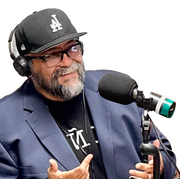
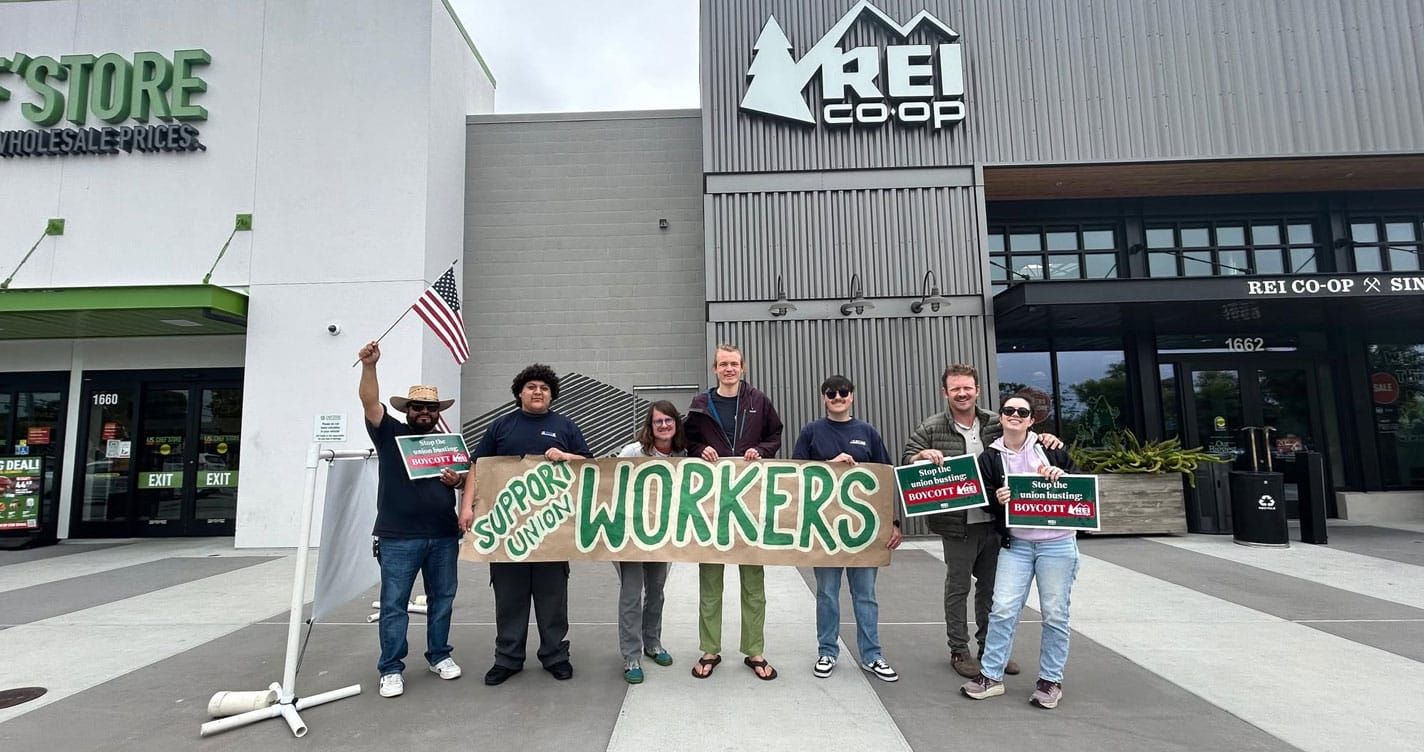
This episode of The Signal explores two defining struggles shaping Los Angeles and beyond. First, REI workers discuss the nationwide boycott and labor fight unfolding inside the outdoor retail cooperative as unionized employees push for contracts, wages, and accountability. Then mayoral candidate Rae Huang joins the program to discuss housing, affordability, homelessness, public safety, transit, and competing visions for the future of Los Angeles. Aired live on 90.7 FM KPFK Los Angeles on May 16 2026.
This is viewer supported news. Please do your part today.
This is a rush transcript. Copy may not be in its final form.
TRANSCRIPT
00:00:00:00 - 00:00:10:12
MUSIC INTRO
Home run by a handful of greedy bankers and CEOs who nobody elected. What can't possibly last?
00:00:10:13 - 00:00:14:02
MUSIC INTRO
I'm going to tell you a number of things.
00:00:14:04 - 00:00:18:09
MUSIC INTRO
But you really only have to remember you're a two words.
00:00:18:11 - 00:00:50:10
DINO
Hey, you. Welcome, Los Angeles. Welcome to another episode of The Signal. News, information and analysis here on Kpfk. No. Punto FM in Los Angeles and 98 point 7 a.m.. And that rather than Santa Barbara, 93.7 FM San Diego and 99.5 FM in Ridgecrest, China. Like by the way, a little fun fact about the Ridgecrest, China League. I don't know if you knew this.
00:00:50:12 - 00:01:20:10
DINO
I remember a couple of months back me saying something about Ridgecrest, China Lake and where exactly that is and doing this, you know, it's out in the Mojave Desert. I want to shout out to our, our listeners and supporters out in the China Lake area. And it was named by the Chinese railroad workers who were harvesting borax, all in the dry lake beds.
00:01:20:12 - 00:01:46:20
DINO
And it eventually evolved the region into this naval air weapon station and eventually a top secret site that did this. I didn't know this is a part that blew me away. Apparently was a top secret site that helped test the explosives and aerodynamics for the Fat Man, the big bomb that we now know came from the, what was that?
00:01:47:02 - 00:02:08:22
DINO
Called the Manhattan Project. Who knew? I had no idea. So shout out to our our folks, our supporters, KPFA listeners out in the Ridgecrest, China Lake area and all across Southern California. And, I do want to also give an important update before we get into today's program. I was at a policy conference this week.
00:02:09:02 - 00:02:28:14
DINO
SLI and, one of the listener supporters came up to me and Richard, shout out to Richard. Thank you for supporting not only KPFA, but, yours truly and The Signal and, you know, comes up and he says, are you Dino? And at first I'm literally like, I don't know if I should say yes, but I said, yeah, maybe there's one.
00:02:28:14 - 00:02:52:04
DINO
I recognize your voice. Okay. Because I and I got a question for I said, sure. What is it? So what happened to all, your producer nella? You're joking about her not being around. I said, you know, she had the audacity, Richard, to take vacation. Now, Mahuta, how does she think she is? And but I'm happy to say that my producer, nella, is back in the house.
00:02:52:04 - 00:03:16:15
DINO
The prodigal daughter has returned. And, Richard, nella was very concerned that, wait a minute. You know, he keeps referencing her and she's not around and she's gone missing. No, indeed. Nella is back in the house, and today we have a great, program lined up for you with two very important, stories that speak directly to the larger political and economic moment that we're all living through.
00:03:16:17 - 00:03:54:12
DINO
You know, we're going to take a look at this growing national boycott in labor dispute involving r e I, you guys know about, about this r e I r e I is the, the big sporting goods, recreational equipment. Indeed. That's the name of it. R e I recreational Equipment incorporated. It's been around for 88 years, and, there's a dispute over at the r I, operation where workers across the country, have called on a boycott just as it launches its, big anniversary sale that was called yesterday.
00:03:54:14 - 00:04:19:15
DINO
Sly. And, we're going to have a guest, one of the worker, organizers, representatives join us, shortly. And then we're going to have, another special guest, somebody that I've been looking forward to having a conversation with. As we turn to the Los Angeles political scene and the future of City Hall with mayoral candidate, Ray Huang.
00:04:19:17 - 00:04:40:04
DINO
As we discuss her candidacy now in the final stretch, as we move towards what is going to become a historic, election in L.A. for the mayor, you know, and a quick thought about that. Why? You know, as we give props to our friends over at Ridgecrest, China Lake and San Diego and Santa Barbara, you know, why should I care?
00:04:40:04 - 00:05:05:18
DINO
I live in Santa Barbara. I live in San Diego. And here's the thing, folks. You know, L.A. politics is the heartbeat of Southern California because the region serves as an economic demographic, an infrastructure anchor for the entire region. Decisions made in L.A. oftentimes dictate the flow of things like trade, housing development, policy, innovations that ripple across neighboring counties.
00:05:05:18 - 00:05:38:19
DINO
I can tell you, as somebody who's done work, and public policy for 20 plus years, 30 years, actually, you know, when there's policy shifts that happen at the city of L.A., you oftentimes see echoes of that at the county of L.A. and that, in turn, does and will influence other counties and, other cities. So that is why sometimes in order for us here at the signal we do, we have brought in a lot of, folks around city politics issues.
00:05:38:21 - 00:06:07:22
DINO
And of course, senatorial gubernatorial issues and, you know, congressional candidates as well as a programing note. I want to remind everybody that, today and, for the remaining, what, maybe another week or two, I think, we are still in fun drive mode. And I want to encourage all of you to please continue to call (818) 985-5735 option two.
00:06:08:00 - 00:06:31:15
DINO
Or, you know, my personal favorite online at kpfk.org and donate where I even as somebody who has a program here, will oftentimes listen to some of my colleagues who I'm covering, for example, right now, you know, I was listening to this great interview on the nature of, of law in the Confederacy, and I was like, man, this is I want to check this book out.
00:06:31:17 - 00:07:01:03
DINO
You know, so, yeah, keep your corgi and we'll continue to, elevate the wonderful programing and the wonderful opportunities to support this program, on this important station that, continues to be commercial free, truly independent, commercial free public radio, that without you, the audience, the listener, we wouldn't be here now for 60 years. KPFA dawg.
00:07:01:05 - 00:07:40:20
DINO
Please donate. So with that said, let's get into it, folks. I'm excited again about this important topic. Up today, as RCA launched its annual anniversary sale, workers across the country are launching a nationwide boycott and escalating labor action against the outdoor retail giant unionize RTI again, this, RTI stands for Recreational Equipment Incorporated, first founded back in 1938, in Seattle, when, these two cats, Lloyd and Mary Anderson, pooled the resources of their 21 homies climbing homies.
00:07:40:22 - 00:08:07:10
DINO
Who came together and wanted to import high quality European ice axes. Go figure. Right. An ice house. We're going to go climb a mountain made of ice and let's get a better ax. And today is the largest consumer cooperative in the US, boasting over 25 million members and operating more than 150 stores nationwide. And for those of you who heard it and are saying, consumer co-op.
00:08:07:16 - 00:08:08:02
DINO
Right.
00:08:08:02 - 00:08:10:12
MUSIC INTRO
These are.
00:08:10:14 - 00:08:32:18
DINO
They. They operate across a variety of different industries. Some most, more common include things like grocery and retail. Some of you, may be a part of a credit union, which functions like a bank, but is owned by their depositors. There's utility co-ops, housing co-ops, well, r II is one of that, and it's an organization.
00:08:32:18 - 00:09:16:16
DINO
It's a company that has long, prided itself. And having greater, stronger moral and ethical values. And yet here we are. The boycott comes after recent negotiations in Chicago ended without meaningful progress. According to union representatives, I failed to present serious proposals until the final day of bargaining and refused to send key decision makers to the table. Workers are now calling on consumers, customers and co-op members to stand, with employees demanding fair contracts, sustainable scheduling, better wages and democratic accountability inside the company.
00:09:16:18 - 00:09:45:12
DINO
The conflict also has raised larger questions about the future of labor organizing and otherwise progressive branded companies like this one. The market themselves around social values, sustainability and community, issues. Right. So as we turn our attention to this story, this boycott comes, again after the negotiations ended in April, and indeed, I believe it started just yesterday.
00:09:45:14 - 00:10:08:10
DINO
And it's going to go through the duration of rise, anniversary sale. So to help us break this down, joining us now is Sam. Sam Wirt. So I hope I'm saying that's right. Sam from RTI Berkeley, one of the unionized stores participating in the national boycott efforts. Sam, welcome to the signal.
00:10:08:12 - 00:10:10:10
SAM WIRT
Hi. Thanks a lot for having me.
00:10:10:12 - 00:10:34:12
DINO
So, Sam, let's let's take it from the top, right. For listeners who may just be hearing about this, I know that there's, there's at least I want to say ten stores participating, and Southern California doesn't have an I, if I remember correctly. But we still thought it was very important in solidarity with worker rights worker issues, a topic that we cover here extensively, in fact.
00:10:34:14 - 00:10:48:01
DINO
But for those of us that are just hearing about this, right, for the first time, rather what exactly is happening right now between RTI workers and the company, and why did workers decide to launch this boycott?
00:10:48:03 - 00:11:27:00
SAM WIRT
Yeah. So, what's going on? We have currently 11 unionized stores, two in California, including Berkeley and Santa Cruz. And then, San Diego actually just filed to hold their union election, at the end of this month. So hopefully we'll have 12 stores by the end of this month. And the process that we're at right now is we are near the end of contract negotiations, you know, like just to throw out a random number, 95% or so, I would say of the contract language is already written, and we're at the point of where we're getting down to brass tacks a little bit, and we're talking about wages and benefits and RPI has been
00:11:27:00 - 00:12:00:06
SAM WIRT
coming to the table for the last few negotiating sessions and essentially insisting that the unionized stores should have to take less in terms of pay and benefits than nonunion stores. And that's just something that we can't accept. So the boycott is designed to bring them back to the table, to get them to negotiate in a real serious way to to bargain in good faith with us, and meet us so that we can finally get this contract, this first contract, which is now four years in the making, get these negotiations resolved and get us back to work.
00:12:00:07 - 00:12:25:18
DINO
Now, Sam, one of the things that caught a national attention, in fact, I think it might have been one of the issues that first caught my attention, were reports about some, some of the some of our Ice bargaining proposals, including restrictions on organizing activity, public communications, from the workers perspective, what message did that proposal send to you guys?
00:12:25:20 - 00:12:52:15
SAM WIRT
I mean, really, what we see is a lot of us came to this because really, as a business, as a, as a workplace, attracts a certain type of person. And a lot of us see the idea of working as a co-op is kind of a, like a real draw to the position you know, because we want to we want to come to work and have a real say in how things function and how we help our customers and how the sort of business operates.
00:12:52:15 - 00:13:39:14
SAM WIRT
And when you get here, you're very quickly disabused of any notions of that happening. So when it shows up to the bargaining table instead, you know, like proposes non disparagement or the idea that like, say, only one store over the course of a three year contract could join our union? Like, it really rankles us because it's fundamentally and diametrically opposed to the conception of a cooperative enterprise where we work together, where we lift voices from the bottom, where the people at the top face some real level of accountability, where there's this idea of sort of free association that people come here to work here because they want to, and all of what they're
00:13:39:14 - 00:13:57:14
SAM WIRT
sort of encapsulating in these ideas of like non disparagement, like not speaking ill of the company when even if they, you know, do something worthy of such, like the ability to block other people from joining our union like that. It's just something that we really don't find stuff.
00:13:57:16 - 00:14:24:07
DINO
So. So what you're so. Sam, what I'm hearing is, you know, you're addressing this very important issue, right? Aria has spent years building a public image around, you know, ethics, sustainability, community values. And indeed, what it sounds like to me is that workers are having to reconcile, you know, their reaction to what is public image on one hand and what you say and your colleagues are saying is actually happening on the inside.
00:14:24:09 - 00:14:45:21
DINO
And, you know, let's let's touch on that a little bit, right? Because one of the benefits that's touted about co-op models is that it is a community focus. Right. Decisions prioritize, community needs, ethical sourcing, sustainability and how what has been the response by the consumers and the community at large to this?
00:14:45:23 - 00:15:07:14
SAM WIRT
I mean, I so I'm actually outside the store right now. I'll be leafleting as soon as we're done with this call. And I was out here with some of my coworkers and a good number of our supporters yesterday leafleting. And that's one of the most common things that we've been hearing from people over the course of this dispute is, you know, one of the things people will say is like, do you even need a union?
00:15:07:14 - 00:15:29:01
SAM WIRT
I thought that this was a co-op. Yes. And then, you know, and then then comes the lower drop of where we need to explain, like, no, well, it's a consumer co-op for one thing. And for another thing, like over the course of a year, I would estimate, probably around the last 20 years or so, RPI has really hollowed out its, its Democratic core.
00:15:29:06 - 00:15:49:08
SAM WIRT
Right. The member votes. So, for instance, last year, us in the union ran a national campaign where, we wanted to get, some, some new voices, let's say, on the board. And as opposed to the sort of business as usual place that they're clearly putting up. And so we encourage our customers and our members to vote them down.
00:15:49:10 - 00:16:14:00
SAM WIRT
And they did. We don't know how overwhelming the vote was, but based on the tenor of their response, it was pretty overwhelming. They don't believe the numbers. And what happened in the aftermath of that is that rather than perhaps taking us up on a few people that we had, recommended to them that could stand for election on the board, they simply changed our eyes, co-op operating bylaws and appointed whoever they wanted for full terms.
00:16:14:02 - 00:16:36:14
SAM WIRT
And, you know, if that happened in, say, the state government or in Congress, people would be up in arms about it because it's a clear breach of the very basic democratic principles. And yet the people up in Issaquah, where the headquarters is located, they don't see a contradiction there in the way that we do on the ground level, both as workers and for our members.
00:16:36:16 - 00:16:57:10
DINO
Now, you're at the Berkeley location. And thank you for actually not only taking this call and doing this, having this discussion with us. And I'm happy to hear that you're there, actually, now, let's let's go back to your store. Your Aria store was one of the early ones to unionize. Take us back to that moment. What conditions?
00:16:57:10 - 00:17:07:20
DINO
When when was it and what was it that first said, you know, Sam is there and you're like, wait a minute, what the hell is this about? Take us back to that moment.
00:17:07:22 - 00:17:32:09
SAM WIRT
Oh, absolutely. I mean, yeah, we were the second store to unionize, and we kicked off our drive in a real way when Soho won their election. I think it was in March of 2022. So there was, I mean, you know, as with any workplace, you speak to 100 workers, you're going to get 100 different answers. I'm sure most of them are going to be pretty good about things that are wrong and things that could be better.
00:17:32:09 - 00:17:54:01
SAM WIRT
So we had, you know, where workers and workers of color who were facing various forms of discrimination, both from, coworkers and management and from customers, we had, a lot of people who were focused on cost of living because, as you know, the San Francisco Bay is one of the most expensive real estate markets right in the country and therefore that world.
00:17:54:03 - 00:18:15:23
SAM WIRT
So it's really hard to make ends meet here. I've had multiple coworkers who were living out of their cars. So that was obviously really important to people. But, you know, for me and my part as someone who, you know, I, you know, I'm kind of a true believer in the idea of a democratic workplace. And for me, when I started at RPI, that was the main draw.
00:18:16:01 - 00:18:31:17
SAM WIRT
You know, like, I came in, I saw it. It says Recreational Equipment Incorporated in its co-op, plastered all over it. Right. So I went in and I worked my first few shifts and I went through the training, and then I wanted to one of my managers and I said, so what's the what's this co-op deal like? How do I participate?
00:18:31:17 - 00:18:54:08
SAM WIRT
And they gave me the, underwhelming spiel about that. And I went, okay, well, that's that's disappointing. And when I had the opportunity to actually do something democratic via forming a union, I jumped at it because I earnestly believe and, you know, I'm not, you know, maybe we're puffing ourselves up a bit. Maybe we're making ourselves a little bit too big for our britches.
00:18:54:08 - 00:19:14:09
SAM WIRT
But I gotta say, I really do feel that the heart and the soul of this company lives and dies with the union. Because if we are going to remake it, if we're going to turn it into a true co-op, if we're going to make it so we can actually be reflective of what the workers, members and customers really want, what their needs are, what they want to see out of an institution like this.
00:19:14:11 - 00:19:43:23
SAM WIRT
Like, right. Berkeley is the oldest continually operating RPI with the second store ever, and it really is an institution. And you hear the pain in our customers, in our members voices, some of the old time workers in how it used to be. And if we want to make something, something new that, that, that holds the reflection of that old idea of what RCA was, but bringing it into the 21st century, then I really do think that a democratic union is the only way to do it.
00:19:44:01 - 00:20:19:02
DINO
My guest is Sam Reid. He is with the, Ray Berkeley store, one of the unionized stores participating in the national boycott effort, RPI, the outdoor retail co-op, known for branding itself around community sustainability and ethical values, is now facing a nationwide boycott led by unionized workers during one of its biggest sales of the year. Workers say that the company has spent years fighting unionization, unionizing efforts, refusing to bargain fairly and even proposing contract terms that would effectively silence workers and limit organizing activity nationwide.
00:20:19:06 - 00:20:40:20
DINO
And, Sam, you know, we often hear corporations say unions create division inside workplaces from your perspective. And, you know, you sharing with us what motivated you, what brought you in, you know, how has the organizing changed the relationship among workers themselves? In other words, is is are you blowing up smoke on this?
00:20:40:22 - 00:21:02:22
SAM WIRT
You know, I as a person, generally just try to I don't sugarcoat things. You know, I when I was organizing the store along with my coworkers, I in my conversations with people, always tried to be very straightforward about the fact that this is a struggle and that it's going to cause tension, it's going to cause strife, and it does, no change that's worth.
00:21:02:23 - 00:21:07:03
SAM WIRT
Worth building is easy. You know, it's a cliche, but it's true.
00:21:07:04 - 00:21:07:15
DINO
Very true.
00:21:07:16 - 00:21:41:06
SAM WIRT
Like this process. Like of building a union, of building something new, is both like, as with all creative processes, it is also destructive. But what I have to say about it is that over the course of a four year struggle and going through so much of leafleting and picketing and so many of our stores have gone to stripes and setting up this national table and arias and transitions, all of that really does build a bond that that is strong and is enduring.
00:21:41:08 - 00:22:11:01
SAM WIRT
And one of the one of the things that's been truly heartening is that over the course of time, we have had, you know, people who started out where you start out arguing and then eventually you get to the point where you're discussing and then you can go a little bit further. And if you give people grace and time information and like a little bit of understanding, like you really find that people do start to get it because RTI has continued to strike in our benefits as the things that make this the sort of place that people want to work at.
00:22:11:03 - 00:22:36:18
SAM WIRT
And there are people who have been here for decades, and you've seen it on a decline. And some of those people started out as ones who were skeptical of the union or didn't want the union. But when RTI comes for the things that make this work worth doing, when they come between us and our customers, when they make it more difficult for us to go out and enjoy the activities that give us the experience to bring back and help to help make RTI successful.
00:22:36:20 - 00:22:48:13
SAM WIRT
Like it hurts, like it really does make it difficult for people to continue on working here. You know, doing that, even though through the disruptions, it helps us become stronger on the other end.
00:22:48:15 - 00:23:16:21
DINO
You know, Sam, you know, hearing you describe that, and thinking back to some of the issues, labor issues we've covered on this program. You know, this struggle really strikes me as connected to this broader national labor movement that we're seeing across the country, resurgence of the labor movement, especially given, the challenges that we have with the current administration and whether it's Starbucks, Amazon, higher education workers, or even the entertainment unions.
00:23:16:23 - 00:23:27:04
DINO
You know, do re workers see themselves as part of this larger movement, this larger, new American labor organizing.
00:23:27:06 - 00:23:55:19
SAM WIRT
I mean, it's a little funny because, you know, I as a as a general rule for myself, I don't I don't deal with trades very well. So there's a lot of times when you separate things like, yeah, yeah, yeah. And, you know, it's like, oh, hey, you're a part of this big national labor movement. And I'm like, I'm just some guy who works at a sporting goods store, you know, like, I'm just trying to get my my coworkers back on track.
00:23:55:21 - 00:24:16:21
SAM WIRT
And, you know, I think that that's really the perspective of most of the people that are. And like that that angle is definitely there. And it's something that we absolutely, I think need to be more conscious of and, and really, internalize because I think it's important. But at the same time, like, that's one thing that's so astonishing about my coworkers.
00:24:16:21 - 00:24:39:13
SAM WIRT
It's advice to learn. And at the national table and at all the other unionized stores is like, they really do have this very, very grounded sense of of what we're doing here. Like, they they recognize very fully that our workplace is only going to improve if we do something about it, but we also have to do it together.
00:24:39:13 - 00:24:59:20
SAM WIRT
And that the the unity that we've displayed around this country, our ability to stick together through this, we face down three decertification elections. And in each one of them, we won with a lot of support from the other unionized stores. Like all of that is is is real and it's been enduring in a way that right corporate never expected.
00:24:59:20 - 00:25:23:07
SAM WIRT
And it's it we do. There is some understanding that what we're doing is important because like retail is such a tough nut to crack when it comes to labor organizing. But I think as a rule, us at the national table and at the individual stores, we tend to kind of keep it grounded because at the end of the day, where we can make the most impact is at our individual stores.
00:25:23:09 - 00:25:40:01
SAM WIRT
But any opportunity we get to help out other people, you know, we've had people from SEIU show up to support us. We've had people from the unions show up to support us. We've had people from teachers unions show up to support us. And that's the sort of bonds that we can use when they need help. We'll be there for them.
00:25:40:03 - 00:26:04:12
DINO
That's great. Sam, as we close out, you know, the union contract, about 95% complete. You've got that crucial remaining 5% to get it over the over the, the finish line. The big boycott was announced yesterday. What, what is a fair resolution? What do you see? What's next? What does it look like from the worker perspective?
00:26:04:18 - 00:26:14:06
DINO
Needs to happen. How soon? So that we can close this, chapter and get you guys moving forward?
00:26:14:08 - 00:26:39:15
SAM WIRT
Absolutely. You know, contrary to what you'll see from our eyes, extraordinarily, manicured press releases, you know, workers are not asking for anything unreasonable, you know, at some sort of cost of living adjustment, some ability to to know that we're not going to be drowning under the, you know, the tidal wave of inflation that is striking us.
00:26:39:17 - 00:27:05:17
SAM WIRT
You know, we have an offer on the table for that could resolve all of this. And I could simply accept it, you know, you know, I would be perfectly happy personally with something like 5% raises across the board, just to keep up with inflation and make it so that we have a little bit of room to advance so we can feel like we're truly invested in sticking around for the long haul.
00:27:05:17 - 00:27:27:19
SAM WIRT
It. Right. And a lot of what we're asking for is parity. You know, when it comes to like for instance, vacation, we we are perfectly happy to to keep the same level of, vacation pay that we would, be accrued as with the nonunion stores. But the difference is Ray is trying to suggest that union stores get less, and that's what we can't accept.
00:27:27:20 - 00:27:50:01
SAM WIRT
And if they want to come and make a serious proposal, you know, not one that has six year union contract where every year you have to you will donate $1 million. So arise charity of its choosing. Like that's ridiculous. It's laughable. We literally laughed at the table when they presented that to us. So we're not asking for the sun in the stars here.
00:27:50:01 - 00:27:57:13
SAM WIRT
We're asking for what we see as a as a decent first contract so that we can get this behind us and get us back to work.
00:27:57:15 - 00:28:10:06
DINO
Sam, if our, our audience wants to learn more about the real labor campaign, about the work that you're doing, where can they go and read up on it?
00:28:10:08 - 00:28:41:07
SAM WIRT
They can go to our rci.com o u r e i.com. That's our like sort of organizing website. And then of course they can follow us on social media. We have the Aria Union Instagram page as well as individual pages for our stores. And of course you can always come in and chat with us, you know, from the 15th to the 25th, we are encouraging people not to shop, not to buy anything, in-store or online at any location.
00:28:41:11 - 00:28:53:00
SAM WIRT
But, you know, we're still on the clock. So if you want to come into your local area, I, especially one of the unionized, locations and chat with us, we'd be more than happy to hear from everybody.
00:28:53:02 - 00:29:23:17
DINO
We've been speaking with Sam rid of, from Ray Berkeley about the nationwide boycott, an ongoing labor dispute involving unionized RPI workers across the country, a boycott, a nationwide boycott that started actually just yesterday. Now, this is clearly a story that goes beyond one retailer. It raises broader questions about labor rights, corporate accountability, and whether companies that publicly embrace progressive values are willing to honor those values when workers organize for a voice on the job.
00:29:23:17 - 00:29:32:08
DINO
Sam, thank you for joining us today. We'll continue to follow this story, closely here on the signal. And good luck.
00:29:32:10 - 00:29:40:05
SAM WIRT
Thank you very much. We really appreciate you having us on. The more people know, the more pressure we're able to put on RTA to come back to the table and bargaining today.
00:29:40:07 - 00:29:59:09
DINO
Wonderful. Stay with us, folks. Stay close to your radio. We're going to take a quick break. And when we come back, you know, we're going to bring in, one of our special guests, somebody I've been looking forward to. Chit chatting for a while. And, one of the la mayoral candidates, everyone is going to join us.
00:29:59:11 - 00:30:12:15
DINO
And as we get close to the, you know, go time on June 2nd, you're going to hear from her and her campaign, to why she is the person you should pick for L.A. Mayor, stay with us. We'll be right.
00:30:12:16 - 00:30:17:16
MUSIC INTRO
Come to my welcome back.
00:30:17:18 - 00:30:54:13
DINO
You're listening to The Signal news, information and analysis here on Kpfk in FM Los Angeles. And again, shout out to all our friends at 98.7 FM Santa Barbara and 93.7 FM San Diego and 99.5 FM in Ridgecrest, China Lake. And a programing note. Folks, I want to remind all of you that, you know, Kpfk is, one of the last remaining truly independent public radio operations now in operation for, what, 60 plus years, I believe, is the running total, the running tally.
00:30:54:15 - 00:31:15:23
DINO
It's, exclusively listener sponsored. We don't take, any corporate money. We don't take any, direct underwriting. So for, if you want to make a donation, if you want to support this program and all the great programing that we have on this station. (818) 985-5735 hit option two. And you know how I tend to donate when I donate to operations?
00:31:16:05 - 00:31:46:05
DINO
Whether it's radio or other, it's kpfk.org/donate. And you can look at a variety of different, gifts that you get in return for your, tax deductible donation. Right? So our particular program is being, underwritten and not underwritten, rather supported, from the National Bobblehead Hall of Fame Museum located in Milwaukee, Wisconsin, who presented us with, L.A. Dodgers Shohei Ohtani bobbleheads.
00:31:46:05 - 00:32:03:18
DINO
And why? Because they know that yours truly, is a big fan of baseball. Baseball. I love baseball, I love, you know, spending an afternoon at the baseball park, and they donated some excellent. The, again, the Milwaukee, Wisconsin.
00:32:03:20 - 00:32:24:17
DINO
The National Bobblehead Hall of Fame Museum in Milwaukee, Wisconsin, donated some great bobbleheads. We'll be talking a little bit more about that as the program ends. But we want to segue now to, our next conversation, which takes us directly into one of the most closely watched political races here in California, the race for the mayor of Los Angelas.
00:32:24:19 - 00:32:51:00
DINO
As the city struggles with affordability issues, homelessness, public safety debates, transportation challenges, the question about who City Hall truly works for is front and center. Voters are hearing very different visions for the future of L.A., so I want to take a moment to introduce you to, Rae Huang, the community organizer, Presbyterian minister, and candidate for mayor of Los Angeles.
00:32:51:00 - 00:33:15:16
DINO
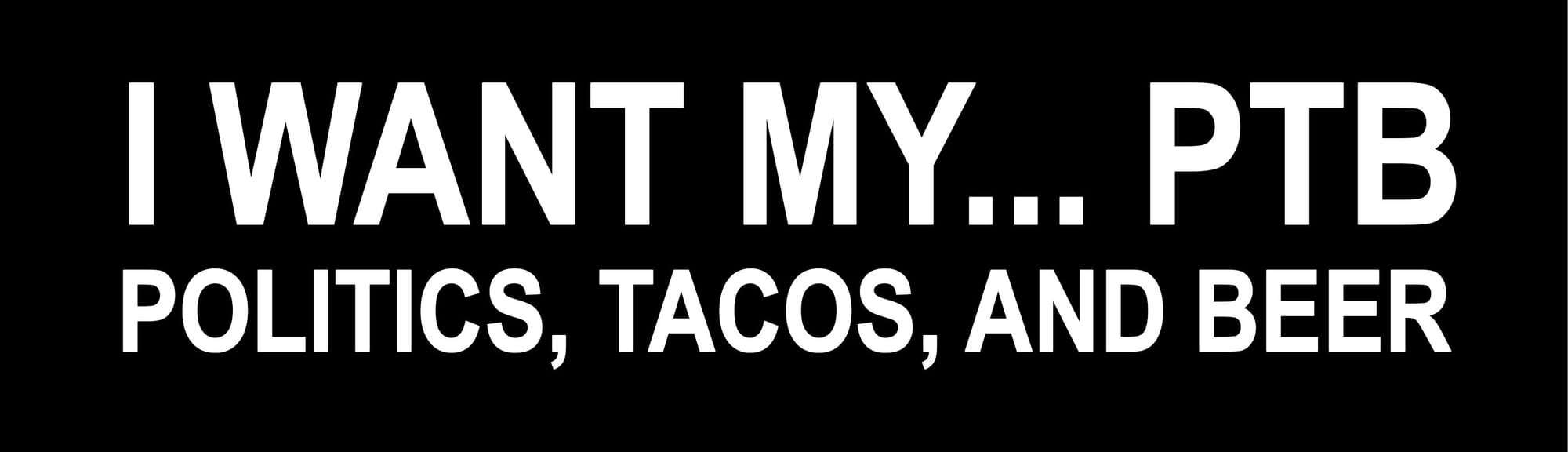
Her campaign centers on what she calls an economy for the people, with proposals focused on social housing, expanded public transit, community based safety programs, nightlife expansion, tenant protections, among many other and at Rae, I want to welcome you to our special series, politics, Tacos and Beer, where we open up, a space for you all to remind us.
00:33:15:16 - 00:33:26:01
DINO
O tell us why. You know, taking this, this huge responsibility of running for office is so important. Rae, welcome to the signal.
00:33:26:03 - 00:33:28:07
RAE HUANG
Thank you so much. You know, it's so great to be here.
00:33:28:13 - 00:33:54:14
DINO
So, you know, one of my favorite questions. And I always ask the same question of everybody who's been on this program. We've now had dozens of political candidates from, you know, Congress to local office to city of LA. You know, I like to remind folks that elected officials, civil servants, indeed politicians are people, too. And I'd like to ask you take me back to that moment.
00:33:54:16 - 00:34:12:00
DINO
You know, Ray, when I don't know, maybe you're having coffee. The clouds split. The light beam came through the window, and you heard that echo music. And that said you should run for office. What was that? Take us back to that moment.
00:34:12:02 - 00:34:46:23
RAE HUANG
Yeah. You know, I it was the moment where I have found out that Mayor Das decided to use the state legislature to weaken, measure early, which is a measure that voters here in Los Angeles voted for to ensure that we could finally solve and end our homelessness crisis. And community organizations, together with labor unions, together with neighborhood organizations, affordable housing developers came together to solve the homelessness crisis and our affordable housing crisis.
00:34:47:05 - 00:35:18:10
RAE HUANG
Because City Hall was not. And I was a part of this group and this organizing for many years. And when I found out that our mayor was trying to weaken this, this, this measure that we had worked on, I said, what the hell is going on? And I said, well, no, not under my watch. And so it was at that moment that I realized that we no longer had leaders who could stand up with the people and for the people and bring forward and move forward our solutions.
00:35:18:10 - 00:35:41:09
RAE HUANG
Our City Hall has been for years now, moving us backwards after the people have spoken. And if there's an example of that, just this, earlier this week, the Olympic wages, which is an ordinance that we had passed to ensure that our workers would receive, finally moving toward the living wage, to live here in Los Angeles and benefit from the Olympics.
00:35:41:09 - 00:36:12:23
RAE HUANG
Meanwhile, just to be clear, very there's I don't even know that Los Angeles is benefiting from the Olympics. And so, at the very least, can our workers benefit from the Olympics when when our tourists come and we all said yes, let's make sure we do. Let's raise the minimum wage to $30 an hour for hospitality workers. I want to remind everybody who's listening, you need to make at least $55 an hour to be able to afford a regular two bedroom apartment rents here in Los Angeles.
00:36:12:23 - 00:36:45:13
RAE HUANG
So $70, this is not even close enough, but it's closer than what it's been. And our city, our city council again voted to to, delay this, measure, delay this, increase in, in their, salary, for another two years. So it's not even the Olympic wage anymore. This is that was the defining moment when you, a la was weakened that I said we need to have real leadership that works with the people, that works with the people that defends the people.
00:36:45:19 - 00:36:55:04
RAE HUANG
They can truly be somebody who sees our Los Angeles, our Angelinos, everyday working Angelenos as true partners in government.
00:36:55:06 - 00:37:24:15
DINO
And just for the audience. For those of you who haven't followed this, we're talking about this Olympic wage ordinance, which, as, as our guest pointed out, mandated path to a $30 an hour minimum wage for hotel workers by the 2028 Olympic Games, which, unfortunately, the business community, the major airlines, hotel operators, business organizations gathered enough signatures to force a measure onto the November ballot that would repeal the city's approach to this.
00:37:24:15 - 00:37:48:14
DINO
And as a result, you ended up with a legislative compromise. I guess you could describe it. The city was threatened, into submission. And this is what we're, you know, for context, for those of you who may not have been following, this issue, really, one of the biggest issues in Los Angeles right now is affordability, rent, groceries, transportation, utilities, everything feels so much more expensive.
00:37:48:14 - 00:38:07:21
DINO
And indeed it is. I went to the store, I think, yesterday, and bought two little bags of groceries and came out $70 short. You've spoken about this openly, your own struggles with affordability in Los Angeles. How has your personal experience shaped this part of your platform?
00:38:07:23 - 00:38:29:04
RAE HUANG
I mean, look, I am a single mother of two children here in Los Angeles, and it is nearly impossible to be able to survive here in LA. Our costs are so high, like, you just seemed, you know, just even going to the grocery store or getting around town, we it is such a difficult it's been hard. Let's be honest with ourselves.
00:38:29:09 - 00:38:50:13
RAE HUANG
It's been hard. And if you had asked the question earlier, you know, your your station, what this show is all about asking the question, who is City Hall for? Who do they represent? Who are, you know, who's the people of Los Angeles, right. And I would say that's the exact same question that I am asking who is City Hall for?
00:38:50:13 - 00:39:11:04
RAE HUANG
But and we know the answer is right now, city Hall represents the wealth and the power of the very few in our city. Our corporations are buying our city out and determining our lives. They already own where we live. They're already own where we shop, how we shop, what we shop. They already own. You know what kind of car we drive.
00:39:11:04 - 00:39:45:03
RAE HUANG
They own everything about our lives, where we work, how much we can make. It's time to fight back and to redistribute that wealth and power to the working people who are the ones who have made Los Angeles who it is. Who are the ones making Los Angeles the kind of city we are. So that is exactly why I am running, and that's why I'm trying to change City Hall to ensure that we finally have leadership that represents those who normally don't even turn out to vote, because they don't even think that L.A. cares about them anymore.
00:39:45:06 - 00:40:07:16
RAE HUANG
In the last election, 70% of Angelinos chose to sit out of the primary. Right? 70%. Yeah. Well, we have been working on what my campaign has been focused on. Is reaching those who are not typical voters in Los Angeles because they've been forgotten. And so we are hitting the doors, we are making sure we're getting our message out, and we're making sure.
00:40:07:20 - 00:40:15:17
RAE HUANG
And I talk to everyday people who feel like they are struggling. Right. And so in this moment, we have to change the tune.
00:40:15:19 - 00:40:43:01
DINO
My guess is very wrong. Community organizer, Presbyterian minister and candidate for mayor of Los Angeles. And you not raise your housing platform pitches, pitches, pushes. Rather, for what you call. And I like this, right? Social housing, publicly owned housing that remains affordable permanently. And we were just talking to the, on a previous segment, you know, co-op or co-op, for the right co-op and the challenges they're having.
00:40:43:07 - 00:40:55:11
DINO
But, you know. Yeah. Walk us through this. Explain how that would work, in LA and, how you'd find and scale something like that, which, you know, especially now with all the constraints that we have in the city.
00:40:55:13 - 00:41:14:04
RAE HUANG
Yeah. That's right. So, yeah, I am advocating and I've been working on this now for about eight years to expand social housing in the city of Los Angeles. I'm proud to say that two years ago, we passed a bill in the state, that is a social housing study. So that way we can actually conclude the end of this year.
00:41:14:04 - 00:41:34:04
RAE HUANG
I sit on that advisory committee for the state that helps identify what are the recommendations for our state to be able to support the infrastructure. We need to expand social housing across the state, including in Los Angeles City. And I'm also proud to say here in Los Angeles, we've already created the infrastructure to and to expand social housing.
00:41:34:10 - 00:42:00:04
RAE HUANG
We have technical assistance with a housing hub. We have, opened up La Casa to passing as the passage of measure A, which is a one stop shop for affordable housing developers to be able to build, social housing. And then we also have funding coming from measure Ullah as revenue over $1 billion. Now, we've raised to be able to preserve affordable housing and to be able to again build and construct new social housing.
00:42:00:04 - 00:42:25:14
RAE HUANG
And what is social housing? People like you just names social housing is, community and publicly owned, property that is, and land that is resident managed. And what that means is that we are able to remove land off of the speculative market and put that into permanent ownership of communities who are not looking to profit off of individuals who live in those buildings.
00:42:25:16 - 00:42:50:12
RAE HUANG
So it's owned by the public. So that way we ensure that that land and those properties are for people and not for profit. And so that's what we've been expanding here in co-ops, community land trust. We have them already as models in our city. It's time we expand this model. And then that way we can finally temper the real estate market from going up, up and up the market, just continuing to, own our lives and to determine, you know, what our future can look like.
00:42:50:14 - 00:43:07:11
DINO
Now, speaking of those who have, challenges with what the future can look like, you've been very critical of encampment sweeps and the current homelessness strategy for those who are unhoused. What do you believe the City Hall is getting wrong? And what would you do on day one?
00:43:07:13 - 00:43:28:02
RAE HUANG
Yes. Well, on day one, I would absolutely. Look at and direct the our city comptroller to look at that funding that's been going to in safe space. We do not know where that funding has been going. We have since, we know that there's been cases of fraud. There's hundreds and millions of dollars right now going into a program that has no end in sight.
00:43:28:08 - 00:43:54:15
RAE HUANG
This is so much of our tax dollars that's being wasted, paying hundreds of millions of dollars to private hotels and motels, taking advantage of the city to provide housing. And it's temporary housing for the unhoused. And we already know it's been so unsuccessful that 40% of the people in those programs have returned back from history. I've talked to so many people who are in the Inside Safe program, or who have left the inside safe program because they've been moved 2 or 3 times.
00:43:54:19 - 00:44:16:15
RAE HUANG
The goal of getting people from off the streets and into housing is not to move them into temporary shelter, to temporary shelter that destabilizes them over and over again, in which case it increases problems of mental health. It it makes it harder for them to finally find the stabilization they need for them to, to have a life where they can finally thrive.
00:44:16:20 - 00:44:37:04
RAE HUANG
Right. And so that's the same thing with 4118, right? The constant sweeps, moving people off and taking other things, actually incinerating all those things. I don't know if you've ever seen, you know, what we do with all of the things that people own, but you get rid of all of their IDs, all of their, things that they are surviving on, on the streets and then moving them from street to street, corner to street corner.
00:44:37:04 - 00:45:01:09
RAE HUANG
It's not only expensive, it's not only inhumane, it's just simply doesn't work. So we need to find an alternative one that's not from the perspective of those who are housed, but from the perspective of those who are unhoused. You have to ask the question when we are making laws and creating programs for the unhoused, is it really for the unhoused, or is it to make us warehouse feel better about ourselves?
00:45:01:11 - 00:45:12:11
RAE HUANG
We have to do the right thing and ensure that we are building permanent housing for those who need it, and we need to find. And that's why social housing is a solution towards that. And, you.
00:45:12:11 - 00:45:34:03
DINO
Know, and I'm glad that you just said that. Who is this really benefiting? Because it automatically makes me think about the criminalization of homelessness and the individuals who are experience, who are experiencing, homelessness. Which leads me to this bigger, broader issue that has defined it's been one of the defining issues for for this election.
00:45:34:03 - 00:46:00:08
DINO
And that's public safety. You've argued, and true safety comes from housing stability. We heard that. But were you also saying, look, economic opportunity is important and community investment rather than simply expanding policing? Now, how do you respond to voters who say, you know, that worries me because it means less, say, less safety or slower emergency response when we don't prioritize policing?
00:46:00:13 - 00:46:02:13
DINO
What do you say to that?
00:46:02:15 - 00:46:21:00
RAE HUANG
Well, here's the thing. The police come after a crime has occurred. I don't know about you or your listeners out there, but when you call the police, because you got to say to them, hey, I'm feeling afraid there's a situation about to occur, and I need you to be here to prevent the situation, the crisis, from becoming full blown.
00:46:21:00 - 00:46:55:21
RAE HUANG
The police will say, we can't do anything until the crime has already occurred. Right? So in which case, then are they actually there protecting you? Right. That's the question we want to ask. Whereas if you have an unarmed crisis response unit, who comes to prevent the crisis from becoming even more full blown? If you're providing the services that people need to prevent the crisis from occurring in the first place, because you're stably housed, because you have your health, your mental health needs are being provided for, then the crisis is less likely to happen, right?
00:46:55:21 - 00:47:26:08
RAE HUANG
The crime is unlikely to happen because crime occurs when we don't have what we need, and you have to find alternatives or you've gotten to a moment where you've lost it, right? And you're you're doing something in survival mode. Can we get our city to a place where we're not longer failing in survival mode every single day? I would bet that all of your listeners right now, including myself, especially with listening to the news, especially when they're out there just trying to make ends meet, we're in survival mode.
00:47:26:08 - 00:47:49:04
RAE HUANG
And you know what? Our political establishment is trying to take advantage of that. They're trying to make us feel fearful and force us into into voting in particular ways. So in this moment, we need to be taking a beat, grounding ourselves and deciding for us what is it that we need for our families, for our own bodies, and for our own communities and our cities?
00:47:49:09 - 00:48:11:17
RAE HUANG
What we need is to move towards real public safety, and that means putting our resources into things every human needs, like housing, just like you said, like health care, just like you said, rights. We need to stabilize ourselves. And it is there where we can put our resources and we can put our time and our energy, not the police.
00:48:11:22 - 00:48:22:04
RAE HUANG
And if we look at the police budget, it is over bloated. Almost half of our city budget is going to the police right now. If we put that into things that we need, we're going to have so much of a safer community.
00:48:22:04 - 00:48:51:13
DINO
So much so, Ray, you describe yourself as an anti-establishment candidate. We can hear it. And your, and the discussion points that we're having here now, your campaign has attracted supporters, support from artists, organizers, tenant advocates, younger progressive voters. But in L.A., we also have, you know, hard working class families, immigrant communities, older homeowners who may or may not connect have that.
00:48:51:19 - 00:49:06:08
DINO
You know, I have a hard time connecting with my own kids who are in their 20s, on some of these very issues and discussions. When we talk about it, how do you how do you see yourself bridging that divide?
00:49:06:10 - 00:49:23:16
RAE HUANG
You know, I think what's important right now is that the goal that I had for this campaign was first to be able to create open space that we could change the system that we have, that we no longer need to live in survival mode all the time, and that there was hope for the future and that we could create that.
00:49:23:20 - 00:49:43:07
RAE HUANG
And by the way, I do want to give a shout out to our young Angelinos. I have teenagers literally today leading a canvass in our city, neighbors to neighbors, sharing with them the future in the hope that they want for themselves. That is who we need. Leading in our communities, in our in our country right now is our young people.
00:49:43:07 - 00:50:09:20
RAE HUANG
Right. So that's for number one, the something my goal was to be able to enlarge our, our major, our L.A. majority voters, and that changing our voter base to go from the typical, you know, homeowner who has, you know, maybe not all that they need, but enough of they need, and then expanding that base to get more people to come out and vote and join the ranks and to join if you will, democracy and feeling like that.
00:50:09:20 - 00:50:29:10
RAE HUANG
They have hope and that they can also be a part of a change for our and transform our whole city. And then the third is to put solutions in their hands so that everybody, homeowners and everybody alike that make the decisions for themselves. What is the future of L.A. That we need for ourselves. And so that's what I'm providing.
00:50:29:13 - 00:51:00:01
RAE HUANG
I'm putting on the table options that people did not know that we had, such as making our busses fast and free, such as social housing, which we talked about such as an alternative to policing, where we can reimagine a world where all of our needs are provided for, such as, a public base. So that way we don't lose hundreds of millions of dollars in and fees, for private institutions and private banks and Wall Street and lining their pockets with more and more money.
00:51:00:01 - 00:51:03:03
RAE HUANG
But we keep that investment for us.
00:51:03:05 - 00:51:26:11
DINO
At bay as we wind down the the second to last million dollar question. Because my last question is the million dollar one, you know, from some of the folks running for this office have, shamelessly said in public, you know, I'm running for city, not, the federal government. So the immigration issues aren't as big a priority, for them.
00:51:26:13 - 00:51:41:19
DINO
However, you know, city has been under attack by the current administration. As mayor, how would you defend the city against the current attacks being launched by the, the federal administration?
00:51:41:21 - 00:52:07:04
RAE HUANG
Yeah. You know, here I, I want to name something super clear, because we as a city have not been asking this question. And the question is this should we be calling for the cancellation of the Olympics right now? The Olympics are not benefiting us here in Los Angeles, the Olympics. The reason I believe Garcetti brought this here was to embolden and expand our economy.
00:52:07:06 - 00:52:34:04
RAE HUANG
In what way is this going to do this? At this point, it is more likely that our city is going to be further in debt right now because we don't even have we don't even know what the budget is that the city and the Olympic Committee has been behind in providing us the budget. So almost and very, very many cities that are deep in debt following the Olympics, that's want us, the taxpayers are going to be on the hook for the cost of the Olympics.
00:52:34:09 - 00:53:00:17
RAE HUANG
The second is that right now, the Olympic Committee has already said that they're planning on expanding options for other companies and other businesses beyond Los Angeles to be able to be considered for contracts for the Olympics. So now our L.A. businesses are not going to benefit the possibilities for competition reasons. We're not saying that even benefit our economy and get those contracts.
00:53:00:22 - 00:53:33:08
RAE HUANG
The third is that we already know that Mayor Bass is already been proposing a budget that would increase, that would allow, Airbnb to buy up more properties. Well, and increase more, evictions. You know, the potential evictions of our own community members from housing who don't already don't have enough housing, and yet we're giving a pass to Airbnb, unless, of course, you know, the federal government's going to come and they actually get to own LAPD while they're in town.
00:53:33:10 - 00:53:48:13
RAE HUANG
That means they have access to all of our information. All of our village has already inc surveillance already increased here. Surveillance increased in Paris. We are expecting it to increase here. And with surveillance, if surveillance increases here, it's going to stay here even while after the Olympics are done.
00:53:48:13 - 00:54:07:18
DINO
And I believe you'll be able to talk more about this. A quick programing note. I understand you are going to be participating. And actually, one of my colleagues cut to the chase with live rivers is having a forum and discussion with several candidates, happening today where you can, very limited seating. You can schedule, be a part of that event.
00:54:07:18 - 00:54:24:18
DINO
Eventbrite.com search Kpfk. And, Ray, as we close this out, I always like to ask this last question. I think it's the most important question. Our series is called politics, Tacos and beer. Very quickly. What's your favorite political topic? What's your favorite, taco, and what's your favorite drink of choice?
00:54:24:20 - 00:54:28:21
RAE HUANG
And, did you say my favorite topics?
00:54:29:02 - 00:54:31:14
DINO
Favorite political topic? Politics tacos. And go.
00:54:31:14 - 00:54:34:06
RAE HUANG
For it.
00:54:34:08 - 00:54:56:17
RAE HUANG
So my favorite political topic, is, I would say housing, just because that's been an area that I care so much about, really care a lot about our unhoused, folks or six, you know, six Angelinos are dying on the streets every day. So, that night and then, my favorite taco, I would say is, Carnegie asada.
00:54:56:23 - 00:54:59:05
RAE HUANG
Okay. So and I go there.
00:54:59:07 - 00:55:01:12
DINO
And you go to drink.
00:55:01:14 - 00:55:05:12
RAE HUANG
And I don't drink. I actually don't drink beer. I don't drink alcohol.
00:55:05:12 - 00:55:06:14
DINO
I can be coffee to.
00:55:06:15 - 00:55:10:21
RAE HUANG
So I am a tea drinker. I love my Earl gray.
00:55:10:23 - 00:55:24:17
DINO
Wonderful. We've been speaking with Ray Wong, candidate for mayor of Los Angeles, discussing affordability, housing, public safety, transportation and her bid for mayor of L.A.. Ray, good luck. We look forward to, staying in touch with you.
00:55:24:19 - 00:55:26:14
RAE HUANG
Thank you so much. I appreciate the time.
00:55:26:19 - 00:55:48:08
DINO
Great. Thank you. And with that, you know, as we prepare to close down, I just want to take these last few minutes to thank all of you who've been joining us and remind you. Listen, the reason we're able to bring guests like Ray and every other candidate we've had for the last year, in fact, is because this station is free, independent.
00:55:48:08 - 00:56:08:03
DINO
But we also need your support. Listener, sponsor, support. Please come to the website kpfk.org donate. Or you can look at the various different gift options. I'm going to bring in my producer, Nella Barbara, who's back in studio here to tell us why she's supporting Kpfk so important.
00:56:08:05 - 00:56:32:01
NELLA
Well, first of all, hello, Dino. It's very good to be here. Hello, Sly. As well as chewy. Chewy, where are you? Yeah, okay. One of the reasons the signal continues to resonate so deeply with listeners is because of the incredible work of our host, Dino Armando. Guido Dino, known to many of you and as simply as Mighty Dino.
00:56:32:03 - 00:57:00:18
NELLA
And let me tell you something. People like Dino are becoming rare in a world where so much media has become controlled, filtered, watered down, and designed to protect power instead of challenger, Dino continues to stand fearlessly for the people. Week after week, he brings conversations that matter, truth that matters, voices that matter. He fights for working people. He fights for injustice, corruption, all of that.
00:57:00:22 - 00:57:34:16
NELLA
So guys, now it's time to give back to Dino. To signal to Kpfk, call 8189855735818985 Kpfk. Option two. We have wonderful gifts as Shohei Ohtani. Am I pronouncing this correctly? Player bobblehead? Yes. Oh yeah, I'm surprised they had it for $120 donation. And we have Carlos Santana and the Universal Tone bringing my story to light book for $100 donation.
00:57:34:18 - 00:57:48:06
NELLA
Guys, go to the phone right now and call (818) 985-5735. Option to do it. Now I want to say again (818) 985-5735. Option two to you guys.
00:57:48:09 - 00:58:09:14
DINO
And you know here's how this works. You guys. We're a public radio community driven listener sponsored. You make a donation to help keep us on the air. And in return, we give you a wonderful gift. If you call in at (818) 985-5735, option two. Say, you know what? I want to donate. I want to help keep Dino and that team alive on the air doing this every week.
00:58:09:16 - 00:58:25:01
DINO
And, what do I get? Well, if you make $120 donation, you can pick a special Shohei Ohtani player bobblehead for $120 donation produced by the folks at Foco, which is a bobblehead company that comes to us by way of the National.