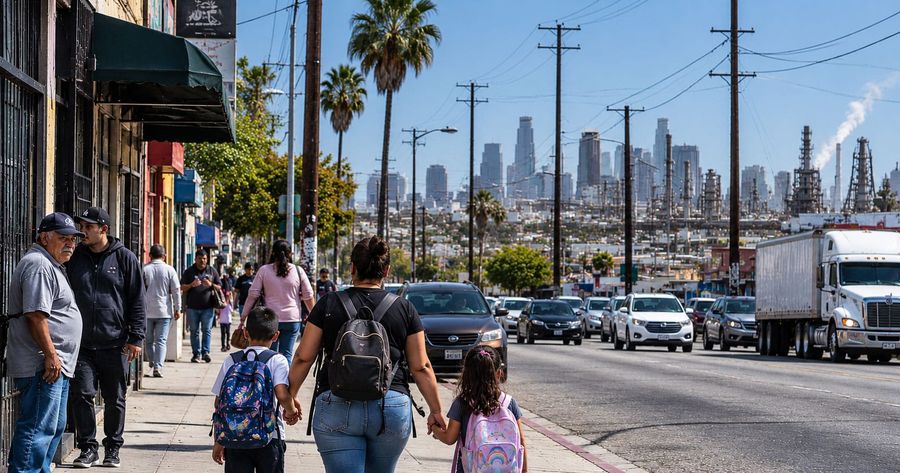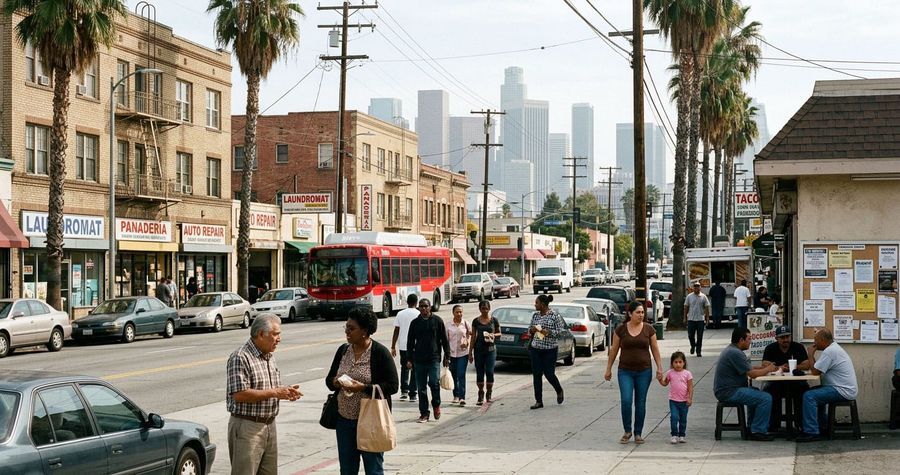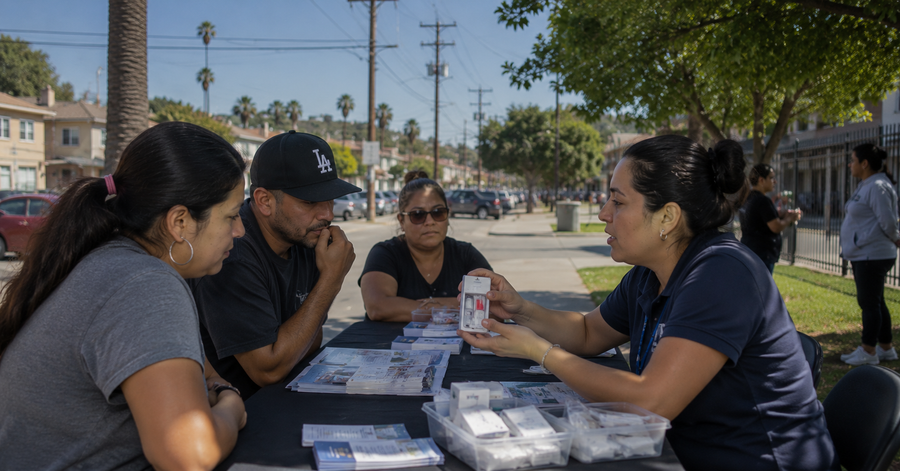
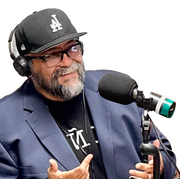
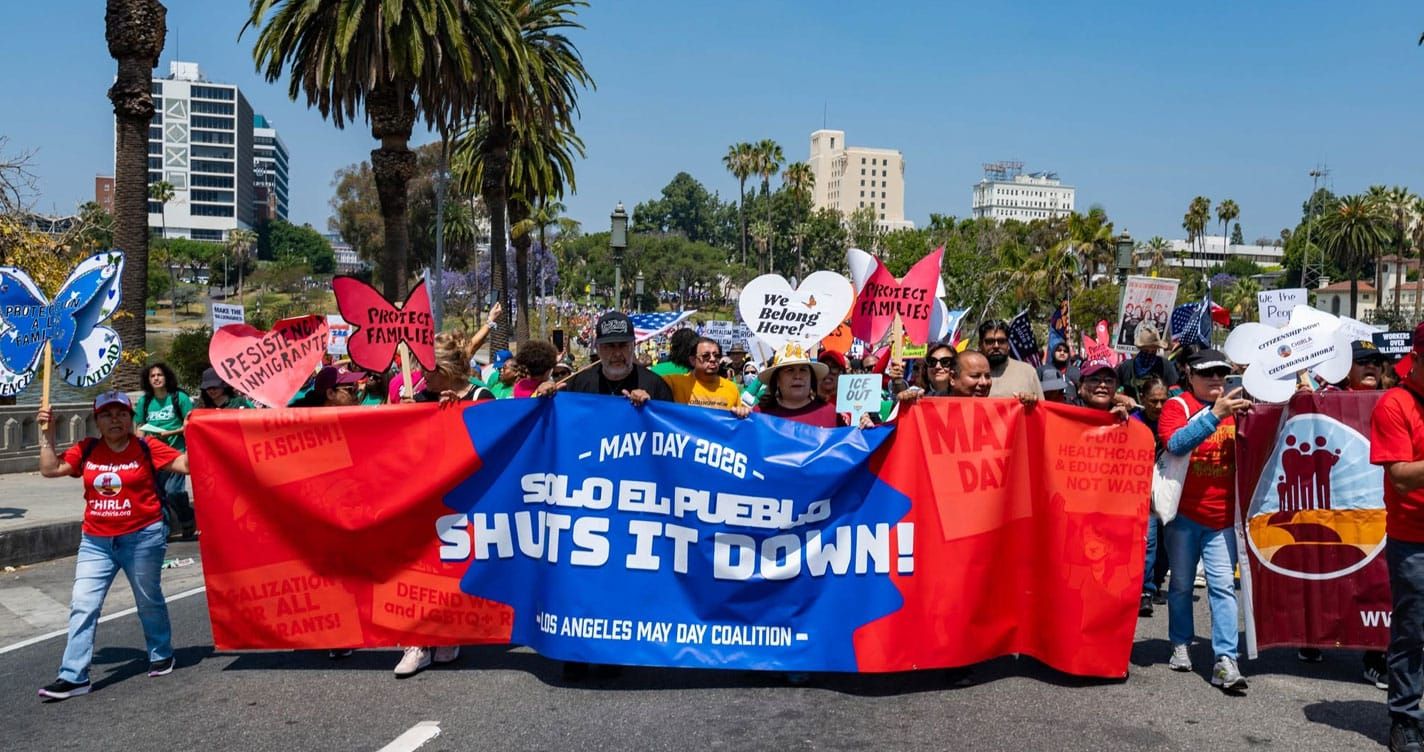
Power shapes everything—from wages and elections to who feels safe in their own city. This episode of The Signal explores labor enforcement reforms in Los Angeles, a pivotal election in Whittier, and the organizing force behind May Day 2026. Through voices from labor advocates, elected leaders, and community organizers, we examine how power is built, challenged, and reclaimed across L.A. Aired live on 90.7 FM KPFK Los Angeles on April 25 2026.
This is viewer supported news. Please do your part today.
This is a rush transcript. Copy may not be in its final form.
TRANSCRIPT
00:00:01:07 - 00:00:12:13
MUSIC INTRO
The whole run by a handful of greedy bankers and CEOs who nobody elected. What can't possibly last?
00:00:12:15 - 00:00:16:03
MUSIC INTRO
I'm going to tell you what I'm saying.
00:00:16:05 - 00:00:16:21
MUSIC INTRO
But you really only.
00:00:16:21 - 00:00:23:21
MUSIC INTRO
Have to remember you're two words, phrases.
00:00:23:23 - 00:00:25:08
MUSIC INTRO
Come on.
00:00:25:10 - 00:00:57:15
DINO
Good afternoon, Los Angeles, and welcome to another edition of The Signal. News, information and analysis here on Kpfk 90.7 FM. I'm your host, Dino, and I want to welcome all our listeners from across Southern California, 98.7 FM in Santa Barbara, 93.7 FM in San Diego, and 99.5 out in Ridgecrest, China Lake and you know, every week we come here, we break down the stories shaping our communities, our economy and our political reality.
00:00:57:17 - 00:01:22:05
DINO
Today's episode is, in fact, about power. Who has it, who is fighting for it, and how it shows up in our workplace, our cities, and in the streets that we all traverse and live in. We're talking this episode. We're going to be talking about our labor enforcement reforms here in L.A., a key, election outcome that happened out in Whittier in the southeast L.A., part of the county.
00:01:22:07 - 00:01:43:16
DINO
And then we're going to go over to some special guests that we have in studio around May day organizing and what it means for this moment, what it means for workers all over, but indeed, what it means for all of us. So as we prepare to get that going, let's dive right in. And our first segment, we're going to open up with a special topic, a special conversation.
00:01:43:18 - 00:02:13:00
DINO
I'm joined by Aquilino Soriano, executive director of the Filipino Worker Center, a member of the Los Angeles Worker Center Network. We're talking about the Office of Wage Standards, or more commonly known around city circles, always and in particular, about a push to strengthen how the city enforces basic labor laws. I think we take it for granted. Oftentimes we think, well, you know, it's labor lost of federal state, and why wouldn't you enforce some more?
00:02:13:00 - 00:02:39:03
DINO
And you're going to hear a little bit about why. Here's a quick timeline for those of you who have been listening to our program, you know that we've covered this issue quite extensively, in fact, and we've had multiple guests on this topic, from the legal community, from city representatives, representatives from the Office of Wage Standards who have been here with us to discuss this.
00:02:39:05 - 00:03:18:05
DINO
Including the very folks who are in charge of administering this particular office. So sometime back, the city of L.A. chief legislative analysts released a set of recommendations that would expand enforcement authority, and investigators gave the city the tools to be able to enforce these kind of labor law violations, that we're talking about over the last few months, this project that has come now full circle, three years in the making, has pushed the conversation into what is now budget negotiations.
00:03:18:05 - 00:03:39:03
DINO
Many of you who follow city politics know that the city budget just was released. In fact, this past week, you know, the city has been in some challenging environments. Last year we were in a very challenging environment. This year, it seems that it's not going to be as bad as was predicted, or at least was as concern was expressed.
00:03:39:05 - 00:04:05:00
DINO
But nonetheless, it puts a lot of the city agencies and departments in the challenging environment to be able to continue to do the type of work that they do to ensure that the city has what it needs, the tools that it needs, so that the citizenry, the residents, all who live here are adequately served. So with that said, let me, welcome back.
00:04:05:02 - 00:04:11:04
DINO
Aquilino Soriano, the executive director of the Filipino Worker Center. And aqui, welcome back to the Signal.
00:04:11:06 - 00:04:13:09
AQUILINO SORIANO
Thank you. Happy to be here.
00:04:13:11 - 00:04:35:13
DINO
Great. So, you know, let's let's, Okay, let's start with the basics and ground this in, in reality, and we want to kind of convert this into a two parter. So first of all, what exactly is it? What does what are the challenges for low wage workers or anybody who has and who is experiencing which the violation?
00:04:35:15 - 00:04:43:13
DINO
What are the challenges in recovering that or just filing a claim at a place like the city of L.A.?
00:04:43:15 - 00:05:19:05
AQUILINO SORIANO
Well, you know, Los Angeles is the wage capital of California, of the U.S., actually, with 28, an estimated $28 million being stolen from workers every week. This is billions of dollars per year. And when, when workers are trying to, file claims, of course enforcement of our labor laws is one ways, one way to protect their rights.
00:05:19:05 - 00:05:51:00
AQUILINO SORIANO
And right now, there are a lot of barriers, especially to low wage workers, immigrant workers. Right now the Office of Wage Standards, is there, but it's it's waiting for people to come to them and for low wage workers and immigrant workers, especially, who are living in this environment of, you know, this enforcement, immigration enforcement raids by the federal government.
00:05:51:02 - 00:06:26:14
AQUILINO SORIANO
But even in their jobs, just how vulnerable they are, it's very difficult for folks to come forward because, one the trust in the government also, just the ability to, overcome, the fear of retaliation and losing their jobs or the threat of deportation sometimes that employers give and, and additionally, the Office of Wage Standards is not yet enforcing overtime and meal and rest breaks and 80% of violations.
00:06:26:14 - 00:07:00:05
AQUILINO SORIANO
Wage theft includes overtime and meal and rest breaks with home care workers, for example. I don't think we ever handle the case that didn't include overtime violations in addition to minimum wage violations. And so if your case does include overtime or meal and rest break violations, either you have to file multiple cases or it just gets, you have to go to the state or the federal government.
00:07:00:05 - 00:07:29:15
AQUILINO SORIANO
Right now, the federal government is not a safe place for many workers. And at the state level, they are experiencing extreme backlog where even now there are over, 2000 cases that have, haven't been resolved after five years. So there's thousands and thousands of cases like the wait line is so long for individual cases, that it's a big deterrent.
00:07:29:15 - 00:07:31:17
AQUILINO SORIANO
So those are, those are many of the challenges right now.
00:07:31:17 - 00:07:59:07
DINO
So $28 million a week, if you have one type of violation, you likely have others. With the backlog, we're talking about a system that is essentially broken, not functioning, not working. There might be some something there. But, what exactly are the reforms that you're seeking to fix? And as a matter of full disclosure, well, I am host of this program.
00:07:59:09 - 00:08:16:03
DINO
I do have a, I do have a day job for many of you who already know it, and I am closely affiliated to this topic. Having said that. Okay, what exactly are the issues that you're looking to fix within these reforms?
00:08:16:05 - 00:09:12:04
AQUILINO SORIANO
Yes. And and to be clear, of course, the L.A. Worker Center network was one of the main advocates for having the Office of Wage Standards, established about ten years ago. So that was, you know, a step in the right direction. But what we need now to have a strong and effective office, with standards is, we need, us to also enforce over time violations, you know, arrest, break violations to have the ability to, to go after individual liability, to use up the chain, accountability in the cases, in, also to, have subpoena power, easier access, like a streamlined access to subpoena power, as well
00:09:12:04 - 00:09:57:23
AQUILINO SORIANO
as, using a strategic enforcement framework that you use that you're not just waiting for whoever comes to the door, you're looking at, the industry that work force, seeing where wage theft is actually happening and higher, higher frequencies. And then, actually having strategic strategies to go after an impact wage theft. And part of this is actually partnering with groups like those of the L.A. Workers Center, network worker centers, legal, community organizations, other worker organizations, unions to be able to effectively then build the cases and enforce the law.
00:09:58:04 - 00:10:04:01
AQUILINO SORIANO
So, and we've seen that be effective at the state level with the California Strategic Enforcement. And it's,
00:10:04:03 - 00:10:38:13
DINO
It's important to note that these kind of strategies, these particular types of partnerships is nothing new. You're not inventing reinventing the wheel here. We have, long established precedents in this area where city agencies like these have partnered with community based organizations. So as we look at, you know, this has been a long time coming. This particular project that you've been a part of now for several years, but over the last three years, you've I can we've covered it here on the show, over the last year, at least multiple times.
00:10:38:18 - 00:10:49:10
DINO
Walk us through what has been that that, that timeline leading up to the CLA report and why right now is such a pivotal moment.
00:10:49:12 - 00:11:22:02
AQUILINO SORIANO
Sure. Ten years ago, we established the, minimum wage ordinance that, the Los Angeles city level, as well as the Office of Wage Standards. And then in 2020, we were able to pass a state law that gave full authority to all local, labor agencies to enforce all California labor laws. So that made it very clear that the city could also do that.
00:11:22:04 - 00:11:51:07
AQUILINO SORIANO
And then, two and a half years ago, we were able to win a motion that called for, the CLA to do research, and make recommendations of what would, what would be needed to strengthen us. And it's been two and a half years since then. It passed through the first committee.
00:11:51:09 - 00:12:25:15
AQUILINO SORIANO
That called for the, the report, back in November of 2025. And so now we are trying to get this passed, to the personnel and hiring committee of LA city, and then it will go to the full city council. And the recommendations are all of the things that I talked about, that would grow and give the tools necessary to the AWS, investigators, to be effective in, protecting workers.
00:12:25:15 - 00:12:36:12
AQUILINO SORIANO
Right. And in addition, it did identify building the capacity and investment in the US by building in 11 new positions as well.
00:12:36:14 - 00:12:58:00
DINO
My guest is Aquilino Soriano, executive director of the Filipino Workers Center, a member of the Los Angeles Workers Center Network. We're talking about the Office of Wage Standards, or ORS, and the push to strengthen how the city enforces, labor laws that have a direct impact on not only communities of color, low income workers, but everybody in the city.
00:12:58:02 - 00:13:26:22
DINO
And, actually, let's let's touch on this reality check that we're all experiencing right now in the city. We've seen the mayor's proposed budget. You know, it's again, as I opened up the program we're talking about, we're not in a stellar position, but, there is, some gain here. The project, the reforms didn't get everything that, you wanted, but it's still in play.
00:13:26:22 - 00:13:36:01
DINO
What is the next step? What are the pressure points? Right now? What is, what are we waiting for? For these reforms to come through?
00:13:36:02 - 00:14:21:03
AQUILINO SORIANO
Well, I mean, it is a very hard budget year, and almost all, departments had to cut their budget by 10%. So we did win that. The Office of Wage Standards kept all of its budget. That's also really huge. And, there is, outside of the budget process. An effort, by Council member Tim McCusker to be able to secure $700,000, and retention bonuses because one of the issues in capacity is also that the way that the jobs are structured is it doesn't give a lot of incentive or way that people can advance in these jobs.
00:14:21:03 - 00:14:34:22
AQUILINO SORIANO
So we lose that experience and people from from the jobs. So that's something that's still in play. And that will be really important to building good capacity and experience in the Office of Wage Standards.
00:14:35:00 - 00:14:45:10
DINO
And I if our listeners want to learn more about this, want to learn more about your organization and this effort overall, where can they go to, tune in?
00:14:45:12 - 00:15:10:14
AQUILINO SORIANO
Yes. Where you can actually come see the the L.A. Workers Center Network, website, which is, array worker center Network, dawg. Or you can come to our website, w ww dot p w csc that o r g. Or you can also look us up on Facebook. We have a very active, page there to find out the latest.
00:15:10:14 - 00:15:17:00
AQUILINO SORIANO
And when we're actually coming to join this, LA city when, different hearings happen as well.
00:15:17:05 - 00:15:44:15
DINO
Wonderful. Again, Leanna Soriano, Executive director, the Filipino Worker Center, member of the Los Angeles Worker Center Network. Let it go. It's given us the latest update on the reforms at AWS. Okay. I want to thank you for joining us. And for those of you who are tuning in, again, this is one of those vitally important issues that, we should all keep an eye on, because when we improve the lives and opportunities of one worker, we're doing so for all workers and by extension, everybody, who is a part of the city.
00:15:44:20 - 00:16:00:01
DINO
Stay with us. We'll be right back as we go to the city of Whittier and talk about the historic election there. And the landslide victory for the Democrats who have taken all seats in that, council election. Stay with us. We'll be right back.
00:16:00:01 - 00:16:23:11
DINO
Welcome back to The Signal. News, information and analysis on your host, Dino. Now we're going to go into one of my favorite parts of this program. One of my favorite series, a series we call politics Tacos and beer, where we break down politics and the way that connects to real life, real communities and real conversations. And today's discussion and our series, politics, tacos and Beer.
00:16:23:13 - 00:16:53:12
DINO
We're going to do exactly that. Joining us is Whittier mayor elect James Becerra who recently declared victory in his race, for mayor, not only him, but his colleagues in the city council. Now, Whittier is a majority Latino, middle income city that often reflects broader political trends across the region. So today we're looking at what the how does this election victory mean for all of us, not just in the city of Whittier, but in the region?
00:16:53:14 - 00:17:12:00
DINO
And by extension, you know, is this an indicator of what's to come? Now, look, we're not going to ask the mayor, the good mayor, if he can predict this. None of us can. Sometimes I can, but, you know, every once in a while, the producer will come in here and take my crystal ball away. So with that said, I want to welcome mayor elect James Mayor.
00:17:12:05 - 00:17:16:17
DINO
Congratulations on the victory and becoming mayor of the City of Whittier.
00:17:16:19 - 00:17:18:03
JAMES BECERRA
Thank you very much.
00:17:18:05 - 00:17:38:05
DINO
So when you mayor, look at the results, what do you think voters in Whittier were responding to the most? Not. Look, I want to give you props. I want to give you credit. I think everybody everybody who decides to vote more often than not, if not always vote because they have genuine trust and believe in who they're voting for.
00:17:38:07 - 00:17:55:22
DINO
But then, you know, we are in a very difficult political climate where, quite frankly, folks are saying this is a referendum vote. You know, we just don't want that other guy we're going to trust this guy. But what was your read on the ground as you were running this campaign?
00:17:56:00 - 00:18:10:16
JAMES BECERRA
Well, I think, you know, there was a lot of frustration and a sense of a nursing, a nurse coming from City Hall, and that was, you know, more as much as anything with voters. People weren't able got people to come out and vote.
00:18:10:18 - 00:18:42:19
DINO
Now, Whittier is often seen as a bellwether Latino suburb. From your perspective, these results are the reflection of the Latino community coming out. Is this, a, you know, given the complicated environment around immigration raids, which Whittier was, a place of focus for the federal administration? Walk us through that particular period. What did Whittier do or not do when the raids started coming last year?
00:18:42:21 - 00:19:08:10
JAMES BECERRA
Well, you know, Whittier might well be a Latino suburb, but there is no monolithic Latino vote in Whittier, right? You know, I'm not a statistician or a sociologist, and there is a strong Latino GOP contingent in Whittier. But in terms of the results saying anything, I believe it says that Latinos demand and engage and perceptive mayor just like everyone else.
00:19:08:12 - 00:19:32:20
DINO
Now, by engaged with, prior to this election, mayor was the Latino community being engaged in a in a more meaningful way? I, for example, I, you know, here at the at the signal we we monitor oftentimes in fact, we monitor a lot of the local elections because we're trying to be a place where, these type of, of smaller cities come.
00:19:32:20 - 00:19:56:09
DINO
You just heard our previous guest, or you might have heard our previous guest was talking about issues in the city of L.A., which oftentimes gets all the attention. But here, you know, we're bringing these issues. And yeah, indeed. There was a you know what? He was a very politically active city, right. Do we know yet who showed up to the polls and then voted.
00:19:56:10 - 00:20:25:15
JAMES BECERRA
Well mayor, the numbers were through the roof almost double from the last election. And I'm very proud that the campaign was able to bring, new First-Time Young Older Voters into the process this time. And I hope the electoral process becomes even more invigorated in subsequent elections. Clearly, many voters across party lines. And again, I'm so proud that the campaign was able to provide a viable, credible candidate for the people to choose.
00:20:25:16 - 00:20:33:10
DINO
Now, tell us about the other candidates. It wasn't just you in the mayor's position, but there was two additional council members.
00:20:33:11 - 00:20:54:10
JAMES BECERRA
Right. Well, you know, it's interesting. I had never met. Well, the the two candidates, the one I had never met them prior to the election. Okay. And it was and, you know, initially there was, you know, people suggested, why don't you run as a slate or whatever and forget from the beginning there was like, no, no slate. We're going to do our own thing.
00:20:54:12 - 00:21:17:15
JAMES BECERRA
Fine. But over the campaign, it was clear that our values, our vision as much as anything, is our values really align. So as the campaign went on, it was able to do, you know, we'd maybe have show up at the same meet and grade or we would've been able to as we went door to door in certain districts, tell people, you know, our suggestion would be the or we would endorse, you know, a certain candidate.
00:21:17:16 - 00:21:38:22
JAMES BECERRA
So we were really able to support each other as a candidate went on. And, you know, I'm looking forward to working with those, too. Once an attorney, one has a lot of experience in HR and budget review and so forth. So they're very confident. And I think, again, the electorate really picked up on that, that they really had strong candidates to put in office.
00:21:39:03 - 00:22:12:10
DINO
You know, I actually I didn't know this as much as our, energy drink field research team, brought me out to share here with you. With with our audience. So this is interesting because there's there's worth looking into this. You know, the fact that you all weren't necessarily. Well, you weren't running on a slate, but indeed, it turns out you were aligned and may very well speak to this issue of how there's just, the voters in Whittier may have been just ready for change and and ready for a new leadership.
00:22:12:15 - 00:22:27:03
DINO
And with that, let me ask you, mayor, top priorities. We heard him on the campaign, saw them on the website. But you're ready to go into office. What are those top priorities for you?
00:22:27:05 - 00:22:52:05
JAMES BECERRA
Priorities. I I'll just lay them out. As for, the first is, that we're going to align our elections with the state and national cycles. You know, we're currently off cycle, which I believe is a calculated form of voter suppression. I've said that before, and I'll say it again, and that will end. It's going to be as we, involve a try to reform to the city, but we're going to make that happen.
00:22:52:07 - 00:23:14:09
JAMES BECERRA
The second is making the residents of the city, the residents of our city, know that the city will do everything it can to protect them before, during, and after ice race. I don't see them abating any time soon, and I do hope I'm wrong about that. But, you know, the Ninth Circuit decision the other day, regarding the Supremacy Clause complicates things.
00:23:14:09 - 00:23:42:06
JAMES BECERRA
But, I promise you, and to anyone listening that Whittier will do everything it can legally to protect the US Constitution and protect all its residents. And then the last two things I'd like to strengthen our foot and bicycle patrols. To have them there in a more, a continuous and sustained presence. And finally, as a priority increase our programable recreation space and recreation facilities.
00:23:42:08 - 00:23:50:02
DINO
I mean, that van sounds fantastic, right? So let's get a charter reform. You're saying to align the election with the state cycle?
00:23:50:04 - 00:23:50:20
JAMES BECERRA
And national?
00:23:50:20 - 00:24:17:15
DINO
Yes. And national, protect, protect the Constitution. Who can't get behind, who won't get behind that public safety and, of course, recreational areas. Mayor. Like what? What do you see as important moving forward in keeping this voter base engaged? I see the four priorities. I think these are great priorities. But is there something that needs to happen in order to keep folks engaged on a more regular basis?
00:24:17:17 - 00:24:41:14
DINO
You know, we, you know, has the midterms end the day after the midterms? What begins the general election campaigns begin. And that, you know, if you guys are, do end up aligning yourselves, I imagine there's going to be yet another very significant political, activity going on. So what do you what do you see are going to be the most important, techniques or strategies to keep your voter base engaged for the city?
00:24:41:16 - 00:25:14:09
JAMES BECERRA
Yeah. Well, I'll tell you, I'm going to engage, the residents directly. I.e. going to community meetings and so forth. You know, I believe that sustaining and growing a robust electorate is probably one of the most sacred obligations any elected official can have. So I plan to speak as as many community groups as I can. Not to campaign, but to energize and remind my constituents that voting is as much a right as a duty, and only they have the power with their votes to control their future.
00:25:14:11 - 00:25:26:21
JAMES BECERRA
You know, because if they don't, others will. So that's going to be a consistent message I want to deliver. And I think that will produce the kind of sustained engagement and enthusiasm for what we're going to be doing in the city.
00:25:26:23 - 00:26:00:02
DINO
Now, mayor, City of Whittier, you know, by the way, beautiful city. It's one of those cities where folks, enjoy, you know, making the drive out. They have a vibrant, nightlife, an excellent food share restaurant community. What role do you think the city needs to play in addressing the economic pressures, like the rise in housing costs, wages, wage issues and support for small businesses, which the what your community is known for, its vibrant business community.
00:26:00:04 - 00:26:31:17
JAMES BECERRA
That you're right. But you know it'll be a big role. You know first of all, but you know, a city or a mayor for that matter, can't set rental rates or salary or interest rates directly. You know, we just don't. But we can facilitate a discussion about rent stabilization. We can pursue union contracts and we can expedite the permit permitting process, where applicable, and support an economic climate that, prioritizes the community over outside corporate interests.
00:26:31:18 - 00:26:51:14
DINO
So, mayor, and as we close this out, what is the most important message you want? Our listeners, your listeners. We do have a base of support, coming out of the city of Whittier. We have listeners in the city of Whittier for this program and this station. What's the one message you want to convey to them as we close out this segment with you?
00:26:51:16 - 00:27:13:09
JAMES BECERRA
Okay. Well, I I'm sorry. I'm going to have to give you two. One is I keep going back to the importance of, the city and the mayor sending a message to the residents that we support and will defend the Constitution of the United States in our city. I think that is really, in many forms, going to be a critical issue going forward with the federal overreach, in our cities.
00:27:13:14 - 00:27:32:11
JAMES BECERRA
The second thing is, I really want to encourage and explore what a healthy, vibrant, sustainable is going to look like in the second quarter of the 21st century. Meaning I think a lot of our old economic models are not viable. So let's start looking about what the new ones are going to look like that are going to work for us.
00:27:32:15 - 00:27:50:03
DINO
And we're going to take note of that and invite you back. Mayor elect. Mister, I want to thank you for joining us again. And congratulations on the victory. I think it's an exciting time for the city of Whittier. Will be keeping an eye out and, have you return once you've been in there for a minute and let us know how things are going.
00:27:50:05 - 00:28:13:10
DINO
We're going to short break, and be back with our friends from Chula, the coalition for Humane Immigrant Rights, L.A. and who's going to talk to us? They're going to talk to us about the May day planning that's in the works. And with Sheila, my other special guest. Reverend Tanya Lopez, pastor at Downey Memorial Christian Church, and her role and participation.
00:28:13:10 - 00:28:14:22
DINO
And stay with us. We'll be right back.
00:28:15:01 - 00:28:39:09
DINO
Welcome back. So now we transition to my special guest in-studio, and I want to thank you both for coming in, making the drive out to beautiful Glendale, California and special segment as we head into May 1st. Communities across Los Angeles and across the country are preparing for May day, a historic day of action rooted in labor rights, immigrant justice, and collective power.
00:28:39:15 - 00:29:03:21
DINO
Community power, people power. This year's mobilizations come at a time of real pressure on working people, communities of color, from wages to immigration enforcement to broader a challenging, broader political climate. Joining us now is Reverend Tanya Lopez, pastor at Downey Memorial Christian Church, and Oscar Zarate director of external affairs at title of the coalition for Humane Immigrant Rights.
00:29:03:23 - 00:29:14:16
DINO
L.A., who is also a leader within the May Day Strong coalition, both deeply involved in organizing and mobilizing this year's May day actions. Welcome to you both.
00:29:14:18 - 00:29:15:09
OSCAR ZARATE
Thank you. Dino.
00:29:15:10 - 00:29:16:13
TANYA LOPEZ
Thank you. Thank you for having us.
00:29:16:13 - 00:29:31:11
DINO
So, Reverend, I want to start off with you because, you know, on the way in, we were driving into the studio and, you know, one of my colleagues says who's going to be on the show today? And we're already, like, halfway here. And I'm like, how do you not know who's going to be on the show today?
00:29:31:13 - 00:30:15:14
DINO
And what I said was, you know, I think you're going to like all the conversations, but one in particular, because we're going to get to the root of how important it is to be spiritually grounded. How important is to have faith? You know, that grounds you in such a difficult political time. You claim your leadership, and work came through out of the community of Downey, and in particular during a moment in which you confronted Ice officers who were abducting an individual on your church grounds.
00:30:15:16 - 00:30:18:07
DINO
Reverend, walk us through that moment.
00:30:18:09 - 00:30:41:05
TANYA LOPEZ
Yeah. So, the interesting thing is, is that being grounded in your faith, you live it every day, and you never expect to encounter something so shocking and so alarming and so, you hear tires screeching into the parking lot. I came out thinking, you know, I was alerted by another staff member thinking, oh, my gosh, is this a car accident?
00:30:41:05 - 00:31:10:21
TANYA LOPEZ
Or is there a medical emergency? What? What's happening? And when I came on the scene and I realized what was actually unfolding, where they already had a man that to my knowledge, had just been walking through. I mean, he literally wrong place, wrong time. Already on the ground, already zip tied and surrounded by three men, three other men that were then approaching us and asking us essentially to leave, right.
00:31:10:21 - 00:31:29:01
TANYA LOPEZ
That we didn't have permission. When I identified myself as the pastor and I said, this is the property of the church, I do have permission. I'm telling you who I am. I introduced myself by name. Can you tell me who you are? What are you doing? Why are you taking him? And then just the intimidation tactic of leave.
00:31:29:01 - 00:31:55:23
TANYA LOPEZ
Now. You don't have to be here. You can't be here. You know, don't worry about what's happening, essentially. And so for me, it really became matter of this person is about to be taken with nobody around, nobody to even see he was alone. And I really felt like if that were me, I would want someone there asking questions, trying to get as much contact information from me as possible.
00:31:56:01 - 00:32:21:22
TANYA LOPEZ
Who knows if any of his family found out. Almost a year later, we still don't know if this person was able to be released. Is he still in detention now? And so for me, it became very apparent that this was something that was designed to be quick and, you know, untraceable. Like we're just going to snatch people. They went up the street past our church to the local CVS and took more people.
00:32:22:00 - 00:32:25:07
TANYA LOPEZ
And so, yeah, it was shocking and alarming.
00:32:25:10 - 00:32:48:21
DINO
Does a situation like that, when you see it, when you experience it, when you essentially become and pardon the expression, a victim of these type of, of intimidation and threats, does it shake your foundation of belief or a favor? You know, I dare say you have a lot more a stronger foundation. And those of us are looking for, a better source of support.
00:32:48:23 - 00:32:54:22
DINO
But what does that do to you as a woman of faith, as a woman of faith in leadership?
00:32:55:00 - 00:33:18:22
TANYA LOPEZ
I mean, absolutely, we're human, right? And it was it was very alarming. It was scary. I think once the adrenaline wore off, I had nights where I wasn't sleeping. I had nights where I was jolting awake in the middle of the night. Nightmares. I'm still living with some of the after effects of just constantly tracking license plates, because I'm now scared.
00:33:18:22 - 00:33:41:18
TANYA LOPEZ
Like, what if there's a vehicle I don't recognize in the church parking lot, right? But I think what keeps me tethered in times of even great distress, which my hope is to model that for others as well, is that together we embody God's love and protection. And so I'm reminded that I wasn't alone when I went out there.
00:33:42:00 - 00:34:02:19
TANYA LOPEZ
I was surrounded by the staff member of the church who came out with me, and there were other observers that later heard me shouting and confronting and trying to get that man's at least a phone number of a loved one. And we came together. And so in that moment, community came out and had my back, just as I was trying to have that man's back.
00:34:02:21 - 00:34:20:00
DINO
What do you say to your congregation? What do you say to those who you work with on a daily basis, whether it's at church or meeting groups or during a particular sermon, how do you keep them motivated, to hold on to that faith?
00:34:20:02 - 00:34:48:05
TANYA LOPEZ
I continue to remind them that in times of great distress, we turn to one another in the way that we can experience God's love tangibly. Scripture tells us that the greatest commandment is to love each other as we love ourselves. And so I remind people that you don't have to have it perfectly figured out. In fact, the strongest your faith is, is when you wrestle with some doubt.
00:34:48:06 - 00:35:14:23
TANYA LOPEZ
But together, we give each other messages of hope. We give each other testimonies of when we've been able to come through some difficult situations. And I model my full humanity in the pulpit and everywhere that I go that I too sometimes look behind my back, scared right? But we don't give in to the fear because that's the intent and purposes behind this entire campaign is for people to be scared and to disengage.
00:35:14:23 - 00:35:27:08
TANYA LOPEZ
And we actually find courage by coming together. And even when your knees are trembling, taking that step forward, you feel that fear melt away because you're actually not alone at all.
00:35:27:10 - 00:35:34:21
DINO
Now, how has this motivated you and your church to participate in this year's mobilizations around Mayday?
00:35:34:23 - 00:36:12:08
TANYA LOPEZ
Yeah. So actually, with within our community, even within the church, we have people that are part of unions that have spoken. We've we've held people in the pulpit to give their testimony of, of when they've been advocating for protections in the workforce and, better wages. And so for us, this is a way to not just talk about it, preach it, pray about it, but to take to the streets and to be truly in solidarity with the very people that make up the members of our congregation that are also longing for and waiting for things to change in their circumstances.
00:36:12:08 - 00:36:34:17
TANYA LOPEZ
And so we know that we have collective power. And so, maybe not everybody can come out, but we can maybe not shop that day, or we can maybe, you know, choose to support local mom and pop businesses or buyout vendors. And so I'm encouraging people to find other ways to use their power because all of it matters and makes a big impact.
00:36:34:19 - 00:36:58:17
DINO
Oscar, let me turn the to you. Oscar said that the director of external affairs at the coalition for Humane Immigrant Rights, Los Angeles. Now, you all are very much a part of this, you know, full disclosure to our listeners. I've joined a few meetings here and there as we try and and not only keep up with just the massive level of engagement because I feel there's like there's hunger out there.
00:36:58:17 - 00:37:14:05
DINO
Communities are saying we want to be a part of this, for you all. And, Sheila, you guys have been at the forefront of a lot of these battles. Help us center just the role that Sheila has been playing in this movement right now.
00:37:14:07 - 00:37:41:19
OSCAR ZARATE
Absolutely. Like you said, Sheila, this is actually our 40th anniversary, doing the work in the community, organizing, policy advocacy, civil rights, immigrant rights. And Mayday is a natural extension of that work. Sheila has been involved in anchoring May day since, it began here in L.A. with the worker centers. And it played a very, very big role in the 2006 mega marches, which which is also the 20th anniversary of that mega march in 2006.
00:37:41:21 - 00:38:06:08
OSCAR ZARATE
I went to that march with my dad, and it was a very pivotal moment of political realization, because seeing my father join the the sea of white shirts, made me realize that this is a movement that is beyond just one person, but it involves the entire community. So, yeah, Sheila has been, again anchoring and helping organize, the actions here in LA, but also providing support to actions in the Bay and, and around the country.
00:38:06:10 - 00:38:35:08
DINO
It's funny, I, I was actually we were broadcasting right next to the stage during that big march, and I remember it so well. Well, funny that you said that. Right. And I'm like, oh my God. I remember having our tents and it being so chaotic because we were bringing folks on from the stage onto the booth. And, you know, at the time I was producing radio and we were, you know, imagine a bunch of us running around with paper and who heard what speak, where were you again?
00:38:35:08 - 00:38:46:02
DINO
And, and trying to get it to the host. Tender moment. Give us a sense of what is, what's in the works for this year? And, what should people expect?
00:38:46:07 - 00:38:49:16
OSCAR ZARATE
Absolutely. You know, before I go into that, I do want to share something really quick.
00:38:49:16 - 00:38:51:17
DINO
Please, please, we have plenty of time.
00:38:51:17 - 00:39:09:15
OSCAR ZARATE
It's something that's really grounded us as we've been organizing. Mayday here in L.A. is actually a quote for Martin Luther King as, where he gave it when they were, on the historic March on Washington for Jobs and Freedom. He said, we are now faced with the fact that tomorrow is today. We are confronted with the fierce urgency of now.
00:39:09:17 - 00:39:29:22
OSCAR ZARATE
And that really is what's been grounding us as we've been working on Mayday. Not here, not just here in L.A., but around the state. But what should people, expect? Well, we're going to be at MacArthur Park 10 a.m., this Friday. We have a list of amazing speakers, from labor unions, from community orgs, from faith groups.
00:39:30:00 - 00:39:44:06
OSCAR ZARATE
We're going to be marching from MacArthur Park to Grand Park, and we're going to have a celebration of our community at Grand Park with performances from local, musicians and bands and maybe even a special guest. I'm not going to reveal here because.
00:39:44:08 - 00:39:49:00
DINO
I might drop it in a minute, but, thank you for not revealing. Yeah. My goal.
00:39:49:03 - 00:40:04:08
OSCAR ZARATE
Yeah. And then, and we also have we're also coordinating around the state. We actually have, for the first time in many years, a statewide coalition. And we're coordinating 30, 30 actions throughout the state, from the border to the bay. California's rising.
00:40:04:09 - 00:40:05:15
DINO
I did not know this part.
00:40:05:15 - 00:40:21:16
OSCAR ZARATE
Yes, yes, yes. And you can find that information at CA may day 2020 6.org. Please, folks, join your local action. There's I promise you there's an action nearby. Go to the website, find it, and you can join us on Mayday to show our power to flex our power.
00:40:21:16 - 00:40:44:02
DINO
Now, what are what are the messages that we're likely to see this year? What are we what is a coalition coordinating in terms of the demands? Right. We've seen some of these other national protests around no kings, among others. And historically, Mayday has been one of labor rights, which immigration is an issue of labor rights and vice versa.
00:40:44:02 - 00:40:49:08
DINO
But what should we what are the messages? What are the key messages of this year's gathering?
00:40:49:08 - 00:41:11:14
OSCAR ZARATE
Absolutely. Well, there's two very key messages. One is, citizenship now legalization, for all you know, I think, the recent, activities in the summer with the, with Ice and, immigration enforcement, I should say, really, sparked, mobilization in the community. And we want to add to that. Right. It's it's important to say I saw and no more money to DHS.
00:41:11:14 - 00:41:33:07
OSCAR ZARATE
It's also very important to name the permanent solution, which is a pathway to citizenship for our community. So this can never happen again in our community. The second thing is the is the recognition that corporate greed, billionaire wealth has caused a lot of damage. Right? And and right now we're in a budget season where we're seeing cuts to social programing while billionaires make record profits.
00:41:33:07 - 00:41:42:06
OSCAR ZARATE
And we need to name that and make sure that we're holding the Uber rich accountable. And making an economy that works for all. And those are really the two key messages of this year's Mayday.
00:41:42:09 - 00:41:47:09
DINO
And that's both a pun and, and not the owners of Uber.
00:41:47:11 - 00:41:49:11
OSCAR ZARATE
All right.
00:41:49:13 - 00:41:55:05
DINO
Oscar, the.
00:41:55:07 - 00:41:57:09
DINO
What does success look like?
00:41:57:11 - 00:42:18:14
OSCAR ZARATE
Success for us is, building momentum and growing the movement. I think a lot of folks are seeing Mayday as a as a stress to see how we can flex our muscles so that we can keep growing our power, not just into the summer, but into the midterms and all the way up to 2028, where we're hoping to have a even greater, margin, you know, hopefully even a general strike.
00:42:18:14 - 00:42:36:12
OSCAR ZARATE
I know a lot of unions and a lot of folks really want that, want to see that happen. And, Minneapolis really showed us the blueprint to see how we can maybe do, a general strike. And that's really the I, for me, at least one, one measure of success. The other thing is, how can we bring in other, sectors of our society, right.
00:42:36:12 - 00:42:44:11
OSCAR ZARATE
Business, faith? Can those folks join us and really build a rainbow coalition that, has always been the goal for many of us in that movement.
00:42:44:13 - 00:42:56:15
DINO
You know, it's about bringing in other sectors. What what is the message for those? I remember, you know, I was involved, a lot as a younger person.
00:42:56:17 - 00:42:57:20
OSCAR ZARATE
And I'm still young.
00:42:57:22 - 00:43:05:12
DINO
But my mama used to say, you know, this one, this one wakes up wanting to go to March.
00:43:05:13 - 00:43:24:07
DINO
Because some of my siblings weren't always as active or engaged. What's the message to those who say and, and I'm going to bring it back to you, Reverend as well. Yeah. You know when people say, well, you know, I, I mean, I'm always the marker that's for those that are politically out there. I don't like politics.
00:43:24:08 - 00:43:31:21
DINO
And yet politics seems to govern all our lives. But how do what's the message to those folks, Reverend. What what do you think.
00:43:31:22 - 00:43:53:12
TANYA LOPEZ
Yeah. So for me I think I try not to chuckle when people say, you know, I don't do politics. My life is political. You know, whether you're choosing to be engaged, all of us are affected. And so I always like to center all of this on community and on what it looks like to be God's people in the world.
00:43:53:14 - 00:44:13:02
TANYA LOPEZ
And so I remind them that the church was never meant to be confined to a building. The church was never meant to be, just one group of people. That's an exclusive club that feels privileged and, you know, safe from everything, but that the church is where God's people are. And I believe that all people are God's children.
00:44:13:06 - 00:44:31:02
TANYA LOPEZ
And so where they are hurting were meant to be out there. And many people that are that take to the streets are out there for those very same reasons. They want to see good in our communities, they want safety. They want people to not go hungry. They want people to not have to work 2 to 3 jobs, you know, to be able to live where they work.
00:44:31:04 - 00:44:53:17
TANYA LOPEZ
These are the simple things that make a society thrive. And so when people say like, oh, well, that's not really for me, I would challenge them to say, do you want your community to be vibrant, to be safe, and to to see everyone not having to worry about the basic necessities. That's why we come out. We come out to protect one another, to advocate for each other.
00:44:53:17 - 00:45:14:11
TANYA LOPEZ
And so, yes, there's politics infused in there, but it's all about love and justice, equity. It's about access. Everyone wants their kids to be able to not worry about will they have food when they go to school? They're cunning, you know, funding to lunch programs and after school care. These are things that families across the board can get behind.
00:45:14:11 - 00:45:16:17
TANYA LOPEZ
And so I would remind them of that.
00:45:16:19 - 00:45:39:22
DINO
And we have the same question. I asked Oscar a minute ago. What do you is success in an environment like this? You know, for many of us, we'd like to think, well, success, as we had 100,000 people out there. I've oftentimes thought, especially back to my own experience, if I can get that one brother that never went to a pro to something that's huge success, because we've move the dial with one voter.
00:45:40:00 - 00:45:48:19
DINO
That's right. Right. But what does success look like? For you, is there something that you can point to and say, yeah, this is it right here.
00:45:48:21 - 00:46:15:04
TANYA LOPEZ
I think for me, success would be that people take those experiences of coming out to an event like May day and leave changed, and where they are now at the table, at their dinners, talking in different ways, where now they feel more encouraged and empowered to be more engaged in their local communities, to get involved in the PTA, to go to the meetings at their city Council and ask these questions.
00:46:15:04 - 00:46:39:08
TANYA LOPEZ
Right. What does our budget look like? Where are we choosing to invest? And so to me, it looks like people getting to know their own power and using it for one another, not just on that day, but beyond in their cities, in their neighborhoods, and really recognizing that we are what makes society moves. So when you're engaged, you become a force to be reckoned with.
00:46:39:10 - 00:47:03:00
DINO
Joining me is Reverend Daniel Lopez, pastor at Downey Memorial Christian Church and also the director of external affairs at Chiller, the coalition for Humane Immigrant Rights, L.A. and a leader within the made a strong coalition deeply involved in organizing and mobilizing this year's Mayday actions. Oscar just how big a coalition for me? A little bit bigger than previous years.
00:47:03:02 - 00:47:20:00
DINO
How much of this is being motivated by the current federal administration and the draconian, zombie like acts of, of, of the criminally convicted president? But I'm not going to editorialize. And how much of this is just the community fed up? I think,
00:47:20:02 - 00:47:37:14
OSCAR ZARATE
A lot of it has to do with that. And just to add to, Tanya's metaphor of the table, either were at the table or on the menu, you know, I think that's really always what people are realizing more, more now than ever before. And, we have, a coalition now of about 125 organizations here in L.A.
00:47:37:16 - 00:48:08:07
OSCAR ZARATE
Statewide, we have over 50 again, faith, immigrant rights, labor unions coming together saying we're going to say one message with one goal, working together to really flex our power. And to your point, yeah, I mean, Trump's, draconian immigration deportation machine has impacted so many families, has destroyed so many lives, has changed, family structures irreparably. I don't think people know, but most, around 60% of folks who are in detention centers still don't have legal representation.
00:48:08:09 - 00:48:24:23
OSCAR ZARATE
15% of them have already been deported. And I'm saying just people who have reached out to children, we've been able to do intakes with them. So in order to get out of this, we need to be together. We need to show our power collectively. And I think Mayday is one test of many, many tests that we're going to have until 2028.
00:48:25:01 - 00:48:47:17
DINO
You know, I'm going to share one of the concerns. And, you know, I was talking again to to my mama, who's, I don't know, 185 years old, heavy hitter and, you know, like my colleague, she asked me yesterday, who are you having on the show this week? And we're talking about Mayday rally. And she was reminding me about, you know, waking up, wanting to go to a protest.
00:48:47:19 - 00:49:06:21
DINO
But then she says to me, how are you all going to make sure that people are safe, that they're not going to end up in a confrontation with Ice? After all, you're going to be and, you know, and she had like this. And by the time of her micrometeorites, she's like, oh, no, no, you shouldn't have a rally because you got to protect people.
00:49:06:23 - 00:49:09:14
DINO
What's been how is that being taken into consideration?
00:49:09:14 - 00:49:28:21
OSCAR ZARATE
Absolutely. That's a question that comes up a lot. We actually have 300 peacekeepers trained for me today. We're we're activating a rapid response network to be on call for Mayday as well. But something I want to say overall, and I want to validate what your mom said. You know, we're living under very unpredictable, violent times. And so I want to be scared, and I want to want to go to a protest.
00:49:28:21 - 00:49:45:12
OSCAR ZARATE
That's for me. I don't want to invalidate. I know where that's coming from. At the same time, we have to realize that authoritarian governments, their number one tool is fear intimidation. That's how they execute their agenda. And, you know, for those folks that feel scary, like, that's why we have such a broad call of action, right?
00:49:45:17 - 00:50:08:04
OSCAR ZARATE
No shopping, no school, no work. So maybe you don't want to go to a protest. That's okay, you know? But you could do many other things that are supporting that. These, call to action. And again, and I have similar, batteries and parents that feel the same way. Everybody plays a role. And maybe they don't go to a march this year, but maybe they take, you know, maybe they, you know, don't go shopping at Walmart.
00:50:08:04 - 00:50:11:23
OSCAR ZARATE
That's their that's their state, that's their arena day. How do you say arena?
00:50:11:23 - 00:50:15:14
TANYA LOPEZ
The Granato the the arena.
00:50:15:16 - 00:50:19:22
DINO
You're a grain of sand contributing to this. Exactly.
00:50:20:03 - 00:50:27:07
OSCAR ZARATE
So that's the the and then you know, you have this conversations and maybe next year they do something else. And maybe by 2028 they're actually out there on the street with us.
00:50:27:09 - 00:50:42:12
DINO
Now, one of the keynote speakers, that's going to be, talking to tens of thousands of people is also talking to us here today. And, Reverend Watt, give us a preview of what's going to be the message.
00:50:42:14 - 00:50:43:21
TANYA LOPEZ
So again, I think.
00:50:43:21 - 00:50:49:12
DINO
And by the way, if you tell me you haven't thought this through, you were just more of a badass. And.
00:50:49:14 - 00:50:50:10
TANYA LOPEZ
You know, Sly.
00:50:50:10 - 00:50:51:03
DINO
And the team.
00:50:51:03 - 00:51:16:12
TANYA LOPEZ
Here, honestly, it's one of those things that you really you really have to just continue to remind people of their power. And that comes from my faith tradition as well. Jesus Christ came to empower people to love one another and to create the society that was just and equitable for all. That's why he was a threat to those in religious authority and to those that were the power in his time.
00:51:16:12 - 00:51:47:01
TANYA LOPEZ
And so he continues to inspire me, in my tradition, in my walk to empower and embolden people to recognize what their voice can really do, what their presence can really do, I show up with my clergy collar to model for others that you have more power than you think. You can model for others. What it looks like for ordinary folks to recognize, you know, when we all come together, you know, I love that imagery from A Bug's Life, right, with the grasshoppers.
00:51:47:03 - 00:52:12:09
TANYA LOPEZ
And they talk about the ants, right. What what is true about that analogy is there are more of us. This isn't left versus right. This is honestly a class war. And we're here to dismantle oppressive systems. And so the message will always be love and justice, goodness for all. And what that looks like is making a budget, making society work for everyone.
00:52:12:09 - 00:52:33:20
TANYA LOPEZ
It's not about, oh, well, when we make justice happen, some will lose out. Now, there have been many that have been robbed consistently to make the top 1% filthy rich. And so it's about dismantling that and recognizing that equity, love and justice is what makes what makes life worth living and what we should all strive for.
00:52:33:22 - 00:52:51:19
DINO
Now, the the million dollar question I asked our audience, you know, hopefully we've inspired those that are concerned about coming out, or maybe weren't motivated enough. Or maybe somebody is listening and saying, you know what, I'm going to head out there. Where do we go to get more information?
00:52:51:21 - 00:53:10:10
OSCAR ZARATE
Again, we're going to have our this last mayday at MacArthur Park 10 a.m., tying in the other incredible speakers going to start around, 1040. So please join us. And then if you want to learn about, well, not just here in L.A., but around the state, it's CA may day 2020 6.org.
00:53:10:15 - 00:53:23:07
DINO
CA may day 2020 6.org. Any final words? From Sheila from the coalition. To motivate folks to come out?
00:53:23:09 - 00:53:39:22
OSCAR ZARATE
Yes. I mean, this is the time this is the moment. You know, we face a very, tumultuous year. And this is the moment to really show up for your community. I think, again, the college, no work, no school, no shopping, come to a march. But if you don't feel comfortable going to march, there are many ways that you can show your power and flex your power.
00:53:40:02 - 00:53:41:11
OSCAR ZARATE
This May day 2026.
00:53:41:11 - 00:53:52:03
DINO
And Reverend Tanya Lopez, we're giving you the last word. Close out this segment, close out this show. Close out this this week. What is the message? Help us get.
00:53:52:03 - 00:54:14:20
TANYA LOPEZ
There. Yeah, I would just say now el pueblo, salva el pueblo. We the people protect each other. We keep us safe. And so, like my colleague here, Oscar said, if you can't come out, hold your dollar, don't shop, don't go to school. Watch and make sure that this message gets loud and gets out there, that we are together in this fight until we win and.
00:54:14:20 - 00:54:22:01
DINO
Where can people know more about your congregation in the beautiful, wonderful, fabulous city of Downey? And I'm not saying that because I live there.
00:54:22:03 - 00:54:26:02
TANYA LOPEZ
You can learn more about my congregation at Downey Memorial. Georgie.
00:54:26:04 - 00:54:46:21
DINO
And again for the May day festivities. Ka may day 2020 6.org. And as we wrap up today's show, I want to bring it back to the simple idea and that's power, not the kind that we hear about in the headlines, but the kind that shows up in everyday life and whether the worker gets paid, or whether you have the ability to the right to self-determination.
00:54:46:23 - 00:55:11:12
DINO
We talked about wage stuff. We talked about building power and enforcement of that power, but not just systems, but at the self, at the individual and those of us that make up these systems. With that said, I want to thank all my listeners. This has been the signal news, information and analysis. I want to thank the producer who's still missing in action, and she has been gallivanting across Europe in L.A..
00:55:11:12 - 00:55:35:03
DINO
We miss you. Come on back, because I'm tired of producing the show by myself and Sly rivers, our audio engineer, and Fabian Montes, support and the production team and our entire Kpfk family programing. Note next week, we launch the Kpfk Spring Fund drive. Make sure you tune in kpfk.org. I'm your host, you know, stay engaged, stay positive.
00:55:35:03 - 00:55:36:11
DINO
Talk to you next week.
00:55:36:13 - 00:55:48:12
MUSIC INTRO
Let me get that smoothie fat and then I'll get it. Then it's on 20th Century President.
00:55:48:14 - 00:56:00:14
MUSIC INTRO
So let's get getting credit back here in the best way that you can. An umbrella.
00:56:00:16 - 00:56:03:07
MUSIC INTRO
And.
00:56:03:09 - 00:56:04:18
MUSIC INTRO
You you.
00:56:04:20 - 00:56:08:11
MUSIC INTRO
Yes I love being guest I sympathize.