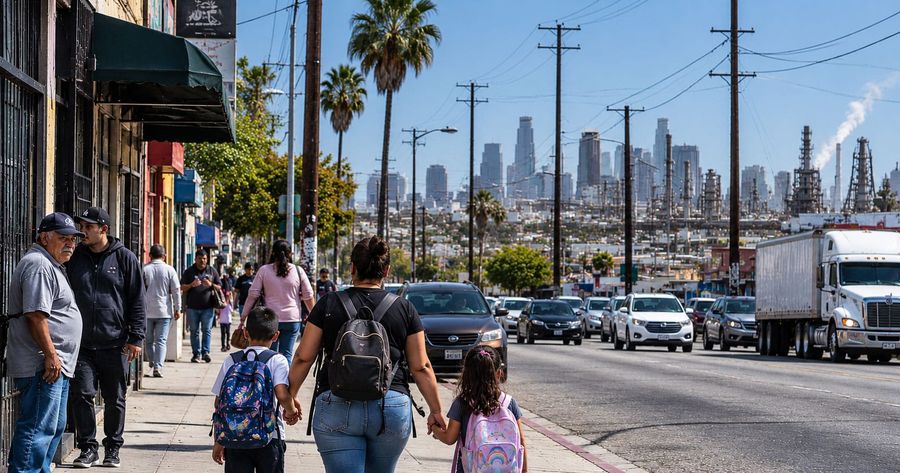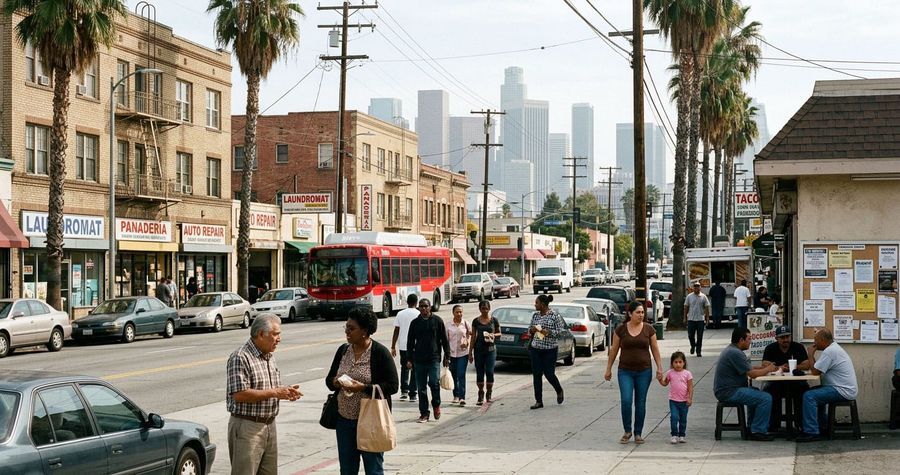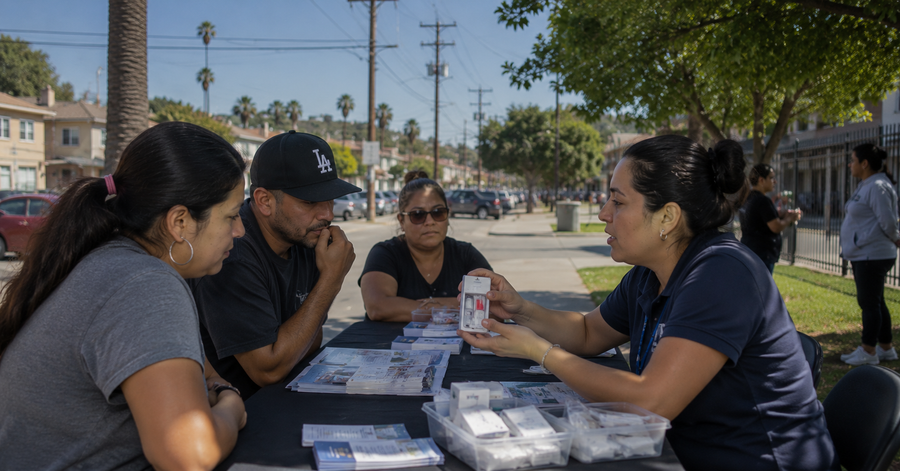

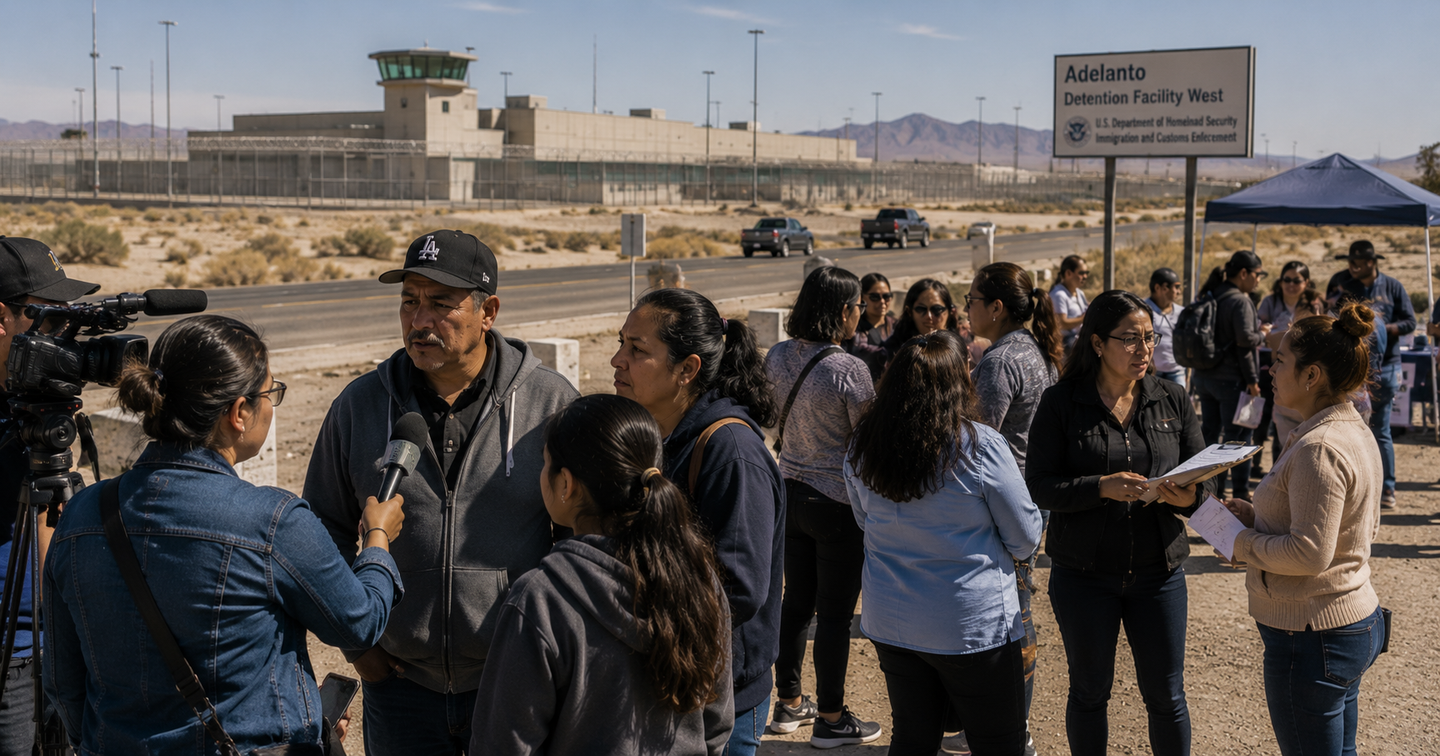
From human rights planning to conditions inside Adelanto’s ICE detention center, this episode of The Signal examines how policy decisions shape real lives. Professor Stephanie Brown breaks down gaps in L.A.’s anti-trafficking strategy, journalist Ryan Mena reports from inside detention, and candidate Sara Rascon joins the race for State Senate. Power, accountability, and lived experience collide in Los Angeles. Aired live on 90.7 FM KPFK Los Angeles on April 11 2026.

This is viewer supported news. Please do your part today.
This is a rush transcript. Copy may not be in its final form.
TRANSCRIPT
00:00:00:03 - 00:00:04:05
Music Intro
the whole run by a handful of greedy.
00:00:04:05 - 00:00:07:01
Music Intro
Bankers and CEOs who.
00:00:07:01 - 00:00:12:14
Music Intro
Nobody elected. What can't possibly last?
00:00:12:16 - 00:00:16:04
Music Intro
I'm going to tell you the numbers.
00:00:16:06 - 00:00:17:05
Music Intro
But you really only have to.
00:00:17:05 - 00:00:23:22
Music Intro
Remember that you're two words.
00:00:24:00 - 00:00:25:16
Music Intro
Coming.
00:00:25:18 - 00:00:52:14
DINO
Welcome back, Los Angeles. Welcome to The Signal. News, information and analysis. I'm your host, Dino. Another great episode today. We're going to jump right in. We have lots to cover. Hope everybody's having a good week. Thank you for being with us on this wonderful Saturday afternoon. We have, whole team of guests and great topics, including, Stephanie Brown from the Sunita Jane anti-trafficking initiative at Loyola Law School.
00:00:52:16 - 00:01:20:16
DINO
Journalists from the Southern California News Group, Ryan Manna and also Sarah Rascon, one of the candidates for the state Senate district 26, who we've covered on this program extensively. But we're going to jump right in and welcome our first guest, Stephanie Brown. Professor Stephanie Brown from the Sunita Jane anti-trafficking initiative at Loyola Law School, who's been on the program, in the past.
00:01:20:18 - 00:01:51:08
DINO
And we've talked about, trafficking, human trafficking, human rights, and the topic in particular of today and why we're jumping in so quickly here is this issue of the risk of human trafficking tied to the major events, like the World Cup and the Olympics happening here in Los Angeles. We've talked about the conditions that make these events high risk events, increased demand for low wage labor, pressure on housing, and the vulnerability of immigrant workers in particular.
00:01:51:10 - 00:02:24:22
DINO
Now we have an update on this topic. The Le 28 Human Rights Strategy, in collaboration with the city of Los Angeles, released their plan this week outlining what they intend to do to address and mitigate the potential concerns of, violations, human rights violations, human trafficking violations, issues of that nature. However, as we've now learned, it's largely relying on existing systems, laws and coordination efforts that are already in place.
00:02:25:00 - 00:02:44:16
DINO
And the big question we're asking ourselves today is, well, did they fall short? So to walk us through that, again is yes. Stephanie Brown, director and faculty advisor from the Sunita Jain Anti-Trafficking initiative at Loyola Law School. Stephanie, welcome back to The Signal.
00:02:44:18 - 00:03:04:23
STEPHANIE BROWN
Hi. Thank you for having me. This is Professor Richard from the Sunita Jain anti-trafficking initiative at Loyola Law School. And I can clearly answer your question, which is the Ella 28 human rights draft plan fails to protect human rights or prevent human trafficking.
00:03:05:01 - 00:03:32:13
DINO
Now, professor, we you know, the the you were part of the consultation process that this was supposed to be an informed plan that brought in advocates, experts in their field, such as yourself to, as I recall, when we first started covering this topic to ensure that the city didn't create gaps that they covered all their bases to ensure that some of the problems, challenges, and mistakes made in other cities.
00:03:32:13 - 00:03:45:08
DINO
With regard to this issue of human traffic and human rights violations did not happen here in LA. Talk to me about this process that you participated in and what was the end result?
00:03:45:10 - 00:04:14:14
STEPHANIE BROWN
Yes. As an expert in human trafficking, I was really excited to be invited to consult with Le 28 on the development of their section of their human rights plan on human trafficking. That consultation occurred in October of 2025, and I think all of us who were present were excited because it was the first time the Olympics human rights plan was required to have a discussion on anti-trafficking prevention.
00:04:14:16 - 00:04:44:13
STEPHANIE BROWN
And that is because of all the evidence based data that had come out that showed that labor trafficking increased around major sporting events, including the Olympics, because of the use of temporary workers and immigrant workers and the increased hospitality services needed. And so historically, around major sporting events, there had been a heavy discussion around sex trafficking increasing.
00:04:44:18 - 00:04:56:12
STEPHANIE BROWN
But that's not what the evidence based data shows. And so we as experts, were really excited to emphasize that the plan needed to take prevention steps around labor trafficking.
00:04:56:14 - 00:05:26:13
DINO
Now, with regard to the prevention steps, and before I ask you, exactly what were some of your recommendations and the panel of experts, including a report that you released back in December? But what is it that they came up with? It's my understanding from reviewing the report that they're actually reliant on existing systems that are already there existing laws, programs and mechanisms that may or may not be functioning properly and would prevent some of these problems.
00:05:26:15 - 00:05:28:15
DINO
Tell us more about that.
00:05:28:17 - 00:06:05:06
STEPHANIE BROWN
Yeah, well, when I hear a human rights plan or any kind of plan, what I believe needs to be included is deliverables, a timeline and resources. This plan has none of those things. It is general statements and covers just the existing, laws and mechanisms in LA County that have always been used around human rights. But when we're talking about a major sporting event that has a national security designation, more needs to be done.
00:06:05:06 - 00:06:38:10
STEPHANIE BROWN
And that is what we believed as experts would occur in October. A group of 25 experts provided very specific recommendations to Le 28 about the types of measures that would need to take place to prevent human trafficking before and during the games. And then we actually released a report that enumerated six areas that Le 28 could fund, and provided timelines of when this would need to be done to be impactful.
00:06:38:11 - 00:07:01:11
STEPHANIE BROWN
Because a plan right can't happen. The day before the Olympic starts, it must be a process. The good news is, is that this is a draft plan that was released last week, and so we still have over two and a half years before the Olympics. So we're hoping that this plan can become a real plan and cover the areas that we recommended.
00:07:01:13 - 00:07:16:07
DINO
Now, Professor Brown, six areas. Walk us through those six areas very quickly and tell us more about, some of the recommendations. But particularly the dedicated funding that was requested for that.
00:07:16:09 - 00:07:50:21
STEPHANIE BROWN
Yes. So as I said, a human rights plan cannot say we can leverage existing resources, to actually create change and prevent harm. And so we because this is the first time that human trafficking had to be enumerated in the Olympics human rights plan, we created six categories of areas that we felt like Le 28 as a starting place, could fund and, take steps, around preventing human trafficking.
00:07:51:02 - 00:08:35:04
STEPHANIE BROWN
So very quickly. The first was outreach and education around human trafficking, especially labor trafficking, because that is what is shown to increase around major sporting events. The second was to actually fund independent audits of the sporting contracts, supply chains. So you would know as a consumer the t shirts, right, that you were buying as part of the Olympics were not made with child labor or forced labor globally, the third was that we have increased resources and monetary commitment for legal monitoring and a negotiated MoU between the city and DHS.
00:08:35:04 - 00:09:18:17
STEPHANIE BROWN
Given the increased fear around, law enforcement and federal immigration enforcement actions. The fourth was increased money for victim services. And because we will be publicizing a local hotline, increased moneys for that hotline, the fifth is probably my favorite and innovation fund for that. Groups who want to do innovative efforts, a year before the games to prevent trafficking during the game could be resourced to do that, whether they be in that worker rights, animal rights, unhoused coalition sex worker rights, those groups that are vulnerable populations that we traditionally see as impacted by major sporting events.
00:09:18:19 - 00:09:36:16
STEPHANIE BROWN
And the last thing, as you know, professor, as well as someone who cares about evidence based data, is that we spend money and invest on an evaluation that's independent of what our human rights plan accomplished. So those were our six buckets and none of that received funding.
00:09:36:16 - 00:10:03:02
DINO
Okay, that was my next question. Professor, I understand that the proposal submitted by your organization and allies, called for something in the area of a $3 million investment for what is undoubtedly a very important strategic and if not obligatory component to ensuring that we have safe and secure services for potential, folks who are impacted.
00:10:03:04 - 00:10:05:14
DINO
Why wasn't any of this funded?
00:10:05:16 - 00:10:36:11
STEPHANIE BROWN
Yeah. Great. I can only say that the bottom line shows how much people care about an issue. And since this was zero, I hate to say that our city has failed our most vulnerable populations. There are billions of dollars being invested into security for the games. The city is currently negotiating with L.A. 28 money for things like increased trash, increased traffic control, increased policing.
00:10:36:13 - 00:11:03:11
STEPHANIE BROWN
Yet our human rights needs and increases are not even part of those negotiations. Now. Now, the good news is, again, it's not too late. This is a draft plan. The negotiations for the services agreements, whether they be, the general for the city, which we're supposed to finalize in October of 2025, have still not finalized. So our city can take a stand and insist that human rights is included.
00:11:03:13 - 00:11:25:04
STEPHANIE BROWN
But we also believe that L.A. 28 should not just be giving resources to the city, but because of the documented impact of, major sporting events on vulnerable communities, that there should be money from $1 billion industry given to our local community and service providers. And only then can we say we have a true human rights plan.
00:11:25:05 - 00:11:43:20
DINO
And indeed there will be more time, billion dollar, economic investment happening. Professor Brown, before we move on, how serious a problem is human trafficking human rights violations of that nature in L.A. right now?
00:11:43:22 - 00:12:16:13
STEPHANIE BROWN
Yeah. So what we can say is that human trafficking in both sex and labor trafficking happens every day in California and in our city, Los Angeles. That happens in our own backyards. But what we know, based on the evidence based data is that major sporting events, because of their increased demand for, temporary labor in the hospitality section and construction, in bending, lead to an increase of exploitation and abuse of workers.
00:12:16:13 - 00:12:52:20
STEPHANIE BROWN
And so we need additional resources and capacity to ensure that our games are not on the backs of individuals who are forced to work against their will. And I believe that Los Angeles has a historic opportunity to make those investments. Two and a half years before the games, and I believe our city and our county cares about human rights, and that if we can set the standards and the investments that the Olympics Committee, does here, it will impact things globally in the future.
00:12:52:21 - 00:13:14:08
DINO
Professor Brown, as we wrap up, tell us more. How can the audience get involved, learn more. You pointed out, we have a couple of years to this. There's still time. What needs to happen now or what are you asking? The city, including its constituents, to get involved in, to help navigate this issue forward.
00:13:14:10 - 00:13:41:13
STEPHANIE BROWN
Yeah. So the action that anyone can take next week is to join us at the ad hoc committee meeting for the Olympics and Paralympics Games at City Hall. It will be at 8:00 on April 14th, and public comment will be taken right at the beginning. And it is in City Hall, room 340. So please come and take a stand with us for human rights.
00:13:41:13 - 00:14:06:19
STEPHANIE BROWN
If you cannot make it for public comment, you can always reach out to your local elected city official, and let them know that you want the games to be a fair game. I really, for human trafficking and other human rights abuses, and that it's important to you that the city invest in that as much as in traffic and garbage collection?
00:14:06:21 - 00:14:26:16
DINO
Well, we've said it here before on this program, and this update brings it back in focus. The issue isn't whether the risks are known. They are no, the question is whether the response matches the scale of those risks. Stephanie Brown, professor at Loyola marymount. I want to thank you for joining us. We look forward to bringing you back as this issue continues to develop.
00:14:26:22 - 00:14:30:14
DINO
And we'll certainly be covering it. Thanks for being with us.
00:14:30:16 - 00:14:34:05
STEPHANIE BROWN
I look forward to joining you again. Thank you.
00:14:34:07 - 00:14:38:09
Music Intro
And let's give it up. And like.
00:14:38:09 - 00:14:39:05
Music Intro
I said.
00:14:39:07 - 00:14:44:01
Music Intro
If you all you see.
00:14:44:03 - 00:14:50:03
CUT
From all presidential look, if I
00:14:50:05 - 00:15:10:14
DINO
Welcome back. I want to thank my guests, Professor Brown, who has joined us in the past. And this is an issue that we'll continue to cover here on the signal. It's an issue we've covered before. And if you're, a regular audience member, you've heard that topic before, a quick programing check. Next week, we're going to be joined by Andrea Valadez from Color News.
00:15:10:17 - 00:15:30:03
DINO
Somebody who you've heard from here on a regular basis who will be bringing us the latest coming out of Sacramento. And the governor's race, which she's been covering extensively. And, of course, this week we had much going on on that front. So next week continues back with us. On the signal, make sure you tune in on that note.
00:15:30:03 - 00:15:45:11
DINO
We're going to transition now to I want to welcome, my guest who's in studio on a very important topic, something we've covered again here in the past around the issue of immigration. And that's this issue.
00:15:45:12 - 00:16:20:11
DINO
Of the Adelanto Persecution Prison processing center. My guest is, Ryan Manor, journalist with Southern California News Group, including, the Los Angeles Daily News, who's been reporting on the Adelanto prison out in what is a northern L.A. County, by the way, prison, which was previously a men's prison, if I remember correctly. And it was, men's prison for about 20 years until it was converted into an immigration detention center.
00:16:20:11 - 00:16:46:04
DINO
I think it was in 2011. And so today we're going to take a closer look at the conditions inside other Lando, ice processing center, one of the largest immigration detention facilities in the country. This facility is often difficult to access. And much of what we know comes from people inside. And journalists like Ryan, who are documenting these experiences are talking to folks firsthand.
00:16:46:04 - 00:16:56:21
DINO
And what she's going to share with us. You know, in talking to our prior to this episode left me an absolute wow. Not to mention her coverage is. So, Ryan, welcome to The Signal.
00:16:56:22 - 00:16:58:10
RYAN MANOR
Thank you for having me.
00:16:58:12 - 00:17:22:20
DINO
So, yeah, walk me through this. Tell me, how did this start for you as a journalist? You know, some of us, oftentimes are really focused end on becoming a specific type of journalism. We're focused on a particular area, economy, you know, criminal justice. What was it for you that drew you to this issue of, immigration detention?
00:17:22:22 - 00:17:50:10
RYAN MANOR
So back in 2018, when I was a community college student, the Office of Inspector General released a report on their unannounced visit where they found nooses made out of braided bedsheets in detainee cells. And that had a very lasting impact on me. I told myself back then that I was one day going to report on the conditions inside this place, and I went for, keeping in the loop of what's been going on with that detention center since.
00:17:50:10 - 00:17:58:16
RYAN MANOR
And this is a place that has faced widespread scrutiny from politicians, watchdog groups and advocacy organizations for years.
00:17:58:18 - 00:18:17:06
DINO
So give me, you know, give me an idea. Right. What has your, journalism uncovered at Adelanto and how has that grown change developed over the last couple of years that you've been covering conditions at other London?
00:18:17:08 - 00:18:45:02
RYAN MANOR
So I've been closely following conditions, for the past about four months since I've begun, you know, talking to people on a regular basis who are detained inside and what's consistently brought up to me is our issues with food, water and medical care lately, more and more people. And what I mean by lately, I mean, within the last few weeks, several people have told me that they're afraid that they're going to die inside of there.
00:18:45:04 - 00:18:58:21
RYAN MANOR
This is a place where since September, five people have died who were detained inside the Adelanto Ice Processing Center. And so people are hearing about this. People inside are hearing the news about these deaths, and they're afraid that they're going to be next.
00:18:58:23 - 00:19:17:16
DINO
Right. Paint a picture for me. And what do you on the folks that you've talked to and what you've uncovered in your coverage? You know, give me a visual. This is obviously, you know, in our medium it's about it's radio, but paint us a picture for what we're what we're talking about here.
00:19:17:18 - 00:19:46:10
RYAN MANOR
So this is a facility. So the orderly out to ice processing center is actually made up of two facilities east and the west. This is a place that's in the Mojave Desert in the San Bernardino County, roughly 85 miles northeast of Los Angeles. The facility is on a road that's splintered with cracks and potholes. It's a facility that's surrounded by razor wire, and it's a difficult place for people to visit.
00:19:46:11 - 00:19:49:00
DINO
How many folks are housed there? Do you know?
00:19:49:02 - 00:19:55:21
RYAN MANOR
As of mid-February, the last time Ice released detention management data, there were around 1800 people.
00:19:55:23 - 00:20:07:16
DINO
Now, you've reported on and you mentioned, right, food issues, water, medical care, the issue of medical concerns and delayed care. What stood out to you the most? What's the condition in that regard?
00:20:07:18 - 00:20:35:23
RYAN MANOR
What's that to me the most is the amount of time it takes for people to be seen. People have told me it takes weeks. If not months, to be seen after they submit a medical request. And what also stood out to me is that several people have told me that even in cases where there are medical emergencies, say someone's on the floor foaming at the mouth, that it takes ten minutes, 30 minutes to be seen to be paid attention to by facility staff.
00:20:36:01 - 00:20:43:02
DINO
Now you've also described issues of isolation, solitary confinement. What can you share about that?
00:20:43:04 - 00:21:02:07
RYAN MANOR
Yeah. So several people have told me that being detained inside Adelanto is like psychological torture, because they don't know when they're going to be released. They don't know when they're going to see life outside, and that it's really difficult for them to to be in there not knowing what's next.
00:21:02:09 - 00:21:25:23
DINO
Ryan, I followed you on your social media, and we'll make sure that we plug that before we there was one clip on your social media page of an individual who described somebody. And get ready for this, folks biting his finger off and eating it. Now, this happened inside the facility.
00:21:26:01 - 00:21:58:16
RYAN MANOR
Yes. So this happened in one of the ordeal on so ice facilities. This man Jose has been detained inside ODL on two Ice facilities for nearly three years. And about a year into detention. Another detained man bit the tip of his right pinky off and he ate it. And after Jose was taken to a hospital, he said he was thrown into solitary confinement for several weeks into a cell that was leaking some sort of liquid, and that he didn't receive proper medical care for his infected finger until after it burst.
00:21:58:16 - 00:22:01:08
RYAN MANOR
When he was sleeping.
00:22:01:10 - 00:22:22:18
DINO
I mean, I'm just trying to picture this, right? Not to get too gory with you. All are on the other side of the microphone here, but, you know, I'm just as I was when I first saw this. It's kind of left without words. And to hear you describe it here live. I just can't imagine what this must be like.
00:22:22:20 - 00:22:45:10
DINO
So folks come in, they say, look, I'm not feeling well. Or maybe I take I have an existing medical condition. You have to fill out something it sounds like and say like, and folks will go on, for some time without it. And now Ice often times disputes these claims. How do you navigate this issue as a reporter, both in terms of their disputing the claims?
00:22:45:10 - 00:23:00:21
DINO
And of course, you're doing your due diligence as a reporter, as an investigative journalist, to ensure that what is being said is not only accurate but counters the government's, effort to wash this, you know, diminish this, wash it away.
00:23:00:23 - 00:23:27:06
RYAN MANOR
So I think it's important like for the my, my story on the letters I received from several detained people, I thought it was important to include those letters for people themselves to read, because I think the story speaks for itself. And I think ice disputing these claims also speaks for themselves, speaks for itself. So all I can really do is, you know, include ICE's statements and let the reader think what they will now write.
00:23:27:08 - 00:23:39:15
DINO
You mentioned, your story on letters. Tell us about that story. Folks sending you letters from within the you described in one of your pieces.
00:23:39:17 - 00:24:04:02
RYAN MANOR
Yeah. So when we hear news about Adelanto, it's often about or even any other Ice detention centers, it's often about statistics. How many people are detained inside about a disease that's maybe gone rampant inside, or the death of yet another person. And all of that is very important news, information. But what I think has been left out of the conversation is the people who are actually inside these facilities.
00:24:04:04 - 00:24:17:07
RYAN MANOR
They are the ones who can paint the clearest picture of what life is like inside. And so that's what I sought to do by obtaining these letters. And I think also obtaining these handwritten letters helps to humanize the people inside.
00:24:17:09 - 00:24:46:23
DINO
My guest is Ryan Manna, journalist with the Southern California News group Los Angeles Daily News. An investigative journalist who has done, a lot of work in recent months, around the detention center, located in San Bernardino County. And I think earlier I said northern L.A. County. And, you know, Ryan's been covering this topic of, the impact it's having on, folks who are being incarcerated process there, some of which have been there for quite some time.
00:24:47:01 - 00:25:07:01
DINO
Ryan, you've described a lack of transparency. What barriers exist for journalists like yourself are going out there? I've seen in fact, we've had elected officials who said to us, you know, we went to the land, they refused to let us in and others did. We're able to go in. And, of course, advocacy activist groups who have been on our show talking about their own experiences.
00:25:07:03 - 00:25:14:22
DINO
But for you all as journalists trying to report on facilities like on the land, what have been the biggest challenges?
00:25:14:23 - 00:25:36:14
RYAN MANOR
The biggest, one of the biggest challenges for me as a journalist, reporting on this Ice tenure is getting information from the people who run this place, from the agencies who run this place, such as Ice, such as Geo Group. When we send inquiries, when I send inquiries, and sometimes they're responded to sometimes or those responses, don't answer my questions.
00:25:36:16 - 00:25:46:02
RYAN MANOR
And so it's difficult to, you know, get information, from the agencies that are running this place. So that's one of the biggest barriers. Information.
00:25:46:04 - 00:25:55:07
DINO
As a journalist, when you look at a place like other land, how is that facility a reflection of what's happening across the country?
00:25:55:09 - 00:26:30:00
RYAN MANOR
So Ice detention centers have been getting receiving a lot of widespread scrutiny recently, such as ODL on Toh last year. There a record number of deaths since I believe 22,004 and Adelanto, you know, with the five deaths that have occurred there since September, is, you know, an example of what is also occurring across the country. So though this detention center is important to pay attention to, I think the detention system is also very important to pay attention to.
00:26:30:02 - 00:26:35:15
DINO
What do you think is the most important thing the public needs to know about these facilities?
00:26:35:17 - 00:27:05:15
RYAN MANOR
I think one important thing that people should know about is who runs these detention centers, and that is private prison company, Geo Group. There are Florida based private private prison company who runs about 50 Ice facilities across the U.S., and they donated hundreds of thousands of dollars to Trump's 2024 presidential reelection campaign. And after Trump took back the Oval Office, Geo Group secured more than $1 billion in contracts to run these facilities.
00:27:05:15 - 00:27:09:19
RYAN MANOR
So I think it's important for people to know who's who's running this place, these places.
00:27:09:19 - 00:27:38:01
DINO
Are there any any advocacy groups that you've had a chance to work with? One of our listeners sent in a message saying, is there? And I actually we've covered this before, but and sorry to throw this kind of curveball at you, but the the listener is asking, are there any organizations that you're aware of that provide services, including low bono, pro bono immigration services for some of the people that you've covered on, on this issue?
00:27:38:03 - 00:28:03:07
RYAN MANOR
That's a good question. Well, an advocacy organization that I'm regularly in contact with is the Inland Coalition for Immigrant Justice. They aren't a law firm themselves, but they can provide, people detained with various services, sometimes legal services, visitations. And then there's also immigrant defenders, law firm who provide lots of services to people in the SoCal region.
00:28:03:09 - 00:28:06:02
RYAN MANOR
So those are just two of many that exist in California.
00:28:06:04 - 00:28:26:07
DINO
And immigrant defenders have been a guest on this program before and actually have shared valuable information. Ryan, as we wrap up, I know that this is a topic you're going to continue to cover. And if folks who are listening or, folks, know somebody who is either there.
00:28:26:07 - 00:28:27:07
DINO
Or.
00:28:27:09 - 00:28:38:07
DINO
Wants to share their story with you, you're still looking for folks to continue to document this process. What can you tell the audience in terms of how do they reach you? How do they connect with you?
00:28:38:09 - 00:28:58:03
RYAN MANOR
So you can find me on Instagram? Ryan underscore Mena Ryan is spelled r y a and e underscore Mena. You can reach me there. Reach out to me via email are mena at SE and com. I'm looking to speak to as many people as I can who know people who are currently or formerly detained inside the Adelanto Ice detention centers.
00:28:58:08 - 00:29:00:20
DINO
One more time to email our Ryan.
00:29:00:22 - 00:29:04:07
RYAN MANOR
Our Mena at se Ngon.
00:29:04:09 - 00:29:16:17
DINO
Ryan Mena is a journalist with Southern California News Group, including the Los Angeles Daily News. Her reporting continues to bring us, voices from the inside, inside the system that is largely out of public view. Brian, thanks for being with us.
00:29:16:21 - 00:29:18:09
RYAN MANOR
Thanks for having me. Me.
00:29:18:10 - 00:29:24:17
Music Intro
Are you guys back to get back inside?
00:29:24:19 - 00:29:31:14
Music Intro
No no no. La la la la la. Me. And I was.
00:29:31:18 - 00:29:32:10
Music Intro
Just going to get you.
00:29:32:10 - 00:29:50:19
Music Intro
Yeah, that's my thing right there. He never cared. I said I'm looking for that because I believe he ain't no la la la la. La. They're all you see. Oh, some senile president.
00:29:50:20 - 00:30:03:13
Music Intro
Look at that salami. Let's move the fat. And they don't get it. Dennis, on 20th January, President.
00:30:03:15 - 00:30:10:04
Music Intro
You tell us. Can't get any credit back. Even back. Way back in time and number.
00:30:10:06 - 00:30:42:21
DINO
Welcome back. So today we're going to continue our special coverage on, elections. Right. As many of you all know. And if those of you who've been following us, we have, had an ongoing series, our special series, politics, tacos and beer. And, by the way, a programing note. Next week, we'll have another, candidate of running for office, Angela Gonzalez Torres discussing her campaign for the, California's, 34th Congressional District.
00:30:42:21 - 00:31:19:14
DINO
Again, that's next week Angela Gonzalez Torres, joining us on her campaign for California's 34th congressional district today. We continue our coverage on Senate District 26. Last week, we had another candidate. We've now had several candidates, on this program for this particular race. And, as part of this, again, ongoing political series, politics, tacos and beer, a space where we open up for candidates, elected officials and the public to come in and help us break down policy, politics and the real impact on working people's lives.
00:31:19:16 - 00:31:43:11
DINO
To joining us now is Sara Rascon, a candidate in the race for Senate District 26 with a background in environmental justice, and which is actually when I first I think you and I first met, just crisscrossing the policy politics world that is L.A., community development and public service. And of course, you did work, in public service, in government.
00:31:43:13 - 00:31:46:03
DINO
Previously. Sara, welcome to the show.
00:31:46:05 - 00:31:48:14
SARA RASCON
Hi. Thanks for having me. It's a pleasure to be here.
00:31:48:14 - 00:32:25:01
DINO
So, Sara, I'm going to open up, as I have with every guest. To me, I, I always like asking this question because I am a it gives us a little insight into the human. I like to say politicians are people to because I think, you know, especially days like today, we lose sight of that. We see politicians, elected officials, as you know, agents of government and, you know, I like to remind folks that, no, no, these are folks like you and I who decided to take that step forward.
00:32:25:05 - 00:32:50:06
DINO
So here's my question. Sara Rascon is sitting in the living room. Maybe she's out, drinking lemonade, cutting flowers. And the cloud parted. The light came through. You hear the proverbial noise that, you know, I remember in the cartoons, the music plays and it hits the light of beam on Sara, and it says you should run for office.
00:32:50:07 - 00:32:51:21
DINO
Was that how it happened?
00:32:51:23 - 00:32:58:06
SARA RASCON
No, not at all. Definitely not something that I've planned.
00:32:58:08 - 00:33:00:07
DINO
What brought you to this point?
00:33:00:09 - 00:33:27:12
SARA RASCON
It really goes pretty deep. Has to do with my upbringing. I was raised in El Sereno or El Sereno, as some people call it. And El Serrano is the neighborhood furthest east in the city of LA, having grown up in a community that is a but to two other cities Alhambra in South Pasadena. I grew up questioning inequity.
00:33:27:14 - 00:33:49:03
SARA RASCON
Why does our neighborhood look different? Literally one street to the next. But also, government was very involved in our lives as children. My siblings and I and, you know, my parents did the best they could. Funny fun fact, they actually met at the L.A. times think, oh, yeah, L.A. times was a big employer of a lot of our family.
00:33:49:08 - 00:33:53:20
SARA RASCON
My uncle helped unionize their print press when we had print media.
00:33:53:23 - 00:33:54:14
DINO
Oh, wow.
00:33:54:17 - 00:34:20:02
SARA RASCON
Okay, but I digress. You know, the point is, our parents had a tumultuous divorce, and my grandmother stepped in as our legal guardian. So we, at an early age, had social workers in our home, went to Children's Court and my grandmother, as an immigrant who never learned English till this day, had to navigate bureaucracy, LAUSD for my brother, government for us.
00:34:20:02 - 00:34:44:23
SARA RASCON
And furthermore, I would hear her say things like, Como si la la caixa? How do you get this street fixed? Right. And I knew beyond our, you know, property her line. It was government that was responsible. And from an early age, I just very much became dedicated and committed to figuring out this invisible system that impacts all of our lives, whether we are civically engaged or not.
00:34:44:23 - 00:34:50:00
SARA RASCON
And my family certainly was not super politically and civically engaged.
00:34:50:00 - 00:35:10:07
DINO
Now, prior to this effort of yours, now, of running for, this particular Senate district seat, Senate, district 26, you worked in government? Alongside other communities by way of that government vehicle. Tell us more about that period in your life.
00:35:10:09 - 00:35:19:22
SARA RASCON
You know, I am a, lifelong public servant. I don't consider myself a politician yet.
00:35:20:00 - 00:35:20:13
DINO
Okay.
00:35:20:15 - 00:35:22:16
DINO
Fair enough. I gotta I gotta follow up on that.
00:35:22:16 - 00:35:48:05
SARA RASCON
Yeah. There's a way to continue to serve and not fall into the toxic spiral of owing other people and favors and lobbyists, and I'm sure we'll get into it. But, yes, to answer your question, you know, I started my work in community voter engagement as a community organizer, civically getting those who have historically been, you know, underserved, engaged.
00:35:48:07 - 00:35:54:18
SARA RASCON
And that's actually where we met. I believe my former boss was a frequent, speaker on Kpfk.
00:35:54:18 - 00:35:57:21
DINO
Yes, yes. Antonio and Salazar Rippy.
00:35:57:23 - 00:36:25:18
SARA RASCON
Yes. Great man. You know, taught me a lot. But I also knew that I wanted to be behind the scenes in the system and that's exactly what I did. I volunteered on a campaign for then state assemblyman Jimmy Gomez. It was his first time running for office, and I had the distinct honor and privilege of representing our communities on the East side and directly serving my community and helping connect them to the state legislatures, state issues.
00:36:26:00 - 00:36:47:10
SARA RASCON
You know, I was boots on the ground as a person helping resolve issues in state government and working with the other entities. I then went on to work in other levels of government. I actually started as an intern on the Hill many moons ago and did so through a public education. You, CDC program, which my grandmother drilled into us.
00:36:47:10 - 00:37:15:16
SARA RASCON
Education is the way out of poverty. And for me, it certainly was. And you know went on then to work for an environmental agency that does open space work, environmental equity, tribal work, ahead of its curve, for sure. And to your point, most recently worked for the mayor's office. So have a vast array of government experience, which has given me a very front seat to also seeing a lot of our gaps and inefficiencies.
00:37:15:21 - 00:37:42:14
DINO
Now, sort of how does how do you consolidate that? Right? How do you synthesize, you know, one could easily say, well, you know, I got a little bit of a taste of all of these different sectors of, civic engagement, accountability, you know, community, but how do you synthesize it into, let's say, district 26 and running for office as a state senator?
00:37:42:16 - 00:38:06:10
SARA RASCON
You know, politics is local. Everything affects us down on the local level and especially in the state legislature. I don't think that we realize enough how much the state affects us down to our city level. And because I have this vast array of experience, like I said earlier, I know what the gaps are, the inefficiencies, and I'm a solutions oriented person.
00:38:06:11 - 00:38:32:15
SARA RASCON
I know where the red tape is and how we can get around it. And quite frankly, I was, you know, not willing to take the status quo and accept business as usual, politics as usual, the same old thing, because we've had a Democratic majority in the state legislature for quite literally decades, right? The last time we had Republican power or someone in control was Arnold Schwarzenegger.
00:38:32:17 - 00:38:43:12
SARA RASCON
And even then we had a Democratic state legislature, and we need to do more because doing the same thing and expecting a different result, as we all know, is the definition of insanity.
00:38:43:14 - 00:39:13:16
DINO
You know, I appreciate you bringing this this up because, you know, you've held roles focused on implementation, turning policy into, real programs. What have you seen are the biggest gaps between the policy promise and what people actually receive? And I ask this because, you know, as you pointed out, look, we've had democratic, government for years, and yet the infighting still exists.
00:39:13:16 - 00:39:26:18
DINO
The challenges with getting one bill passed or another turning policy into programing. What do you see are the biggest challenges, and how do you think, you'll navigate that as a state senator?
00:39:27:00 - 00:39:51:09
SARA RASCON
You know, it often has to do with the implementation and having a dedicated person or entity that not only gets a bill passed, but how do you see that impact people's real life on a day to day basis? How do you get the people to get engaged with this state program? How do you connect people to workforce opportunities or apprenticeships?
00:39:51:09 - 00:40:20:19
SARA RASCON
Yes, it's great that bill created new jobs in the Green economy, but how are we really translating that to the people that are going to or are already most affected? And I've had the distinct privilege of being that point person to implement policy. And if you don't have someone that's constantly on it who is, you know, reaching out to the community and making them aware, creating this pathway opportunity, then it it's going to fall on deaf ears.
00:40:20:20 - 00:40:24:20
SARA RASCON
It very well could and often does.
00:40:24:22 - 00:40:47:23
DINO
My guest is Sarah Rasco on running for who's a candidate for State Senate District 26, part of our ongoing series politics, tacos and beer. We've now had several candidates in this particular race, coming. And maybe as we get closer to voting, they will synthesize some of these interviews into one. That's not a bad idea. My producer's on vacation.
00:40:47:23 - 00:41:14:01
DINO
Thank you, Nela, for not being back yet. But I'm not bitter that she's gallivanting across Europe, but I digress. Let's going back to your time at the mayor's office. You've gotten a firsthand look at what works. Well, and, you know, I know that you're running for state office, but, city of L.A., four point some odd million people.
00:41:14:03 - 00:41:40:03
DINO
The district granted, it's not 4 million people, but the point I'm getting at is you've seen what works well, what can work well, what are the systems that need changing that highlight what's not working well? And we're talking about systemic challenges. What would you see are what would you say are the challenges that you identify. And as such, how would you, as a candidate deal with that?
00:41:40:05 - 00:42:07:18
SARA RASCON
Speaking from a macro level? Right. Not necessarily. Local state trickles down to a local, you know, it it really has to do, like you said, with systemic issues and getting to the root cause of these issues. And what can the state do to help people and therefore help the 58 counties in the state of California and those counties then help the cities?
00:42:07:20 - 00:42:21:07
SARA RASCON
You know, what I have seen is a lot of bureaucracy, a lot of red tape and a lot of government stepping on its own two feet and not adapting with the times.
00:42:21:09 - 00:42:51:00
DINO
Okay, I can totally appreciate that. Speaking of bureaucracy, one of the biggest challenges that we're facing, not only here in the city, but across the state, is this issue of housing. Housing is probably the defining issue across this district. The Senate District 26 and deed across the city and across the state at this point, when you talk about affordability, what does that actually mean in real terms?
00:42:51:01 - 00:42:55:23
DINO
And who is, who is the policy working for and not working for?
00:42:56:01 - 00:43:21:23
SARA RASCON
Great question. And at this point in time, I believe that policies around housing are working best for a two person household with two incomes and both that have good jobs. They have benefits, they have a pension. And that's just not the reality for the majority of the state. As you know, many of us are working class or single parents, right?
00:43:22:00 - 00:43:53:14
SARA RASCON
Or seniors on a fixed income. There are certainly more of us than there are of that traditional household, which is a rarity. And, you know, in the case of first time homebuyer programs, in the case of new housing, which is typically luxury housing, you you more likely than not need a two person income. So the housing that we really need is that which accommodates the wages in our communities and is accounting for the future.
00:43:53:16 - 00:44:22:13
SARA RASCON
I have family who live in a senior housing development that has, you know, some federal funds through HUD. And unfortunately, HUD has cut those programs. So senior housing has been halted and we have an aging population. This is an opportunity for California to launch progressive taxes, for instance, and backfill those incentives, those subsidies and Trump proof California as as the largest, you know, fourth, fifth largest economy.
00:44:22:13 - 00:44:27:05
SARA RASCON
We tinker between 4 and 5. We have the opportunity to do that.
00:44:27:07 - 00:44:49:01
DINO
Now. You again brought this up already. This is a working class district where many people are already working, as you said, multiple jobs. Right? One household just to survive may have 2 or 3 adults who are working multiple jobs themselves. You know, what is force work development look for look like in a district like this, who is already stretched?
00:44:49:01 - 00:44:55:13
DINO
Then, you know, how should the state be thinking about growth and job quality?
00:44:55:15 - 00:45:24:05
SARA RASCON
You know, I briefly touched on progressive taxes and my first job at a voter registration, education outreach, nonprofit agency. We also worked on proposition 39 back in the day in 2012, which closed a corporate tax loophole and directed funding to green jobs. Now that funding has since been exhausted and expired. But we know for a fact that corporations are not paying their fair share.
00:45:24:06 - 00:45:50:07
SARA RASCON
This is the biggest wealth inequity we've ever seen because of the lack of regulation. I have friends in tech in I who have said we're not getting regulated enough. You know, if the employees are saying, I'm not going to say who or where, you can, you know, figure that out for yourself. But we need to invest and have our business community also invest in jobs for the future.
00:45:50:07 - 00:46:16:01
SARA RASCON
That means jobs for the green economy. You know, those jobs that are going to transition for future economies. We need to change the way we see traditional training, workforce development, apprenticeships and trades and overall, you know, really preserve that labor that is, you know, manual and skilled where you still need people because the future, you know, technology is coming and it's already replacing people.
00:46:16:01 - 00:46:42:19
SARA RASCON
But nonetheless, there are still roles where we can help people better hone in on their existing skills and also help with professional development. You know, it's not just one training course and that's it. You're done. We have to go much more beyond that and really invest in the capital of people, especially because a lot of these businesses and corporations are getting rich off of our backs, our skills, our labor, and that's what's contributing to the wealth and equity.
00:46:42:21 - 00:47:07:02
DINO
My guest is Sara Rascon, candidate for State Senate District 26, part of our ongoing series, politics, Tacos and Beer and we are going to be asking Sara as we wrap up towards the end of this segment, what her favorite taco policy issue Taco and drink is. But before we get to that, I spent a lot of time on the environmental issue.
00:47:07:04 - 00:47:39:18
DINO
Right. You spent a lot of time on environmental equity for folks listening. How does that show up in their daily lives? Right. Why? You know, I remember, somebody used to say to me, he used to say to me, Latinos were the only and this is not a Latino centric question, but this particular cat used to say to me, Latinos were the biggest environmentalists because we're the ones that, among the the highest concentration of users of state parks, which includes beaches and go to any beach, you see the Latino then.
00:47:39:20 - 00:47:49:19
DINO
Anyway, so just remembering that, how does this, how do you balance economic development with environmental protections?
00:47:49:21 - 00:47:51:04
SARA RASCON
There is a way to do it.
00:47:51:04 - 00:47:52:03
DINO
Tell me.
00:47:52:05 - 00:47:53:00
SARA RASCON
You know.
00:47:53:01 - 00:47:55:10
DINO
I'm like Mark Anthony right now. I need to know.
00:47:55:12 - 00:48:21:01
SARA RASCON
Our environment, which we may not see. That's hilarious. Which we not we we may not see manifest itself. You know, very evidently when you see a green space, but really, our parks and open space, our green spaces can and, you know, at least where I work for sure, they are multi benefit multipurpose spaces. So we're talking, you know places for gathering.
00:48:21:01 - 00:48:49:01
SARA RASCON
But also stormwater capture greenhouse gas capture and reduction. They you know these green spaces are contributing to our well-being. Your mental health, your physical health and also can promote jobs. I helped launch a L.A. River ranger program where we are working with Los Angeles Corps members to do an implement, actually a state bill, AB 1558, by then Assemblywoman Christina Garcia.
00:48:49:06 - 00:49:11:13
SARA RASCON
So this is bringing youth to the river. Where they have may have not been giving them skills to do operation and maintenance, you know, providing that workforce development pipeline, should they want to be a Ranger, we can certainly introduce those skills and help them work their way up. And also the building of a park, the design, the construction, the implementation.
00:49:11:13 - 00:49:37:18
SARA RASCON
This is using people skills to create a regional asset. You know, you mentioned places of gathering. I was at a Legion park for Easter for a different meeting, and it was a number ample busy with families. You know, these are places for gathering that can also bring, like we said, workforce development, green jobs. We need people to have a presence at our parks that help with nature interpretation.
00:49:37:20 - 00:50:07:05
SARA RASCON
Like I said, we also can, you know, train folks to become rangers, which is a much friendlier, you know, peace officer whose first, reaction is to work with the public. Right? That is, that's part of their mission is to be able to identify birds. Vegetation, trees. It's a friendly face. But anyway, the point is, you know, and rangers can still retire at 55, but they are more so dedicated to open space preservation and nature.
00:50:07:07 - 00:50:16:06
SARA RASCON
So urban greening is certainly multi benefit, multipurpose and serves us in many ways and should be accessible to everyone.
00:50:16:08 - 00:50:44:17
DINO
You know, set up. As somebody who's worked in these coalition spaces, you know, one thing that we all know, whether you're a coalition builder or not or just part of the, the constituency, governing also requires taking positions that not everybody's going to be happy with, right? I mean, you can never you know, I've, I've asked and mentioned this to other elected officials or just to folks running for office.
00:50:44:19 - 00:50:53:05
DINO
There's always going to be an issue where you're not going to have everybody on board. How do you navigate that tension?
00:50:53:07 - 00:51:30:10
SARA RASCON
As someone who has been a consensus and coalition builder throughout my entire career, first and foremost is bringing people together and hearing them out, understanding the different issues and really dispelling any false information and being driven by data. I've always tried to make my decisions based on information and actual data that's credible. So having that guiding foundation has always been extremely important for me, especially when bringing people together on controversial topics and developing compromise, you know, especially on these issues that are tough.
00:51:30:12 - 00:51:54:01
SARA RASCON
You're not going to make everyone happy, to your point. But when we can compromise in the middle and create a happy medium, you know, ultimately I'm here and have always governed by doing what's good for the greater good. And that's how I will continue to make my decisions. Deciding between, you know, what's the going to create the most good for our community members.
00:51:54:03 - 00:52:13:22
DINO
Sara Rascon is a candidate for State Senate District 26. Joining us here on The Signal news, information and analysis. As we as part of our ongoing, coverage, politics, tacos and beer, our coverage on elections and politics in general. This is a crowded field. There's about 3465 candidates in this race.
00:52:14:00 - 00:52:17:09
SARA RASCON
Might as well be,
00:52:17:11 - 00:52:36:03
DINO
And we're, you know, as somebody who's interviewed now several, you know, similar priorities are emerging. And that's cool. I mean, that's fair, right? And and that's just part of the gig housing and environmentalism and others. What actually distinguishes you from the other candidates in the race?
00:52:36:03 - 00:52:44:14
SARA RASCON
Well, there are quite a few other candidates. I would say. Most can be put into a category of being institutional Democrats.
00:52:44:14 - 00:52:45:09
DINO
Okay.
00:52:45:11 - 00:53:08:05
SARA RASCON
And I myself, despite having worked in government and public service, I'm not that institution candidate. I don't have a lot of the quote unquote traditional support. But what makes me stand out is that I have the community support. As someone who is born and raised in this district, has served this district and knows the NGOs, the CBOs, the community leaders, I have been a lifelong resident here.
00:53:08:05 - 00:53:28:05
SARA RASCON
And I'm not just coming around now asking for a vote. People know me. I've established trust and relationships and what's most important and significant to me that stands out is that we have over 500 individual donations. We are truly fueled by people and the people of this district. This isn't just anyone. These are people who have never contributed to a campaign, never been involved.
00:53:28:09 - 00:53:32:03
SARA RASCON
So we are truly creating a social movement through this campaign.
00:53:32:05 - 00:53:56:22
DINO
And with that, I'll come to my final question. And this is, I think, the question that's going to get anybody elected. And that's the following. We do call our series politics Tacos and Beer. And here we ask that proverbial important, life changing questions. What's your favorite political topic? What's your favorite taco and what's your favorite drink? It doesn't have to be beer because my producer says, don't ask people what their favorite beer is.
00:53:56:22 - 00:54:02:06
DINO
Fine. It could be wine, whiskey, scotch or water. So again.
00:54:02:08 - 00:54:03:15
DINO
Favorite political topic?
00:54:03:20 - 00:54:05:04
DINO
Tacos and beer.
00:54:05:04 - 00:54:31:00
SARA RASCON
Go, political topics citizens United getting corporate interests and special interest money out of politics who have no limits, whereas actual individuals do, which is ridiculous and is changing our campaigns. Taco, it's really hard. I love me a burrito from King Taco, but I also love, Michoacan on Lincoln Heights on Broadway. They're open 24 hours and El Russo, honorable mention.
00:54:31:05 - 00:54:33:19
SARA RASCON
Favorite beer Pacifico, honorable mention.
00:54:33:19 - 00:54:36:14
DINO
And where can people learn more about your campaign?
00:54:36:16 - 00:54:45:16
SARA RASCON
Please visit us on Instagram. We're very active on the Gram Rascon for Senate. And also our website is just go on for senate.com. Thank you so much.
00:54:45:18 - 00:55:11:11
DINO
Roscoe and Garrity for California State Senate District 26. Thank you for joining us. And as we continue to cover this race and all other races, you know, we're hearing different approaches to the same challenges, and voters will ultimately decide what kind of leadership they want representing this district. And I want to thank you for joining us. And I want to thank all the, folks listening in the audience on kpfk.org and across the interwebs.
00:55:11:11 - 00:55:32:05
DINO
Net, as well as our 98.7 FM, Santa Barbara, 93.7 FM San Diego, and of course, our friends out in Ridgecrest, China Lake in 99.5. And you know, on a closing note, a quick programing note. I want to remind all of you next week, we'll have, Andrea Valdez from Carlisle News giving us the latest on the governor's race.
00:55:32:06 - 00:55:59:15
DINO
And we're going to then head to Arizona, where this week the state saw the largest drop in snap participation nationwide, impacting hundreds of thousands of residents, residents, including children. We'll speak to state senator, Marianne Sandoval, Mariana Sandoval about what's happening there. And then again, one more time on Gilligan's Gonzalez stories, discussing her campaign for California's 34th congressional district.
00:55:59:17 - 00:56:24:09
DINO
So on that note, I want to thank our engineers, Vic, the poet who is behind the white today, and, Sly rivers, our other engineer. Special thanks to Fabian Montes for joining us. With production today. And of course, the, ever so missing producer nella, who last I heard is crisscrossing Europe somewhere. But we're not bitter about that.
00:56:24:11 - 00:56:33:15
DINO
Thank you. This has been the signal. I'm your host, Dino. Stay tuned as, my homies from the car show coming up next.
00:56:33:17 - 00:56:42:21
Music Intro
The government in general, in the US. Every coming back. Same.
00:56:42:21 - 00:56:45:22
Music Intro
You never stop.
00:56:46:00 - 00:56:48:22
Music Intro
And I said I get no data inside.