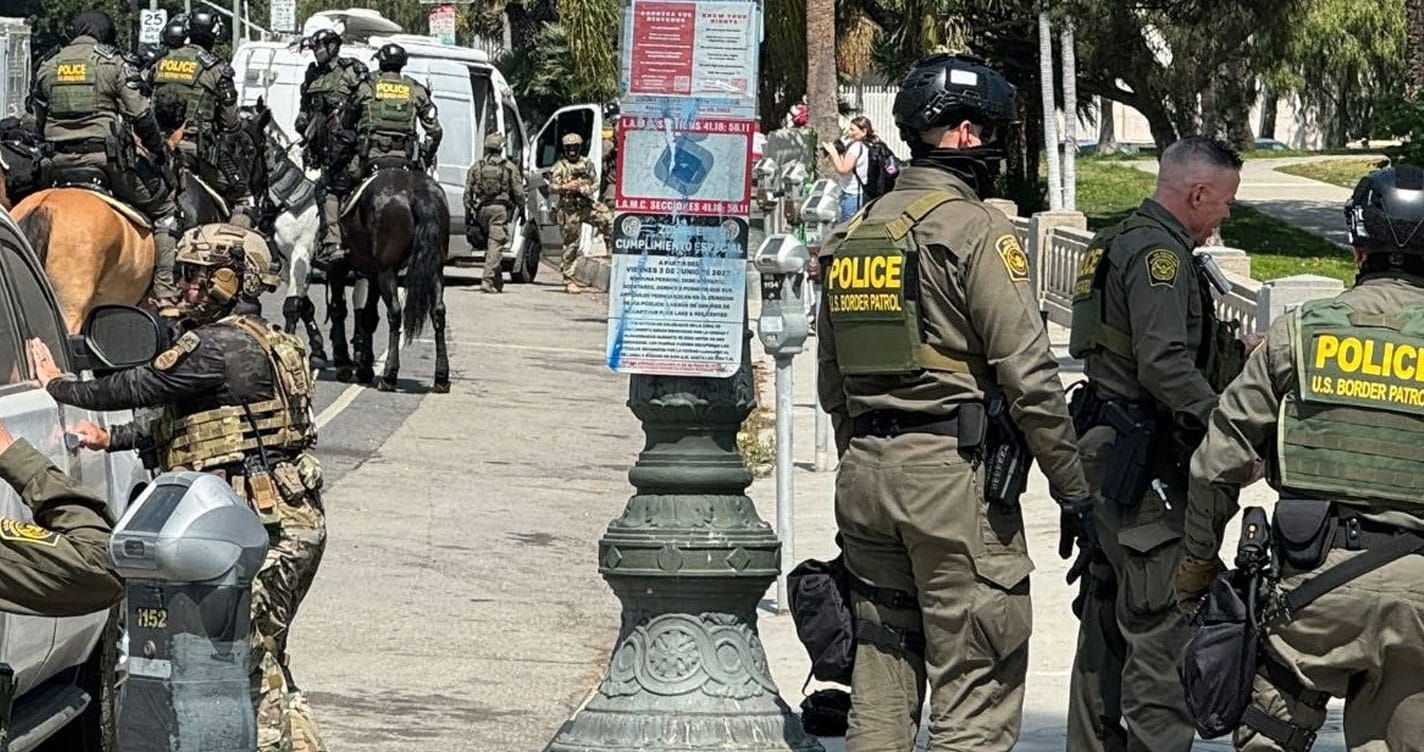
On this episode of The Signal, Dino breaks down California’s escalating governor’s race with journalist Andrea Valadez, examines the political backlash against harm reduction programs after the MacArthur Park raids, and speaks with Assembly candidate Fatima Iqbal-Zubair about affordability, labor, environmental justice, and the future of working-class communities across Southern California. Plus public radio fundraising. Aired live on 90.7 FM KPFK Los Angeles on May 9 2026.
This is viewer supported news. Please do your part today.
This is a rush transcript. Copy may not be in its final form.
TRANSCRIPT
00:00:01:14 - 00:00:09:01
MUSIC INTRO
The whole run by a handful of greedy bankers and CEOs who nobody elected. What?
00:00:09:03 - 00:00:12:14
MUSIC INTRO
Can't possibly last?
00:00:12:15 - 00:00:16:00
MUSIC INTRO
I'm going to tell you the numbers that.
00:00:16:01 - 00:00:48:17
DINO
Good afternoon, Los Angeles, and welcome to another episode of The Signal. News, information and analysis on Kpfk, 90.7 FM in Los Angeles. And, you know, we want to welcome all our listeners in Santa Barbara, 98.7 F.M. in San Diego, 93.7 FM. And our homies up in Ridgecrest, China, look at 99.5 all across Southern California. And of course on the web on the World Wide web@kpfk.org.
00:00:48:19 - 00:01:20:10
DINO
And as always, we appreciate you spending part of your Saturday afternoon with us here on Independent Public Radio, where we continue to bring you the conversations focused on politics, policy, labor, public health, community issues and all that jazz in between. But before we jump into today's program, a quick reminder and as you've already heard, we are currently in that fund drive mode here at Casa Kpfk stations like this survive because listeners believe in independent media, and they believe that it still matters.
00:01:20:15 - 00:01:42:21
DINO
So as you listen today throughout the show, throughout the afternoon and throughout the weekend, we encourage you to visit kpfk.org, explore the incredible programing, get to know us a little bit more, a little bit better, and support community radio. That creates space for conversations like this, like the ones that we're having today. So today we have a busy program.
00:01:42:23 - 00:02:08:19
DINO
First, we're going to head over to Sacramento with our friend and ongoing correspondent who's giving us the latest on political coverage. Andrea Valadez, from Callo News, who's breaking down the rapidly intensifying California governor's race where, you know, they're almost done. The drawing blows. We'll then shift over to an important public health conversation many of you saw over the week.
00:02:08:21 - 00:02:39:19
DINO
There was a massive raid by the drug Enforcement Administration over at MacArthur Park, amassing, massive dog and pony show put on by, American forces and now there's major calls for the elimination of harm reduction programs, whom they are in part blaming for the unfortunate, problematic drug use that's going on in that area. And then we're going to close out the hour, with our revisiting our special series, politics Tacos and beer.
00:02:39:21 - 00:03:04:18
DINO
And our guest, assembly candidate, Fatima Iqbal. Shabir, who is going to join us about her candidacy for a district 65, Assembly district 65. So let's get into it. As I said, we're going to, start off with our continuing ongoing coverage of the major political stories coming out of Sacramento and the rapidly developing race for California governor.
00:03:04:18 - 00:03:24:13
DINO
Joining us once again is our friend Andrea Valdez, California, news reporter with Carlo News, whose reporting has been closely tracking the candidates, the debates, the polling shifts and the growing battle for Latino voters, for all voters at this point across the state. Andrea, welcome back to The Signal.
00:03:24:15 - 00:03:27:14
ANDREA VALADEZ
Hey, I'm I'm. Well, I love being here. Thanks for having me again. No.
00:03:27:14 - 00:03:34:19
DINO
Well, listen, we dig. You come in and join us. And you got front row seats on the drama, right? I mean, it's getting good.
00:03:34:21 - 00:03:35:19
ANDREA VALADEZ
Yeah.
00:03:35:21 - 00:03:40:02
ANDREA VALADEZ
It's just been hectic. It's ten. Honestly, a mess.
00:03:40:04 - 00:04:01:16
DINO
A mess, I love it. Okay. So one of the biggest takeaways from we're getting from your reporting is just how combative this, debate has become, over previous forums. Now, I get it. We're getting close to vote time. June 2nd primary. And it's, you know, what is it? Do or die at this point, what's changed politically?
00:04:01:18 - 00:04:05:07
DINO
And why did the tone suddenly shift?
00:04:05:09 - 00:04:36:14
ANDREA VALADEZ
Yeah. Well, you know, you said it. We're getting very, very close to Election Day, June 2nd. There are two debates this week. One on Tuesday, one on Wednesday, and ballots went out on Monday. So I think there's an increasing pressure on all of the campaigns to really make their final, you know, pitches to voters. And if we're looking at polls, too, I think there's an increased pressure for some of the lower polling candidates to to to get their name out there right now.
00:04:36:16 - 00:04:57:17
DINO
You know, that that former what is it, the health how health security. Is it health? It's health secretary. Yeah. How this habit was sort of became the main target on stage. Right. And he got, he got a big expert on him. Is that a sign that the other candidates now see him as the frontrunner?
00:04:57:19 - 00:05:23:12
ANDREA VALADEZ
Yeah. I mean, I wrote in in my coverage, it was like a six on one. There were seven candidates on that stage. And have you ever said I was getting punches from everyone? Again. Yeah. If we're looking at polls, he has just been climbing higher and higher each time the next poll comes out. So I think especially among Democrats, there's kind of a consensus that they need to punch him down a couple levels.
00:05:23:14 - 00:05:24:03
DINO
So that's.
00:05:24:07 - 00:05:24:14
ANDREA VALADEZ
Clear.
00:05:24:17 - 00:05:27:16
DINO
We're going to call that the Sacramento beat down.
00:05:27:18 - 00:05:28:11
ANDREA VALADEZ
And.
00:05:28:13 - 00:05:48:13
DINO
Grab. One of the more interesting dynamics that you highlighted in your reporting is how candidates were constantly interrupting and fighting for airtime. Now, we've seen this over, over the years. I've certainly seen this covering politics, for some time now. Did the debate actually help voters understand policy differences, or did this become political theater?
00:05:48:15 - 00:06:09:06
ANDREA VALADEZ
Yeah. You know, I think the majority of it was political theater. Where in the last couple of weeks, these candidates have been on the campaign trail, for the most part, people who are paying attention know the candidates policies. Right. They've had it's been kind of standard questions, standard answers. And I think this these debates weren't any different.
00:06:09:06 - 00:06:19:11
ANDREA VALADEZ
They said the same things that they've been saying for months. However, this time it was mostly trying to attack the other candidates to lift themselves up.
00:06:19:13 - 00:06:34:11
DINO
Now under their health care. And the billionaire attacks seem to expose real division inside the Democratic field. What stood out to you most about where candidates differ ideologically on this or just in general?
00:06:34:13 - 00:07:03:02
ANDREA VALADEZ
Yeah, I think there was a clear difference in this week's debates on candidates giving answers that were very pragmatic and then kind of optimistic, right. So on the topic of health care, you had people like Tom Steyer and Katie Porter saying, absolutely, we need a single payer system in the state. And then you have people like Matt Mayhem, the mayor of San Jose, saying that the other candidates weren't being honest about how feasible these things are.
00:07:03:04 - 00:07:12:11
ANDREA VALADEZ
So I think we're seeing a lot of people making promises that maybe they can't deliver. And then some candidates saying, you know, I'm not going to over promise to voters.
00:07:12:13 - 00:07:36:18
DINO
We're speaking with Andrea Valdez of Carlo News, who's giving us a breakdown on these Sacramento beat downs. This past week, on the governor's race, there was two of them. And that has been covering this closely for Carlo News and joins us regularly to break it down for us and our listeners. And, Andrea, immigration and Trump, our enforcement policies also became a major issue during the debate.
00:07:36:20 - 00:07:43:20
DINO
When we look at that, how central do you think this immigration policy is becoming to the governor's race, specifically?
00:07:43:22 - 00:08:11:19
ANDREA VALADEZ
Yeah, I think it's a very essential part of all of the candidates, campaigns, the Democrats, the Republicans, for the most part, they're kind of staying out of it, saying they're going to enforce federal laws. But for Democrats, of course, we know for their voter base, this is a very important issue. And I think specifically also in the heels of Gavin Newsom's, governorship, he's been a very clear, opposer of Trump and his policies.
00:08:11:19 - 00:08:21:12
ANDREA VALADEZ
And I think voters want a continuation of that. And they're looking for someone, especially Latino voters, who they know will stand up for them. I think that's very important to them right now.
00:08:21:14 - 00:08:37:10
DINO
And so, Andrea, Republican Steve Hilton and, Chad Bianco largely focus their criticism on Democrats instead of each other strategically. What does this tell us about the Republicans and how they see a path, in California?
00:08:37:12 - 00:09:02:13
ANDREA VALADEZ
Yeah. You know, it's interesting, I think a few months ago, before, you know, Eric Swalwell dropped out, it was pretty much Steve Hilton and Chad Bianco fighting for those top two spots. Right. And now there's kind of some more Democrats higher up. So I think their strategy based on seeing them in the debates is I think they they believe as long as one Republican ends up on the top, then they'll be fine.
00:09:02:13 - 00:09:08:20
ANDREA VALADEZ
They just want to beat out as many Democrats as possible. They're not necessarily focused on during jabs at each other.
00:09:08:22 - 00:09:35:04
DINO
And Andrea, one other story that you covered that caught my attention as we were preparing for this program. And a lot of folks, you know, over the years, we periodically hear somebody pop up kind of like a mole out of a golf course and peek his head out, and we're talking a Green Party candidate. And this time around, there's a growing presence of a third party and also the candidates, not only in the governor's race, but just in other races in general.
00:09:35:10 - 00:09:43:13
DINO
So let's pivot there a little bit. And for listeners just hearing about this and him for the first time, who is, Butch, where.
00:09:43:15 - 00:10:03:11
ANDREA VALADEZ
Yeah. Butch. Where is an activist? He's a historian. He's a professor. He is not a career politician. And that's you know, what he's running on? He's running on a nontraditional non two party candidacy. And I think there are a lot of people who are looking for that right?
00:10:03:13 - 00:10:22:17
DINO
Right. You know that he does tout himself as anti-capitalist outside of the traditional political establishment. And I think you just touched on that there seems to be an appetite for this, but is there an appetite for like an openly left wing candidate? Yeah.
00:10:22:19 - 00:10:44:09
ANDREA VALADEZ
Yeah, I think there is. I think you're right. I think there is an increasing appetite, especially among younger voters. You know, there's dozens of studies out there showing that younger voters specifically are kind of tired of the traditional two party establishment, like you said. And so I think, Butch, where is tapping into those voters now?
00:10:44:09 - 00:11:21:10
DINO
One thing that I've always been curious about this, and I actually let me just put out my bias. Now, I do believe that sometimes, the underdog. Right. The little guy in these races can at the very least put front and center some of the important issues that maybe others are not wanting to talk about. And even if there remains a longshot candidate to campaigns like this, still influence the broader political conversation and potentially push major party candidates either to address more left leaning issues or just left in general.
00:11:21:12 - 00:11:50:10
ANDREA VALADEZ
I think so, I mean, I think we've seen a lot of in the last two years, a lot more litmus tests, right? So people asking, candidates, do you believe in, for example, that health care is a privilege? I think questions like this, again, especially among younger voters, are becoming more and more relevant and more confident. And I think candidates have no choice but to answer them and to have a solid plan for these things.
00:11:50:12 - 00:11:51:07
ANDREA VALADEZ
Andrea Valadez.
00:11:51:07 - 00:12:12:05
DINO
As always, appreciate you joining us and helping us break down all for all that's happening in Sacramento, especially for our listeners. There's clearly a lot happening in the state's capital for this governor's race, and it's getting more and more intense as the primary approaches. We look forward to having you back soon. For more coverage and analysis from the capital.
00:12:12:07 - 00:12:15:22
ANDREA VALADEZ
Definitely. I look forward to it. It's going to be a crazy few weeks.
00:12:16:00 - 00:12:39:04
DINO
I know we'll go through it together. Stay with us, folks. Coming up next, we shift into a very different but critically important conversation focused on public health outreach, and we go and political debate surrounding harm reduction. Many of you may have seen over the week, there was a massive raid at MacArthur Park, where hundreds of people were arrested, and now community is coming out.
00:12:39:08 - 00:13:02:03
DINO
Some in the community is coming out and are saying, hey, we blame the harm reduction programs, public health centered approaches to help people with problematic drug use. They are to blame. We're going to get to the bottom of it and before we go, remember, support Independent Community Radio by visiting kpfk.org. We're in fun drive mode. We'll be right back after this break.
00:13:02:05 - 00:13:26:14
DINO
Welcome back. So earlier this week, many of you were surprised. In fact, I actually got a call, from a local news reporter, asking if I was familiar with what was happening at MacArthur Park in Los Angeles. And, let me I did misspeak earlier. I said hundreds, hundreds were rounded up, but not hundreds were arrested.
00:13:26:14 - 00:14:05:21
DINO
A total of 18 people were arrested, 40 pounds of fentanyl, was seized in these, and this massive drug raid that happened at MacArthur Park, I think it was actually might have even been more as I'm looking at my notes here, but I actually, for transparency, come through my drug policy background where I spent many years in, addressing some of these issues involving, this area, this area of of public health called and the center for Public Health called harm Reduction.
00:14:05:23 - 00:14:44:14
DINO
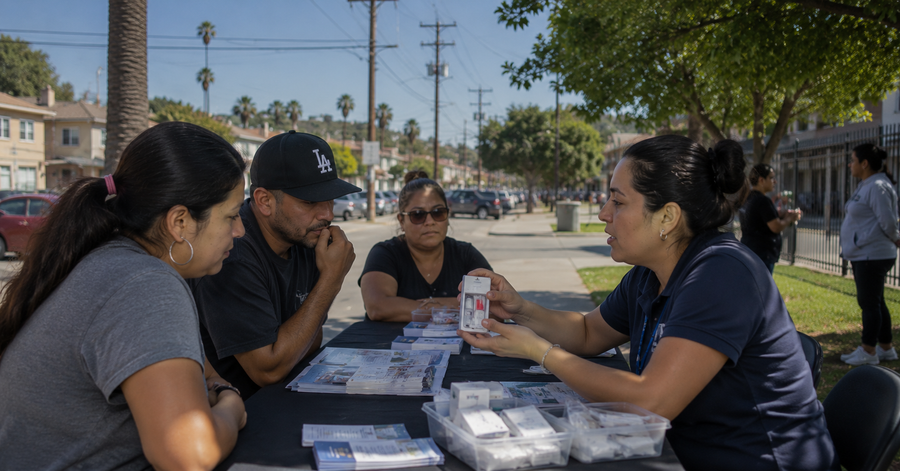
Over the last several days, a lot of attention has been focused on this topic of harm reduction. Because of this recent law enforcement activity in the area. Now, with that has come a wave of misinformation and political rhetoric targeting harm reduction programs and the organizations doing outreach work on the ground. So today, we're going to take a few minutes to slow things down a bit and create a space for a real conversation about what harm reduction actually is, how these programs operate, and why public health experts across the country continue to support them as evidence based strategy to save lives, improve community health outcomes.
00:14:44:16 - 00:15:13:11
DINO
Harm reduction is often discussed politically, but not always explained clearly. Joining us today is Gerry Otero, manager of drug user health at Saint Anne's Corner Harm Reduction, the longest continuously operating needle exchange program in the United States, now operating for 34 years. This is why we reached out to Gerry. We have many harm reduction programs here. But this particular program is actually based in New York.
00:15:13:13 - 00:15:25:17
DINO
And the reason we reached out is because we have one that's been operating for 34 years. Gerry, welcome to The Signal. I appreciate you joining us today.
00:15:25:19 - 00:15:26:08
CUT
Gerry, I need.
00:15:26:08 - 00:15:29:13
CUT
You to turn on your radio.
00:15:29:15 - 00:15:34:08
CUT
Now we can hear him on the left. Gerry, this is.
00:15:34:08 - 00:15:35:18
CUT
One of the things for.
00:15:35:20 - 00:15:36:09
CUT
A long.
00:15:36:09 - 00:15:38:01
CUT
Time, because of problems. You.
00:15:38:03 - 00:15:39:20
CUT
Gerry, are you there.
00:15:39:22 - 00:15:40:18
CUT
Is.
00:15:40:20 - 00:15:54:08
JERRY
This building on it? And the reason we started this. So you walk into a signal facility? Yeah. Hey. Good morning. Or good day? Rather coming from the Bronx. Can you hear.
00:15:54:08 - 00:15:57:20
DINO
Me? Yes. Jerry, I need you to turn off your radio. Listen to me on the line.
00:15:57:20 - 00:16:03:15
DINO
Not on the, broadcast. There is a delay there. Which is why we're experiencing that delay.
00:16:03:17 - 00:16:04:06
JERRY
How does that work?
00:16:04:11 - 00:16:23:07
DINO
All right, so let's get rid of the, the web stream. Thank you for joining us, Gerry. As I was telling our audience, you are the manager of drug user health at Saint Anne's Corner. Harm reduction in the Bronx. And the reason we chose to work. Reach out to us because you've been running a program there, or the program has been running for 34 years.
00:16:23:08 - 00:16:36:01
DINO
And, you know, as I said in my opening, Jerry, here in L.A., we had a massive drug bust, in the MacArthur Park area. I actually believe you are familiar with that area and been out here before, and we're.
00:16:36:01 - 00:16:36:18
DINO
Now hearing.
00:16:36:18 - 00:16:59:06
DINO
This major buzz around the blame game. Folks are saying, well, it's the harm reduction programs that are offering needles. And given these services that are inviting drug users to stay as drug users. So for listeners who are not familiar, give us, the one on one breakdown on what is harm reduction.
00:16:59:08 - 00:17:45:15
JERRY
Great and good. Great. Everyone come from the book down. Harm reduction is a pragmatic set of ideas and policies that are based on something known as the four pillars, which is a drug strategy that, brings together comprehensive, evidence based public health framework designed to reduce the harms associated with substance use. And, move beyond the solely punitive approach to address addiction through a balanced, compassionate, health focused lens that focuses on 40 areas, that is, prevention, treatment and recovery, harm reduction, enforcement and community safety.
00:17:45:17 - 00:17:55:03
JERRY
And these pillars are intended to work together, acting as a holistic, integrated approach rather than functioning in isolation.
00:17:55:05 - 00:18:07:16
DINO
Now, Jerry, what are some of the what are some of the when we look at the public debate, right, especially here recently, what are some of the biggest misconceptions people have about harm reduction programs?
00:18:07:18 - 00:18:33:09
JERRY
Oh goodness. Okay. Let's run them down. And one is that harm reduction enables and encourages drug use. The other is that it doesn't appreciate recovery or abstinence. The other is that it's only with severe addiction. But one other is that people must hit rock bottom to change. And the other, which I think you're experiencing right now, is, as evidenced in the MacArthur Park fiasco, is that it increases crime in the community.
00:18:33:11 - 00:18:51:02
JERRY
And, harm reduction isn't about those things at all. It's about treating people with dignity, respect, aiming to keep them alive and the safest possible while reducing the health and social impacts of addiction. No far cry from those, those stereotypes.
00:18:51:04 - 00:19:16:14
DINO
From those allegations. Now, in your case. Right. You work at Saint Anne's Corner harm reduction. And which operates as a drug user health hub. What kind of services are you also providing, to the community? Just to provide an example for those who aren't familiar with, you know, there's this image around that. You know, there's just these random individuals handing out needles willy nilly.
00:19:16:19 - 00:19:25:21
DINO
But it's not just that there's actual services that are provided and even can lead to substantive support.
00:19:25:23 - 00:19:46:20
JERRY
Sure. Well, let me say this first, Amanda, harm reduction is less of a thing to do and more of a way to be. And we're located in the South Bronx in New York City, considered to be ground zero of the opioid related overdose fatalities. But so here we focus on overdose prevention, of course, but we also focus on providing people who use drugs with services that are essential to living.
00:19:46:22 - 00:20:11:20
JERRY
We operate a drop in space where we provide hundreds of culturally sensitive prepared meals a week, a hot shower, change of clothes if you need a needle exchange, of course. But we provide a wide range of public health services that include testing, treatment of HIV, hep C, STIs, vaccinations. We provide women and LGBTQ plus centered care. We have mobile and street based medicine services.
00:20:11:20 - 00:20:28:19
JERRY
We provide drug testing services where folks can bring us what they're finding on the streets and are able to get a chemical analysis of what they're putting into their bodies. And all of this happens in a non-judgmental setting that really seeks to restore dignity into the helping relationship.
00:20:28:21 - 00:20:52:07
DINO
Now, here's the million dollar question. How do these programs, Jerry? Jerry out there, by the way, let me remind our audience of the, video, on the air with ministerial Daryl, manager of drug user health at Saint Anthony Harm Reduction in the Bronx, New York. That has the longest, running operating needle exchange program in the United States now on this 34th year.
00:20:52:07 - 00:21:14:14
DINO
And we went there because we wanted to give a point of comparison for another location that historically has had challenges with, problematic drug use. And given the recent activities here at MacArthur Park, Los Angeles, and Lee now attack on the harm reduction programs like the ones you operate out in the in the Bronx, blaming them for what is going on.
00:21:14:14 - 00:21:22:19
DINO
So let me ask you this right. How do harm reduction programs help reduce overdose deaths and improve broader community health outcomes?
00:21:22:21 - 00:21:28:18
JERRY
Well, let me let me say, I misspoke when we spoke yesterday. We're operating 36 years.
00:21:28:20 - 00:21:30:04
DINO
Oh, you.
00:21:30:06 - 00:21:31:00
JERRY
Know, the longest.
00:21:31:00 - 00:21:56:04
JERRY
Running exchange program. But but I was talking with Joyce Rivera, our, our, founder, you know, yesterday about this interview and she lamented about how we can't seem to get beyond how dismal US culture has become, perhaps from all the scapegoating, gaslighting, that now, as a matter of public policy, you know, that that centers elitism.
00:21:56:05 - 00:22:32:08
JERRY
You know, and the pernicious lack of accountability and the need for these services just continue to grow and grow. And the goal is the goal is to save lives and restore dignity, Armando, in the relationship and the evidence is, is we don't need to look any further, 40 years plus of harm reduction services around the world, here in New York in the 90s when, when Joyce first started distributing, injecting equipment out on the streets, the rate of HIV, the prevalence among injecting users was around 60%.
00:22:32:10 - 00:22:41:13
JERRY
Well, we know that today that prevalence has been beaten down to about 3 to 5%. And in anyone's book, that's a public health win.
00:22:41:14 - 00:22:55:20
JERRY
I think now, as, let me let me jump into that because we're running out of time. Jerry. You know, critics often times, you know, claim that harm reduction encourages drug use. What do you what do you say to that? Oh.
00:22:55:22 - 00:23:29:16
JERRY
I don't think I don't want to make a joke about it. But number two, on the drug use lead and the encouraging, all of us are drug users in some way, even if it's a cup of coffee right in the morning, you know? So, so, you know, I think what what what what what prohibition the war on drugs has done is created this other this us and some other kind of sensibility which really just keeps people who use drugs marginalized out on the street and, and, and, and subject to police actions like the one you're experiencing in MacArthur Park.
00:23:29:18 - 00:23:51:04
DINO
And that's a great segway to to my final question, Jerry. And again, I appreciate you taking the making the time to join us at the, at the end of the day, what impact do these law enforcement sweeps or disruptions have on outreach workers right now? Listen, I do want to acknowledge I do want to acknowledge, wholeheartedly, 1,000%.
00:23:51:04 - 00:24:22:08
DINO
I myself am very familiar with the area drive by there, I wouldn't say on a daily basis, but regularly and, you know, it is a visually a challenging environment to sometimes see so many people. And these, dire, scenarios of poverty. And many times, what there's this, this imagery that one associates with, inebriation or, or perhaps drug use, but these law enforcement sweeps, at the end of the day, disrupt the outreach workers who are there to help.
00:24:22:09 - 00:24:24:13
DINO
What is the impact.
00:24:24:15 - 00:24:45:13
JERRY
Now on the police sweeps? You know, here's the crux of it restrictions, police sweeps and so on, just cause people to hide and use drugs of own, of unknown provenance causing deaths, in other words. And it causes otherwise abiding people to break the law and hide their use because everyone knows a little something, you know, so they hide their use or their risky behaviors.
00:24:45:18 - 00:25:21:04
JERRY
I spend a lot of time in teen drug education, and as an educator and as a father myself, I don't want my kids to lie to me or hide from me. I for young people to have faith that a fair, more just world is possible. I envision a post prohibition, this world where we can come to grips with the drugs we have and not use them to oppress or marginalize people, but people don't realize is that harm reduction programs, provide the greatest resource for conventional drug treatment programs for beyond any other social service agency.
00:25:21:06 - 00:25:32:11
JERRY
So we are right in the mix, and providing that connection, that deeply needed connection for people who otherwise are just the subject of these kind of, police actions.
00:25:32:13 - 00:26:00:09
DINO
Jerry Otero, manager of drug user health at Saint Anne's Corner Harm Reduction, Bronx, New York, we appreciate you taking the time to join us in talking to us about harm reduction programs. We're actually I'm very proud to say that we're working on a special series on this issue, on this topic, and we look forward to welcoming you back and joining us for this timely discussion where public debate around addiction, homelessness, public safety and healthcare is becoming increasingly politicized.
00:26:00:09 - 00:26:04:11
DINO
So it's important that we keep this conversation going. Jerry, thank you for joining us here on The Signal.
00:26:04:11 - 00:26:21:23
JERRY
Well, if I may, one last thing I want to say, I want to I want people to know that we need to move from this current system of pathology and punishment to one that's informed by compassion and care. These people are our sisters and brothers, our mothers, our friends, our reductions all around us, mosquito repellent, seatbelts and so on.
00:26:22:04 - 00:26:36:02
JERRY
And we provide these alternatives to people because we care about them. When it comes to drug use, we're less apt to think about ways to protect them. Love is the message, Armando, but not special love. I'm talking about the kind of love that allows us to suspend judgment. That's the challenge.
00:26:36:04 - 00:26:49:22
DINO
And what an excellent way to wrap up this segment. An important reminder that nice people take drugs. Jerry Otero with the, manager of drug user health at Saint Anne's Corona Harm Reduction, Bronx, New York. Thank you for being with us.
00:26:50:00 - 00:26:52:04
JERRY
Thank you.
00:26:52:06 - 00:27:22:08
DINO
Well, folks, you know, coming up, we're going to take a quick break. And before we go, to our next guest for Fatima. Impossible. Candidate for California's 65th Assembly district. We're going to take a moment to remind everybody why this type of programing, why this type of broadcast, is so important. And joining me for that brief, for this brief reminder is our master of engineers here, Sly Rivers Slide.
00:27:22:09 - 00:27:24:08
DINO
Tell us, why is this so important, man?
00:27:24:09 - 00:27:44:06
SLY RIVERS
Thank you very much. Do you know that's the mighty Dino? He's here every Saturday at 12:00. And he's the only program on here that really deals with these candidates. So our goal, and he brings him in, he talks to him. And I learned a lot from him. But we could do this because we're listeners sponsored. We don't, subscribe to big corporate money.
00:27:44:08 - 00:28:09:08
SLY RIVERS
So we need you to call in and donate our goal for this hour. Now, it's just a half hour, so we really need you to step up. It's $1,000 every program, every hour. We need to raise about $1,000 to be solvent. So we're asking you to call 81898557358189855735. Hit option two. There's folks waiting to take your call. There's there's premiums.
00:28:09:08 - 00:28:13:07
SLY RIVERS
Or I guess we should call them gifts. What do you have? You're a Dodger fan. What do you.
00:28:13:07 - 00:28:38:17
DINO
Have? I'm a huge Dodger fan. And I want to thank, thank, part of our, our support here because support for the signal comes in part from the National Bobblehead Hall of Fame Museum, located in Milwaukee, Wisconsin. Who presents L.A. Dodgers Shohei Ohtani bobblehead? For further information, you can go to the store.bobblehead.com or call one 804 141 42.
00:28:38:22 - 00:28:48:19
DINO
And yeah, you know, people that know I'm a huge baseball fan. I'm a fan of baseball. My son and I, who is an adult on his own. We regularly spend.
00:28:48:20 - 00:28:49:03
SLY RIVERS
Points.
00:28:49:03 - 00:28:57:16
DINO
You get icons that they sent over a couple of special give special edition, folk foco, big head bobblehead.
00:28:57:17 - 00:28:58:09
SLY RIVERS
Bobblehead, big.
00:28:58:09 - 00:29:11:22
DINO
Head bobblehead. Okay, we have one left at 800 gift. And this is a special, most valuable player. Again, Foco bobblehead of Shohei Ohtani, the phenom of baseball today.
00:29:11:22 - 00:29:12:23
SLY RIVERS
So there's only one left.
00:29:12:23 - 00:29:15:11
DINO
Only one left in that box. So I can take this out.
00:29:15:11 - 00:29:16:02
SLY RIVERS
That's nice.
00:29:16:02 - 00:29:16:14
DINO
It's big.
00:29:16:15 - 00:29:27:11
SLY RIVERS
It's big. 189855735. Only one left. Get that bobblehead there. Been going. People love these bobbleheads. (818) 985-5735. Hit option two.
00:29:27:17 - 00:30:03:05
DINO
Option 28189855735. And then we have this other special edition. Check this out. Player bobble Shohei Ohtani in the position after he hit that, record breaking home run. Last year leading up to the World Series, we got five of this special edition Shohei Ohtani 17, L.A. bobblehead again, brought to us by, with the support of, National Bobblehead Hall of Fame Museum located in Milwaukee, Wisconsin, presenting the L.A. Dodgers Shohei Ohtani Special Bobblehead series to.
00:30:03:05 - 00:30:05:08
SLY RIVERS
Support that work that you do, go ahead.
00:30:05:11 - 00:30:29:08
DINO
All the way from Wisconsin out here to little old me in L.A. Giving us these special edition bobbleheads of Shohei Ohtani again. This is not something that, I take lightly. I appreciate it for $120 gift donation to the station to keep myself, SLI, and everybody else who operates this place going and continue to give you the progressive.
00:30:29:08 - 00:30:30:16
SLY RIVERS
Don't hesitate to use.
00:30:30:16 - 00:30:31:19
DINO
Information and analysis.
00:30:31:19 - 00:30:51:01
SLY RIVERS
People hesitate and those premium premiums are gone. So dial (818) 985-5735. Dino does some great work and you know what else? He's going to be a part of our, I guess our press, people asking questions. We have a mayor of, forum coming up. May 16th.
00:30:51:02 - 00:30:51:20
DINO
May 16th.
00:30:51:20 - 00:31:13:13
SLY RIVERS
Yeah, you can go to the Kpfk website and I think it's up now. Somebody ask about it. But (818) 985-5735 to keep the beautiful work. Option two that he's doing. Don't wait. Get that bobblehead. Get two bobbleheads. Just donate because, you know, for the program for the guest he brings in. And this man is so organized he gives me this sheet.
00:31:13:13 - 00:31:18:08
SLY RIVERS
I said, oh my goodness, if I only could. If I only would, I would slide.
00:31:18:08 - 00:31:45:19
DINO
By the way, he does have a radio program here himself. But with that, let's, let's move on to our next guest who's already on standby. Very, very excited, to bring yet another important, contributor to this newly growing emerging movement that is happening in Southern California, indeed, all over the country, as we see a resurgence of political activity that's motivating people to run for office.
00:31:45:21 - 00:32:15:04
DINO
And that's one of the ways that I can describe my next guest, who we've been reaching out to, trying to get her into the studio. But they're in massive, you know, campaign mode. And, so we're going to have her join us by phone. So today on our continuing coverage on our politics Tacos and beer series, we have a conversation focused on California's 65th Assembly district, one of the most diverse and perhaps working class districts in all of Southern California.
00:32:15:06 - 00:32:42:17
DINO
The district includes communities such as Carson, Compton, Watts, Wilmington, Harbor, gateway, Harbor City, San Pedro, and parts of North Long Beach, areas deeply shaped by the labor movement, by labor in general. We're talking logistics, public education, health care access, environmental justice, and one of the things that's most challenging, I think not only for them but for all of us, is the rising cost of living.
00:32:42:19 - 00:33:10:00
DINO
This is a district connected to the ports warehouse, transportation, service economies with a large Latino, black, Asian American, Pacific Islander and immigrant communities joining us today is the educator, community advocate, and Assembly candidate, Fatima Iqbal, survivor, who is running to represent the 65th Assembly District and her campaign, focuses on issues of affordability, health care access, public education and more.
00:33:10:05 - 00:33:16:16
DINO
Fatima, welcome to The signal and our continuing series, Politics and Beer.
00:33:16:17 - 00:33:18:18
FATIMA
Thank you for having me. How was your audio.
00:33:18:20 - 00:33:37:16
DINO
Your audience? Good. We're going to lower down a little bit on our end, but you're good. It sounds wonderful. Now, Fatima, my favorite question for candidate. Always. And it's almost the exact same question I ask candidates. You know what? Walk me through that moment, right? You're sitting at home. Maybe you're at the dinner table. Maybe you're in the car.
00:33:37:16 - 00:33:52:08
DINO
Maybe you're at work. And the clouds part, the music sounds, the beam of of sunlight comes through and it says, Fatima, run for office. Is that how it happened? Or what drove you to become a candidate for the Assembly district?
00:33:52:10 - 00:34:15:18
FATIMA
Yeah. I you know, I didn't run, you know, because I, I waited my turn right from the political establishment. I really ran because of my students. That's what it comes down to. You know, I started, you know, I'm an immigrant. My family fled a war when I was seven years old. And, you know, you know, I we first when we first got here, it was, nine over 11.
00:34:15:18 - 00:34:36:05
FATIMA
And I saw, you know, how my community, was police and the formation of ice and the surveillance. Right. And we're seeing the impacts now and then what? You know, when I've been out here since about 2009 and, you know, I say I ran because I loved my students. I was really, you know, that teacher that stayed after I was the last teacher to leave the school?
00:34:36:11 - 00:34:56:21
FATIMA
You know, I started an after program because I wanted my kids to have a safe space to explore Steam and robotics. I organize with my students around clean air and water, you know, and I just saw, honestly, the politicians representing this district, like many in Sacramento, are sold out to the industries in the district that are profiting and raising our cost of living.
00:34:57:02 - 00:35:24:20
FATIMA
You know, luxury developers, oil, right. Even the police unions. Right. Which, you know, which, police unions, you know, corporations, and you know, I have also work in state policy, you know, I work on the ground in Sacramento, and I saw with my own eyes and with my own experience the amount of lobbyists and how much money they put to stop policy and how this money affects people's votes.
00:35:24:20 - 00:35:44:23
FATIMA
And so why I'm running now for this open seat where Assembly District 65 can elect a new vision, is because we deserve someone that's going to believe the cost of living, not just say it, but actually say, look, I've held oil corporations raising your gas prices to account. I've held a luxury developers building unaffordable housing to account. So that's what I will do, right?
00:35:45:00 - 00:35:56:02
FATIMA
I will cap your rent because I have worked on supporting and worked with community members on capping the rent here in L.A., so that's why I'm running, because we deserve champions when people are struggling and barely getting by.
00:35:56:08 - 00:36:16:15
DINO
Now, Fatima, and let me ask you, just to back up a little bit, just a little bit from the microphone on your phone. But let me ask you this. You talk a lot about families working full time and still struggling to make rent and cover groceries. We've heard this, now for quite some time over the last couple of years as the economy continues to thrive, but yet folks aren't able to afford.
00:36:16:20 - 00:36:22:07
DINO
What do you believe Sacramento's getting wrong right now when it comes to the cost of living?
00:36:22:09 - 00:36:28:08
FATIMA
Yeah, yeah, it's already going to hard to come through. I think you're asking me about the economy and and you know, what can we do about it. Right. Yeah. There's other questions.
00:36:28:08 - 00:36:30:11
DINO
Yeah. Cost of living in particular.
00:36:30:13 - 00:36:51:19
FATIMA
Yeah. Well I think, you know, there's a couple of things that are happening. Look, we have we have the president in the, in the white House, right? We have, a fascist, right, that is giving tax breaks to billionaires, you know, and California, in California, the corporations and the billionaires are feeling emboldened. Right. And it's making it harder for workers.
00:36:51:21 - 00:37:12:13
FATIMA
But here's what I will say. I don't think anyone on this call will say that it's enough to anyone listening to that. It's enough to just be a Democrat. Right? We are seeing our Democratic leaders in Congress, right? We are seeing a Democratic leaders in Sacramento open up no oil drilling, right. Why are they doing that? We are seeing our Democratic leaders in Sacramento.
00:37:12:15 - 00:37:37:22
FATIMA
You know, debating on whether we should close corporate tax loopholes or tax billionaires. Why is that happening? Right. So why is our economy struggling? What I share is that, you know, we can't just be a party that's anti-Trump. We have to look inside of our own party and even those that are no party reference, but in our own party, the Democrats have had control and say, does our party stand for working people when we have had Democrats in Sacramento since the 90s?
00:37:38:03 - 00:37:53:02
FATIMA
It's not just about being a Democrat. It's about being a Democrat that's really going to stand up for working families. That's going to say no to these corporations that are raising our cost of living. And economically, that's what we have to do, right? We don't have Democrats in Sacramento that are that are enough, that are willing to do that.
00:37:53:02 - 00:38:13:08
FATIMA
And that's what our policies are feeling. And one example is, you know, there was a, a rent, rent control policy that died in the first committee, not because of Republicans, because of Democrats. We just had a single payer health care bill, A.B. 1900, you know, which I support for decades, right? People have been organizing. It's not getting to again, because of corporate Democrats.
00:38:13:10 - 00:38:22:22
FATIMA
And so at some point, we have to ask ourselves, you know, it's not enough to have a district that is a Democratic stronghold. It's about, are we electing someone that stands for working families?
00:38:23:00 - 00:38:49:06
DINO
We're, you're listening to The Signal news, information analysis or Politico series politics, tacos and beer on the air with me is Kennedy for the 65th Assembly District 40 Mike ball. So bear, who is talking about her campaign, we're down to go time here. We got a couple of weeks left in the campaign. And one of your one of your priorities, Fatima is bringing and keeping good union jobs.
00:38:49:06 - 00:39:10:00
DINO
You say, particularly in local communities, like the one that you're describing, like the one that you're looking to support you, I believe, got the endorsement of the L.A. Federation of Labor, which is, you know, significant in California, Southern California politics. How do you see, your relationship with organized labor? And what do you believe?
00:39:10:00 - 00:39:14:01
DINO
Union jobs are so important to the future of California?
00:39:14:03 - 00:39:40:06
FATIMA
Yeah, yeah, yeah. So we we actually, you know, I, we have a no recommendation on this from the organization. We've I found this out recently because of the statewide approval process. But we do have the majority of union members supporting us like unions, from the California Teachers Association, SEIU California APS, Me, California, UFW, you know, and you know, all the classified workers, for example, that work in the schools and many more.
00:39:40:08 - 00:39:58:03
FATIMA
So, you know what I see as an important thing is twofold, especially in our district. And I think it applies a lot of it applies the rest of California to look, the one thing is our ports. Our ports are a huge economic engine. And and there has been it's not that it's going to happen. There have been so many jobs that have been lost due to automation.
00:39:58:05 - 00:40:14:12
FATIMA
And it comes back to the influence of big tech, the influence of AI, right? How much power power that is having and the lack of protections for the workers there. And so that is going to be my top priority, right? Because of my district. I mean, we we have the port is you know, I look you got you everyone listening here.
00:40:14:12 - 00:40:32:15
FATIMA
And you know, if you know, my work is I have worked in climate justice, but this is not a duopoly. We can invest in the climate infrastructure. We need. Well, we can put guardrails and see the machinery has to be human operated, that, you know, that we are regulating against AI. So we don't have a single middle class job or job taken away.
00:40:32:19 - 00:40:50:23
FATIMA
So that's my first priority. The other thing is, you know, just protecting all the workers in my district. Right. So when it comes to unions, I want to be a champion for bold, you know, union contracts, right? You know, for example, in my district, you know, the Compton teachers recently, I think, got a contract with you, had a contract for almost two years.
00:40:50:23 - 00:41:10:08
FATIMA
Right. And so when you when I have that power, I want to make sure I push and say, look, teachers, right? Our nurses, our frontline workers, our public sector workers, they deserve a living wage, right? When you have it, when you have you see counties and when you see corporations having so much money, right? School districts. Right. There's no excuse to not pay people a living wage.
00:41:10:13 - 00:41:29:23
FATIMA
There's no excuse. People have to work more than 40 hours to make ends meet. So that is a priority in my district because look, in my district, only about 13% have college degrees. What that means is we have folks that are blue collar workers, right? You and so so it is my job as a legislator, just as I've been doing as an advocate to say, you know, corporations are going to doing just fine.
00:41:29:23 - 00:41:43:18
FATIMA
Billionaires, you're doing just fine, right? It's time that you pay up, that you make sure that if you want to operate in our state and our district, that you are paying folks a living wage. Now, what are you doing for retirement and health care and all of the above?
00:41:43:20 - 00:42:07:19
DINO
You mentioned, environmental justice and, you know, this is very, I think, very particular to your district in part because that's in a district is impacted by pollution, particularly in working class communities for residents living near ports, refineries, warehouses, heavy industry. What should accountability and environmental protections actually look like?
00:42:07:21 - 00:42:27:05
FATIMA
Yes. So very good question. And again, thanks for talking about this. You know, because it is true. I was in fact just at a Carson meeting, you know, where they are talking about building a battery storage plant within 500ft of sensitive receptors. You know, that is unacceptable, right? That is unacceptable. So, you know what protections look like.
00:42:27:05 - 00:42:49:12
FATIMA
I'll start with that is we have to address our history of systemic and environmental racism when it comes to pollution. Right. Refineries chose to do Operation Black and Brown communities because they don't value lives as much as rich people. Right. This is a class thing, right? The the, you know, they choose to pollute and dump toxic waste in communities, you know, and while they might not see that, don't they don't matter as much in their book.
00:42:49:12 - 00:43:12:08
FATIMA
And that is just inhumane. That is immoral, right? That is wrong. And so my biggest priority is this water to hold, you know, polluting industries and our district to account to see that you have to if you do business here, you know, you need to be held to account of emissions, right? To see that if we bring new industry here, it's not going to be, you know, industries that are low paying jobs.
00:43:12:08 - 00:43:28:09
FATIMA
And look, I respect this warehouse job. Sure. But the truth is they do pay a lot for a living. They don't. And so I want to bring good, high paying union jobs here in the clean energy sector field. I want to talk about if a refinery is going to shut down, like in my district, like Phillips 66, why hasn't a plan been made?
00:43:28:09 - 00:43:45:08
FATIMA
Why wasn't the corporation part of that fighting? Why didn't the state come in five years ago and say, we can't just have these jobs lost? And now, you know, what I hear is that they want to build an industry there that is, you know, not really benefiting the community, right? Or doesn't have meaningful community engagement. That is unacceptable.
00:43:45:13 - 00:43:55:01
FATIMA
Communities that have been the most polluted and have had the worst health outcomes need to be at the table. They need to be at the table early and make a future that's sustainable. That is, with clean energy and union jobs.
00:43:55:06 - 00:44:15:17
DINO
Fatima is, as we wind down on the segment, and as you're out there walking, canvasing, you know, running your campaign for the 65th Assembly District, when you do come out to these neighborhoods, whether it's Watts, Wilmington, Carson, North Long Beach, what are the issues people bring up to you the most?
00:44:15:19 - 00:44:35:06
FATIMA
Yeah. You know, and it is honestly that they feel like they are going they're not going to be able to afford to live that they're going to be kicked into being unhoused, that, they're not going to be able to, you know, driving to work because of the gas prices, right, that they are having to choose between childcare or going to work.
00:44:35:08 - 00:44:50:11
FATIMA
So it is just the costs are really, really high, right? The cost of living. Right. And I described the sense of the youth, cost of living a lot. But people are struggling to survive. That's what I hear at the doors. I'll share you one story that I heard in Wilmington. There was an older woman I talked to a couple weeks ago.
00:44:50:11 - 00:45:09:19
FATIMA
I knocked on her door and she said, look, my husband lost his job at CVS, which means he lost health care. He has a chronic health condition. And with the cuts coming from the Trump administration, you know, we are seeing that they might be denying care for him. Right. And we are struggling to wonder she was a renter, how we're going to pay rent, how we're going to pay for increased cost of health care.
00:45:10:00 - 00:45:29:17
FATIMA
Right. And so these are like not just like talking points. Like this is like people on the ground are living this. And I am genuinely worried in a year, right. Or in two years what our community will look like, who will still be able to live, who will be alive, who will be displaced. Right. What health conditions our kids might get because their parents couldn't access health care.
00:45:29:19 - 00:45:51:10
FATIMA
That is by far the top issue. And so for me, my biggest priorities are that it's holding oil corporations account to see lower and capped gas prices. Let's let's call it corporate price gouging for groceries. Let's enact rent control. Right? Let's make sure our property taxes for homeowners are not increasing, but they should be lower. And let's charge corporations more, right.
00:45:51:10 - 00:46:09:13
FATIMA
Let's reassess them for their property taxes because they have a lot of money. Right. Let's make sure that we guarantee universal health care. Right. It is ridiculous in our state that this bill keeps feeling. Let's find a way to get there. Let's find a way to get to universal health care. Right. Let's make sure that we don't just talk about housing.
00:46:09:13 - 00:46:31:12
FATIMA
When we look at housing, we look at the funds where they're going. That is building affordable housing. That is actually keeping people housed. Right. And there's wraparound services for those that need it. Right. And so I want to be a watchdog, honestly, at the state level, I want to make sure taxpayer dollars is spent really effectively. And that corporations, many of whom over half are paying zero in taxes, I don't know folks listening know that, right?
00:46:31:14 - 00:46:41:13
FATIMA
I just want to say zero in taxes when you and I are paying a lot, right? Taxes, that is unfair. So let's level the playing field and let's make sure that money goes to lower people's costs every day.
00:46:41:15 - 00:47:05:22
DINO
And Fatima, as we as we wind down to the final question that I have for you, where can folks learn more folks out in the neighborhoods that we're talking about? Folks in Compton, folks in North Long Beach, course, in Wilmington. Where can they learn more about your campaign, that you're running for? And, yeah, the 65th Assembly District folks.
00:47:06:00 - 00:47:25:22
FATIMA
Yeah. So again, my name is Foxy. Mike falls, a Democrat running for the 65th Assembly District. Ballots are out right now. They're in your mailbox before June 2nd. You can go to WW. Dot Fatima fatty Amar for f r assembly.com, but you can access my priorities my website, my Instagram, my Facebook, my social media events to get involved.
00:47:26:03 - 00:47:41:15
FATIMA
And I will just say if I can take 10s 20s to say that you got a lot of big, big money there. Okay. There's a, there's a lot of big money in my race right now. Almost 2 million in outside spending, you know, for court, from corporations, from anti-labor interests attacking me as we speak, playing TV ads. Why?
00:47:41:20 - 00:47:58:12
FATIMA
Because they don't want the Sacramento that I just talked about on this interview to be come to fruition. They want to keep Sacramento sold out to the highest bidder. They want to sell our communities. These corporations are not community members. They are not from the district. So please look and see when you see those names on your list, who is funding them.
00:47:58:12 - 00:48:10:21
FATIMA
Google it. Right. It is people that are and celebrate its oil. It is police unions. Right. And so I just want to say, you know, we are of the people, by the people and for of working people. And so I hope we can earn your vote.
00:48:10:23 - 00:48:32:09
DINO
But IMA, I appreciate it. Now here's the million dollar question. Girl, I know you're out there fighting the good fight. But here on, The Signal and our series politics Tacos and Beer, we like to ask the final question a what's your favorite political topic? B what is your favorite taco? And see what is your favorite drink?
00:48:32:11 - 00:48:38:14
FATIMA
Oh, and lighthearted. Okay, okay, so the first question, what is my favorite political topic?
00:48:38:14 - 00:48:43:19
DINO
Yeah. Listen, anybody who's running for office loves punditry, loves politics as I do.
00:48:43:19 - 00:49:05:10
FATIMA
I my favorite my favorite political topic is corporate accountability. Corporate accountability okay. My favorite Taco, you know, because I'm Muslim, right? Unfortunately there's not many local places. So I love my fish. And shrimp tacos. Nice, nice. I can get them. And my third favorite drink. You know, I'm I'm Sri Lankan anti is like I grew up drinking tea.
00:49:05:10 - 00:49:19:00
FATIMA
So I love a good a good black tea. You know not the bag tea. The one with like the loose leaf that you brew. So I know it sounds a little bit. Hey I know, I know, I that day I need my cup of tea every day. So that's my thing. I'm a tea drinker.
00:49:19:02 - 00:49:40:10
DINO
Well, I, you know, for transparency I do love going me going to to a good, lavender farming, picking some fresh lavender for tea myself. So boujee together we shall be, my guests once again. Fatima. Igbo Sabbath, running for the 65th Assembly District, an open seat. Wishing you the best of luck. Thank you for joining us on The Signal.
00:49:40:10 - 00:49:43:16
DINO
News, information and analysis. Good luck to you.
00:49:43:18 - 00:49:46:12
FATIMA
Thank you so much for having me on this year already.
00:49:46:18 - 00:50:13:16
DINO
So, folks, as we wind down, we're going to take the last several minutes of this program, to listen, remind you about what you just heard or better yet, why you just heard it. Right. Listen, I've been associated with this broadcast entity, Kpfk, 90.7 FM, Los Angeles for close to 30 years and one capacity or another. I have been here, I've supported I've actually a 1.10, 15, 20 years ago.
00:50:13:16 - 00:50:32:13
DINO
I even worked for this broadcaster. And you know why? Because there is value. There is this tremendous value. And supporting independent, commercial free broadcast journalism like the one you hear across this, this great station that's been around now for what is it's like 65.
00:50:32:13 - 00:50:40:23
SLY RIVERS
Years, I think, of this particular station. You know, it started in Berkeley, California, and then it came to Los Angeles, I believe was 1959.
00:50:40:23 - 00:50:41:13
DINO
59.
00:50:41:14 - 00:50:45:15
SLY RIVERS
Just 60 something years. If my math is correct.
00:50:45:17 - 00:50:46:06
DINO
The math is.
00:50:46:07 - 00:51:02:13
SLY RIVERS
Math. We're still here, and we want to remain here. It got this. Got a little sketchy. Do you know, because of the the taking away of the Cfpb funds. But we managed to get through that. The government took away the funding for public radio. So a lot of the smaller stations will go out of business. Yeah.
00:51:02:18 - 00:51:19:19
SLY RIVERS
We used to raise a lot of money. But then the other thing that happened was the internet. But we're still here and we are on. You can get us live on the internet, but we need you, your money, to keep us going because like the sister said, you just interviewed Fatima. Corporate money is running things. We want the people's money.
00:51:19:19 - 00:51:26:06
SLY RIVERS
You want money, you have premiums. You have those bobbleheads. You want to tell them. I don't know if we still have any left with. There's only two.
00:51:26:08 - 00:51:55:09
DINO
We had actually, we had four left of one of. So, the wonderful folks, who, from the National Bobblehead Hall of Fame Museum located Milwaukee response, Wisconsin rather, provided this support for the signal, again from the National Bobblehead Hall of Fame Museum located in Milwaukee, Wisconsin, who presented lead Dodgers Shohei Ohtani bobblehead. We got a bunch of bobbleheads, a special edition limited edition.
00:51:55:11 - 00:51:59:12
DINO
The majority are gone already. Four left. There's only four left of.
00:51:59:12 - 00:52:05:09
SLY RIVERS
8189855735 hit option.
00:52:05:11 - 00:52:30:18
DINO
Two, and we got a special player bobblehead through the Foco Bobblehead Company. It is a genuine merchandise of the MLB for $120. Give to this broadcaster to yours truly. Not me personally, but rather the opportunity to continue to bring this to this kind of, a program in public affairs news, information programing. We'll send over a player, the show hail Tommy.
00:52:30:20 - 00:52:54:09
DINO
World series batting. The moment he put his bat down and was ready to go, again, it is a part of this. The L.A. Shohei Ohtani Dodgers special series for $120 donation. I will send you one of these great bobblehead special edition. And then we had a second one, which, quite frankly, I'll be honest with you, I don't know if we even have it left.
00:52:54:11 - 00:53:15:03
DINO
There was also another for an $80 donation. But here's the thing, folks that you know, you can go to Kpfk, dawg. Not only are you going to get to experience everything that we make available as a thank you gift for your contribution, your, tax deductible contribution donation to the station. But you can look at his tax.
00:53:15:05 - 00:53:17:01
SLY RIVERS
That's very important. It's tax deductible.
00:53:17:01 - 00:53:37:23
DINO
Tax deductible. You can look at all the wonderful program we had doctor Gerald Horne before I came on. We have excellent we have excellent music programing where our music director, former general manager Michael Peek, you know, and all the programmers, my producer who has been on vacation and we finally sent a private jet that is total.
00:53:37:23 - 00:53:53:19
DINO
So, to go get her from Europe. And we should have with us again next week, Kpfk. George, you can go to the website, hit the donate button, let them know you're donating for Dino and the signal or, you know what? I don't even care.
00:53:53:19 - 00:54:10:17
SLY RIVERS
Now. Just call right now. Yeah. (818) 985-5735. Also, Dino, we have some great t shirts for only $50 $50. You can get a Kpfk t shirt and support it around when they go out to functions. And the other thing you know is the minimum pledge is only $25.20 $5.
00:54:10:17 - 00:54:12:13
DINO
So cheap if you want to have affairs.
00:54:12:13 - 00:54:26:21
SLY RIVERS
I want you to have thousand or 25. But we need you to say, okay, I am now a listener sponsored because I went to the website kpfk.org, or I dialed (818) 985-5735. That was a little harmony.
00:54:26:21 - 00:54:49:05
DINO
There you go. See, I might have a little a little at me. Listen, KPFA dawg, any time of the day I want to thank, the entire crew and staff. Sly rivers, who is here with me in nella. Barbara was on her way for me on Mondays for production support. And everybody else on this broadcast who is doing their thing to make sure that we stay on the air of 65 years and counting.
00:54:49:11 - 00:55:00:15
DINO
Public radio community radio, noncommercial radio. Thank you for listening. Stay with us as our homies from the car show coming up next. We'll see you next week.
00:55:00:17 - 00:55:01:12
SLY RIVERS
Yes.
00:55:01:14 - 00:55:03:02
MUSIC INTRO
In Los Angeles.
00:55:03:03 - 00:55:11:06
MUSIC INTRO
Let's see now. And thank you for the other great program. I'm on the same yacht.