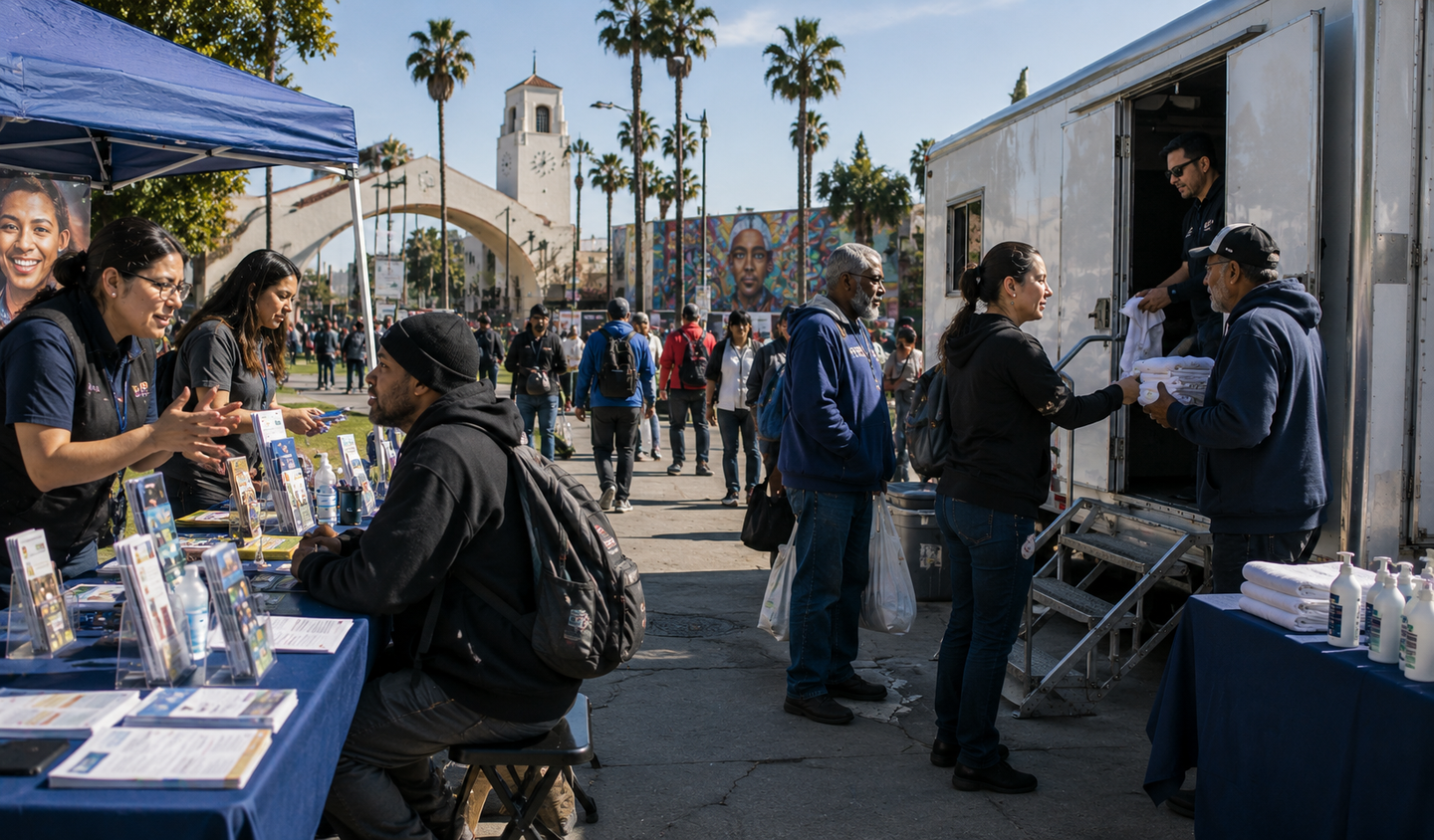
Mental health access, homelessness, dignity, and public policy take center stage in this episode of The Signal. Host Dino explores L.A. County’s Take Action L.A. mental health campaign with Jesús Romero of the Department of Mental Health, then speaks with Shower of Hope co-founder Mel Tillekeratne about mobile shower services for unhoused Angelenos and the growing threat of budget cuts to essential community programs. Aired live on 90.7 FM KPFK Los Angeles on May 2 2026.

This is viewer supported news. Please do your part today.
This is a rush transcript. Copy may not be in its final form.
TRANSCRIPT
00:00:02:18 - 00:00:13:08
MUSIC INTRO
Whole run by a handful of greedy bankers and CEOs who nobody elected can't possibly last.
00:00:13:10 - 00:00:16:21
MUSIC INTRO
I'm going to tell you the I'm.
00:00:16:22 - 00:00:17:23
MUSIC INTRO
But you really only have to.
00:00:17:23 - 00:00:22:23
MUSIC INTRO
Remember you're two words.
00:00:23:01 - 00:00:47:13
DINO
Good afternoon. And when I start this. Welcome back to another episode of The Signal news, information and analysis here on Kpfk. 90.7 of him. I'm your host signal. I'm your host. You hear that? I'm your host, Dino. And I want to welcome all our listeners, including our friends over at 98.7 Santa Barbara and 93.7 and San Diego and 99.5 in Ridgecrest, China Lake.
00:00:47:15 - 00:01:26:01
DINO
And today we have a wonderful program that we're dedicating to, this opening of the month of May, Mental Health Awareness Month. It's going to be an episode and that we're really going to hone in on opportunities that exist, opportunities for services. And who are some of the folks out there that are doing this? We're focusing on something that affects every single community across Los Angeles County, across, indeed, every part of this country, from mental health, access to basic issues that involve dignity for those who are experiencing homelessness.
00:01:26:03 - 00:01:46:00
DINO
We're talking about access to resources and what support actually looks like on the ground now is a quick programing note. I think all of you who are loyal fans and listeners, know. Well, our Spring Fund drive is, coming up right around the corner and we want to encourage you all to stay with us online at KPFA.
00:01:46:02 - 00:02:13:09
DINO
Dawg, make your, charitable donation your contribution to ensure that public radio, that free speech radio, that, unrestricted airways like the independent news talk and music and culture that you hear here on Kpfk, stays alive. That's at Kpfk, Dot org. So let's get into it. You know, we're going to start off with something that affects, again, every single community across this country, this world, indeed.
00:02:13:11 - 00:02:35:02
DINO
May is health, Mental Health Awareness Month. And it's a it's a movement not just to raise awareness, but to really talk about access, talk about stigma and what resources are actually available to people on the ground. Because the reality is, is, folks, too many folks are still navigating stress, anxiety, trauma and crisis without knowing where to turn.
00:02:35:02 - 00:03:03:05
DINO
Sometimes you know that that sense of desperation makes it difficult. And you know, we're not going to have a conversation about the causes. We're not going to talk about, you know, the actual specifics that involve some of these mental health challenges. What we're going to talk about are resources. Here in L.A. County, there has been a growing effort to respond to these challenges, not just by naming the problem, but by creating real pathways to support.
00:03:03:07 - 00:03:22:13
DINO
One of those efforts is a campaign that I became aware of a short while back, and I became very interested and was waiting for this month to kick in and that's this, Take Action L.A. campaign, a countywide initiative designed to address many of the barriers we're going to talk about, from lack of awareness to access to care.
00:03:22:14 - 00:03:45:23
DINO
The campaign is focused on connecting residents to mental health services, building awareness and making sure people know they're not alone. That help is available. It's about meeting people where they are and making it easier to take that first step towards support, to help us break it down, and to really understand what's available and what this campaign is all about.
00:03:45:23 - 00:04:00:14
DINO
We're joined with by Jesús Romero acting Senior Deputy. Let me try this again. Chris is acting senior deputy for the Department of Mental Health, Outpatient Care Services. Los Angeles County Department of Mental Health Care says welcome to the Salem.
00:04:00:16 - 00:04:03:02
JESUS ROMERO
Thank you. Good afternoon. Thank you for having me. It's a pleasure.
00:04:03:04 - 00:04:24:22
DINO
And, you know, talk about let me try and say that introduction twice. Right. It seems you know, this issue affects us all. You know, I in my family have had friends and relatives who have experienced mental health challenges. And, you know, let's let's get a scope. Let's get, let's start off with getting a better sense of just how big an issue is, right?
00:04:24:22 - 00:04:40:01
DINO
We know that mental health is a major concern across L.A. County. County data. In fact, your website shows that roughly 1 in 5 adults experience a mental health condition each year, and many of them don't receive care. Just how big is this a challenge in L.A. County?
00:04:40:06 - 00:04:58:22
JESUS ROMERO
Oh, it's a huge challenge. I mean, L.A. County Department of Mental Health is the largest mental health department in the country, and we still have a service gap. We know there's a lot of challenges, especially with our older adult populations, our young, our youth, right, our age, youth 18 to 25 years of age. Those groups especially need more support.
00:04:59:00 - 00:05:18:21
JESUS ROMERO
You know, mental health issues can be compounded by substance use, homelessness. And again, we know that there's a lot of folks out there that don't get the support that they need and don't know where to look for it. So, that's what Take Action L.A. campaign is about, about trying to reach out to the communities and provide awareness.
00:05:18:23 - 00:05:42:03
DINO
And now you work as a social worker. And a lot of times we are you are trained initially started as a social worker and talking to you before the broadcast. And, you know, one of the things that I've always appreciated about the social worker community is that it's it's, it's a thankless job. Sometimes you're really going out there to help people navigate difficult times.
00:05:42:03 - 00:05:44:18
DINO
What drove you to become a social worker?
00:05:44:19 - 00:06:13:06
JESUS ROMERO
You know what? I'm a beneficiary of the system, if you so to speak. You know, I grew up, you can say I was poor, right? Family members who suffered from substance use disorders, mental health issues, you know, had lived in housing growing up. Again, I've been a beneficiary of the system. I saw. I worked with social workers, had people in my corner who provided support, and I saw that the the work that they did, excuse me, saw the work they did, and it really touched me.
00:06:13:07 - 00:06:29:13
JESUS ROMERO
And it meant a lot to me. And I also know folks in my communities where I grew up, that needed help and support. And we didn't always know where to find it. Right. And when you found it, well, then you want to share that information. You want to share that support with the with the community. And for me, I'm a social worker first and foremost, always, every day.
00:06:29:19 - 00:06:42:16
JESUS ROMERO
That's right. I'm a manager. But at the end of the day, with a core of what what I am and what I do is because I want to give back to my community. I want to support those that we work with. And I always think about how can we impact the system so that the folks get the support that they need.
00:06:42:21 - 00:07:10:16
DINO
You know, and I, I asked you that question was because, you know, we were talking before we went live about sometimes the importance of of having the messenger, those of you who are providing these services be seen as something more than just a government employee, something more than someone more than just a an agency representative. And, you know, you touched on, you know, having experienced some of these challenges, give us a breakdown of the different types of mental health services.
00:07:10:16 - 00:07:16:22
DINO
L.A. County provides, what's available across, let's say, prevention, early intervention, crisis response. Yes.
00:07:17:00 - 00:07:40:07
JESUS ROMERO
The department has a wide continuum of services ranging from early intervention, wellness, community based type supports. You know, some mental health issues can be helped through managed care programs or community based organizations. The Department of Health focuses more on more mild to moderate, severe clients who might have more severe disorders like maybe schizophrenia, bipolar, major depressions,
00:07:40:09 - 00:08:07:13
JESUS ROMERO
There are services available throughout the continuum for young adults, older adults, children, we provide services in schools, community centers, in the field. We do really we do a lot of field work as well. We have homeless outreach engagement teams. In addition, for crisis response, we also have the psychiatric mobile response teams, and we have teams that correspond with, our, law enforcement agencies to go out into the community and provide support as well.
00:08:07:15 - 00:08:31:20
DINO
Now, you just described a couple of, key issue areas. How do we for those of us that aren't fully aware or understand, how do we define or classify these range of mental health issues that people are facing? You know, you mentioned severe. Give me a, put it, you know, I'm a simple radio guy. I understand this better.
00:08:32:00 - 00:08:49:05
JESUS ROMERO
That's that's a great question. I think some folks, you know, don't always know where to start. And I think the that's the piece. Right. We want folks to kind of start somewhere. You can start small, talk to a friend, family member, a clergy person, someone that you trust, someone that you know, they will listen to you. There's help through the department.
00:08:49:05 - 00:09:12:01
JESUS ROMERO
We have a our 24 hour hotline that you can call, any, you know, you can call 24 hours a day, get information and support. They'll ask you a series of questions, ask you what you're going through, provide you resources, information. They might even give you information how to schedule an appointment with one of our clinics and programs, or direct you to to the right resources in the community, depending on where you might live.
00:09:12:03 - 00:09:30:00
DINO
Now, this is one of the ways the county works to reach residents is through this outreach public awareness campaigns. I know that this particular project, the Take Action L.A., has been around for a couple of years now. How does this yeah, tell us about the program. How does this part of the system that you guys are trying to develop here?
00:09:30:04 - 00:09:56:13
JESUS ROMERO
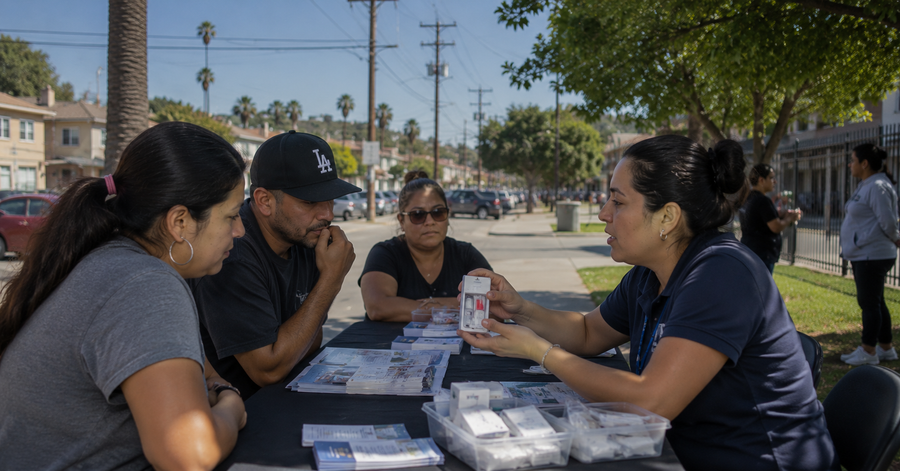
Yeah, our Take Action L.A. campaign. I'm really excited to talk about this. Our first event is that this is timely. Interview tomorrow, May 3rd, from 1 to 4 at Magic Johnson Park in Los Angeles is our kickoff event for, for Take Action L.A.. And this is an opportunity for the department to share information and resources with the community about what services are available, from, you know, outpatient services, residential services.
00:09:56:15 - 00:10:24:12
JESUS ROMERO
Many of our county partners will be at this event. In addition to the department will have different, bureaus that will be there providing information and support. In addition, there's going to be, you know, activations, I think there's an art activation, a Guardian activation. There'll be some family, friendly activities that go on throughout the day. And it's just really an opportunity for the community to come out, get some information, get some support without having to feel, obligated to kind of engage in services, of being.
00:10:24:13 - 00:10:26:13
JESUS ROMERO
We just get informational.
00:10:26:15 - 00:10:57:10
DINO
And just stuff. Let me ask you this and let me let me read you, it here with me. Romero, acting senior deputy, for the Department of Mental Health and Patient Care Services, L.A. County Department of Mental Health. And so walk me through this. So I was like, I got a friend, I got a colleague, an old friend of mine who every once in a while, I'll say, hey, Dino, man, you know, I'm, I'm having issues with depression, you know, and maybe he doesn't always maybe she doesn't always go out there and seek help.
00:10:57:12 - 00:11:22:19
DINO
But if he were to go to this event, walk me through what? What is the process for somebody who is saying, hey, listen, I might be experiencing issues of depression. Walk me through what the afternoon can look like. And what I want to get at is I want the audience who may be experiencing a moment like this, where they may be feeling that, you know, I'm feeling a little depressed, but I'm clearly not like the guy out there that I saw down the street the other day.
00:11:22:21 - 00:11:37:06
DINO
And of course, and we'll get into the issue of stigma, which is one of my favorite topics, because I think it's such a, a difficult topic. But walking through that, I know we're having this event or you're having this event tomorrow, May 30th, the Magic Johnson, by the way, what time does it start?
00:11:37:07 - 00:11:38:04
JESUS ROMERO
It's 1 to 4.
00:11:38:09 - 00:11:47:01
DINO
1 to 4 p.m.. I can walk in there, say, Jesus told me I could come here. Where do I go first? What do I do? What do I tell them?
00:11:47:03 - 00:12:10:05
JESUS ROMERO
Yeah, the event is going to. Like I said, it's going to have a series of different, divisions within the Department of Mental Health providing information and resources. But for those folks who may come and say, I need help today, the great thing is that there's going to be plenty of mental health professionals there on site to be able to provide information, resources, support, and if need be, really, really help them engage and connect with services in the community.
00:12:10:11 - 00:12:39:16
JESUS ROMERO
So it's open to the entire county. Anyone, any resident from the county or outside of the county can come to the event and get information about mental health resources in addition to, you know, maybe walking out of the event with an appointment to for services in one of our local clinics or just informational, you know, material materials that you can get you to, to have somewhere to call or to, something to look into, maybe a website, a phone number, a contact person.
00:12:39:18 - 00:12:51:09
JESUS ROMERO
But definitely they can leave. They can come and leave with plenty of information to get the support they need, not only for themselves, but for family members, or other significant others that they might want to get information for.
00:12:51:11 - 00:13:11:02
DINO
This is let's talk on it. Let's touch on this issue of stigma. And we were talking before the broadcast went on. And this is an issue that, you know, as I said to you earlier in a previous, work experience, I navigated issues of, of, problematic drug use or more commonly referred to us as drug addiction.
00:13:11:02 - 00:13:40:05
DINO
And I was sharing with you this campaign that the nice people take drugs campaign that sought to mitigate the the perception that people with substance abuse problems, mental health problems, or, you know, are bad people. We reminded folks that, you know, nice people take drugs. First and foremost are people that are experiencing challenges. Many of them are brothers, sisters, cousins, wives.
00:13:40:05 - 00:14:01:11
DINO
Parents are nice people who just have a hard time for whatever reason. And I feel this is actually one of the things endeared me towards this segment, because when I first read about the Take Action campaign and I went on the website and I'm like, oh man, this is good, right? But stigma and stigma is a huge issue in all communities.
00:14:01:11 - 00:14:10:16
DINO
And, you know, let's jeez, let's get into the Latino community, for example. Right. But tell me about how do you all address this issue of stigma?
00:14:10:18 - 00:14:30:14
JESUS ROMERO
Well, you know, growing up Latino in a very male dominated, macho machismo type of environment in Oxnard, California, I can speak to that directly. I know that it's difficult sometimes to admit that you need help or support or that you're not feeling well. And I think the goal of the campaign is to help people understand that you're not weak for needing help.
00:14:30:14 - 00:14:46:12
JESUS ROMERO
Everybody needs help, I need help, you need help. We all need it at different times, and we all need it in different ways. It doesn't look the same for everyone, but the goal of the campaign is to provide awareness and information. Part of it starts with, you know, where can I get help and to understand that it's confidential?
00:14:46:14 - 00:14:59:18
JESUS ROMERO
The folks that are doing this work, they're not doing it for the money. They're doing it to help people who they're doing it because they want to give back. They're doing it because it means a lot to them. And I think that's the important piece is, folks want to support the community. They want to be there for them.
00:14:59:20 - 00:15:10:16
JESUS ROMERO
And I know that folks don't get the support that they need or don't feel like they have the help that they need. And it's sometimes it's hard to turn to a family member and say, hey, I'm not not feeling well today.
00:15:10:18 - 00:15:29:09
DINO
Let me, let me, let me bring you back to your your on the ground. On the ground days as a social worker. Right. You know, and here I come, you know, a somebody, you know, and I'm not feeling well. What's the message you convey? First and foremost?
00:15:29:11 - 00:15:51:03
JESUS ROMERO
Or you just try to be human. Be natural, be honest, be open. Hey, we all have those days where we don't feel well. Sometimes I don't feel well. But what can I do to support you? What do you need right now, in the moment? What's going to help you get through the day and what, you know, talk to the folks about what's what's available to them, what support is is available, what are the resources in the community now?
00:15:51:03 - 00:16:17:02
DINO
The campaign talks about different ways people can take action. That's part of where the name comes from. From what I understand and what does that actually look like in practice for residents, for families, for community organizations? The first step is understanding, accepting that, you know, it's okay to ask for help. You're going you mean either someone at an event schedule an appointment?
00:16:17:04 - 00:16:25:18
DINO
But walk us through the take action part of this? Is it just a procedural thing? What else can be done to lead up to this and prepare for it?
00:16:25:20 - 00:16:45:01
JESUS ROMERO
I think the goal of the campaign is really it's not just me. It's every day, right? Every day. We want to be able to spread awareness and information. And I think the goal, too, is to have families engaged in the process. I think folks, folks do better when their family's involved and when when you have, you have more support than just maybe your social worker or your psychiatrist.
00:16:45:03 - 00:17:04:15
JESUS ROMERO
So part of it is to to start small, maybe you go to this event and you pick up some information, maybe not for yourself. Maybe it's for a neighbor, for a loved one, you know, family member, someone that, you know, that's not doing well, that you think could, you know, could use some support but didn't feel like they could come to the event, or maybe isn't even thinking about the fact that they need some help.
00:17:04:17 - 00:17:23:16
JESUS ROMERO
So I think those those little action steps about creating awareness, providing information, letting folks know that we're here and available, where can you access the services? That's a big one. Folks know that there's mental health services available, but sometimes they don't know how to get there. Where are we located? You know, what are the hours? What exactly do we provide?
00:17:23:16 - 00:17:51:14
JESUS ROMERO
You know, we provide therapy and, you know, individual therapy, group therapy, case management services. We provide housing support. You know, we work with a lot of folks with co-occurring disorders, which is, you know, substance abuse and mental health issues. And, you know, in addition to that, we have community partners that we work with where, well, you know, we might refer someone to substance abuse services or housing services or other services that are local to their community that maybe they weren't even aware of.
00:17:51:16 - 00:18:11:00
DINO
You know, my guest is guest is Jesús Romero, acting senior deputy for the Department of Mental Health, outpatient care services for L.A County's Department of Mental Health. And we're talking about the Take Action League campaign, a countywide initiative designed to address many of the barriers, associated with mental health challenges. And we're doing this because this is mental health awareness month.
00:18:11:02 - 00:18:35:16
DINO
The month of May, has was one of the biggest challenges. I think oftentimes with a lot of these type of issues in a place like L.A. County is the fact that we are so massive, right? 10 million people, you know, from the North End, of of the county down to Long Beach, the West side. I mean, you know, and then that diversity.
00:18:35:18 - 00:18:52:08
DINO
Right. Walk us through this. How do you all addressed and mitigate these challenges? Because we have, you know, gosh, one 200 different languages, cultural challenges, barriers. How is the how is the department addressing these challenges?
00:18:52:10 - 00:19:20:15
JESUS ROMERO
That's a great point. I, you know, L.A. County is, you know, is very diverse. And our clinics, we tend to we do we make an effort to make sure that our clinics and our staffing, the folks that treat our folks in the communities, look like the community. So we we we treat folks in the language that they prefer, when we can't, we do have language interpreter interpretation services that we use, but for the most part, we also have promoters that go out into the community and provide information and support.
00:19:20:17 - 00:19:31:06
JESUS ROMERO
But we make a concerted effort in our hiring practices and the programs to provide bicultural, competent services to our community members.
00:19:31:08 - 00:19:51:01
DINO
And I'm glad to hear that you have you guys do utilize the promoters model, which is a community based health worker approach utilizing trusted, trained, and culturally proficient individuals. You know, who speak the language. Well, you know, we were talking about this before the broadcast, how important it is to have people, you know, be able to relate to you.
00:19:51:03 - 00:20:00:00
DINO
You know, the last thing you want is some suit to pop out of a nicely painted van in the low income community, say, here, let me help you fix your brain.
00:20:00:02 - 00:20:21:18
JESUS ROMERO
Yeah. I think the goal is to it's whatever it takes mentality in terms of there's no wrong door for folks to enter, but we're going to do everything we can to support them. And as much as possible, we want to mirror what the community looks like. So you know, we want to make sure that we hire folks from the community if we can, spokes folks that speak the language, for that community and the represent the culture well.
00:20:21:18 - 00:20:31:06
JESUS ROMERO
Right. So I think that's that's ongoing. That's every day. That's always a top of mind when we think about, you know, what our community community's needs are and what our staff look like.
00:20:31:11 - 00:20:57:09
DINO
Now, here's $1 million question. And I say that, pun intended, because, you know, for some folks, you know, the person I was referencing earlier when I was having this conversation, you know, I said, well, you know, see if there's any available resources, there are available resources. And the first response I got was like, I don't have health insurance, I can afford this, I can afford to mental health services.
00:20:57:11 - 00:21:06:05
DINO
And, you know, oftentimes there's confusion about cost eligibility. Are these services free and who qualifies for them?
00:21:06:06 - 00:21:31:14
JESUS ROMERO
We don't turn anyone away for for lack of funds or insurance. Everyone who comes in will will be screened and, and, you know, given information about, you know, if they do, they have an ability to pay. Do they have private insurance? Do they have Medi-Cal? If we if they have those will certainly try to utilize that. But if they don't have insurance or they're undocumented and they don't have means to pay, we have sliding scales to work with folks in terms of their ability to pay.
00:21:31:14 - 00:21:41:05
JESUS ROMERO
We're not going to turn anyone away for for lack of funding. We're the safety net for the county, and we make sure that we let folks know that we're here to support them.
00:21:41:07 - 00:22:02:10
DINO
Now, for someone who may not be in crisis, but is still struggling, what are the first steps they should take? You know, you have these events and you'll be having more of these events throughout, the month. And let me repeat that. The first take action event, the kick off event, in fact, is tomorrow, May 3rd Sunday.
00:22:02:10 - 00:22:25:21
DINO
And Magic Johnson Park happening from 1 to 4 p.m.. And again, this is a location where you as, an individual, you can take your family, you can go there with a friend. Mother, parent, sister, brother, and, you know, go through the available resources. There's going to be a variety of different tables and booths where you can walk in there and say, hey, I might need help with this.
00:22:25:21 - 00:22:39:03
DINO
I might need help with that, inviting a variety of different sort of resources. But when there isn't an event, how is the county? Help me understand how does somebody walk into what office? Where?
00:22:39:05 - 00:23:00:08
JESUS ROMERO
Well, you can start by going to the L.A. County DMV website, and you can get information on resources in your local community, as well as what services the county provides. The department provides, in addition to links to other community based organizations that provide services. So there's always a way, to get information. The other is we have our one 800.
00:23:00:10 - 00:23:18:00
JESUS ROMERO
It's 1-800-854-7771. That's our LCM 8 to 24 hour hotline. If you call that number, you can also get information and resources and support. If you're just kind of trying to inquire about what's available in terms of services in the community.
00:23:18:04 - 00:23:28:11
DINO
Now, that's, a general number you call in and you, maybe only speak Spanish or only speak Tagalog, and you can just say it out and somebody will figure it out.
00:23:28:11 - 00:23:40:07
JESUS ROMERO
Yes. They there we have, folks on, on the call who speak different languages. And as I mentioned before, if there's a language that we don't have access to, we do have interpretation services that will provide support.
00:23:40:12 - 00:24:03:02
DINO
Okay. So give me the website one more time so that the audience, can go to it and see if we can, get folks help who need help. Again, we're we're talking about one of those issues that affects us all. We're talking about the Take Action L.A. campaign. May is Mental Health Awareness Month. And it's a moment not just to raise awareness, but we're talking about access.
00:24:03:02 - 00:24:26:11
DINO
We touched on the issue of stigma, but more importantly, resources that are available for folks here in L.A. County. There's this growing effort on the part of the county, to respond to these challenges, not just by naming the problem, but by creating real pathways to support one of those efforts. And what we're talking about today with with Silver Middle is Take Action L.A., a campaign, a county wide initiative designed to address many of these barriers.
00:24:26:11 - 00:24:38:04
DINO
We're talking about lack of awareness, access to care, how and where to get services so folks can go to what website, out in the into webinar sphere.
00:24:38:05 - 00:25:09:03
JESUS ROMERO
So the first website I would direct folks to is DMs la county.gov. And that's the Department of Mental Health main website has information on the resources and services provided to the through the department. And then the take action out take action Lakum website is a website that will, give you information on the event that's happening tomorrow, along with the other countywide events that are going to take place at various community colleges throughout L.A. County.
00:25:09:04 - 00:25:26:09
DINO
Oh that's great. Okay, so it's going to be through the community college system, which out here there's there's many of those. So dms.la county.gov. That's their general, L.A. County website right. Yes. Okay. So you can go there at any time. And indeed you can go to to the take action L.A. you can do a basic Google search.
00:25:26:09 - 00:25:48:00
DINO
That's how I, I first saw it, I believe actually, I think it was on social media a while back through your social media handle. And, I went to the website and then that's where I just kind of got fixated in. As many of our listeners know, we've been covering the elections. I think every episode for six months has been, you know, during our political series, Politics, Cycles and Beer.
00:25:48:02 - 00:26:11:09
DINO
Stay tuned. And we've been talking about elections. But again, you know, mental health awareness month, month of May. It's an issue that affects us all, whether directly or indirectly. And we at the signal are taking advantage of this platform to make sure that folks, are fully aware the number also, we're you can call us 808 547771.
00:26:11:09 - 00:26:11:21
DINO
Did I get that?
00:26:11:21 - 00:26:16:08
JESUS ROMERO
Yeah. That's correct. That's the damage. Damage 24 seven. Access line.
00:26:16:10 - 00:26:40:08
DINO
Damage. Department of Mental Health access line. We'll have this obviously on our website at kpfk.org where you can link to the show and you can, access the program there for the next 30 days. So just as we wind down, you know, we've talked about the venue, the event happening the month long effort on the on the part of the department to try and get people to help.
00:26:40:10 - 00:26:50:06
DINO
What's your final message to our listeners who are tuning in again, who are contemplating looking for help or maybe need help right away?
00:26:50:08 - 00:27:15:06
JESUS ROMERO
Don't hesitate to call. I think it's important that folks understand that needing help is human, right? You're not weak because you need help. You're human because you need help. We all need help from time to time. What it looks like for one person is different than the other. And again, it's it's important to know that the resources out there and available to everyone in the community, our residents have a great department of mental health that provides wonderful services.
00:27:15:08 - 00:27:31:03
JESUS ROMERO
Again, as I mentioned before, the work isn't always as rewarding as we'd like it to be, but it means a lot. It, it means a lot to us to do this work, to be able to provide support to our community, our loved ones, our friends, our families, the folks that, you know, they grew up in our community.
00:27:31:03 - 00:27:51:06
JESUS ROMERO
So I think, it's a passion to, to be able to do this type of work. And I think it comes across when you come visit our clinics, you can come to these events. You'll see that folks are really dedicated to this. And, I also really want to encourage you, if you have an opportunity to come out to one of these mass mental health events that are happening throughout the month, please, please do that.
00:27:51:06 - 00:28:07:14
JESUS ROMERO
Go on and take action. Lakum. You can see the listing of events, the locations, the times, and I'm going to be at tomorrow's event at Magic Johnson Park. So if anyone is there, I'll be there. And ID love to to meet folks and say hello and provide information and do whatever I can to support.
00:28:07:16 - 00:28:26:21
DINO
And this brother's dedicated. He drove down here to meet with us since, from Oxnard. So I can't thank you enough for that because I really appreciate you taking the time to join us and walk us through this. And for folks listening, this is one of those moments where information matters. If you or someone is struggling, you don't have to wait until things get worse to reach out.
00:28:26:21 - 00:28:48:09
DINO
There's resources available right now. You can learn more by visiting the Take Action L.A. website. Or connecting directly to services at L.A. County Superior Mental, acting senior deputy for the Department of Mental Health outpatient care Services. We kind of cut this title. L.A. County Department of Mental Health. I want to thank you very much.
00:28:48:09 - 00:28:58:00
DINO
We'll make sure to share the information. And, you're listening to the signal news information analysis. We'll be right back after this break.
00:28:58:02 - 00:28:58:19
MUSIC INTRO
But you really only.
00:28:58:19 - 00:28:59:14
MUSIC INTRO
Have to remember.
00:28:59:14 - 00:29:05:18
MUSIC INTRO
To work towards.
00:29:05:20 - 00:29:11:23
MUSIC INTRO
Coming.
00:29:12:01 - 00:29:25:17
CUT
til I make it. It's me with his hat. And they look at me and say to him, then it's on through. And they say, no president. So let's get, get angry.
00:29:25:18 - 00:29:32:10
MUSIC INTRO
That he made it this way to find love.
00:29:32:12 - 00:29:50:18
DINO
Welcome back to The Signal. So for many of us, taking a shower is just part of the day, right? We wake up in the morning. Some of us are nighttime shower folks. Some of us are mourning how some of us are 2 or 3 times a day. But for tens of thousands of people across Los Angeles, that's not a given.
00:29:50:19 - 00:30:24:23
DINO
According to the Los Angeles Homeless Homelessness Service Authority, more than 75,000 people are experiencing homelessness across L.A. County, and the vast majority are unsheltered, living on the streets and vehicles or encampments without consistent access to basic hygiene. That's where the shower of hope comes in. Now, this is an organization that provides mobile shower services across L.A. County, meeting people where they're at, not expecting them to, you know, make miracles for themselves.
00:30:25:01 - 00:30:51:19
DINO
But again, meeting people where they're at and in doing so, restoring something simple, something simple. But essential. Dignity. Through weekly services across dozens of locations, the program reaches unhoused individuals in encampments, shelters and community sites, delivering thousands of showers each and every month, while also connecting people to additional supports. Resources. We just talked to the Department of Mental Health Services.
00:30:51:21 - 00:31:03:20
DINO
So here to help us understand and talk about this vital, vital, service. Okay, Mel, I'm going to give it a shot. Right. I think I got it the first time. Mel to La coconut.
00:31:03:22 - 00:31:05:02
MEL TILLEKERATNE
Very close. Tillekeratne
00:31:05:02 - 00:31:35:02
DINO
Tillekeratne. Tell the coroner I mean, like, this guy has the the the dopest name, around right now. We're going to go with that. Okay. So let's let's get let's get going with this. Right. Mel is co-founder and executive director of the shower of Hope. And, walk us through this, Mel. Okay, so let's start off with the big picture for people who may not be familiar with what shower of Hope is, start us off there.
00:31:35:02 - 00:31:45:03
DINO
How did this get started? How did you, Mel one day say what you co-founder. You know what's a good idea? To help people regain their dignity? Starting off with a shower? Yeah.
00:31:45:05 - 00:32:18:10
MEL TILLEKERATNE
Well, first, thank you for inviting me on here. In 2011, we started a very grassroots program to serve food on Skid Row. And, it started as one day a week, but it ended up being Monday through Friday of every week. We would serve around 250 individuals every night. So we did that from 2011 until 2018. And while we were doing that, we used to get a lot of volunteers from places like USC, UCLA, and just regular Angelenos, majority of the regular Angelenos.
00:32:18:10 - 00:32:40:15
MEL TILLEKERATNE
So after a few years, people came up and said, hey, like, you know, we know we can do more. We got to do more. So what we did was we started listening to the people who were coming to us. And the one thing that came up that was very common from every person was that they didn't have access to showers.
00:32:40:17 - 00:33:05:10
MEL TILLEKERATNE
And where they did have access to show us the showers when clean or they didn't feel safe. So back then, another volunteer and me, Damien Matsuda, we decided we were just going to start small. Just get one trailer. That's why it's that singular, the shower of hope. And just use it on Saturdays. So we started we actually deployed the trailer in 2017, in Highland Park.
00:33:05:16 - 00:33:18:18
MEL TILLEKERATNE
And, just seeing not just the demand, but what it actually did for the people who were able to take a shower. That's where it was like, okay, we have to do more.
00:33:18:20 - 00:33:40:15
DINO
And you know, man, I just hearing you describe that, I think about, you know, myself. I mean, sometimes you've had a rough day, a long day or, you know, you're ready to get started and you need that extra boost. And, you know, you take that shower, you come out, you know, revitalized, rejuvenated. You feel good. And you started as a volunteer.
00:33:40:15 - 00:33:41:15
DINO
You said.
00:33:41:16 - 00:33:45:11
MEL TILLEKERATNE
Yeah, when we started giving out food on Skid Row, everyone was volunteer.
00:33:45:12 - 00:33:57:07
DINO
Everyone was volunteer. And you saw that a shower was the way to go. And and you start developing this. Tell me what that first couple of weeks was like. What was the first couple of months?
00:33:57:09 - 00:34:16:00
MEL TILLEKERATNE
Well, we all knew a shot was important, right? But we we knew a shot was important when our shower is usually ten feet from our bed. We only understood how much a shower was important for people who don't access it. Once we rolled out the trailer.
00:34:16:01 - 00:34:17:17
DINO
Okay.
00:34:17:19 - 00:34:25:02
MEL TILLEKERATNE
Before we take everybody home, you need a shower to be clean, right? You need a shower to get your mental state. You do your debates in the shower, right?
00:34:25:05 - 00:34:26:06
DINO
Yeah, sure, sure.
00:34:26:07 - 00:34:55:14
MEL TILLEKERATNE
But seeing people come out of the shower and understanding what that meant to them, like I said, for me, my bathroom is ten feet away. But for a person who doesn't have access to bathrooms, who's turned away from bathrooms because of the way they look, it's different. And when you haven't showered in months, when we brought the trailer to Highland Park, we used to get a lot of people who said they hadn't showered in six months.
00:34:55:16 - 00:34:57:07
DINO
Wow. Okay.
00:34:57:09 - 00:35:20:18
MEL TILLEKERATNE
Their version of a shower is sneaking into a Starbucks, closing the door and trying to just get a blood bath before someone keeps knocking on the door. So for us, it's important. And, you know, it's it's interesting. You know, when we talk about our shower baptism, you even look at the religion of Islam before you pray, you have to clean yourself right?
00:35:20:20 - 00:35:36:12
MEL TILLEKERATNE
A shower is important, right? It's that part of that, that time where we have for ourselves one to cleanliness is what gives us that start, right? A lot of people say, you know, a lot of people joke, oh, they did something bad. They want to take a shower, right?
00:35:36:13 - 00:35:38:13
DINO
Oh yeah. If you want to get yourself on that.
00:35:38:17 - 00:35:59:21
MEL TILLEKERATNE
Yeah, I so it's but when you don't have access to it for multiple days, what happens is you know, you become very I mean, think of it right. For us, on a summer day, after a long day of work, we become self-aware, like I used to hate. When I came out of the gym, I used to hide in the corner of the elevator, run into my car, get out because you don't want people to smell your B.O., right?
00:35:59:21 - 00:36:00:18
DINO
Yeah. Of course.
00:36:00:20 - 00:36:23:05
MEL TILLEKERATNE
But what happens when, like, for me, it's like I just going to go home and shower for people who don't have that. So after a day or two, you start to isolate. You don't want to talk to your friends because now, you know, your breath smells, you know you have B.O. and then more. You just isolate to the point where you don't want to talk to anyone, including the people like Hacerse.
00:36:23:05 - 00:36:46:10
MEL TILLEKERATNE
From damage to other services who want to come and give you the help you need to get out of homelessness. And that's where it becomes tragic and powerful. It's tragic because in a city like or the county of L.A. now, mind you, in the county of L.A., we have very few programs because our funds are getting cut in a county of L.A, which is the 19th largest economy in the world.
00:36:46:12 - 00:37:04:08
MEL TILLEKERATNE
We don't have public bathrooms. These these folks don't have that ability. And even the places there are, you know, if you've been on the street, you've got a bunch of bags whatnot. People are not going to let you go into a gym, right? It people know you look homeless. You know, you can't even go to a coffee shop.
00:37:04:08 - 00:37:10:12
MEL TILLEKERATNE
So it's it's really you. You lose your humanity, right?
00:37:10:12 - 00:37:31:23
DINO
Wow. You know, I never thought about that. No, I appreciate you. I appreciate you framing it that way because. Yeah, you're right. I mean, you know, if you don't have access to something as simple as an opportunity to clean yourself, to cleanse yourself, to, you know, just get that extra little, you know, sense of pride and ownership and what you have.
00:37:31:23 - 00:38:02:20
DINO
I feel good, I feel clean. You do isolate yourself. And I think we've all been there in that moment where you're on your way back from, from the gym, as you said. And I'm going, I'm going to drive through because I don't want to get off the car, you know, and as simple and as much as we can just kind of laugh that off right now, I think it speaks to something that's real fundamental, which is these are some of the ancillary yet very direct impacts of problems associated with homelessness, problems associated with mental health.
00:38:02:23 - 00:38:13:07
DINO
So, you know, what does a typical day look like for your team when you're out in the field, doing these special programs or having providing these access.
00:38:13:07 - 00:38:39:11
MEL TILLEKERATNE
Yeah. So so now we're at a point, you know, prior to last year, we we we had a much bigger program. Now on a given day, we roll out around six mobile shower trailers, usually around two of their trailers go to Skid Row. The rest go to Highland Park, Lincoln Park, Hollywood, you know, scattered around L.A. And, you know, each trailer starts with, two ambassadors and a team lead.
00:38:39:13 - 00:39:05:19
MEL TILLEKERATNE
When we hire, we give, priority to folks who experience incarceration or homelessness themselves. That gives an opportunity for people, but also they're more understanding. They they understand what it means to have that chance. And, we're proud of our team. You know, we we have a team that really focuses on, you know, we say it a lot, but the reality is respect our dignity.
00:39:05:19 - 00:39:24:05
MEL TILLEKERATNE
Right. We want a point where someone approaches you. First thing you want to do is our team does is if they know their name, they try to call them by their name because it's it's at that point, it's not just a shower, right? You're giving people an experience where they're seen as human.
00:39:24:05 - 00:39:46:22
DINO
As humans, of course. Yes. And Mel, walk me through the you know, you show up here in front of our building, I come out, I approach you. What? What do you provide? What do you have? You know, walk me through that experience. You know, this is a it's radio, right? Well, sometimes we try and paint a picture for people to visualize so that they can fully conceptualize why these programs are so important.
00:39:47:02 - 00:39:48:11
DINO
Penis. That picture.
00:39:48:13 - 00:40:07:14
MEL TILLEKERATNE
So you would see a white trailer that says the shower of Hope on mobile showers. You walk up and you see two of our team members behind a table, on the table, you're going to see towels. You're going to see shampoo, toothpaste. What we do is we let people decide to take what they want. We don't give people all this toothpaste.
00:40:07:15 - 00:40:25:09
MEL TILLEKERATNE
We have a variety because we all have different choices. We all want different sense. So you walk up, one of our team members is going to ask you what's your name? And then say, hey, your name. Your name is on the list here. How how long it'll approximately be. And then they ask you like, hey, what do you need?
00:40:25:11 - 00:40:49:19
MEL TILLEKERATNE
So, you know, obviously everybody needs a towel and soap, but toothbrush, toothpaste. We have everything. So. So, everything from nail clippers, Q-tips to foot powder, to lotion. Because another thing I think we we only noticed once we were doing this is the people who come to us, the people who are experiencing homelessness on a given day.
00:40:49:19 - 00:41:13:00
MEL TILLEKERATNE
They walk a lot. They walk around eight hours when you don't have a place to stay, when you don't have a vehicle, you're walking from one place to the other. Your feet are cracked up. If you have diabetes or high blood pressure, then your feet are even worse and you're susceptible to bacteria to diseases, right? So when they come in, when they take a shower, is when they really see how damaged their feet are, right?
00:41:13:02 - 00:41:36:16
MEL TILLEKERATNE
A lot of people come out with their feet bleeding because all that dirt compacts into the cracks and they don't notice it until they take a shower. Well, so we have to look at, okay, what do they need? Right foot cream foot powder to, you know, deodorant. Everything a regular person needs on top of someone who hasn't has I have access to a shower will fall most likely, at least in a couple of days.
00:41:36:19 - 00:41:57:05
MEL TILLEKERATNE
Average. I'd say a lot of the people who come to us, they haven't had a shower in four days, so we have to look at that. It's like one recognizing the person as a person, right? We want to give everybody that experience. Hey, hey, how you doing? How can we help? Second, giving them what they need for a shower to feel clean razors.
00:41:57:07 - 00:42:03:13
MEL TILLEKERATNE
I mean, we're talking does a significant amount of women who are homeless in this county, right.
00:42:03:19 - 00:42:05:04
DINO
And this service is for every.
00:42:05:04 - 00:42:17:06
MEL TILLEKERATNE
Yes. So women who go through menstruation, right. So feminine hygiene items, all of that is included where they can come and take a shower and walk away leaving clean but also seen.
00:42:17:08 - 00:42:21:00
DINO
No, give me.
00:42:21:02 - 00:42:47:20
DINO
You know, tell me about somebody that may have stood out to you in your years of doing this. You know, an individual who really conveyed the value of this to you by way of that experience, whether it's a single experience or a returning customer, so to speak. Right. Somebody that has impacted you and said to you by way of their story, hey, man, thanks for doing this.
00:42:47:22 - 00:43:09:11
MEL TILLEKERATNE
I think what sticks to mind is something that happened pretty much almost in the first year we were there. And that goes back to her from DMA age. We weren't we were told about this lady who was going through a very rough time, even within home, that sense worth getting attacked and whatnot. And so some of their friends, let's call her.
00:43:09:11 - 00:43:30:00
MEL TILLEKERATNE
And without getting her real name, some of her friends connected her to us and said, hey, you can come here and get a shower. This person was going through a very severe mental health episode where they were they had a very severe multiple psychotic episodes. So when we tried to talk to them initially, we tried to get them connected to a mental health team.
00:43:30:02 - 00:43:57:08
MEL TILLEKERATNE
She absolutely denied it. But then one day we were in Pasadena and, we were in the middle of a pilot, actually, to see how mental health is affected or supported or how we can connect all of this through showers, Rooneys Pasadena and that day and she came by and when she came by, because this was the last day of the pilot, everybody from the county and a lot of folks from DMA were there.
00:43:57:10 - 00:44:07:17
MEL TILLEKERATNE
So one of the senior DMA outreach, officers wanted to go talk to you because they recognized they also knew her.
00:44:07:19 - 00:44:13:01
MEL TILLEKERATNE
When they approach energy, she just cast them out. Right. She just cast them out.
00:44:13:01 - 00:44:14:01
DINO
Don't want it.
00:44:14:03 - 00:44:16:20
MEL TILLEKERATNE
Just cast them out. Not just don't want it. Cast them.
00:44:16:20 - 00:44:17:22
DINO
Off okay.
00:44:18:00 - 00:44:42:04
MEL TILLEKERATNE
Super angry. She waits a bit goes takes a shower comes out. And they had this part. Everybody's almost about to leave. We're about to leave. And then and she calls out to that clinician talks to that clinician. Three months later she was housed. Wow. I'm not saying this is typical, but this is becoming housed.
00:44:42:04 - 00:44:42:21
DINO
Sure, sure sure.
00:44:42:21 - 00:45:11:22
MEL TILLEKERATNE
But this is how a shower can affect your mood and open you up. Like I like I mentioned before, right? When you when you don't feel clean about yourself, you isolate. But when that's removed, we all know out of a shower we feel clean. We get a little bit of confidence. It's also about talking to a person who's willing to offer you help and that story to this day is, and mind you, not just for me, everybody who was there that we were at, we only had one shower at that point.
00:45:12:00 - 00:45:16:20
MEL TILLEKERATNE
After that days when the county and the city were like, we need we need shower trailers everywhere.
00:45:16:22 - 00:45:32:09
DINO
Now here, let's get to the to the nitty gritty, the challenging part, right? So you get inspired. You start with one trailer, you eventually, level up to how many.
00:45:32:09 - 00:45:33:06
MEL TILLEKERATNE
Trailers, 20.
00:45:33:11 - 00:45:39:23
DINO
20 trailers, how many people are you guys serving total? Give us a rough house number.
00:45:40:01 - 00:45:42:03
MEL TILLEKERATNE
70,000 showers a year.
00:45:42:05 - 00:46:14:02
DINO
70,000 showers. You just. Hell, Mel heard Mel describe the power of a shower. But then over the last couple of years, last year, we heard about this, you know, crisis budget issue in the city of L.A. Who is a part of yours? And, you know, this year, right now, in fact, full disclosure, I too have worked on other projects outside of radio trying to identify ways to keep funding projects and programs that are essential.
00:46:14:02 - 00:46:36:14
DINO
And I couldn't think of one that more essential than this. Not all of them or all of them are important. That's I'm not saying this at the to dismiss any other, but in keeping with the topic, you now hear that there's a chance your funding will be cut substantially. Walk us through that.
00:46:36:16 - 00:47:00:18
MEL TILLEKERATNE
So last year, we lost a program which was an average of 40,000 showers a year. So up to this year now we only doing because we lost that 40. We only doing $30,000 a year. This program that's on the chopping block is $10,000 a year. But more than that number, it's what subs Highland Park, Lincoln Heights three days a week.
00:47:00:18 - 00:47:17:12
MEL TILLEKERATNE
Hollenbeck Park, Cyprus Park. So that's pretty much northeast L.A.. Plus the one side in East L.A. when those go away, there's no access for people. So what does that mean for the people who are in those areas?
00:47:17:14 - 00:47:29:19
DINO
Right. And what's the latest update? I know that there's been deliberations over the last 72 hours around these budget issues. Have you gotten any update as to where, where the budget where the budget is on this?
00:47:29:21 - 00:48:04:15
MEL TILLEKERATNE
So we have some some good news. So the budget is very complicated. And this time when they rolled it out, they were unable to really brief all the officials from the individual city district. So right now, we know that council member UNICEF's Hernandez and her team, they are working on it. Unfortunately, the way the budget and where they put it in the budget, which is not where they usually put it, it it might be where we would, would have at least 50% of the funding, which so would mean, you know, we have to cut sites.
00:48:04:18 - 00:48:32:00
DINO
Right. But, what's the total operating budget? I mean, what how do we, you know, what's the plan B, Mel, if this budget, this budget. But budget cuts continue. And if you already lost 40,000 showers, you're potentially going to lose more. Is there a plan B to keep this vital service going? So yeah. Well, yeah, it's the hard truth.
00:48:32:02 - 00:48:56:15
MEL TILLEKERATNE
I think part of this too, I think, is recognizing that the city and the county are moving in a way that they don't want to see street homelessness. So we've seen that with a lot of small cities that used to have showers and they did away with it. So it is a movement towards the 2028 Olympics to say, hey, we don't have a.
00:48:56:15 - 00:49:38:10
DINO
Homeless for some. All right. Now we're getting now we're getting into the politics of this. Now, are you suggesting that? And I could see this actually. And let me be careful on how I frame this. Right. Because there's this this I think this false criticism that I've heard over the years where, you know, well, if you provide services, if you give them, you know, X and Y, that's just sustaining somehow their way of living, which couldn't be bigger bus because, you know, again, if the services are there, people will take advantage in the case of, of of the person that you reference, it can even lead to a person being housed.
00:49:38:12 - 00:50:04:10
DINO
But are you suggesting that possibly one of the motivators here is that, by doing away with this, they are essentially supporting this effort to do away with homelessness because it's bad luck for the city. And look, I'm a critic of this. I do believe historic history tells us that cities have done this globally instead of mitigating and addressing the problem, they rather disappear.
00:50:04:10 - 00:50:21:00
DINO
The problem, at least until the event is over. We've seen this in every major, Olympic venue over the last 30, 40 years. Is that what you're suggesting here?
00:50:21:02 - 00:50:22:06
JESUS ROMERO
I mean.
00:50:22:08 - 00:50:43:21
MEL TILLEKERATNE
When you see all the clues pointing in one direction, you got to make a judgment based on all the facts that when you're seeing services cut, when you're seeing ramped up enforcement, and when you're seeing that the city of L.A. is investing in something that was a bad idea, but now they can't get out of it. Now it's let's go all in.
00:50:43:23 - 00:51:08:17
MEL TILLEKERATNE
Right. So I, I think I think the thing is, L.A. has been a place that attracts people regardless of what's provided. I'm not familiar. I'm from Sri Lanka. I didn't come to L.A. for a shower. Right. People come here for that L.A. dream. People see a certain thing in this city. Guess what? When we have the Olympics here, people's good to see more of it.
00:51:08:17 - 00:51:37:11
MEL TILLEKERATNE
Sure, but. But by not providing people access to basic needs, access to services, what's going to happen to those people regardless of whether they were here or whether they're coming here from somewhere else? We're putting people in situations where they won't have a choice but to stay for one who come, do come here. But for the people who are here, we have to recognize that this city has been through so much gentrification.
00:51:37:13 - 00:51:57:18
MEL TILLEKERATNE
How many people are we talking to? A whole other people. We talk. Are we talking about the city is more and more becoming that footprint of trust fund babies running amok and then the people of this city, let's face it, majority of black and brown people are the ones sleeping in their cars. Now, the city of L.A. removing safe parking, right?
00:51:57:19 - 00:52:19:06
MEL TILLEKERATNE
That's the people who are. That's a ton of people who bounce from coach to coach. Before it was renting a room. Now it's bouncing from coach to coach. We run a program for our homeless community college students. You can afford to rent a room for less than 1200 bucks these days, if that. So what about the people who are here?
00:52:19:06 - 00:52:36:23
MEL TILLEKERATNE
What about this community? What about black and brown people of L.A.? Are we just going to say you don't belong here, right? Or are we going to say, hey, you know what? We have to have a city that's for everyone and that's affordable.
00:52:37:01 - 00:52:58:04
DINO
What has been the reaction by your volunteer base, by your support base? Upon hearing that the programing that has been so vital that they've been supporting, and indeed maybe even some of your regular returning, shower customers, what's been the reaction so far at the prospect of this diminishing?
00:52:58:06 - 00:53:01:15
MEL TILLEKERATNE
Are volunteers on fire? You know, kudos to Angelinos.
00:53:01:15 - 00:53:12:01
DINO
Actually, I want to give props to your volunteers. Let me tell you why I actually did see them hyped up on social media about this, so props to them. But tell us more peop.
00:53:12:03 - 00:53:36:05
MEL TILLEKERATNE
People are just emailing the mayor's office and the city of L.A. Every day they're showing up to city council meetings and for them they recognize that the. So I think the reason we, you know, were so successful is because we had a base of volunteers who recognize that we are all on the brink. Yeah. And for them, this does not this is this is about just this this about everyone.
00:53:36:05 - 00:53:54:13
MEL TILLEKERATNE
Sure. So we have people from, you know, every neck of the woods in LA to every age who are showing up. And for them, what they're saying is clear. Hey, it's not about the shot of hope. It's about giving people dignity in this city.
00:53:54:14 - 00:54:04:20
DINO
Well, I want to thank you. But before we head out, tell us, where can folks learn more about the hour of Hope and what they can do to help support keep this alive?
00:54:04:21 - 00:54:30:04
MEL TILLEKERATNE
You know, so we're at w w w dot the shower of hope.org WW dot the shower of hope.org. And then on Instagram at the shower of hope. So right now we have an email campaign going on on our Instagram. One of our amazing volunteers I mentioned her, she put a call out for help that is getting a lot of emails out.
00:54:30:04 - 00:54:54:01
MEL TILLEKERATNE
So if you want to help, just go to our Instagram page, look at the top, post and then you can find out how to email the city for us. And we need to we need people to call up the city, make those phones ring, make those emails come in until their inboxes are jammed so that, you know, people in, our Angelinos who on the streets have access to basic hygiene.
00:54:54:03 - 00:55:14:12
DINO
The shower of hope.org, the shower of hope.org Instagram handle at the shower of Hope. And props to Emma Zander, who I think I actually saw that post that you're describing, where she put it all very simple and clear. Mel, I want to thank you. And I'm going to do it. I'm going to try it. I'm going to actually say the name correctly.
00:55:14:14 - 00:55:19:05
DINO
All right, here we go to LA Cartman.
00:55:19:07 - 00:55:26:13
MEL TILLEKERATNE
Well, hopefully the city does a better job of supporting the showers that, you know, Mel with the shower of Hope.
00:55:26:13 - 00:55:50:13
DINO
Co, co-founder co-director of the shower Hope, a vital, organization providing I have one point, somewhere north of 70,000 showers, in danger of being cut due to the city budget. Again, please, go to their website, learn more at the SA football game Instagram handle at this hour of hope. And as we close out, I just want to close with this.
00:55:50:15 - 00:56:12:16
DINO
Know what we're talking about here is in complicated it's fundamental. Access to something as basic as a shower shouldn't determine whether someone feels human, whether they can walk into a job interview with confidence, or whether they're treated with dignity. And yet, for tens of thousands of people across L.A., it still does. Programs like The Shower of Hope step Into the gap.
00:56:12:18 - 00:56:35:19
DINO
Every single day, quietly, consistently, without a lot of attention, but with real human impact. And when funding becomes uncertain, it's not just a program at risk. It's access, it's dignity. It's its connection to services that can actually help people move forward. So the question is simple. Question for us is simple. Do we see this as essential or is optional?
00:56:35:21 - 00:56:57:13
DINO
If you want to learn more, support this work. And with that we sign off. I want to thank both my guest today in this special edition of the Signal, as we look to, give you all an option, an understanding of the type of services that are out there to help you all. I want to thank the staff, engineer Sly rivers, my producer, who is almost back out of vacation.
00:56:57:13 - 00:57:10:16
DINO
Thank God, our Nella Barbara and, our production assistant, Fabian month has also been super helpful. I want to, thank you, the listener, for tuning in. Stay with us. Up next, the car show.
00:57:10:18 - 00:57:23:21
MUSIC INTRO
Your guest. My hero. He never get away. I said, I promise I'll be the best. He ain't no la la la la la la. There all is. All.