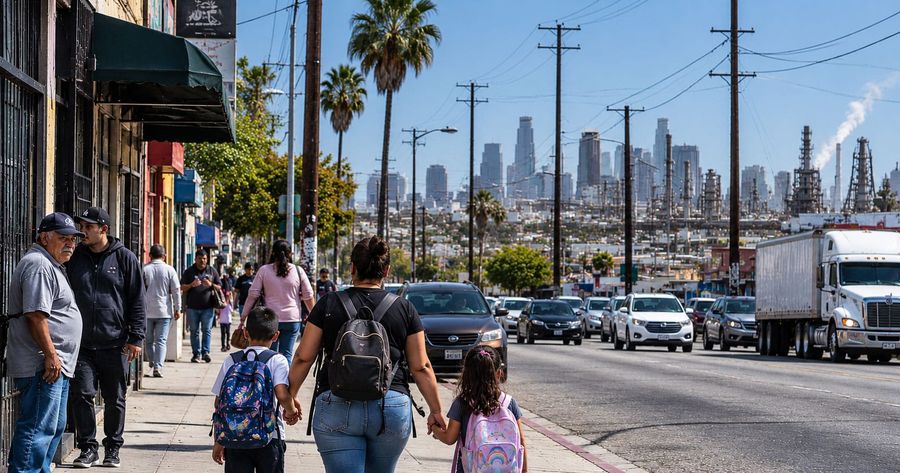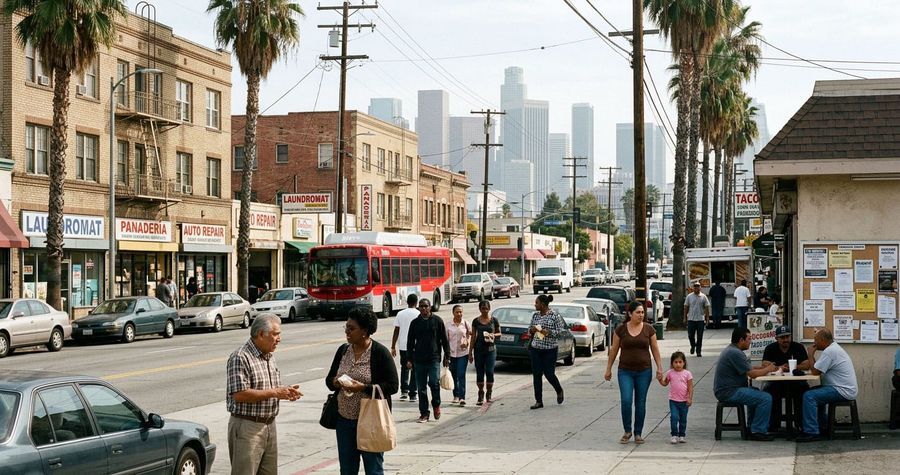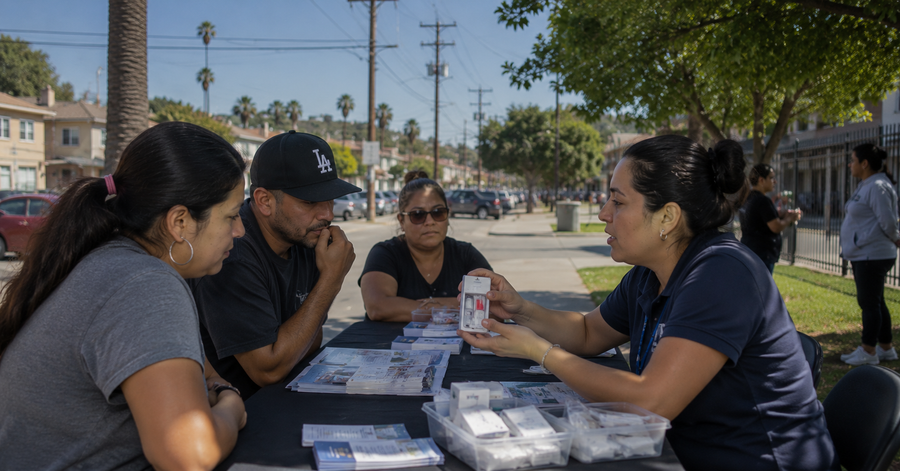

Los Angeles is at a crossroads. In this episode, Dino breaks down proposed reforms to the city charter—who holds power, how it’s used, and whether it serves the public. Featuring LA Forward’s David Levitus, we explore accountability, policing, and representation. Then, a conversation with State Senate candidate Sara Hernandez on affordability, housing, and the future of California communities. Aired live on 90.7 FM KPFK Los Angeles on April 4 2026.

This is viewer supported news. Please do your part today.
This is a rush transcript. Copy may not be in its final form.
TRANSCRIPT
00:00:01:22 - 00:00:12:11
Music Intro
The whole run by a handful of greedy bankers and CEOs who nobody elected. What can't possibly last?
00:00:12:13 - 00:00:16:12
Music Intro
And I'm going to tell you why I'm saying.
00:00:16:14 - 00:00:19:14
Music Intro
But you really only have to remember to.
00:00:19:16 - 00:00:43:21
DINO
Good afternoon, Los Angeles, and welcome to another episode of The Signal. News, information and analysis. I'm your host, Dino. Listening. Listen, today we're talking about power. I got thrown off a little bit there for a second. We're talking about power, folks. Who has it? How is it structured? And, whether it actually works for the people, that it's supposed to serve.
00:00:43:21 - 00:01:12:14
DINO
Right? So that's why today we're looking at the rules that are being discuss on the rewriting of, the city charter, changes to the Los Angeles city charter system. At the same time, we'll be talking to, another, important candidate in our political series, politics. Tacos and beer. For. And this one is for the district 26 that I'm not just candidate for California State Senate.
00:01:12:20 - 00:01:39:09
DINO
But before that, we'll be chatting with, David Levitus. We were talking earlier about how to pronounce his name, and he's whispering he's in studio with us, executive director of LA forward. So, yeah, listen, let's get into this. Right. As we start off this, this first segment, we're going to be talking again about how how the system works.
00:01:39:11 - 00:02:03:20
DINO
And right now in Los Angeles and Circular City Council, in fact, they're considering major changes to the Los Angeles City charter. Now, for those of you who don't know, the city charter is the foundational, legal document effectively, governing the city. It's look at it may be fair to say, David, maybe like a local constitution. Right. Exactly.
00:02:03:20 - 00:02:31:05
DINO
That defines a city's structure, power and procedures approved by popular vote. It dictates how the city operates, manages its money, elects officials, and controls municipal affairs. These reforms are being framed as a way to rebuild public trust and clarify how power works in L.A.. So joining us for a deep dive in this issue is David Levitz from L.A. forward.
00:02:31:07 - 00:02:44:10
DINO
He's a civic reform leader focused on making Los Angeles government more representative, accountable and transparent with direct involvement in the charter reform efforts and governance changes. David, welcome to The Signal.
00:02:44:14 - 00:02:45:15
DAVID LEVITUS
Thanks so much for having me.
00:02:45:21 - 00:03:21:17
DINO
Now, as a matter of full transparency, I want to disclose that I, in my day job, as a local nonprofit, director, have, organizationally been a part of this effort insofar as I was providing support for this broader discussion. So with that said, we did not reach out on this topic for that very reason. But, David, once topics are pitched to us as a radio program, as a news radio program, you know, my producer Nahla, who's off gallivanting in Europe somewhere and didn't take me, but I'm not bitter about that.
00:03:21:19 - 00:03:42:21
DINO
Said, hey, this, just came in and we jumped on it and it came in by way of, some of the folks over, supporting your operation. So here we have it. So, David, let's jump into this. Right. We're going to take, a good portion of this hour to really dig deep into this. Let's start off simple for folks who are listening right now.
00:03:42:21 - 00:04:07:14
DINO
And by the way, those are listening. And Kpfk, 90.7 FM, they're listening. And 93.7 FM San Diego, 99.7 FM, Ridgecrest trying to like we were going over the map of that. That's up in Edwards Air Force Base. And and for those of you who reached out earlier today and said, how do I listen to you? I'm in Bakersfield, Kpfk, dawg.
00:04:07:16 - 00:04:17:22
DINO
So on the easiest front, the simple front. David, talk to me about.
00:04:18:00 - 00:04:28:06
DINO
Oh, this they're telling me. Remember this. Listen live@kpfk.org City charter. Why is this going on right now? What? Give me the brief history of it.
00:04:28:08 - 00:05:00:09
DAVID LEVITUS
Yeah. So, you know, the basic shape of LA city's charter was it was established in 1925. That's when the council size was created of 15 council members. We had a whole big rewrite of the charter in 1999. There was a couple competing commissions and and that made a lot of changes. But, you know, fundamentally, there's there's the short term reasons why we're having charter reform now and the the long term reasons, the long term reasons are that, you know, this government structures that served us 20, 50, 100 years ago don't necessarily serve us.
00:05:00:09 - 00:05:24:10
DAVID LEVITUS
They're not necessarily promoting, accountability, transparency, effectiveness. But I think the the reason we're seeing it now is there's just as so many folks know, there's just been a string of scandals. I mean, between Mitch Englander, going to jail and Jose, who are going to jail and, what's everything happening with Mark Ridley-Thomas, but also the his the very messy process of of replacing him.
00:05:24:12 - 00:05:45:03
DAVID LEVITUS
And then of course, the fed tapes, that we heard, labor leader and some of the council leaders, you know, speaking in racist ways about gerrymandering. Like, I think it exposed, the reality and the feeling that the government really wasn't working on behalf of all the people of of the city of Los Angeles, and that we needed an update.
00:05:45:05 - 00:06:13:03
DAVID LEVITUS
And I think as we got into the process of charter reform, once the there was a delay in the appointment of commissioners. But once that finally started happening last August, just I think 25 plus years of, backed up, like a pent up demand for, for structural changes emerged. And so the commission ended up hiring hundreds of proposals for, for ways to change how the city is governed and structured and deliver services and provides representation.
00:06:13:05 - 00:06:20:20
DAVID LEVITUS
It it quickly went beyond like 1 or 2 things, that the council maybe had in mind to be like, no, we need to fundamentally rethink the city's constitution.
00:06:20:20 - 00:06:58:00
DINO
So so, you know, I, I, I worked on some legislation a few years ago, prop 64, in fact. And I remember when that legislation was shaping up and being framed. At one point, we had 110, I think, proposals for how to regulate, legal cannabis in the state of California. And our job at the time, which was a huge task, was to withered that down to one model, one format that eventually became, you know what?
00:06:58:00 - 00:07:24:04
DINO
We now know the end result of prop 64 and the legal framework for cannabis sales in California. You all had hundreds of proposals. Plus you're navigating what is undoubtedly, you know, a genuine, deep rooted distrust of government after 40, 50 and especially in the last ten years. Walk me through that process. How did you get to where you are with this one final proposal?
00:07:24:04 - 00:07:24:21
DINO
I couldn't have finished.
00:07:24:21 - 00:07:46:05
DAVID LEVITUS
Well, I mean, I would say it's it's only one there's a there's a report that was delivered from the charter Commission to council, which council now can take up or not take up or do whatever they want with. But in that, in that all the approved charter language that's been passed by the Charter Reform Commission, there are still dozens and dozens of proposals for both minor and major changes.
00:07:46:10 - 00:08:11:04
DAVID LEVITUS
So I would say we there was a winnowing down, but it wasn't it wasn't from 100 to 1. It was like there was maybe 300, 400 different proposals on the table. And we've got to, you know, a couple dozen basically. And, and the process by which that happened, I mean, there was, there was different groups leftward, probably, you know, very leading among them that came in with different ideas for what we wanted to do.
00:08:11:06 - 00:08:39:00
DAVID LEVITUS
We were, you know, one of the proposals that emerged was ranked choice voting. That was not something that we worked on. That was the ranked choice voting groups were really gung ho. This is an opportunity for us. I think where we we decided to push, was on both some structural changes to increase accountability and to make sure that the lines of authority and accountability were aligned as well as, and, in general, but as well as, as, as it applies of specific offices.
00:08:39:00 - 00:09:15:10
DAVID LEVITUS
So how we do public works in the city, how, the police are governed and overseen. And how, say, the city attorney's office works. So we we keyed in on a few different areas and focused our advocacy efforts there, and not just our staff advocacy, but really, we had a very active, group of volunteer leaders who were working on these issues, who were showing up at, if not every commission hearing, many of them, and advocating and building relationships with elected officials with the, the charter commissioners and pushing things forward, helping explain things when they weren't clear.
00:09:15:12 - 00:09:29:03
DAVID LEVITUS
And I think there were some proposals that, you know, were floated by groups that maybe had less, organizing, oomph, less political power, sure that there were good ideas that just didn't go anywhere because they there's just too much to take on all at once.
00:09:29:03 - 00:09:46:03
DINO
So now walk me through this, David. How does David and look forward? You know, okay, so structural changes. We're talking about how public works, functions, police accountability issues of of the city attorney. How did you all reach that in the first place?
00:09:46:03 - 00:10:03:21
DAVID LEVITUS
Yeah, it's a it's a great question. I think it was a combination of of factors. I mean L.A. forward were a multi issue progressive group focused on local issues. So there's not like we're only care about democracy forms or only care right. Infrastructure. And we have a lot of partnerships. And we work in a lot of coalitions.
00:10:03:21 - 00:10:23:20
DAVID LEVITUS
And so some of these issues that we chose to work on, like the capital infrastructure program, CIP or public works reform, we've been working with, investing in Place, led by Jessica meany and other other, transportation infrastructure groups on this problem for a long time, that fact that the infrastructure is failing and and falling apart in L.A. city.
00:10:23:20 - 00:10:48:13
DAVID LEVITUS
So that was one way that things came in. You know, that same is true for police accountability. Like, we've cared about this issue, for a while. And I think the other piece, some in some cases, we hadn't worked on issues before, like the city attorney, but we'd been in conversation with council offices, or we'd been in conversations with people advocates who've had to deal with the city attorney's office.
00:10:48:13 - 00:11:12:16
DAVID LEVITUS
And we started just asking questions and having those informal conversations about, well, what would make the city attorney's office under the current occupant has been especially terrible, but it has posed structural problems for a long time. So we started asking and doing research into it like, well, what works other places? And that is how we it was a really a combination of ways that we arrived at a very long list of proposed reforms.
00:11:12:17 - 00:11:28:18
DINO
David, let me stay on that. Give me a practical example. Okay. Like let's pick on the city attorney. I'm going to pick on her a little bit, because she was supposed to be a guest of mine a couple of weeks ago. And in all fairness, she did have something, a legitimate concern that popped up. We haven't been able to schedule.
00:11:28:20 - 00:11:40:01
DINO
But if we are, I'm going to ask her. But picking on the city attorney as a topic, not on her. Give me an example of what's not functioning and how charter reform would improve upon.
00:11:40:02 - 00:12:03:08
DAVID LEVITUS
Yeah. So, so many cities have, have city, you know, city attorney is a very common position. Most cities across the country do not have an elected city attorney. Usually it's appointed by the mayor, confirmed by the council. Even in a place like, San Francisco, where they do have an elected city attorney, that position, does not take on prosecution.
00:12:03:13 - 00:12:28:02
DAVID LEVITUS
And what's really the problem and what's so unusual about the LA city situation is that, we have a mishmash of functions combined into a massive office. So we have the LA city attorney is responsible for prosecution of misdemeanors. They're also responsible for advising the mayor and the departments. They're also responsible for drafting legislation. And that is it's it's two unwieldy of an office.
00:12:28:02 - 00:12:58:03
DAVID LEVITUS
And also, if you think about who's running to lead that office, like if they have a background of criminal justice, which would set them up to do prosecution, are they going to have a background in municipal law and advising and vice versa? So I think this is really too many functions under one office. And then I think the second problem that we really need to fixing is that there are, the the job of the city attorney should be to provide unbiased legal advice to the mayor, to the council.
00:12:58:05 - 00:13:38:02
DAVID LEVITUS
And when you have that position as an elected position, there, someone's going to have to campaign and run on an agenda. And, it's not just the current city attorney, past city attorneys as well. Like, they have an agenda they're running for, and that may impede their ability to provide objective advice to their client. De la city and so what has been what we we advocated and what the Charter Commission has approved is a bifurcation, a splitting of the city attorney's office into two and basically trying to conform with more common place practice around the state in the country, which is to have a elected city attorney, I mean, elected, sorry, elected city
00:13:38:02 - 00:14:02:22
DAVID LEVITUS
prosecutor. Like, we have an elected district attorney who is responsible for prosecuting misdemeanors. And then separately, we have an appointed city attorney who is responsible for advising the city, defending the city in lawsuits, all that sort of thing. And this gets us to a place where we're more in line with other, other cities around the state, in the country and, it sets us up for really, I think, frankly, a more manageable office.
00:14:03:00 - 00:14:21:21
DINO
And David, we've actually had, all but, the current city attorney, Heidi Feldstein, sort of we've had Marissa Roy, I'd, and others all here in that very chair where you're at. How have they given any feedback to this idea, considering that they're looking to get into that very position?
00:14:21:23 - 00:14:39:23
DAVID LEVITUS
I mean, I think I haven't talked to them directly during their campaigns about this. I think I've, I've read what they've said in the press. And I think, you know, Marissa who, full disclosure, was a former L.A. forward board member who have endorsed, you know, she points to the failings, in her view of the current city attorney as the reason for this.
00:14:40:01 - 00:14:59:18
DAVID LEVITUS
I think, Ida says, I don't remember what I says, but but point is, I think that I think for us to be a phenomenal city attorney, and I think she could do the job. And yet I think structurally, even if someone I loved was in this position and thought was phenomenal, like structurally, this should be at least two positions, not one.
00:14:59:20 - 00:15:17:04
DINO
So now let's transition actually to this other big topic, on this issue, one of the big proposals, that's on the table is clarifying the roles of the mayor and city council. All right. Talk us through what that issue at its core. What are we talking about here?
00:15:17:04 - 00:15:48:07
DAVID LEVITUS
Yeah. And frankly, I would have loved to see the commission go further on this, but I think we have in LA city due to not things from 10 or 20 years ago, but from 100 plus years ago from the the early 20th century. We have a system where we've diffused dispersed power to all these commissions that are appointed, in many cases by the mayor, and that really impede accountability and transparency, because, the mayor doesn't appoint the police chief, it's the board of commissioners which appoints the police chief.
00:15:48:09 - 00:16:14:15
DAVID LEVITUS
And that's true across so many commissions. And, it limits the ability, you know, the city council should have the power to set policy, to do oversight. And in some cases, we have commissions that are appointed by the mayor, but are not the mayor herself that are responsible for running departments and performing oversight. And I think that is that misalignment between authority and accountability is a real problem.
00:16:14:15 - 00:16:35:08
DAVID LEVITUS
And I think there's there's a lot more a future charter commission could do to look at like aligning, making sure the mayor and the council's roles are clear. But I think we have moved in a positive direction of, of really creating an empowered director of public Works to oversee the board of public over to the Public Works Department.
00:16:35:11 - 00:16:59:00
DAVID LEVITUS
Right now, it's overseen by a five member board appointed by the mayor. And likewise, we've in this reform package, we have a proposal to let council actually set policy for LAPD for the first time. They people assume they can they haven't been able to. The police commission does that. So I think that's one significant way in which we have seen this reform package.
00:16:59:01 - 00:17:06:20
DAVID LEVITUS
Try to clarify, like council's powers versus the mayor's powers, but there's still a long way to go, even if everything in this package passed.
00:17:06:22 - 00:17:30:11
DINO
My guest is David Levitus is founder and executive director of LA forward, who is, one of the organizations that's looking at rewriting the rules of it's government of the city of L.A. his government, through proposed changes to the Los Angeles City charter. And, you know, David, you kind of touched on this city council. You know, Los Angeles has some of the largest council districts in the country.
00:17:30:13 - 00:17:39:03
DINO
And part of this discussion revolves around expansion of city council. What does that actually mean for communities at large?
00:17:39:03 - 00:17:39:14
DAVID LEVITUS
Yeah.
00:17:39:15 - 00:18:02:00
DAVID LEVITUS
Yeah, I think it's really interesting that council expansion and shrinking the size of districts has popped to the top because it on its face, it doesn't seem like, oh, this addresses the corruption problem or the service delivery problem. It doesn't it doesn't address those things directly. But I think this is one of those great examples of like, just the pent up demand that I think Angelenos are feeling for, like representation in government.
00:18:02:02 - 00:18:32:10
DAVID LEVITUS
We have the largest, like, bar none, the largest council districts of any city in the country, more than 260,000 people per district in a place like New York, which is twice the size, their council is 50 people. And that means, you know that each council member there represents 150,000 folks, which is just more manageable. And I think the reason why we've seen this really widespread demand for expansion, which is which is new, I mean, back in 99, the voters went against expansion.
00:18:32:10 - 00:18:50:14
DAVID LEVITUS
But now if you look at the polling, they're overwhelmingly in favor of it. And that's because I think people want to see themselves represented in government. The size of the districts we have now means that, you know, you're going to have the same council district from what's all the way down to San Pedro, even with the best line drawing, there's no way to avoid that.
00:18:50:16 - 00:19:19:07
DAVID LEVITUS
And so making the districts smaller enables us to draw more, sensible districts that encompass kind of communities of interest that don't lump, neighborhoods together, that maybe it doesn't make sense to lump together. And it also, I think for for a group like forward, which does endorse candidates and believes in grassroots, you know, campaigns it enables, it's easier for a grassroots candidate to run and knock doors and win elections if the district isn't 250,000 people.
00:19:19:08 - 00:19:23:22
DAVID LEVITUS
And so I think that's why we're excited about it, and really so many other folks as well.
00:19:23:23 - 00:19:51:17
DINO
David, in a situation like that, right, where you have such a large district and I can tell you I've certainly heard this a lot, both outside of the space on the radio and, and here where folks are just challenged by a lack of responsiveness and, you know, accountability. But are there winners and losers when you take a district that's whatever, 200,000 and you cut it in half?
00:19:51:19 - 00:20:12:23
DAVID LEVITUS
I mean, I think the, the obvious loser is when you, you know, reduced district size from 250,000 down to, you know, whatever it comes is that the, the council members themselves, I think that's mitigated a little bit because none of these, this council expansion would not go into effect until 2032. So most of the council members sitting now, we're going to be long gone.
00:20:13:01 - 00:20:37:10
DAVID LEVITUS
But they lose. And I think the council loses power in relationship to the mayor. I mean, you know, historically LA has had a weak mayor system and the council has been very powerful. And individual council members have had what's called council member prerogative. And basically, even though they legally don't get to control what happens in their district in practice, the general managers of all the departments feel like they have 16 bosses, the mayor, plus the council members.
00:20:37:12 - 00:20:58:21
DAVID LEVITUS
So but that's not a actually a healthy system. So while the the council, members, you know, might lose some of their power within their districts and as a whole, I think you know, this goes back to what you're talking about, the mayor council, like the relationship, like we're electing the mayor to effectively like, lead and manage the city.
00:20:58:23 - 00:21:16:19
DAVID LEVITUS
She needs to be able to do that. And the council needs to be able to have, embrace the kind of policy and oversight role. And currently they're there in this role in because of their small size and just traditions of managing what's happening in their district, which is no way to run a city of 4 million people.
00:21:16:19 - 00:21:38:01
DAVID LEVITUS
And so I think in the long run, like in some ways, yes, council loses power through expansion, but I think there's a lot of benefits. And my hope is that the current council members, most of whom will not be around in 2032 because they'll be termed out like embrace this and we get to 25 council members, or at least 21 or 23.
00:21:38:03 - 00:21:44:23
DAVID LEVITUS
And they don't look narrowly at their self-interest, but really are looking like what's going to be best for city governance for decades to come.
00:21:45:01 - 00:22:04:21
DINO
David, you know, I'm sitting here listening to you describe this. And one of the things that comes to mind, especially, you know, with what we started off right, acknowledging that, you know, some of these systems, have been around since 1925 and they were rejected in 1995. Is there ready for this?
00:22:04:23 - 00:22:22:19
DAVID LEVITUS
I think I think L.A is ready for it. I wonder and I certainly hope if the council is ready for this because, you know, we're two different charter commissions in 99 and one of which was allowed to put measures directly to the ballot. It was an elected commission, and they could put it right on the ballot.
00:22:23:01 - 00:22:50:05
DAVID LEVITUS
We don't have that now. So and if we want to get anything onto the November 2026 ballot, council basically has to send send off a proposal to the city attorney for, you know, their their, their okay, and their, you know, legwork on it by mid-June. So we have this period which overlaps with the budget season in the next three months, where we have to make sure that this package of reforms gets through council.
00:22:50:05 - 00:23:10:19
DAVID LEVITUS
And I think if it gets through council, it gets to the voters, like voters are hungry for changes. They're hungry for accountability. With the polling shows, they're two thirds majority in support of expansion to at least 23 members. So I think I think, frankly, the people of the city want even more than what the commission delivered. But what the commission delivered is a really good start.
00:23:11:01 - 00:23:25:01
DAVID LEVITUS
Despite the fact that they had a rush, despite the fact they didn't have favorable circumstances, they did excellent work in those difficult circumstances. And I think it's really incumbent upon council to to pat, take the package, pass it and send it to voters for their approval.
00:23:25:03 - 00:24:01:09
DINO
Right. Okay. One of the other big topics in this effort, David, and perhaps one of the more, in my experience, both here and again outside of the radio, are the many different challenges associated with LAPD accountability, right? I mean, this is a huge big ticket item. As somebody who has recently covered, some of the resistance movements in the city of L.A. against ice and, and that whole scene, and as somebody who was actually shot by protect projectiles for nothing more than holding a camera, fully credentialed vest at all.
00:24:01:11 - 00:24:15:12
DINO
Walk me through some of these changes, right? I mean, the Charter Reform Commission recently approved several recommendations related to the police department. And one of the big topic items that, has been a consistent issue is this issue of firing problematic cops.
00:24:15:12 - 00:24:35:04
DAVID LEVITUS
Yeah, yeah. So the the truth is that the commission had zero plans to take up LAPD at all until we and some other groups got involved. Black Lives Matter, L.A or other groups, they, you know, this is even though LAPD is half the city's budget, like it was politically is are not to touch this. The staff didn't want to touch it.
00:24:35:04 - 00:24:52:20
DAVID LEVITUS
I don't think most of the a lot of the commission wanted to touch it. And we along with partners and allies, really pushed hard. And I think it wasn't just us pushing like the public of the city of L.A. they they know the LAPD's a problem as it has many problems on many levels. And we need accountability.
00:24:52:20 - 00:25:14:17
DAVID LEVITUS
We need transparency. We need real sweeping change. So I think the commission heard that and they decided to act. And we worked with, council officers, Ugo Martinez, CD 13 and Otis Hernandez, city one. On some proposals, there was a list of 12 proposals that we had along with partners, for transparency, accountability.
00:25:14:17 - 00:25:40:01
DAVID LEVITUS
But where where we, we got the commission to move and we thought there was a lot of power, was on changes that really we think will materially affect the ability of people in power to hold, to stop abuses that we know are happening. So first off, I mentioned this before, like, actually given the council power to set policy for LAPD, right now, it's the police commission.
00:25:40:01 - 00:26:04:21
DAVID LEVITUS
So that's one big reform. The second is giving the LAPD chief, even though I'm not a big fan of the current chief, but like some, the chief needs to have the power to fire officers who are especially bad. And that, like what we've seen time and time again, is the chief says that he wants to fire someone. And then a civilian board of, oversight, which is a kind of civilian board in name only.
00:26:04:21 - 00:26:25:00
DAVID LEVITUS
It's a lot of times former cops comes in and says, no, you can't fire them. And like that does. Not only does that, like, let a cop off the hook for the abuses they committed, it also has sends a terrible message. It sets a terrible incentive. If cops, on the force see that they're not, you know, their peers are not being punished.
00:26:25:01 - 00:26:41:05
DAVID LEVITUS
Sure. Bad behavior. And then third, you know, we we started exploring a system, and this the commission passed this to really, like, focus on, increasing the the financial cost of bad behavior by creating a system of liability insurance for individual police.
00:26:41:07 - 00:26:51:20
DINO
Which is incredible. The costs associated with that here in the city of L.A is astronomical. You know, that makes me think of this, David, because.
00:26:51:22 - 00:27:20:09
DINO
Especially police culture is such that you can change the structural system. But if that particular culture is still there, how much of this will ultimately change? And I think that same idea is applicable to the city and council, right? Yeah. What do you say to those who say, well, look, David and Dino and all of you guys that are covering this topic, at the end of the day, if these folks don't change their ways, the structure remains.
00:27:20:11 - 00:27:35:17
DAVID LEVITUS
Yeah. I mean, I think there's there's some truth to that, right? Like, we know that there was a change to the city administrative office, which has immense amount of power in the city. There's currently a proposal to rename it Chief Financial Officer and really not change its job. And, you know, if it's just a change on paper, like it's not going to have impact.
00:27:35:17 - 00:28:01:09
DAVID LEVITUS
But I think and culture is super important. But I think we need both, like it. Culture and structure I think work best hand-in-hand. Sure. Right. And so it's not like we can pass these structural reforms and say we did our job. There's no work to be done. We know that on policing in particular, we, we can pass these reforms and then we need to keep electing people to council, which who want to hold LAPD accountable.
00:28:01:12 - 00:28:20:09
DAVID LEVITUS
We need to put pressure on the mayor to appoint a better police chief. Current police chiefs doing a terrible job. We need our mayoral candidates to commit to better police chief like, you know, and the it's culture takes a lot of time to change, as you know. But I think structure a structural shift can give it a boost.
00:28:20:15 - 00:28:40:20
DAVID LEVITUS
And then it's like, we we we elect better people. We put pressure on them to do the right thing when they're in office. And we keep kind of like bird dogging, watching what's going on at agencies, you know, like there's a lot of broken agencies in LA city. And partly for some of them, it's like they need more funding, not LAPD, but others, but others.
00:28:40:20 - 00:29:04:04
DAVID LEVITUS
It's like, how do we how do we become civic and citizen watchdogs? How do we how are people in elected office to do that? Like that is ultimately what's going to create the change, the full change we need. But we think these structural changes, like they, they help us on representation and accountability and service delivery, but they're not they're not the necessary but they're not sufficient.
00:29:04:04 - 00:29:05:10
DAVID LEVITUS
They don't get us all the way there.
00:29:05:10 - 00:29:26:23
DINO
That's just, part of the package. So, yeah, actually, you know what? I'm going to squeeze in one more question, David. You know, the importance of citizen watchdogs and having, a well informed community to be able to respond to this as this moves forward. What should the audience be paying attention to and where can they learn more?
00:29:27:01 - 00:29:30:18
DINO
About not only your organization, but this effort in general?
00:29:30:20 - 00:29:42:12
DAVID LEVITUS
Well, for learning about way forward, you know, go to lwf.org. You know, follow us on Instagram, blue Sky, LinkedIn, and all the socials, except we're not on not on X anymore for for very good reasons, very.
00:29:42:12 - 00:29:42:17
DINO
Good.
00:29:42:17 - 00:30:04:04
DAVID LEVITUS
Research. But, yeah, follow us on Instagram in particular. We post a lot there, I think, for this reform effort. There's coalitions like la ooh la and fair L.A. that are doing a lot of great work following it. And I think the focus now is on council. Like, you know, contact your council member. If you live in LA city, tell them you expect them to advance this package of reforms.
00:30:04:10 - 00:30:26:20
DAVID LEVITUS
But the Charter Commission spent a lot of time deliberating over, this next, next three months are really critical for that. If you come to Lwf.org, you can sign up for a charter reform working group, Get Plugged In. We meet every week on zoom. And like you can, you can become the people who are headed down now to the commission or council to tell them what you think in a really smart way that's going to, move the needle.
00:30:26:20 - 00:30:33:03
DAVID LEVITUS
And then, of course, once we get stuff on the ballot, there'll be plenty of campaigning to do. But right now it's it's all about council moving them.
00:30:33:05 - 00:30:46:06
DINO
Excellent. My guest has been David Levitus is founder and executive director of La forward en Los Angeles. That's looking to rewrite the rules of its own government through proposed changes to the Los Angeles City charter. David, one more time, the website.
00:30:46:08 - 00:30:49:12
DAVID LEVITUS
Website is L.A. forward.org.
00:30:49:14 - 00:30:56:09
DINO
So for this, we'll be right back with our guests. Sara Hernandez running for state senate seat? We'll be back in a few.
00:30:56:13 - 00:31:04:20
Unknown
la la la song. I lost them all is yo, I'm up.
00:31:04:22 - 00:31:15:00
Music Intro
Signal president. Look at that. Let's move. If they don't get it.
00:31:15:02 - 00:31:16:04
Music Intro
Then it's on two hand.
00:31:16:04 - 00:31:20:12
Music Intro
They say y'all president can't tell us.
00:31:20:12 - 00:31:24:16
Music Intro
Can't get it back here in the back. Way back inside.
00:31:24:17 - 00:31:40:23
DINO
And welcome back. So today we're bringing back our special series politics Tacos and Beer. And I want to welcome my second guess who is a candidate for California State Senate District 26, Sara Hernandez.
00:31:41:05 - 00:31:42:06
SARA HERNANDEZ
Thank you for having me.
00:31:42:08 - 00:32:02:03
DINO
Well, thank you for joining us. And by the way, I'm going to pick a fight with you. I know because, Yeah, we we were reaching out. I was like, maybe she doesn't want to do the show. Maybe she just thinks I'm too much of a fail. What's going on? But glad that we finally connected. We will have you on, by the way, a programing note.
00:32:02:05 - 00:32:26:01
DINO
We do have, another one of the candidates for the same seat coming on next week. That's going to be next week. Next Saturday. Let me look at my notes. This all got confirmed just here. Sara Rascon, who's running also for our office on April 11th, and then on April 18th, Angela. Torres Gonzalez, Angela gonzalez stories for California's 34th district.
00:32:26:03 - 00:32:35:05
DINO
So let me start off with you on a basic thing. And I always like to ask this question because to me, I, I think it's important that people know.
00:32:35:07 - 00:32:35:19
SARA HERNANDEZ
Yeah.
00:32:35:21 - 00:32:58:11
DINO
The politicians are people too. Yeah. Elected officials are people too, right? We forget about this. And the one question I ask every candidate at one point, sort of sitting there, maybe at home, maybe drinking coffee, looks out the window, the clouds part, the light breaks through you hear that? That noise. You watch a cartoon angel singing. Yeah, right.
00:32:58:11 - 00:33:16:16
DINO
Some like him or something and it says, I run for office. Walk me through that moment when you decided to be a little bit more unstable than me and go for public radio. For me and you, for your public office. Civil service. What was that like? Walk us through that moment.
00:33:16:17 - 00:33:53:10
SARA HERNANDEZ
You know, it's funny. I, you know, you hear this all the time from folks that are running for office. Usually it's somebody who's already elected. They talk about, you know, people ask them to run. They got recruited. It was, you know, people were like pounding on their door. That is not that was not my experience. It was, you know, the decision to decide to run for office really kind of came through years and years of just doing the work and, you know, seeing the inconsistencies, the really great intentions of policymakers above and how it didn't quite meet the expectations or it didn't quite meet the need of folks on the ground, whether you
00:33:53:10 - 00:34:15:23
SARA HERNANDEZ
were a practitioner doing the work to make people's lives better, or you were someone who was trying to, you know, pull yourself up and, make a better life for you and your family. To back up. I mean, I look, I grew up, I've been in this district for over 20 years, but I actually grew up in Salinas, California, surrounded by the movement for farmworker justice.
00:34:15:23 - 00:34:44:02
SARA HERNANDEZ
My parents were I grew up there. I was born there because they were really involved in the farmworker movement in the 70s and 80s. And, I just, you know, I grew up around UFW marches, bedtime stories about Dolores Huerta, very, very proud to have her endorsement in this race. But I, my parents instilled in my brother and I that it doesn't matter who you are, you know, whether you're a farm worker or a lawyer or a teacher, we all got to do our part to make our communities better.
00:34:44:04 - 00:35:20:07
SARA HERNANDEZ
And their movement was the farmworker movement. You know, my life changed because of educational opportunity. And so I came to LA as a middle school teacher in Watts in South L.A., where I built a nonprofit from the ground up to help young people get to college. And, it was through that work, really, years and years of doing that work with my students, and realizing that the barriers that they faced in achieving their educational goals oftentimes had to do with things that were really outside of my control as a classroom teacher, things like whether or not they had access to affordable housing, whether or not they had a lawyer to represent them, if
00:35:20:11 - 00:35:42:16
SARA HERNANDEZ
if their parents and their family, you know, experienced immigration issues, whether or not they had access to green spaces and parks. And as a teacher in the classroom, time and time again, I really started thinking about there's this disconnect, because I know that there's a lot of elected folks out there that have the best of intentions, but sometimes, you know, we need someone who's been doing this work on the ground.
00:35:42:16 - 00:35:47:22
SARA HERNANDEZ
So it was really my work as a teacher that got me really interested in politics and policy here in LA.
00:35:48:00 - 00:36:11:18
DINO
So how do you see the work as a teacher translate to the work as an elected official? I mean, we're talking I get how it informed your decision and how it's going to inform, ultimately, the work you do. As somebody who has navigated politics now for 20 plus years, closer to 30, I've always wondered about how that translates.
00:36:11:18 - 00:36:31:06
DINO
Right. And how does, you know, teaching a child, which how does that translate to working in a building with a bunch of elected officials who, quite frankly, sometimes act like children? You know, I could see, you know, inside the skin of a sunny but walk me through that. How does that experience translate? Yeah.
00:36:31:07 - 00:36:34:11
SARA HERNANDEZ
Well, first off, shout out to anybody who's been a teacher.
00:36:34:13 - 00:36:36:09
DINO
My channel, by the way. You know what?
00:36:36:09 - 00:36:39:13
SARA HERNANDEZ
Absolutely hardest job I've ever had in history.
00:36:39:13 - 00:36:45:23
DINO
I went through, I think, 6 or 7 different high schools before, you know what I'm going to get into why? But yes, mad shout out.
00:36:46:01 - 00:36:58:01
SARA HERNANDEZ
Oh yeah. Hardest job I've ever had the most mentally, emotionally, physically draining work I've ever had. By far the most fulfilling. And look, I taught middle school, so.
00:36:58:01 - 00:36:59:18
DINO
How does that not.
00:36:59:20 - 00:37:17:23
SARA HERNANDEZ
We weren't kids. They weren't teenagers. They just had a lot of angst. And a lot of, you know, there's angry at the world. But I really loved that work because it is when you want to talk about organizing people, you know, building community, building consensus building coalitions to get people to do the things you want them to do.
00:37:17:23 - 00:37:40:19
SARA HERNANDEZ
Go teach in middle school. Because you're essentially as a, as a classroom teacher or you're doing a board presentation every single day to a bunch of 13 year olds who have, you know, varying degrees of attention spans. And if you want to get effective at, you know, really getting a point across and making sure that people understand why it's so important to invest or to think about this issue or that issue.
00:37:40:21 - 00:38:09:23
SARA HERNANDEZ
Teaching really prepared me for politics, in a way that I never really even imagined it would when I first started. And so it's the combination, I think, of being a teacher in the classroom and being able to really, you know, work with students. You know, the students that I taught, I taught mainly sixth grade, my, my sixth grade students are mostly in their 30s now, but, I mean, these are students that I cried with, with laughter with.
00:38:09:23 - 00:38:29:14
SARA HERNANDEZ
I'm a you go through a lot of emotion, especially the kids that went through the nonprofit that I built. And it absolutely has prepared me for how difficult the work is to create change in our communities. You know, real change is not comfortable, it's not easy. It's not clear cut. And, you know, we might start from a position of this is the right thing to do.
00:38:29:14 - 00:38:34:19
SARA HERNANDEZ
And you realize very quickly, especially when you're teaching in a classroom, that the world is much more nuanced than that.
00:38:34:21 - 00:38:55:10
DINO
The world is indeed much more nuanced, in fact, you know, just keeping one more on the on the personal thread of this discussion, I had a candidate here, I think, I don't know, one two months ago now. And I remember I asked him the same set of questions. How is the experience translated at that moment? That revelation.
00:38:55:12 - 00:39:21:06
DINO
And there's something that he said, that sense I really enjoyed asking because I think, again, it reminds us that politicians are people, too. He described how he had to sit down with his wife and his child and say, look, I'm about to go down this road. No new roads are easy. I'm paraphrasing. And the wife in turn said, not that this is the most beautiful thing.
00:39:21:08 - 00:39:30:01
DINO
That's fine, but times you're going to have to be present here. It's like the spoken contract.
00:39:30:04 - 00:39:31:05
SARA HERNANDEZ
Yeah.
00:39:31:07 - 00:39:52:22
DINO
And I remember thinking, man, that's deep. Right? Because again, it reminds us that that talking head with the nice suit dress, whatever is, at the end of the day, still a human being who has to navigate the challenges of the world. Was there a moment for you like that, that you talk to your kids and say, look, we're going to be exposed.
00:39:53:01 - 00:39:56:12
DINO
People are going to pick on us? What was that like?
00:39:56:14 - 00:40:18:11
SARA HERNANDEZ
I feel that so deeply. So I'm a mom to a six year old little boy. I live in Eagle Rock with my husband and my son, Dale. And, this is, this is my third campaign. You know, I ran, for Congress when I didn't have any children. Wasn't married. I ran for the L.A. Community College District in 2022.
00:40:18:13 - 00:40:39:07
SARA HERNANDEZ
And one. But I my son was a toddler at that time, so, you know, it was different now, having a son who's who's six years old, it's hard. It is really hard to be a parent and to run, because he sees it. He sees that you're not there. You know, he sees that weeknights you got to be at community meetings, you got to be at this event or that met.
00:40:39:08 - 00:41:00:09
SARA HERNANDEZ
And so it is I have found it infinitely harder to run for office this time around because of that sort of mom guilt that you feel for not being there. But at the same time, I remember the type of anxiety that I felt the first two times running for office. Having that sort of family structure really grounds me too, in what's important.
00:41:00:11 - 00:41:00:19
DINO
To, you.
00:41:00:19 - 00:41:26:20
SARA HERNANDEZ
Know, if you as a candidate, sometimes like to to your point of your last guess, sometimes you need to come home and you just need to focus. Yeah, you got to be present. And that is really helped me this time around as well. It's just like it forces me to get out of that candidate bubble and just really think about what is important and what is important to the people of this district, which by and large is how do I make it work for me and my family, whatever, whatever that might be?
00:41:27:01 - 00:41:37:02
SARA HERNANDEZ
How do I make sure that my loved ones are cared for? And, I think it's made me a better candidate in a certain way. It's made it harder. But it's made me a better candidate to really go through that.
00:41:37:05 - 00:41:55:03
DINO
You know, I can relate to that because as somebody who has worked in media and journalism and, you know, I spent a lot of times, especially when my kids were I now they're abandoned me. But it's a different issue. I'm a bitter about it at all. Yeah. There was times where, you know, you'd be gone for a while.
00:41:55:04 - 00:42:20:17
DINO
You come back and you have that parent. It's a little tell I got your mom was here in the studio with. Good. She'll be on her way in about 30 minutes. Okay. So let's get a bit, let's get into the the policy issues. Right. I know that. And studying and having our, energy drink fueled, research team here, they dug up and said, you know, ask her about the issues of affordability and rising cost of living.
00:42:20:18 - 00:42:33:05
DINO
Right? Right now, more than ever before, you know, you see my little spread over there, that's my breakfast every Saturday morning. It cost me only one to get into it. I'm like, what the hell I did? When did a couple of berries and grapes?
00:42:33:07 - 00:42:33:22
SARA HERNANDEZ
It's crazy.
00:42:33:22 - 00:42:37:21
DINO
It's crazy. Talk to me about that as an issue area for you.
00:42:37:23 - 00:42:57:17
SARA HERNANDEZ
Yeah. You know, this is this is the reason when people ask me, you know, why are you running? I really am running in this race right now because of affordability and the affordability crisis in California. And that's obviously a big umbrella. You know, that's what are we talking about when we talk about affordability, affordability and housing affordability and energy prices, affordability.
00:42:57:17 - 00:43:18:17
SARA HERNANDEZ
And like you mentioned, food and just like being able to get the basic necessities. But for me, as someone who, you know, started my career in education because I really believed and I, you know, I talked about this with my students all the time. I made them this promise that, you know, you go to school, you work hard, you get good grades, you go to college or you go to trade school.
00:43:18:17 - 00:43:40:06
SARA HERNANDEZ
Get a good job. Like this American dream. This California dream can be accessible to you and I through the years. You know, I have so many students that have kept up their end of the bargain. You know, they've gone to some of the best schools. They got good jobs, by national standards. But they still can't. They're nowhere near being able to afford a home in Los Angeles.
00:43:40:06 - 00:43:58:01
SARA HERNANDEZ
Most of them, you know, are still struggling to pay rent and the working class communities that they live in, they're staying up at night worrying about their DACA status. Different issue from affordability, but also just as something that keeps you up at night trying to figure out how to pay for childcare for their own kids now, now that they're older.
00:43:58:03 - 00:44:27:05
SARA HERNANDEZ
And so for me, it you know, while I started sort of my career in public service around education, I've realized that we've got to expand on that. And my work as a housing attorney has really motivated me, to run for this seat in particular, because we are in the midst of an affordable housing crisis in this state where young people don't see a future here in California because they don't see an opportunity, to be able to buy a home or afford a home.
00:44:27:05 - 00:44:48:07
SARA HERNANDEZ
And so that work for me, specifically when we talk about housing affordability is really, really important. And because I've been doing that work, for years with clients who are building affordable housing, permanent supportive housing, transitional housing, emergency shelter, I have a lot of ideas about some of the very specific legislative fixes that need to happen, actually.
00:44:48:07 - 00:45:02:15
SARA HERNANDEZ
Great segue. So let me ask you. Right. I mean, what should there is there a balance between development affordability, community concerns and so what does that look like for you in terms of a legislative effort at the state level?
00:45:02:15 - 00:45:40:07
SARA HERNANDEZ
Yeah, no, there absolutely is a balance. And, it's, you know, like anything, it is a it's a nuanced issue that, you know, we've got in the state of California learn how to walk and chew gum at the same time. Right. That's easier said than done. Right? But look, I'm very clear that I believe we need to do whatever we can, to protect tenants and make sure that we have strong renter protections, so that the people, especially people that I lived in, live in historically, black and brown communities in this district in particular, can can stay there for the next generation that can continue to live in the communities that
00:45:40:07 - 00:46:04:10
SARA HERNANDEZ
they've given so much to. But with those tenant protections that we have in place in the city of LA, as well as the state of California, has taken a lot of steps with that. We also have to invest in the next generation, in their children and their grandchildren and immigrants that come to our to our city in the future, and ensure that we are building housing of all types, to make sure that we have a place in Los Angeles for everybody.
00:46:04:10 - 00:46:28:07
SARA HERNANDEZ
And so for me, there is a balance, and I believe that we have not we have not we have not gotten to that balance yet. We haven't figured out how to make sure that we're increasing our housing production, while at the same time protecting renters, while at the same time making sure that we are spending tax dollars efficiently in the construction of affordable, which is really important.
00:46:28:09 - 00:47:03:06
DINO
My guest is are at Monday's candidate for California State Senate District 26, a candidate with a background in education, law, public service focused on issues of affordability, housing, education and rebuilding trust in government. And you just touched on that issue that perhaps, not everything has been achieved. The road has been difficult. Again, as somebody who's been involved in and politics in one form or another, usually on this side of the microphone, I can tell you I've heard variations of that 150 times in the last ten years alone.
00:47:03:08 - 00:47:24:12
DINO
You know, right now the state would, I would say, is under siege by the federal administration and the many different ways that it sought to punish us. And, you know, in fact, indeed, this program has become a target just for having conversations on issues related to the administration. What role should the state have in ensuring that we close those holes?
00:47:24:12 - 00:47:31:13
DINO
Those gaps have been created as a result of the federal administration abandoning the citizens of California? In some respects.
00:47:31:15 - 00:47:58:16
SARA HERNANDEZ
Yeah. No, I think the, state of California has a really important role in the fight for democracy in this country right now. Look, I talk constitutional law at Valley College for a number of years before becoming a trustee on the board. And, you know, it's a weird place to be in when all of a sudden we're, like, taking up the mantle of states rights in California, you know, is usually reserved for a segregationist in the South.
00:47:58:16 - 00:48:25:22
SARA HERNANDEZ
But, you know, there's a real need, an opportunity, right now to ensure that we have leaders up in Sacramento that are going to use every single tool at their disposal to protect immigrants in our communities, to protect the LGBTQ community, to protect women. And it's going to take a lot of work. It's going to take making sure that we craft legislation that's going to be held that can hold up in court, that's defensible.
00:48:25:22 - 00:48:53:16
SARA HERNANDEZ
And when it gets struck down that, you know, we have legislators that are going back to the drawing board to ensure that we're tweaking that legislation so that it fits within, the confines of the Constitution, the Supremacy Clause and preemption and making sure that we have folks up there that are really focused on not just the rhetoric, because I believe we need to abolish Ice, but also delivering for our, you know, for our people, protecting our people.
00:48:53:16 - 00:49:22:06
SARA HERNANDEZ
And that goes beyond a sound bite. You know, we've got to make sure that, you know, if we are going to, you know, if we're really going to say the things that we need to do, we've also got to put our money where our mouth that is and make it happen. And so for me, that means, there's a lot of really interesting, there's a lot of interesting legislation right now that is, up in the legislature in this particular cycle.
00:49:22:06 - 00:49:46:13
SARA HERNANDEZ
You know, I was a fan of what, the immigration package that Newsom signed this summer. We're seeing that play out in the courts right now. So I'm sure, you know, some of that has been held up, some of it has been struck down. And so, we're going to have to continue to tweak and make sure that we can, codify expanding, the safe zones, whether it's around health care facilities or education facilities, making sure that we fight back.
00:49:46:15 - 00:50:24:16
SARA HERNANDEZ
When it comes to enforcement actions, I love the idea of taxing, private immigration detention centers using the power of the state to make it financially really difficult, for Ice, which has been, you know, an arm of the government that completely disregards the Constitution, whether or not you're talking about, warrantless searches or their lack of judicial warrants that they utilize or the racial profiling that they've been engaging in, we've got to do whatever we can to make sure that we are using the powers that we have here in the state of California to make that sort of, activity really, really difficult to do.
00:50:24:18 - 00:50:45:12
DINO
You know, Sarah, I've mentioned this to you when you first came in, in prepping for the show, I put out a message that you were going to be, one of my guest, and, almost immediately. And this happens once in a while, especially when, you know, passions are strong. And you mentioned made reference to rhetoric. I said, you know, join me so that none of this is going to be with me.
00:50:45:12 - 00:51:08:09
DINO
And, you know, I got a couple of messages of folks who said, why are you having an eight pack candidate on? Do you know you're not? Well, okay, first of all, we'll talk about who I get to have on my show at another time. But, and my research team did find a statement you put out with regard to the issue of a pack.
00:51:08:11 - 00:51:11:16
DINO
Are you being funded by an eight by APAC?
00:51:11:18 - 00:51:31:23
SARA HERNANDEZ
Thanks for that question. And, yeah, it's you know, obviously in this day and age that's a big that's a big topic. And politics in Los Angeles. Look, first I want to be really, really clear that I have not taken any PAC money period. And that's what that reflection that that statement reflected. You know, a PAC is not interested in state legislative races.
00:51:31:23 - 00:51:45:05
SARA HERNANDEZ
They have not offered to contribute to my campaign. I have not accepted contributions from them. I will not accept contributions from them. And that is I mean, that's just I want to make that very, very clear.
00:51:45:07 - 00:52:03:22
DINO
And that for those of you that are wondering, a PAC refers to the American-Israeli Israel Public Affairs Committee, and but the I guess the other allegation that came through is that you have personal friends who are associated and have donated. Is there a distinction that needs to be made there?
00:52:04:00 - 00:52:30:22
SARA HERNANDEZ
I mean, look, I this my campaign is powered by people. We are blessed to have a very large tent of support in this race. We are the labor candidate. We have by far the most labor support in this race. I am endorsed by groups like the Sierra Club, endorsed by groups like Street for streets for all we have, you know, progressive, legislators like Senator Lola Smallwood.
00:52:30:22 - 00:52:54:02
SARA HERNANDEZ
Cuevas, Senator Caroline Mensch of our, former Assembly president Jackie Goldberg, who have endorsed our campaign. That's really important in this campaign, is powered by people, you know, and, that's, you know, they believe in, my, that I'm the best person to go up to Sacramento and to help solve our affordability crisis. And I'm really proud of that.
00:52:54:04 - 00:52:57:22
DINO
My guest once again is Sara Hernandez.
00:52:57:22 - 00:53:02:09
SARA HERNANDEZ
This numbers. So there's a lot of us out there.
00:53:02:11 - 00:53:26:21
DINO
Out on this, she's a candidate for, for, district 26 and a district 26, here running for office. If you were to name the top three priorities tomorrow, day one election is on, you're going to start hiring a new media guy that's not going to stand over my shoulder.
00:53:26:23 - 00:53:41:16
DINO
You know, staff, what are the first three? Right. That that's the it's a cliche, a bit of a cliche to ask that, but you know the priorities, right? I mean, what are they going to be? Our audience? What should they be looking forward to in those first couple of days, I suppose?
00:53:41:17 - 00:53:52:20
SARA HERNANDEZ
Yeah. Yeah. So there's there's three areas that I really care. Well, there's a lot of areas that I care about, but there's three specifically, that I think day one I want to start working on. And one is universal child care.
00:53:52:22 - 00:53:53:17
DINO
Okay.
00:53:53:19 - 00:54:15:18
SARA HERNANDEZ
Which look, it's some people will think of this as a pie in the sky issue. It's not, you know, the state of New Mexico, which has less resources than the state of California, the fifth largest economy in the world. Has already implemented universal child care as of November of last year. It is an issue of of political will.
00:54:15:20 - 00:54:34:06
SARA HERNANDEZ
And we have families in this state that are being priced out that are that are leaving the state of California because they can't afford to live here. And, as an educator myself there and as a mother that knows how important the first five years are in the child's development, this is something that is really, really important to me.
00:54:34:08 - 00:54:54:03
SARA HERNANDEZ
And I'm really looking forward to work in Sacramento with the coalition of folks that are already, already fighting this fight. You know, SEIU local 99. It after me UAW. And so I'm really I'm really passionate about that. I'm clear eyed that it's not something that you can snap your fingers and it will happen overnight. And so that's what I want to start working on a day one.
00:54:54:05 - 00:54:58:03
SARA HERNANDEZ
You said three, right.
00:54:58:05 - 00:55:14:16
DINO
No, no it's it's all good because you know, look our audience, you know, we have a very, very progressive audience. Right. And you know, sometimes just asking for one priority is not enough for me, for my audience. But, you know, give me one.
00:55:14:16 - 00:55:36:04
SARA HERNANDEZ
More. I can get another one. So, housing is very important to me. So obviously jumping into the housing, the housing realm, making sure that we can pass legislation that's going to make it easier to develop affordable housing in the future is something that I'm very, very passionate about. The the third thing for me is pathways to debt free higher education.
00:55:36:06 - 00:56:01:05
SARA HERNANDEZ
Oh, gosh, I have so many students that have invested heavily into their, you know, their careers and into higher education that are being saddled with a lifetime of student debt. I graduated from law school with $200,000 in law school debt. You know, it's something that we can't we can't move forward as a country, without making sure that higher education is more affordable and the work I've done at the Community College Board, is something that I'm really proud of.
00:56:01:05 - 00:56:05:19
SARA HERNANDEZ
And I want to continue that work in the state Senate to make those pathways, more accessible.
00:56:05:19 - 00:56:10:10
DINO
Because as somebody who's preparing to pay for college,
00:56:10:12 - 00:56:12:09
SARA HERNANDEZ
You feel this.
00:56:12:11 - 00:56:21:16
DINO
So as we wrap up as part of the most important question, and this is the most important question, because that's the one that matters to me. Our series is called politics, Darkness and Beer.
00:56:21:17 - 00:56:22:10
SARA HERNANDEZ
Yes.
00:56:22:11 - 00:56:31:21
DINO
What's your favorite political topic? What's your favorite taco? And my producer says, stop asking people what three beers. Just ask for a drink. What's your favorite drink?
00:56:31:23 - 00:56:56:06
SARA HERNANDEZ
All right, so tacos wise, my my sort of go to comfort, like crude oil that I always go to is Tacos Dorados. The Camaron specifically? Well, from from Mariscos Jalisco. You know, they've had their truck over on Olimpic and Boyle Heights for years. But I do want to make a caveat, because I've been going there for years with my husband.
00:56:56:08 - 00:57:07:18
SARA HERNANDEZ
And just a year or two ago, we realized that we've been going to Mariscos Cuatro the whole time. So actually, those two trucks, I got to give a shout out to both of them. And then my drink of choice would probably be a Paloma.
00:57:07:23 - 00:57:09:09
DINO
A Paloma.
00:57:09:11 - 00:57:09:17
SARA HERNANDEZ
With Tajín
00:57:09:18 - 00:57:30:04
DINO
And the favorite topic is politics in general, folks, thank you very much. I want to thank my guests, Sara Hernández, and David Evitus, family forward, and, of course, Ida Kennedy for this district 26, thanks to Sly River, who's pushing me out of the air, and my producer of Nala, who's out in Europe gallivanting without me. Thank you all for listening.
00:57:30:06 - 00:57:34:13
DINO
Stay tuned. Coming up next are my homies at the car show. Thank you all for listening.
00:57:34:15 - 00:57:35:23
SARA HERNANDEZ
Thank you.
00:57:36:01 - 00:57:39:19
Music Intro
You know, they get our supplies. Look at those RB.