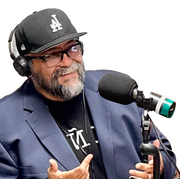
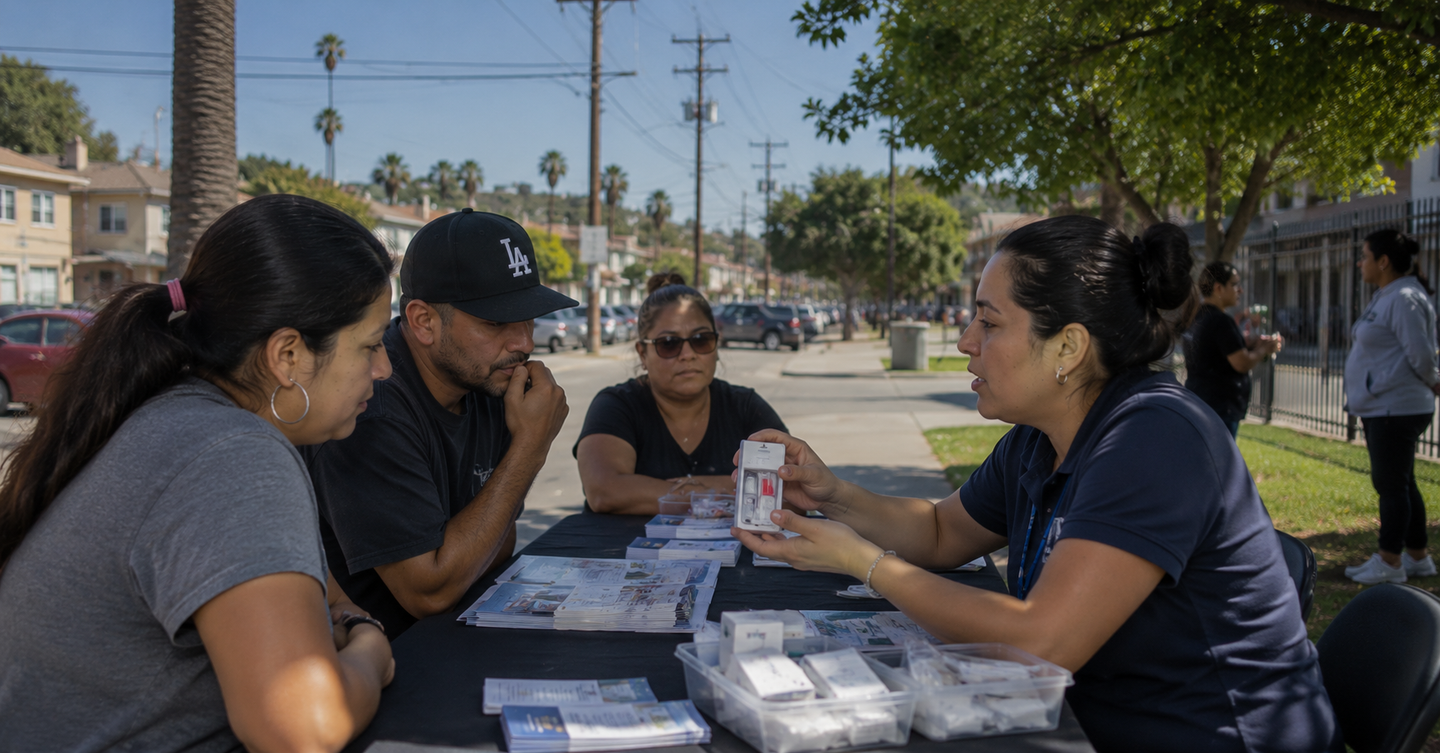
This week on The Signal, we examine how Southern California communities are responding to some of their most difficult challenges. We look at the overdose crisis and the tools helping reduce fentanyl deaths in Los Angeles County, Santa Ana’s controversial approach to homelessness, treatment and enforcement, and the local candidates and community advocates shaping the debate as November’s elections approach.
This is viewer supported news. Please do your part today.
TRANSCRIPT
This is a rush transcript. Copy may not be in its final form.
00:00:00:00 - 00:00:07:09
MUSIC INTRO
Bowl run by a handful of greedy bankers and CEOs who nobody elected. What can't.
00:00:07:09 - 00:00:10:13
MUSIC INTRO
Possibly last?
00:00:10:14 - 00:00:14:03
MUSIC INTRO
I'm going to tell you another plan.
00:00:14:05 - 00:00:19:02
MUSIC INTRO
But you really only have to remember to look forward to it.
00:00:19:03 - 00:00:51:18
DINO
Hey, welcome to the city. No news, information and analysis. I'm your host, Dino, here on Kpfk, 90.7 FM, and I want to welcome all our listeners on 98.7 FM, 93.7 FM in San Diego, 98.7 FM in Santa Barbara, and of course, our dear friends over at 99.5 FM in Ridgecrest, China Lake. Yeah. Listen, we have a great show lined up for you guys on this wonderful, muggy and hot Saturday afternoon here in beautiful Southern California.
00:00:51:20 - 00:01:30:23
DINO
We're going to, have a couple of very important interconnected conversations. Really? They all connect in one form or another. We're going to be looking at this issue of homelessness in Southern California, but with a new approach, a new policy that's being, pushed forward out in Santa Ana, California, where the mayor of Santa Ana, Valerie Massaquoi, will join us to tell us about her approach, which includes offering services and eventually, possibly, leading to incarceration, have said services are denied.
00:01:31:00 - 00:02:01:11
DINO
We're going to learn a little bit about that. And then we're also going to bring back our political series, politics, Tacos and Beer. And, our first guest for this, for this round of the series, will include Downey City Council candidate Elise Rivera, who herself has a longstanding history in fighting, the issue of fentanyl. But first, we're going to start with, a little bit on International Overdose Awareness Month, which actually International Overdose Awareness Day.
00:02:01:11 - 00:02:24:07
DINO
Rather, we'll look at the continuing overdose crisis in Los Angeles County and the impact in part by, fentanyl in the communities, across Southern California. And for that, we're going to be joining, we're going to be welcoming Doctor Brian Hurley, interim bureau director and medical director, substance abuse prevention and control for the County of Los Angeles Department of Public Health.
00:02:24:09 - 00:02:57:21
DINO
And as I said, August 31st marks International Overdose Awareness Day, a global effort to remember the lives lost to overdose, acknowledge the families and communities left behind, and, perhaps more importantly, focus attention on what can actually be done to prevent the next death. Here in Los Angeles County, the number tells the numbers tell two stories. Overdose remains one of the most important public health challenges, according to by L.A. for L.A., an initiative working with Los Angeles County and community organizations to address the overdose crisis.
00:02:57:23 - 00:03:28:14
DINO
An average of eight people in L.A. County die from overdose every day. That now that's that's that's significant, folks. Overdose. Overdose deaths now exceed deaths from car crashes and guns combined in the county, and overdose deaths is the leading cause of death for people under the age of 50. But there's also some encouraging news. After years of increases, overdose deaths in L.A. County are in fact declining and are doing so for the first time in a decade.
00:03:28:16 - 00:03:59:21
DINO
County officials and community organizations are pointing to a combination of reasons why prevention treatment harm reduction strategies, including wider access to naloxone, commonly known as Narcan, which is something that I actually carry with me in my car. Everywhere I go, there's issues. There's other products like fentanyl test strips, community health hubs, and programs designed to connect people who use drugs, people who have problematic substance abuse with treatment, housing, health care and other services.
00:03:59:23 - 00:04:12:06
DINO
So what are we learning about this crisis? What's working? What's not working? Where are we falling short, and how do we continue to save lives? So, as I said, joining us now will.
00:04:12:07 - 00:04:39:14
DINO
Joining us now will be, Doctor Brian Hurley, interim bureau director and medical services medical director, substance abuse prevention and control, County Los Angeles Department of Public Health. Who has been working with us? Two who who has been working with the city, with the county to, address and mitigate some of these challenges. Doctor Hurley, welcome to the signal.
00:04:39:16 - 00:04:41:08
DR BRIAN HURLEY
Thank you very much. Glad to be here.
00:04:41:11 - 00:05:04:10
DINO
And, doctor, really, I really appreciate I know that you're in and transit right now, so we appreciate you making the time. Thank you very much. Doctor Hurley, walk us through, first of all, International Overdose Awareness Day. What is it about this particular day? Why do people, why would this holiday, of this day of recognition rather was created?
00:05:04:12 - 00:05:25:17
DR BRIAN HURLEY
We recognize International Overdose Awareness Day to commemorate the substantial number of people we've lost to drug overdose. We continue to lose too many people every year due to drug overdose. And this day, it really exists in commemoration to those we've lost.
00:05:25:19 - 00:05:48:05
DINO
Now, help us understand the scale of the problem here at home in L.A. County. We're talking roughly, according to, the website, by L.A. for L.A. as much as many as eight overdose deaths, deaths in the county, who is still the primary group that's being affected? And what does that overdose crisis look like? Compared to five, ten years ago?
00:05:48:07 - 00:06:18:00
DR BRIAN HURLEY
Sure. We, the number you're referencing overdoses today, is still way too many people dying of overdose here in LA. We're actually now in our third year of reductions of overdose deaths. So we really are making steps in the right direction as compared with 2022. But in terms of who's impacted, we have near, black Los Angeles County residents dying of overdose than any other racial and ethnic group.
00:06:18:02 - 00:06:35:04
DR BRIAN HURLEY
And in terms of rock count, our Latino and white community members are the highest count of overdose here in L.A. more men are affected than women. So we really are seeing disparities in the rates of overdose. So we're making steps in the right direction, and we need to keep going further.
00:06:35:06 - 00:07:01:23
DINO
Now, there is some encouraging news. As I said in my introduction, for the first time in a decade, overdose deaths in LA County are in fact declining. What's driving that decline? And very, you know, and I thought carefully about this particular question, Doctor Hurley, because we've heard so much, there's been such an attack on, among other things, some of the harm reduction programs and other efforts that have, been enacted here in L.A. County.
00:07:01:23 - 00:07:06:04
DINO
But what is effect driving some of the decline that we're seeing now?
00:07:06:06 - 00:07:33:22
DR BRIAN HURLEY
So the decline in overdoses is really driven by a decline in fentanyl overdose. And we have really good tools to keep people from dying of fentanyl overdose. We have Narcan, which is the brand name of naloxone. It's a medication that can reverse a fentanyl overdose. And it can be administered through somebody's nose. Right now we have widespread availability of naloxone, and we're working on making it even more available to the communities that need it.
00:07:33:23 - 00:07:58:13
DR BRIAN HURLEY
We have addiction medications that can keep people alive. We are, expanding more treatment services than ever. So, yes, harm reduction is a really key strategy to connect to people at risk for overdose. And this is in broad investments in prevention, harm reduction, treatment and recovery, all of which are helping to reduce the rate of overdose here in Los Angeles County.
00:07:58:15 - 00:08:20:11
DINO
You know, and as I said in my opening, I actually have for some time carried Narcan with me in my car. Sometimes if I'm going out to an event, I'll even carry it with me and have had, I will say like this at the awkward pleasure maybe, of being able to administer it on one occasion. And I can say wholeheartedly that we were able to help impact somebody's life in a very positive way.
00:08:20:11 - 00:08:43:03
DINO
Who was experiencing an overdose? Why? Because I happened to be carrying it. I was familiar with it. And, you know, it was a transformative experience for me. And one thing I do advocate, I think everybody should be learning more about, naloxone and Narcan. Let's let's take a minute to how fundamentally, how old has the fentanyl crisis?
00:08:43:05 - 00:09:04:04
DINO
Why has this reduction in fentanyl? Is there anything on the law enforcement side of course, this is one of those issues that folks say, you know, we can incarcerate our way out of this problem. But what you're saying, doctor, is that indeed Narcan addiction medication harm reduction is actually the better solution. Is that an accurate characterization that I'm using?
00:09:04:06 - 00:09:29:05
DR BRIAN HURLEY
That's what we're seeing is effective, right? The lives that are saved in the community are saved by people like you, people that carry naloxone, people that reverse overdose, and people that connect people to services. So I think what we're really seeing is the public health approach. Prevention, harm reduction, treatment and recovery really is showing a community impact on reducing the rate of overdose here in L.A. County.
00:09:29:07 - 00:09:50:02
DINO
My guess is, Doctor Brian Hurley, interim bureau director of medical director, substance abuse prevention and control, County of Los Angeles Department of Public Health. Doctor Hurley, we got to talk about that, title there, but I talk to Hurley Leaf. Really? He talks quite a bit about stigma. Why does stigma matter so much when it comes down to this overdose crisis?
00:09:50:04 - 00:10:19:21
DR BRIAN HURLEY
Oftentimes we think about people in the community at risk for overdose as being them, those people. But the truth is, the people that are at risk for overdose our friends, our neighbors, our children, our brothers and sisters. And so what violence does is really demonstrate that we're rewriting L.A. County story by talking about the work that we do as a we as opposed to a day.
00:10:19:21 - 00:10:42:06
DR BRIAN HURLEY
Because the truth is, you know, if you go out and see somebody having a tough moment, people's humanity is just as valuable as everybody else's humanity. And, that kind of othering leads to, you know, us creating distance between each other, when in fact, I think you had this great example. I carry naloxone, it puts me in a position to save lives.
00:10:42:08 - 00:10:50:13
DR BRIAN HURLEY
It violates L.A. campaign, really helps bridge the distance between us and the community that needs our help.
00:10:50:15 - 00:11:13:00
DINO
You know? And, Doctor Hurley, just. I know that we might lose you pretty soon, but I do want to share with my audience, you know, it reminds me of an important campaign that I, at one point in another life I worked on. It was back in 2008, 2009. It was called Nice People Take Drugs. It was a campaign created out of the UK that sought to bring back the humanity of the individual people.
00:11:13:00 - 00:11:28:01
DINO
I used to find myself every time I wore the shirt. People would think it was some sort of a joke, right? I was trying to encouraging drug use and to the contrary, I used to remind people, listen, it is your brother, your sister, as you pointed out. And at the end of the day, most of these people just need a little extra help.
00:11:28:03 - 00:11:49:22
DINO
They are indeed nice people. And those people, unfortunately, sometimes do take drugs. So tell us about the, I live for a league campaign. Wider. You know, what exactly is this project? And, you know, maybe you can tell us a little bit about the event coming up. The event, the public event coming up, in the next couple of days.
00:11:50:00 - 00:12:13:03
DR BRIAN HURLEY
Sure. So finally, Bailey for Acorn is, website and a campaign really emphasizing rewriting L.A. County story. There's a number of events coming up. I actually just did a community walk this morning. If you go to violate O'Reilly or a number of the the International Overdose Awareness Day and events which really are happening all around the county are posted.
00:12:13:05 - 00:12:39:09
DINO
It's wonderful. And that is by Ella for Ella. You can go to by L.A for LA dawg and Doctor. Really before we lose you, if someone is listening right now, is worried about their own substance abuse concerns, their problematic drug use, or maybe worried about a family or friend, where can they turn for help? Particularly if it's with L.A. County?
00:12:39:09 - 00:12:47:05
DINO
What should every household know about getting and using these type of services and the locks on in particular?
00:12:47:07 - 00:13:21:16
DR BRIAN HURLEY
If you go to recover L.A., we have a whole number of resources that can give people information about where to get naloxone, what services are available in or in the community, and how to access treatment. And we have a 24/7 phone number. It's (800) 854-7771. That's (800) 854-7771. That is the Mental Health and Substance Use Services helpline. If you're calling specific to substance use services after the language prompt you hit option two.
00:13:21:18 - 00:13:32:08
DR BRIAN HURLEY
So I would point people to recover L.A dot org and the Mental Health and Substance Use Services helpline at (800) 854-7771.
00:13:32:10 - 00:13:57:22
DINO
And that hotline again is 808 547771. International Overdose Awareness Day is Monday August 31st. It's an opportunity to remember the people we've lost, but also to recognize that overdose deaths are preventable and that there are tools and resources available right now that can help save lives. Doctor Brian Hurley, interim bureau director and medical director, substance abuse prevention and control, County of Los Angeles Department of Public Health.
00:13:57:22 - 00:14:18:07
DINO
Doctor Hurley, we appreciate you. Thank you for joining us. And thank you for the work that you're doing in communities across Los Angeles. Folks, we're going to take a quick break. Coming up, we turn to another public health challenge affecting communities throughout southern California. That's going to be the issue of homelessness and a new policy that's being developed out in, well, not being developed.
00:14:18:07 - 00:14:35:08
DINO
It it's already in play out in the city of Santa Ana that looks at the intersection of issues of homelessness, severe mental illness, substance abuse, challenges and incarceration. We'll learn more about this policy with our special guest, Valerie M, as well, mayor of the City of Santa Ana. Stay with us. We'll be right back.
00:14:35:10 - 00:15:02:02
DINO
Welcome back to The Signal. News, information and analysis. I'm your host, Dino. California has spent years trying to answer one of the most difficult questions surrounding homelessness. What happens when someone living on the street may be suffering from serious mental illness, problematic drug use, addiction and services are available, but that individual may not be interested or maybe doesn't have the capacity to understand.
00:15:02:02 - 00:15:47:12
DINO
These services are available and therefore take advantage of it. Over the last several years, the state has steadily moved towards giving government local offices more tools to intervene. The Care act created a court, a court supervised pathway to treatment for some people suffering from severe mental illness. Senate Bill 43 expanded California's definition of gravely disabled, including circumstances involving severe substance use disorders and proposition one, approved by voters in 2024, and fully take in effect statewide this pass that this past summer rather is directing billions towards behavioral health treatment, supportive housing and thousands of new treatment beds and outpatient slots.
00:15:47:17 - 00:16:22:03
DINO
We just heard from Doctor Hurley at LA County Department of Public Health and, you know, his sharing of, you know, what is work and what isn't working, particularly as we look at international Overdose Awareness Day, this coming Monday. But another major change has come from the courts. In 2024, the US Supreme Court ruled in Grants Pass versus Johnson that enforce enforcing generally applicable public campaign laws does not, by itself violate the Eighth Amendment prohibition against cruelty and unusual punishment.
00:16:22:05 - 00:16:49:01
DINO
That decision gave cities considerable greater latitude to enforce anti-camping ordinances, even when adequate shelter isn't available. Governor Newsom in the state of California subsequently directed state agencies and those local governments to move more aggressively to clear encampments, while connecting people to services. And in Santa Ana, well, Santana is now putting its own version of the of of that approach into practice.
00:16:49:03 - 00:17:20:02
DINO
Mayor Valerie Maxwell has attracted national attention recently after publicizing what the city describes is a coordinated quality of life operation. Police and service providers together approach people living on the streets, offer access to shelter, detox, treatment and other services. Indeed, we were just discussing the important and the the importance of not only how these services are applied, but how they are leading, according to Doctor Hurley from L.A. County Public Health to actual changes.
00:17:20:04 - 00:17:57:04
DINO
So during a recent operation involving roughly 80 to 100 people, 69 people were reportedly arrested. Supporters say that there's nothing compassionate about allowing people suffering from addiction, mental illness and homelessness to deteriorate on the street, particularly when treatment and shelter is being offered. Critics see something very different. They argue that when the alternative to accepting services is arrest, the offer becomes coercion, effectively criminalizing homelessness and raising serious questions about individual rights.
00:17:57:06 - 00:18:27:09
DINO
Whether the treatment entered under treat under threat of jail can really be considered voluntary. So in Santa Ana, meanwhile, enforcement is only part of the strategy. It's important to note that the city is also expanding direct outreach health care, including street medicine services designed to bring medical care, and particularly for those experiencing homelessness. So with that lengthy introduction, I want to welcome my next guest, mayor of Santa Ana, Valerie Mezcla.
00:18:27:10 - 00:18:29:13
DINO
Mayor, welcome to the Signal.
00:18:29:15 - 00:18:32:00
MAYOR VALERIE AMEZCUA
Good afternoon, and thank you very much for having me.
00:18:32:03 - 00:18:57:09
DINO
And thank you for joining us. I know that you've been very busy not only running such a big city, but, you know, navigating, all that comes with new policies like this one. So, mayor, describe to us the scope of the problem. Let's begin with Santa Ana itself. How significant is the issue of homelessness in your city, and what are you seeing on the streets that convince you that maybe we need to think of a different approach to this?
00:18:57:10 - 00:19:36:19
MAYOR VALERIE AMEZCUA
Well, I think we need to take a step back and look at the history of Santa Ana. And we are the county seat. We're 27mi². You know, we're the third largest seat in the county. And we had the largest number on home. Excuse me? Unhoused, homeless in the entire county. The largest. And then when I was elected in 2014, I started working very closely with city leadership and the Santa Ana Police Department, their quality of life team, which we call cold, and its police officers working, addressing the homeless issue with landscape, with West, with our Public Works Department and our code enforcement and the police officers.
00:19:36:19 - 00:20:01:20
MAYOR VALERIE AMEZCUA
We're working part time, and now they're working seven days a week, and they come in at 6 a.m. to midnight, and we are addressing it. And so the history behind center homelessness is that I call it we were the dumping ground. And we no longer are that. In 2024, the planning time count was 871. Individuals experiencing homelessness in 2026 were down to 714 people.
00:20:01:22 - 00:20:32:12
MAYOR VALERIE AMEZCUA
And so is it significant? It's I would say it's significant. But because we're doing the work and when, you know, I've been, you know, thank you for having me on. You're showing people as we speak about this. It really is not rocket science. You know, it is about not allowing people. And you talked about this a minute ago, not allowing people to remain on the streets, lying in their feces, clean in the dirt, being, so drunk out they don't know where they are, what they're doing and having severe mental health needs.
00:20:32:14 - 00:20:49:02
MAYOR VALERIE AMEZCUA
And we're addressing that now. We're not afraid to say in Santa Ana, and I'm not, as the mayor, to say, hey, this is wrong. And my constituents that I work for as the mayor, that was their number one issue when I was elected was the quality of life addressing the homelessness.
00:20:49:07 - 00:21:09:20
DINO
And in fact, I do want to share that I shared with you when we talked, you know, here at the signal, we have, a very diverse and large audience, who are very engaged. And I was one of your constituents who reached out. Thank you, Miss Solorzano. I had to look her up and remember, who said, hey, Dino, check this story out.
00:21:09:20 - 00:21:26:11
DINO
Look at what we're doing. She said, you know, other cities should be doing this as well. And by that time, I had heard about this policy and, you know, yeah, it was one of those things that I sent to my producer right away and said, check this out. And from there, the story started to to develop on our end.
00:21:26:14 - 00:21:49:10
DINO
But what exactly is the policy, mayor walk us through? Right. You were catapulted into the national attention with this idea, as some have characterized services or jail, but that's obviously a very simplified description. Walk us through what actually happens when one of the team members or, quote quality of life team, goes out, encounter somebody living on the street.
00:21:49:12 - 00:22:02:08
DINO
What are the services offered? What choices do they have? What happens before you get to that point in which, hey, listen, this might be a better option for us to incarcerate this person so.
00:22:02:08 - 00:22:22:07
MAYOR VALERIE AMEZCUA
Well, first, let me start that. In December, the city council approved it the majority of the vote. New enforcements to address loitering, camping, storing personal property in public spaces, you know, and addressing the public complaints because we had homeless people blocking the sidewalks, blocking the parks, having large encampments. So, again, when I got elected, that was the number one issue.
00:22:22:07 - 00:22:41:15
MAYOR VALERIE AMEZCUA
It still is my number one issue, the quality of life. So what do we do? So goes out, as I shared earlier. There's police officers working with the city, but we also work with Salvation Army and we work with Team Challenge. And they do not charge Santa Ana, the city of Santa Ana, any money at all. They want to help.
00:22:41:16 - 00:23:01:10
MAYOR VALERIE AMEZCUA
So police officer makes contact with 20 people in an encampment. They're not they're not making contact with them because it's illegal to be homeless. We know it's not, but they're in a park at two in the morning. And, because I know police will pick me up at three in the morning from my home, and I'll go out with them, and they're in a park and they're doing illegal activity in a park.
00:23:01:10 - 00:23:17:18
MAYOR VALERIE AMEZCUA
The parks are closed, so it's illegal for you to be in there, make contact with them. They say, hey, what are you doing? You know, they get their information. Do you have a place to live? Are you from Santa Ana? We searched that we searched them. They find drugs on them. Or they say I am from Santa Ana, but I have nowhere to go.
00:23:17:20 - 00:23:37:18
MAYOR VALERIE AMEZCUA
So that is where the officers will say. Would you like to go to a shelter? If they say yes, then City Night is contacted and they take them to the City of Santa Ana shelter. We have a 200 bed shelter in our city that is run and paid for by the city of Santa Ana, by our taxpayers. And I have to tell you know that our shelter is never full.
00:23:37:20 - 00:23:59:07
MAYOR VALERIE AMEZCUA
And then the county has a 425 bed center in the city of Santa Ana, and their shelter is available to them as well. So the city has said that in our shelter we say, are you from Santa Ana? Yes. Okay, great. We have a shelter for you. And then the shelter, we're offering services. It's full wraparound services, employment, drug addiction counseling, mental health services.
00:23:59:08 - 00:24:22:08
MAYOR VALERIE AMEZCUA
We offer all of that. So that's the first question. Would you like some help? Would you like to go to a drug program? Would you like to go into a residential program. That is where Teen Challenge comes in, or Salvation Army, because they're there when they ride with us. They're there to assist them with that. And we have a few that will actually go out, go to Teen Challenge or Salvation Army.
00:24:22:10 - 00:24:36:07
MAYOR VALERIE AMEZCUA
And then we have those who say, no. And I have been there and I've spoken to them myself as the mayor, I introduce myself as the mayor. And I said, can you tell me why you do not want to go in a shelter or a program? I want to use drugs, mayor. I don't want to follow the rules.
00:24:36:12 - 00:24:59:18
MAYOR VALERIE AMEZCUA
I know I'm breaking the law. I'd rather go to jail. But okay, so they go to jail, they stay in there. Different time. It could be, you know, six hours, 12 hours, 16. If they're on parole and probation, they have a warrant, their parole officer or their probation officers contacted, they address them and not, you know, on that end and then on their way out of jail, let's just say they're cited and released on their way out.
00:24:59:23 - 00:25:20:17
MAYOR VALERIE AMEZCUA
We touch them again and say, here's services for you. Would you like to go? And again, they and the majority of them will say no. And I can tell you that about 70% of them are not from Santa Ana and majority area. And if you put ten of them in a room, seven of them will say no to services.
00:25:20:19 - 00:25:51:05
MAYOR VALERIE AMEZCUA
So it's not that we're in Santa Ana, we're doing anything that is, you know, again, it's it's it's it's humane. Our police officers working with public works and code enforcement are saying, hey, let's get you some help, right? You're breaking the law because you're in possession of fentanyl or you're in possession of narcotics, or, you know, you have, you know, whatever it may be, a warrant for your arrest, for granting parole and probation or warrant for whatever the crime may be.
00:25:51:07 - 00:26:09:00
MAYOR VALERIE AMEZCUA
But, okay, you're going to go to jail. Now, if you'd like the services, we're going to connect you with somebody. And I have to tell you landscape, lest we take their personal property. We start at the city yard. We hold it for up to 90 days. So we're not just throwing it away. Nothing that we are doing is inhumane.
00:26:09:02 - 00:26:32:18
MAYOR VALERIE AMEZCUA
And the activists and people will say, mayor, it's housing and you're a terrible person sent in the city of Santa Ana has met and exceeded our Rena numbers. We have permanent supportive housing. We have veteran housing. We have detox bed that is paid by opiate ending. And right now we have 57 people in detox beds. So that's just a little example of what we do.
00:26:32:20 - 00:27:01:05
MAYOR VALERIE AMEZCUA
You know, we're we really have gone above and beyond because why we understand that people need help. And also in January working with Cal often and now we have street medicine and, you know, they're connecting with people on the street offering them medical services. So we really have gone above and beyond. And as the mayor, my constituents who voted for me to say, because when I ran, I said, I am going to address the homeless problem head on.
00:27:01:07 - 00:27:02:21
MAYOR VALERIE AMEZCUA
And that's what I have done.
00:27:02:23 - 00:27:30:00
DINO
We're speaking with, Mayor Valerie Misawa, mayor of the City of Santa Ana, regarding a policy that was recently implemented in the city that looks to provide opportunities for those experiencing homelessness, those experiencing mental and problematic drug use to get services and or possibly experience, arrest if in fact, there's other violations of law are happening, and the mayor is describing what and how this policy works, why it's working.
00:27:30:00 - 00:27:51:23
DINO
And in short, you know, it sounds like what you're saying, mayor, that this is indeed working for the city of Santa Ana. I do want to bring, give you another brief opportunity as we prepare to close out this segment, that, you are this is a platform you ran on. You're up for reelection. How has the city or your constituents in particular responded to this?
00:27:52:00 - 00:28:10:19
DINO
We know that you've gotten criticism. But we also know that there's been support for this. Indeed, the the audience member of our program who reached out to us, pitching this story was very supportive. In fact, I remember, she said, this is something that every other city should be using or doing, you know, and that is up for a different discussion.
00:28:10:19 - 00:28:19:02
DINO
But how has the city responded as you walk into this new reelection campaign of yours? Tell us how that is coming along.
00:28:19:04 - 00:28:35:13
MAYOR VALERIE AMEZCUA
Well, thank you. You know, I have to tell you that the constituents, those people that live in Santa Ana, I have received emails and phone calls and just I'm at the market or the gas station. People are saying, thank you, mayor. And I always remind people that I don't do this by myself. It truly is a team approach.
00:28:35:13 - 00:29:01:05
MAYOR VALERIE AMEZCUA
The city manager's office, the Santa Ana Police Department, you know, code enforcement, public works. You know, I worked very closely with Mayor Pro Tem Penaloza, councilmembers. They're on the council. So I don't do it by myself. But what I am, I am a strong voice to say, hey, we have to address this because we cannot allow our loved ones, people we may know, people we don't know to be homeless on our streets, disturbing our way of life.
00:29:01:05 - 00:29:20:09
MAYOR VALERIE AMEZCUA
We have to provide services, number one and number two, we have to be honest with ourselves and say, really, what is it as a society, I feel we've turned a blind eye to say, okay, that's just how it is. That is not okay. We cannot turn a blind eye and say, well, there's nothing we can do except provide housing, housing is just one piece of the onion.
00:29:20:09 - 00:29:39:16
MAYOR VALERIE AMEZCUA
There's so many pieces to address when it comes to this. And so again, in my campaign, I don't change anything. I don't change my position. It's about our quality of life. That's why I ran for mayor. My family's been here long roots here. I have a legacy here. I want to live. My grandchildren are here. My children right here.
00:29:39:18 - 00:29:53:18
MAYOR VALERIE AMEZCUA
This is what place I'm going to die. And this is the city I'm going to stand. And I want it to be just as good as Irvine, just as good as surrounding cities. And I'm not going to accept as the mayor that. Well, that's just how Santa Ana is, because that's unacceptable. That is unacceptable.
00:29:53:22 - 00:30:16:02
DINO
Mayor, we need two additional pieces of information just before we let you go on on the, on the election, the current position aside, let us know where more where people can learn more about the policy and just the city itself, of Santa Ana. And then give us, website or information on where people can learn more about your campaign.
00:30:16:04 - 00:30:35:21
MAYOR VALERIE AMEZCUA
So for the city of Santa Ana, please go to the City Santa Ana web page. We have links for everything for assistance with immigration, with us. If you'd like that, as we have links for, you know, homelessness, we have links to look at the Santa Ana Police Department's court team to see how many contacts they've made and what services they have available for city.
00:30:35:21 - 00:30:53:17
MAYOR VALERIE AMEZCUA
Now we have all those on our website, so please go to Santa Ana website. City of Santa Ana website. You can find everything there. And then on line it's just Valerie. And that's where for mayor, you can also reach me on my personal cell phone, which, you know, or on my cell phone, which I'll text it to you if you'd like to share it.
00:30:53:17 - 00:30:57:15
MAYOR VALERIE AMEZCUA
Or we can let me give you my email and email me.
00:30:57:18 - 00:30:59:08
DINO
That's to email me directly.
00:30:59:11 - 00:31:14:10
MAYOR VALERIE AMEZCUA
Thank you for my email and the, square 1992 at gmail.com V as in Victor, I must square 1992 at gmail.com. And so I look forward to hearing from people.
00:31:14:15 - 00:31:35:08
DINO
Wonderful mayor there. Yeah, no, the phone can be tricky, especially when on the air. I have to stop you on that one. Mayor Valerie of Meskwaki, mayor of the city of Santa Ana. Thank you for joining us and for helping us better understand what this city is doing and, more importantly, the debate surrounding it. Listen, folks, homelessness remains one of California's most difficult public policy challenges.
00:31:35:10 - 00:32:00:19
DINO
And Santana's approach is raising fundamental questions. Right, about how communities across the state and increasingly, you know, in moments of contention around these policies, what responsibility looks like, what does providing meaningful treatment look like? Shelter and long term solutions for people? It's a debate we're going to continue to cover here on this program. Mayor Misko, thank you for your time.
00:32:00:20 - 00:32:02:13
MAYOR VALERIE AMEZCUA
Thank you Dino. Really appreciate it. Have a great.
00:32:02:13 - 00:32:26:05
DINO
Day. You too. Mayor. So stay with us folks coming up. We we bring back our special series on politics, tacos and beer and our first guest. And this current iteration will be Lissette Rivera, a small business owner, community advocate, and co-founder. And here's a connection, folks of war on lethal fentanyl, a project out of the city of Downey.
00:32:26:05 - 00:32:36:03
DINO
And indeed, she is running for Downey City Council District four. We'll learn more about, her candidacy and this project of hers on lethal fentanyl. Stay with us. We'll be right back.
00:32:36:06 - 00:33:06:07
DINO
Welcome back. You're listening to The Signal news, information and analysis. I'm your host, Dino, listen, before we continue, I want to remind everybody that, there's a special event coming up here on behalf of Kpfk, Stanley Clark and friends, 50 years of School Days, a Kpfk benefit concert. Like to let everybody know this is a special fundraiser for Kpfk in Los Angeles, featuring the legendary Stanley Clark and friends celebrating 50 years of his groundbreaking album School Days.
00:33:06:09 - 00:33:35:11
DINO
That'll be October 28th, Wednesday, October 28th at the historic Alex Theater here in beautiful Glendale, California, for one extraordinary night of music supporting independent, listener powered public radio and yours truly, The Signal news, information and analysis. For tickets, you can go to k b f k.org, forward slash, Stanley, Stanley, Clark and friends 50 Years of School Days Wednesday, October 28th at the historic Alex Theater in Glendale.
00:33:35:12 - 00:33:54:13
DINO
Kpfk.org. This is where you can go and buy tickets. Join us. Many of us will be there that evening. You can come by and say hello, especially to my producer nella, who you can say, I want to have this topic and that topic and this topic, and we'll put you on the radio. So welcome back to all our listeners.
00:33:54:15 - 00:34:23:16
DINO
You know, we're going to close out this hour. We're going to spend the next several minutes talking a little bit more about politics, tacos and beer. So as we get closer to the November elections, we're bringing back this special series because we give in this series opportunities for candidates, elected officials and community leaders, an opportunity to come to the table and talk about their issues, the issues shaping the community, in a real formal up and in a format that goes beyond the campaign talking points.
00:34:23:16 - 00:34:48:02
DINO
Right. The idea is simple. Give our listeners an opportunity to hear directly from the people asking for your vote. Understand what they believe, how they think, how they approach leadership, and what they would actually do if given the opportunity. With that, I want to introduce a special guest. Now, I first came across, this next guest of mine because of her work down in the city of Downey for transparency.
00:34:48:02 - 00:35:11:05
DINO
I live in the community of Downey, and I thought this was a fitting segment because this hour we've been covering a lot, of issues, or rather, we've been covering one central, central theme, and that is the issue of, as I said, Overdose Awareness Month starts on Monday. Overdose Awareness Day, rather, is on Monday. We talked to Doctor Hurley earlier from L.A. Public Health.
00:35:11:07 - 00:35:38:03
DINO
We talked to the City of Santa Ana mayor Valerie, I might ask, well, who you know, some say her approach is controversial, and my next guest has a project herself called Wolf War on Lethal Fentanyl, an organization created in 2022 to confront the growing fentanyl crisis through education, prevention and community awareness. That work has included efforts with Downey Unified School District reaching thousands of families, students and school employees.
00:35:38:05 - 00:35:58:20
DINO
Now, Mr. Rivera's actually asking voters to send her to City Hall in the city of Downey, campaigning on public safety, infrastructure, economic development and services for families and seniors, and greater transparency and accountability and local government. This Rivera, thank you for joining us here on the Signal and for joining our special series, politics, Tacos and Beer.
00:35:58:22 - 00:36:00:09
LISSETTE RIVERA
Thank you so much for having me.
00:36:00:10 - 00:36:16:05
DINO
And now at the end of this, at the end of this segment, we do ask the most important question of on which is what is your favorite, political topic? What is your favorite taco? And, you know, my producer says you can't be asking people what their favorite beer is. I'll be fine. Maybe your favorite glass of water, but why not?
00:36:16:05 - 00:36:40:04
DINO
Right. So let's, let's start with your story, right? You've been a small business owner and City of Downey a community advocate. You know, my favorite question to ask people who decide to run for office. I want to know. I'm always curious about that moment. You know that the sky part, like we see in movie and light came through and all of a sudden you hear the music and there's somebody.
00:36:40:04 - 00:36:45:03
DINO
And the voice said, they said, you should run for office. And you're like, I have had an epiphany.
00:36:45:05 - 00:36:45:19
LISSETTE RIVERA
I'm running.
00:36:45:21 - 00:36:48:14
DINO
I'm running. Tell me what that was like for you.
00:36:48:16 - 00:37:08:09
LISSETTE RIVERA
You know, I, I see it as a next step, you know, being involved with my community in the last ten years, making a difference every step of the way, talking to my, my community, listening to their needs and understanding my needs and see my children ahead of me. You know, I asked my children first. I wanted their approval.
00:37:08:11 - 00:37:27:12
LISSETTE RIVERA
My second oldest said to me, mom, why wouldn't you? You've done so much already. You proven yourself. So. I think I've earned my name on that ballot. And, I want to continue to do the work that I've done already in the last ten years. I want to make a difference for my community. And, you know, just take the next challenge ahead.
00:37:27:17 - 00:37:44:14
DINO
Now, you said the next challenge. So you've been involved. What in what have been some of the projects before we get to the war on fentanyl, but your engagement at the city level and different projects you've been a part of? Give us a little background on that.
00:37:44:16 - 00:38:07:16
LISSETTE RIVERA
Okay. So, I've been involved with public works. I was public work, committee member citywide, with, council member Marty through here. He appointed me, for almost two years, I was, was working with him side by side and as a public works committee member. You're basically that council person second hand when it comes to certain projects.
00:38:07:16 - 00:38:31:20
LISSETTE RIVERA
You're there to represent them, to make sure that the needs of the community are being addressed. Right. And we're talking about everyday life, things like, you know, your streets or lighting your sewer system, aspects of Parks and Rec being cleaned, you know, public spaces maintained. And so, you know, when Mario Trujillo, council member right through here, appointed me, it was an honor for me.
00:38:31:21 - 00:39:02:00
LISSETTE RIVERA
I remember him telling me, he said, I know you'll do an amazing job, Lisette, and I trust you. So I took that quite seriously. And that's just the type of person that I am. You know, I'm hands on, right? I take pride in that. And so citywide, I address many different issues, from crosswalks to to lights to speeding, to even our sewer system, you know, and I did it with pride because I knew, what it meant to our community and the benefits that we were all gaining from it.
00:39:02:00 - 00:39:13:14
LISSETTE RIVERA
Right? Including myself, my friends, my neighbors, and to the folks that I didn't know. But it didn't matter to me because I, I had the best intentions always to address their their issues and concerns.
00:39:13:16 - 00:39:40:16
DINO
Now, at some point over the last several years, you came across, one of the topics that has been part of our theme today and that is the the horrible issue that, is overdose, overdose awareness, overdose deaths, which I'm happy, that, Doctor Hurley, doctor Hurley earlier reported there has been a decline, but you were part of this process that led to the creation of Wolf.
00:39:40:16 - 00:39:41:20
DINO
Tell us about that.
00:39:41:22 - 00:40:02:06
LISSETTE RIVERA
So it was 12 or, you know, everyday residents of Downey. We had, a young, an adult, let's say a young child, overdose in, one of our local restaurants close to one of our high schools. And it was impactful because my kids were still in middle and elementary school, so my children were not even close to high school.
00:40:02:06 - 00:40:22:16
LISSETTE RIVERA
But, when it happened, it shocked our city. And the only reason they found out that he was overdosing is because he lapsed and fell and his hand hit the coke or Coca Cola that he was drinking and fell off. And that's how they knew that he was pretty much dying. His his lips were purple. And that's because your lungs shut down.
00:40:22:19 - 00:40:42:19
LISSETTE RIVERA
That's the first thing that opioids do to you. And so we got together and we went from a group of 12 to 3, six months after. It was only on five of us. And we became a second family, very devoted. And if I can say their names. Richard. Patti toddled. Jennifer and Bobby. Alvarez.
00:40:42:21 - 00:41:00:06
LISSETTE RIVERA
Is they're my second family because of the work we do. We're very hands on. We are self-funded, which is not the norm with most nonprofits. And the reason why we do that is because we're free to do and go wherever we want to go. We're where we feel we need it. I can go to a church.
00:41:00:06 - 00:41:24:22
LISSETTE RIVERA
I can go to a street fair, I can go to Downey Pride. I can go to the next event, National Night Out. It doesn't matter if we're invited, we will go. We've been to Long Beach. We've been to many areas in Downey. We've been to, HP, I mean, you name it. And we worked with senators to Senator Bob Birch, let us, Senator Lena Gonzalez and her team.
00:41:25:00 - 00:41:43:20
LISSETTE RIVERA
And so that sends us a sense of pride. You know, we have a 30 year veteran, Downey Unified school teacher, which is Jennifer. And, Richard is a 30 year veteran of Downey Police Department and, with myself, you know, we all collaborate and work together to make sure that we're doing it the right way or being proactive.
00:41:43:20 - 00:42:04:15
LISSETTE RIVERA
That's our approach. We want to make sure that our community understands what fentanyl is and it's illicit fentanyl. It's not the the prescription fentanyl. That's the painkiller you know. And so we also talk about how things are being laced. 98% of the drugs sold online are being laced. And the reason why it's money. And so we're very genuine, very straightforward.
00:42:04:15 - 00:42:26:11
LISSETTE RIVERA
We don't want to scare people. But at the same time we have different tactics of how to present it. I presented to, you know, teachers, we train teachers on the Good Samaritan law. What does that mean? That means that if one of your students is falling asleep, which they shouldn't, now they have a policy and Downey Unified, no child can be falling asleep in the classroom because they know what that could mean.
00:42:26:13 - 00:42:53:22
LISSETTE RIVERA
And so because of that, you know, we train the staff on the Good Samaritan law that if something like that does happen, they have Narcan in their classroom and they're able to administer and how to do it. I literally train them. So we have access to over 3000 teachers and staff members in general. On top of that, we have the, you know, 23,000 families that we see here at every open house back to school night from, you know, all the different high schools and middle schools.
00:42:54:00 - 00:43:13:00
LISSETTE RIVERA
We try to, educate the familias because our Latino families are usually the ones that don't know. And I think the saddest thing for me is when I'm talking to a parent in the nine year olds about it, and the mom and dad don't know. Right. That's heartbreaking, you know, because that could have been me. That could have been my my familia.
00:43:13:02 - 00:43:35:05
LISSETTE RIVERA
And so to me, you know, just getting involved, getting getting hands on. And I can't give you statistics of the impact we're doing. But what I can tell you is the percentage that that we have today, that it's less than right, that we just talked about is because of nonprofits like ourselves. We're being proactive. We're being engaging, educating, you know, bringing awareness and a sense of direction on what to do.
00:43:35:10 - 00:43:53:12
LISSETTE RIVERA
And one of the things that I wanted to share with you, which brought this is, emojis and slang. This is something that I put together every, every December. I put this together and I, and, and I coordinate with my team to say, hey, what do you guys think of this? So what you hear, what you see is so key because we're so busy all the time, right?
00:43:53:12 - 00:44:13:03
LISSETTE RIVERA
We're always consumed with 100 things to do. So think about the terms like Zaza. That's not even a word in the dictionary. Did you know that? So Zaza means marijuana. So think about what your children are saying what they're speaking snow. In what terms are you using the word snow or gas. Right. So these are cards that I given out to so many people.
00:44:13:03 - 00:44:19:01
LISSETTE RIVERA
I cannot even tell you. And look at the emojis. A whole nother language is the third and fourth language literally in front of you.
00:44:19:03 - 00:44:25:18
DINO
Right? And so for the audience, let me just describe you. We're talking to a small postcard size maybe.
00:44:25:19 - 00:44:26:11
LISSETTE RIVERA
Four by six.
00:44:26:11 - 00:44:56:17
DINO
Four by six. So it reminds me of a picture. It's standard picture size and it contains what, what could be characterized or described as a, a cheat sheet, that describes, the word cocaine has specific emojis that would otherwise be represented when, folks are communicating. And the intent here, I presume, is to give folks a sense of what is the current slang terminology so that people become more aware, and understand.
00:44:56:19 - 00:44:59:19
DINO
Yes. Either they're students, they're.
00:44:59:21 - 00:45:00:01
LISSETTE RIVERA
They're.
00:45:00:04 - 00:45:01:05
LISSETTE RIVERA
Kids, nieces.
00:45:01:08 - 00:45:41:00
DINO
Nieces, nephews. Yes. Right. And so how does this translate, Lizette, help us understand, or our audience understand. And we do have an audience. In Downey. I every once in a while, when we cover topics near the southeast area, I will always get folks that say, hey, we'll cover this, and I don't like my council member, and I don't like my, how does this translate to a position, as in your case, district four in the city of Downey, when you decided to run your campaign, when you decided to run for office, rather, and you started engaging communities, what are you hearing are the primary, you know, concerns in your district.
00:45:41:02 - 00:45:41:15
LISSETTE RIVERA
Safety.
00:45:41:20 - 00:45:42:08
DINO
Safety.
00:45:42:13 - 00:45:58:15
LISSETTE RIVERA
Safety and well-being, quality of life that we have as Downey residents are key. I don't knock every day, and I do it because I want to connect with my community, see their concerns and see where I'm at in the picture. Right? Because I'm a resident, I my home is there, my business is there, so it matters to me.
00:45:58:16 - 00:46:17:17
LISSETTE RIVERA
So when I talk to my everyday, the residents of telling me what's happening in downtown Downey, it's a disservice not only to us as residents, but to the small business owners that we have there. We don't have enough, boots on the ground. There's a lot of fights, there's a lot of issues that are happening that are going to be affecting us down the line.
00:46:17:21 - 00:46:37:22
LISSETTE RIVERA
You know, people are going to start second guessing themselves. I've had people that said to me, I don't go to downtown Downey anymore. I don't care for it. It's not safe anymore. I don't care for our parks. They're not clean. There was a huge fiasco that happened. I believe it was the Polar Park. Or actually, you know, the Golden Park.
00:46:38:00 - 00:46:58:10
LISSETTE RIVERA
The bathrooms were not maintained. It was. It was disgusting. And so these are things that, you know, everyday community members do talk about, the quality of life does matter. The infrastructure and the lighting, you know, public spaces being maintained and care for do matter. It's where we're at. It's where we're living. We're raising our families.
00:46:58:10 - 00:47:05:10
LISSETTE RIVERA
My children are being raised here. So, what happened at the Downey Library was a complete disservice to the family.
00:47:05:10 - 00:47:30:18
DINO
Which has been in the news. And for those that aren't aware, there was, an unfortunate encounter exchange between an individual who had previously been in that area, had maybe experiencing homelessness, if I recall, and that exchange led to somebody, unfortunately, losing their life. And now there's a significant lawsuit that's come to it. For those of you that don't know, Downey is part of what's called the Gateway Cities region.
00:47:30:20 - 00:47:55:10
DINO
Sitting about five miles north of Orange County in the southeast part of Los Angeles County, it spans approximately 12.4 miles, with something close to 120,000, residents. And, you know, Downey has a specific history, in part because of its ties to the aerospace industry. Downey has a long standing history in this field. It's the birthplace of the Apollo space program.
00:47:55:11 - 00:48:17:08
DINO
NASA's Apollo spacecrafts, were manufactured in Downey. And to this day, we have a lot of, connections to that. And he said your campaign, as it continues to run, it's a grassroots campaign that's engaged in communities. One of the things that we've heard and when we've covered Downey, we've had the mayor here. We've had other council members on this program before.
00:48:17:10 - 00:48:36:01
DINO
You know, there seems to be this transition happening in a place like Downey, as is the case in many of these southeast cities, some it's happened five, ten years ago, others it's happening now. And yet there's other cities where you have like these long standard elected officials that are just kind of been there, been there.
00:48:36:06 - 00:48:37:00
LISSETTE RIVERA
Been there forever.
00:48:37:02 - 00:48:50:16
DINO
And, you know, that's one of the things that in reviewing some of the campaign challenges or just the campaigns in general, this has come up in Downey. You have folks that are, you know, part of the same circle.
00:48:50:17 - 00:48:52:17
LISSETTE RIVERA
It's there's a monopoly.
00:48:52:17 - 00:48:53:11
DINO
Tell us about that.
00:48:53:14 - 00:49:14:09
LISSETTE RIVERA
Well, to me, you know, I, I love the fact that I'm not part of that monopoly that I'm going to every day resident that really has taken upon themselves to work for this community and make an effort, not just as, you know, a Public Works Committee member, but also as an ambassador of the Chamber of Commerce. You know, in 26 months, I brought in almost 50 businesses to the chamber.
00:49:14:11 - 00:49:35:19
LISSETTE RIVERA
That's impactful, that money being generated, you know, businesses helping businesses thrive, grow. And I wasn't the typical ambassador. I went above and beyond because I'm a small business owner, and I know the challenges that it takes to run a business. And so from marketing to networking to, you know what they should. I opened how early should I close?
00:49:35:19 - 00:49:55:00
LISSETTE RIVERA
You know, I need a permit or it's taking me 14 months to open up my store. The red tape. You know, these are things that, we need to talk about the process, you know, and it's not the staff. And let me let me tell you that right now. It's not the staff. We have an amazing staff at City Hall when it comes to the planning.
00:49:55:02 - 00:50:15:00
LISSETTE RIVERA
Commissioner in the planning department, it's an amazing staff. And the reason why I know this is because I've taken the time to figure things out to to ask the the engineers, the architects that are submitting those plans, asking them. I sat with one of them, Philippe Hernandez. I sat with him for almost three hours just digesting the process.
00:50:15:00 - 00:50:34:13
LISSETTE RIVERA
And you have to understand my background. I have 30 years of management process and procedures. Ricky, when I work with SAC Screen Actors Guild, I did residuals, millions and millions of dollars in my hands every day. And it was about the numbers getting things done. And it wasn't about, you know, how do we get there is not we need to get there.
00:50:34:13 - 00:50:50:15
LISSETTE RIVERA
And how do we get there? By the process being streamlined. So I've done that over and over again, and I see the process that we have right now. You go from one window to the next to the next. No, it shouldn't be like that. It should be someone taking care of your permit application, telling you what you need, coming back to you.
00:50:50:15 - 00:51:06:23
LISSETTE RIVERA
And you have a point person that you can go to and say, you know what, I can get this. Or can you explain this to me or what are the revisions? What does that mean? That's hands on hands customer service. So our staff is doing what they can based on the processes that are given. But that needs to be revised.
00:51:07:00 - 00:51:21:03
LISSETTE RIVERA
And with someone that has done that I done that with, Holly Mitchell when I worked with her with Crystal stairs and the contract department, I did that for SAC before I left. It's something that it just comes natural to me, you know, step by step.
00:51:21:05 - 00:51:38:11
DINO
So listen, as we prepare to wind down on this segment, let me reintroduce you, part of our politics Douglas and Beer series. Our guest is Lisa Rivera, candidate for Downey City Council District four, member of a group that also does, Wolf war, war.
00:51:38:11 - 00:51:39:01
LISSETTE RIVERA
On lethal.
00:51:39:06 - 00:52:13:23
DINO
And lethal fentanyl, which has been part of our theme this this episode discussing in honor of Overdose Awareness Day that's happening on Monday. And as we prepare to close, we're talking about the city of Downey, your candidacy, part of, the gateway Cities region, a densely populated, culturally rich cluster of municipalities nestled between downtown L.A., Orange County and indeed, Downey has its own rich history, with some parts of it being a very affluent, I hate I hate to to share this because there's something about it that I don't like, but we'll get into that later.
00:52:13:23 - 00:52:30:12
DINO
But it has been called the Latino Beverly Hills in the past. There's something about that that just bugs me. But, you know, as we as we win, Downey said, why should residents vote for you? Here's your opportunity. Give us that pitch.
00:52:30:14 - 00:52:51:22
LISSETTE RIVERA
First and foremost, I love Downey. I'm raising my children there. It matters to me. I've proven myself over and over again with not just taking pictures, but actually earning every picture I've taken read, every a word that I was given from two mayor awards from two different mayors, completely side by side. I was woman of the year under Bob Archer letter.
00:52:51:22 - 00:53:15:14
LISSETTE RIVERA
And those are things that happened in the countless awards that I have, including the United States Army, Navy and Army. Because I've taken action and I proved myself over and over again. And no matter what anybody says, I believe in, taking action, giving people a voice and hearing people out. Because in order to serve our community, we need to listen to them and understand their needs.
00:53:15:16 - 00:53:19:03
LISSETTE RIVERA
You know, I live in an area in Downey that is called the unseen Downey.
00:53:19:05 - 00:53:20:01
DINO
The triangle.
00:53:20:01 - 00:53:20:19
LISSETTE RIVERA
The triangle.
00:53:20:19 - 00:53:21:08
DINO
Tell us about.
00:53:21:08 - 00:53:37:12
LISSETTE RIVERA
That. It is so sad. You know, I pay the same amount of taxes as the next guy pays on the other side of the street. You know, my neighbors in Norwalk, I'm literally Cecilia split in half. Half of it is Norwalk, half of it is Downey. I pay thousands of dollars more in taxes and yet my street is on scene.
00:53:37:14 - 00:54:01:17
LISSETTE RIVERA
I have to call, I have to follow up and all my neighbors know me. You go to my street, every neighbor has my my campaign, yard sign. And the reason why is because they've seen me in action. They've seen what I've done. And so, again, you know, I think, a proven record, I would say over and over again and everything that I've done for my city, I've done it with the best intentions, and I've delivered once and once every single time.
00:54:01:17 - 00:54:18:13
LISSETTE RIVERA
And it's the reason why I've been honored on countless occasions, from businesses supporting me to everyday residents to teachers, you name it, to, you know, retired police officers saying to me, Lizette, keep doing what you're doing. We love what Wolfe has done. And I just want to say something to you before I leave.
00:54:18:16 - 00:54:19:13
DINO
Yes.
00:54:19:15 - 00:54:41:09
LISSETTE RIVERA
This card, I had a mother that came to me and said to me, said to me and I, and I, if I do cry, I'm sorry, but it's it's very personal. She said to me, because of this card that you gave me last year, I knew my daughter was doing drugs well, and we saved her. And I just want to say thank you to you and I swear to you, we hugged it out as two mothers and it was so impactful.
00:54:41:09 - 00:55:00:23
LISSETTE RIVERA
And just that one person that came to me that day here has made the difference of me knowing that what we're doing as a team, as Wolf matters, and it's making a change and it's different. And we're addressing key issues that impact families that you cannot imagine losing a child, losing a loved one. There's no words to put it into.
00:55:01:01 - 00:55:10:21
LISSETTE RIVERA
Frame it. There's just no words. I've seen the aftermath. And as a mother and as a wife and as a community leader, it is my responsibility to continue this effort.
00:55:10:23 - 00:55:21:03
DINO
So listen, how do people learn more about you? Can you give us your socials? What? You know, what's your, engagement, method of choice?
00:55:21:05 - 00:55:58:11
LISSETTE RIVERA
Well, you know, everyone loves Instagram. I think everybody is just like, Liz said it's actually Liz Rivera for Downey is my Instagram. And you can, look me up at Liz at River. It's my website. Follow me. See my five action plan. It's amazing. I'm very energetic, you know, new blood, new mindset. What we need right now in Downey, we need we need to see the things that we need to work on and make a difference and make sure that, you know, we shape the future of our city and we take control and we give each other voice to make sure that things are being taken care of.
00:55:58:13 - 00:56:18:08
DINO
The city, a better candidate for Downey City Council District four and co-founder and president of war on lethal fentanyl. Wolf, they said, thank you for joining us and for sharing your perspective on the future of Downey and for taking this moment to share such an important story, as the work that you're doing through Wolf, and not only in Downey, but really across Southern California.
00:56:18:10 - 00:56:55:01
DINO
And we'll continue to bring you these conversations, these stories, through Election Day on our special series, politics, Tacos and Beer. I want to thank you for coming down to Glendale for that with us. We look forward to following this and all campaigns. And as we close out, folks, today's program, there's a common thread running through much of what we've talked about today, whether it's homelessness in Santa Ana or the continuing challenge of fentanyl and overdose death, or the people asking for the opportunity to represent us in local city, there are ultimately conversations about community responsibility and the choices we make about how we respond to difficult problems.
00:56:55:03 - 00:57:22:03
DINO
There are rarely simple answers, folks. Treatment and enforcement raise legitimate questions about compassion and individual rights. The overdose crisis reminds us that progress is possible, but also behind every statistic is a person, a family, and a community member. And elections remind us that many of the decisions affecting our daily lives aren't made in Washington. They're aren't made at the state, they're made at the local level.
00:57:22:05 - 00:57:43:01
DINO
That's the our folks. Many thanks to our guests and to everybody behind the scenes at Kpfk. I want to thank Sly River, our audio engineer and producer, Nella Barbara, our support staff, Fabian Montes, and to all of you for tuning in public radio for the masses, Kpfk, 90.7 FM. Stay with us. The car shows coming up. I'm your host, Dino.
00:57:43:02 - 00:57:47:21
DINO
The car is coming up. I'm your host, Dino. See you next week. Hey, you just been.
00:57:47:21 - 00:57:53:08
MUSIC INTRO
Some holes that do it at some point right away. And the same thing you.