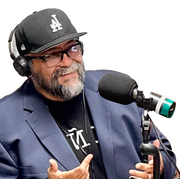

This week on The Signal, we look at who has power—and who pays the price. A national campaign is pushing for a $25 minimum wage as workers confront the rising cost of living. Proposition 39 would add new identification requirements to California voting. And in Los Angeles, a City Council District 9 candidate talks about poverty, public safety, housing, worker rights and political change in South Central L.A. Aired live on 90.7 FM KPFK Los Angeles on September 19, 2026.
This is viewer supported news. Please do your part today.
TRANSCRIPT
This is a rush transcript. Copy may not be in its final form.
00:00:00:00 - 00:00:01:00
MUSIC INTRO
With the whole.
00:00:01:00 - 00:00:11:03
MUSIC INTRO
Run by a handful of greedy bankers and CEOs who nobody elected. What can possibly last?
00:00:11:05 - 00:00:14:17
MUSIC INTRO
I'm going to tell you what I'm going to say.
00:00:14:19 - 00:00:18:15
MUSIC INTRO
But you really only have to remember to feel free to.
00:00:18:15 - 00:00:40:12
DINO
Use information and analysis on your host, Dino. And today we have a great show lined up for you. We're going to talk a little bit about the one fair wage living wage campaign for all. We're going to talk on our special series, politics, Tacos and Beer about the proposition 39 and in particular, our guests on the no. On proposition 39 campaign, Jenny Ferro.
00:00:40:14 - 00:01:08:18
DINO
And then joining us live in studio shortly will be, candidate for L.A. city Council, district number nine, Estrada Estrada masseria goes who again will be in studio. But you know what to do. Let's get into it. Let's start up, the show with this important and this important topic that, you know, as we're sitting here, with my producer, an engineer and other support staff, where we going over?
00:01:08:20 - 00:01:33:03
DINO
We always go over the topics before we get. We go on live, and, you know, we had a few eyebrow moments as we were preparing for our first segment on the issue of, what makes, living wage, particularly this one fair wage campaign. You know, one of our, supporters here shared a couple of interesting factoids, which I want to share with you all.
00:01:33:08 - 00:02:00:15
DINO
But before I do, let me just put it in context. For more than 17 years, the federal minimum wage has remained at 725 an hour. This is actually what, you know, perked up a lot of eyebrows in the studio as we were going over a pre-production meeting. 725 an hour. And even as the cost cost of housing, food, health care and just about everything else has continued to rise, not only in this state, here in our city, but across the country.
00:02:00:16 - 00:02:41:20
DINO
This has not been the case for a lot of salaries. Now, a national coalition of more than 100 labor workers, civil rights, faith and community organizations are trying to make some fundamental change. They're trying to change that. The Living Wage for all campaign is back, backing federal legislation that would establish a $25 minimum wage phaseout. These what they characterize as subminimum wages for among others, to workers, younger workers, workers with disabilities and really help create a mechanism intended to keep the federal wage from remaining frozen for decades at a time.
00:02:41:22 - 00:03:14:14
DINO
The legislation was introduced in the House earlier this year, and with a companion measure now in the Senate, we're going to get into that at the national campaign as this national campaign continues to evolve. If it's coming from workers, from advocates who are also pushing wage campaigns and communities across the US, some here in California. Joining us to talk about this national campaign, what a living wage actually means in today's economy, and what some of this could eventually possibly mean for places like L.A..
00:03:14:16 - 00:03:25:07
DINO
Is Saru Jayaraman, president and co-founder of the One Fair Wage and directed the Food Labor Research Center at UC Berkeley. Saru, welcome to the show.
00:03:25:09 - 00:03:26:13
SARU JAYARAMAN
Great to be here.
00:03:26:15 - 00:04:05:02
DINO
Great. So, you know, sort of we were, again, as I mentioned in my opening the prior, as we were doing our pre-production meeting, we were some of us were really, like, amazed to find out that, you know, in this country, just about half this country still has, this federal minimum wage at 725. And somebody shared a few factoids just before we went on air that there's about 20 states that have or are stuck on this baseline federal rate at 725, 13 of which are classified as given the political time we're living in as red states.
00:04:05:04 - 00:04:30:14
DINO
Some classified as swing purple states, for and then there's about three states that lean somewhat democratic at time given or relative to its populations, that sometimes lean blue. All of these states nonetheless hold that. 725. So let's start nationally. What is the living wage for all? And why launch a national campaign for a 25 minute minimum wage?
00:04:30:16 - 00:05:03:22
SARU JAYARAMAN
Yeah. Well, first of all, thank you for focusing on this really critical issue at a time when the cost of living is just out of control, and communities across the country are naming it as their top issue jobs with living wages going into this midterm election. You mentioned that the federal minimum wage has been stuck at $7.25 that since 2009, the sub minimum wage for tipped workers is still $2.13 an hour, a legacy of slavery that's been stuck there since 1995.
00:05:04:00 - 00:05:08:05
DINO
Now, for our listeners sakes, to tell us what sub minimum wage means.
00:05:08:05 - 00:05:33:22
SARU JAYARAMAN
Yeah. So, after emancipation, restaurants wanted the ability to hire newly freed black workers for free, not pay them. And they did so by telling those workers, we're not going to pay you, you're going to get this thing called a tent. Now, for generations, prior, tips had been an extra or bonus on top of the wage in Europe when it came to the states, restaurants mutated, tipping so that they could access free black labor after chattel slavery ended.
00:05:34:00 - 00:05:55:14
SARU JAYARAMAN
And so to this day, there is a sub minimum wage in 43 states, not California, but in 43 states. Workers are allowed to be paid if they get tips. A two, three, 4 or $5 sub minimum, a wage that's less than the minimum wage, and they have to make up the rest in tips. And if they don't, supposedly the employer's supposed to make up the difference.
00:05:55:14 - 00:06:20:11
SARU JAYARAMAN
But both the Obama and Biden administration's found a 83% violation rate with regard to restaurants actually making up that difference. So it's horrible all around, not just for restaurant workers, but for all workers. And it's due to a very powerful trade lobby called the National Restaurant Association. Or the other NRA, led by the chains that's been fighting to keep wages low everywhere for all workers.
00:06:20:13 - 00:06:39:05
SARU JAYARAMAN
And a couple of years ago, post-pandemic, our members, who we have been fighting for, what we call one fair wage, a full minimum wage with tips on top all over the country. Our members said, listen, even if we got a full minimum wage, that wouldn't be enough because the minimum wage isn't enough to live on anywhere in the US.
00:06:39:05 - 00:07:06:20
SARU JAYARAMAN
So we started talking to our allies and labor and community groups about what is our new vision. Collective vision post five for 15, because clearly $15 is not enough anywhere in the US right now. And what emerged from those conversations was the idea of a living wage for all, a minimum wage that actually meets the cost of living, which is no less than 25 anywhere in the US, no less than 30 anywhere in California.
00:07:06:22 - 00:07:32:15
SARU JAYARAMAN
And for all ending all sub minimum wage is not just for tipped workers, workers with disabilities and youth, but in California we have a pretty ugly sub minimum wage. It's still exists. That's another legacy of slavery for incarcerated workers. Sure, it's the exception to the 13th amendment that allows for slavery in the case of incarceration in our coalition and campaign is calling to end all of these subminimum wages and bring that minimum wage closer to the cost of living.
00:07:32:16 - 00:07:56:11
DINO
And so to help us understand what exactly constitutes a living wage and by the way, I want to share an additional fact here. You mentioned the other NRA, the National Restaurant Association. And, you know, I want to let my audience know that it is indeed, an exceptionally powerful, entity functioning as one of the most dominant and influential lobbying forces in this country.
00:07:56:13 - 00:08:20:15
DINO
And across, state legislatures, all across the country, representing an industry with an expected 1.5 trillion in sales this year alone and a workforce of 16 million. So when you think about the restaurant, the National Restaurant Association, this is indeed who you are up against. Is that would that would be an accurate statement to make?
00:08:20:17 - 00:08:42:18
SARU JAYARAMAN
That's an understatement. They have been after me for 25 years. They put my children's pictures up on attack websites and follow me around the country. They sent people to our home in 2024. We had to leave the home there. Goons and bullies and they just can't, they feel so entitled to pay people. Nothing because they've been getting away with that since emancipation.
00:08:42:18 - 00:09:04:10
SARU JAYARAMAN
So, you know, our coalition is is saying enough is enough. We don't we don't even just need to get rid of these subminimum wages. We need everybody's wages to go up. You know what's so interesting? Do you know, this has been something that's been talked about since, frankly, the initiation of a federal minimum wage in 1938, FDR, who initiated the first federal minimum wage, said it.
00:09:04:13 - 00:09:27:00
SARU JAYARAMAN
And the minimum wage shall be the least anybody can earn to meet the cost of living. And here we are, nearly 100 years later, the federal minimum wage is seven, the minimum wage is two, and the cost of living is no less than 25. And so let's stop fighting for half of what we need. Let's fight for what we really need, which is no less than 25 nationally and in California.
00:09:27:00 - 00:09:48:23
SARU JAYARAMAN
As I said, no less than 30. And that's why we now have 13 state and local campaigns in addition to the federal bills moving $25 an hour. We are saying don't stop at 25, run local and state campaigns based on what the cost of living is in your locality, right? In the Bay area. We just got qualified. We just, we're qualified.
00:09:48:23 - 00:09:57:06
SARU JAYARAMAN
And and the Board of Supervisors just voted to put our initiative on the ballot for $30 an hour in Alameda County. Wow. Congratulations.
00:09:57:07 - 00:09:57:16
DINO
Yes.
00:09:57:18 - 00:10:19:17
SARU JAYARAMAN
Yes, yes. And, we are moving 30 in Hawaii and New York. And that is what's kind of bubbling up in LA. And, you know, very kudos to the hospitality workers who won $30 by the airport. We're really pushing to make that countywide and citywide. This is moving across the country because workers everywhere are saying enough is enough and you can see it in the elections, right?
00:10:19:19 - 00:10:47:23
SARU JAYARAMAN
We've had so many candidates across the country run on a federal living wage for all bill $25. And when really tough primaries and elections in fact, the person who co-founded this national campaign with me and a Lillian Maria, from new Jersey won her congressional campaign running on a $25 living wage for all in new Jersey. And within 24 hours of getting sworn in, she introduced it, along with Congressmember Delia Ramirez and Latifa Simon.
00:10:47:23 - 00:10:48:23
SARU JAYARAMAN
From here in California.
00:10:48:23 - 00:11:24:17
DINO
So clearly, there's a political momentum here that is helping drive some of this effort. Let me quickly reintroduce you. My guest is Saru Jayaraman, who is, one of the leaders of the one Fair wage living Wage for all campaign, national campaign. This crisscrossing this nation, trying to mitigate if that even is the right way to describe it, this disastrous 725 an hour minimum wage and subminimum wage in some places, for many American workers and subtle critics of the 25 federal minimum wage argue that the cost of living varies enormously.
00:11:24:17 - 00:11:58:22
DINO
Indeed, we were doing some quick reference checks, on some of the factoids that were given to me. And, you know, somebody handed me a page just now that says, compared to some places like, I think it was at bam or something. Living in L.A is 1,000% more expensive. So, you know, critics say, well, hey, listen, living there is enormously across the country and smaller and that smaller businesses, particularly restaurants, couldn't respond to these, what they describe as rising prices, for workforce.
00:11:58:23 - 00:12:01:18
DINO
What's your response to that argument?
00:12:01:20 - 00:12:22:09
SARU JAYARAMAN
So we use the MIT Living Wage calculator, which is such an easy, useful tool. Anybody can go on, you know, internet put an MIT living wage calculator, you can look up what it costs, what you the least you need to earn to cover the basic cost of living. The cheapest county in the United States is McLennan County, Texas, and even in McLennan County.
00:12:22:09 - 00:12:52:11
SARU JAYARAMAN
Even if you have just one dependent a spouse, a child, an elderly relative, you need at least $25 an hour to survive that. That same number is 33 or higher in Los Angeles and in California. So yes, it does vary, but the bare there minimum you need to survive anywhere in the U.S. And again, let's remember what the idea of a minimum wage was from the very beginning, from FDR to the minimum you need to cover the basics is not taking your children to Disneyland or even to the movies.
00:12:52:11 - 00:13:15:14
SARU JAYARAMAN
It is just covering food, transportation, rent, very basic costs. That is $25 an hour. And as to can restaurants, can small businesses, can companies afford it? Absolutely they can. We have done so much research on the issue. We all know that every time there is an attempt to raise the wage, businesses say it can't be done, jobs will be lost, business will be closed.
00:13:15:14 - 00:13:22:05
SARU JAYARAMAN
It's never happened. And it's because every time wages go up, guess what happens? Workers spend it. They have of.
00:13:22:05 - 00:13:22:19
DINO
Course.
00:13:22:21 - 00:13:26:04
SARU JAYARAMAN
And so that's money that's pumped into the economy. And businesses do better.
00:13:26:05 - 00:13:47:13
DINO
And so as we wind down let's bring it home to L.A. because this program is in the labor market, also in California, indeed, from Santa Barbara down San Diego. And, just last week, you referenced the city Council vote, 1002 to move forward with extending the Fair Work Week protections to fast food workers. L.A. has also moved forward with higher wages for hotel and airport workers.
00:13:47:17 - 00:14:01:01
DINO
What do these developments signal as far as the broader wage and worker protection conversation? That is not only developing here, but relative to your campaigns? What should we be looking for?
00:14:01:03 - 00:14:11:15
SARU JAYARAMAN
Well, it's really those those steps are incredible steps forward for particular sectors. And now I think what we're going to see is the demands from all workers to say, well, we want those things.
00:14:11:15 - 00:14:13:02
DINO
Sure, we want that.
00:14:13:07 - 00:14:31:15
SARU JAYARAMAN
So there's a growing coalition, an exciting campaign to pass $30 for all workers in L.A. city and L.A. County, with a a big group of unions and work organizations that are behind it. So I think that's what, you know, please get involved, learn more and go to living Wage for all dawg. To learn more.
00:14:31:18 - 00:14:53:02
DINO
Fantastic. Saru Jayaraman is president and co-founder of the One Fair Wage, the national restaurant and service worker organizations, that co-leads a living wage campaign for all as well, the coalition. And, so do I want to thank you for being with us. We look forward to keeping track or following these developments and have you back as you continue with this important campaign.
00:14:53:04 - 00:14:56:06
DINO
We appreciate you joining us on this Saturday afternoon.
00:14:56:07 - 00:14:58:01
SARU JAYARAMAN
Thank you so much for having me.
00:14:58:03 - 00:15:37:00
DINO
Welcome back to the Signal. News, information and analysis. I'm your host, Dino. So as we move forward, one of the series that many of you who have been following this show, knows well, is, we, about a year ago launched a special series we call, politics Tacos and Beer. And it's a series where we give an opportunity for those, who are in the political ecosystem of this city to join us and be a part of these conversations that, continue to develop and evolve.
00:15:37:02 - 00:16:05:23
DINO
And one of those, topics that we're working on, in politics, tacos and beer is, the propositions covering these propositions, including proposition 39, which, in California is the voter ID initiative. Now, let me put it in perspective here. California voters are going to have a lot to decide on this November. And one of the more consequential questions on the on the ballot deals with something fundamental.
00:16:06:01 - 00:16:44:16
DINO
That is how we vote our rights as voters. Proposition 39 would establish new identification requirements for California voting in person and by mail. Supporters argue voter I.D. is a basic election security measure. Opponents say California already has extensive safeguards in place, and that prop 39 would solve essentially no problem, rather make it more restrictive and difficult. The League of Women Voters of California has come out strongly against this measure, so we're going to spend the next few minutes looking at exactly what prop 39 would do, who could be affected, and why.
00:16:44:16 - 00:17:01:23
DINO
The league believes California should vote no. Joining me is Jenny Farrell, executive director of the League of Women Voters of California, a nonpartisan organization with a long history of voter education, voter rights and advocacy, and the civic engagement here in California. Jenny, welcome to the Signal.
00:17:02:01 - 00:17:03:14
JENNY FARREL
Thanks for having me.
00:17:03:16 - 00:17:12:03
DINO
So, Jerry, let's start off with the basics. What exactly would proposition 39 change about the way Californians vote today?
00:17:12:05 - 00:17:36:22
JENNY FARREL
So the League of Women Voters of California strongly opposes prop 30, because it would create new business that will prevent eligible voters getting their ballot without having any at all. And it, so prop 39 makes several significant changes to how Californians vote. If you vote in person, you would now have to present government issued ID before your ballot could be counted.
00:17:37:00 - 00:18:01:23
JENNY FARREL
And if you vote by mail, which the vast majority of us do in California, you would have to designate a particular government issued ID number in your voter registration record and then match and put the last four digits of that designated number on the outside of your ballot return envelope every time you vote. And if those digits don't match the designated number in your registration record, the ballot would not count.
00:18:02:01 - 00:18:25:20
JENNY FARREL
And then the last piece of prop 39 is that it will require election officials to make their best efforts using government data to verify the citizenship of registered voters and report annually on the percentage they have verified. So those are the substantial changes, to a system that we believe already voters and already works and already produces secure elections.
00:18:25:22 - 00:18:48:14
DINO
Now walk us through what happens when you go and vote, right? Because I want to really elevate this for our listeners. You know, our our listeners are engaged voters, people who do go out and vote, whether, through mail, mail in ballots or in person. But I just want to reiterate to the audience, you know, the process when you show up to a ballot box, exactly what happens.
00:18:48:14 - 00:18:57:04
DINO
Walk us through this so that we can really elevate what you just described in terms of the changes that the proponents of this want.
00:18:57:06 - 00:19:24:23
JENNY FARREL
Right? So I think it's important for folks to understand the process even before the election day. So California verifies voters at multiple stages throughout the voting process. When you first register to vote, you provide identifying information such as a California driver's license or a state ID number, or the last four digits of your security number. And those numbers are checked against government records to make sure you qualify to vote.
00:19:24:23 - 00:19:47:01
JENNY FARREL
So for mail in ballots and so so that's the first stage at registration. Now when you go to vote, as I said, most of us in California vote by mail. You actually have to. We have another step of verifying you are who you say you are, which is signature verification. Which is very hard to, commit fraud and copy someone's signature.
00:19:47:03 - 00:20:13:02
JENNY FARREL
So from the league's perspective, you know, the real question is what additional security do these new requirements that that I previously stated of prop 39 provide? And what are the consequences of adding these new requirements? So, you know, so the first part analysis, we already have an incredibly robust and secure election process in California. You are more likely to be struck by lightning than you are to impersonate another voter in a U.S. election.
00:20:13:04 - 00:20:45:21
JENNY FARREL
So, you know, adding additional, in-person ID requirements are not addressing a security concern. But then on the other side, if you do implement the harms, are really clear and predictable. When Texas implemented similar new requirements with regards to making sure voters add, you know, the last four digits of a designated number on the outside of their, Mail-In ballot, the number of rejected mail in ballots in that first election they had after they put in place, those new procedures skyrocketed to one and eight.
00:20:45:22 - 00:21:02:23
JENNY FARREL
So those are folks who have current valid ID, but still got tripped up by this new requirement of writing the last four digits outside of their ballot because they put the wrong number, or they forgot to fill out the new part of the form or other technical errors. And that's 1 in 8 voters not having their voice heard.
00:21:02:23 - 00:21:06:03
JENNY FARREL
And that consequence is really unacceptable to us.
00:21:06:05 - 00:21:24:14
DINO
Now, generally, I want to put it in perspective because you know what? You're describing is very important, right? Stage one you register, that's verified against government data. Stage two there's signature verification. So there's all these measures already in place. And so it begs the obvious questions. Oh what the hell is going on right. Why is this even happening?
00:21:24:16 - 00:21:52:05
DINO
And you know, one of the things that our, energy drink fueled, team of researchers here handed me was that since January 2025, at least 19 states have enacted 44 restrictive voting laws, the highest total from any two year federal election cycle since, according to the Brennan Center, who began tracking this in 2011, surpassing the previous record of 43 laws between 2021 and 2022.
00:21:52:07 - 00:22:12:18
DINO
Zooming out further, there's at least 30 states who have enacted a 123 restrictive voting laws since 2020 elections, and lawmakers in over 40 states have introduced get this more than 300 additional restrictive bills in 2026 alone. Jenny, what the hell is going on?
00:22:12:20 - 00:22:41:15
JENNY FARREL
Yeah, it's interesting. You mentioned January 25th. Because as we all know, January 2025 was when the devastating wildfires happened here in LA. And that is when President Trump publicly said he wanted California to adopt a voter ID as a condition, for receiving federal disaster assistance. So, you know, you're absolutely right. You can't ignore the larger national context and trend.
00:22:41:17 - 00:23:22:23
JENNY FARREL
You know, the league is nonpartisan, meaning we don't support or oppose political parties or candidates. But non partizanship doesn't mean we avoid naming elected officials when their actions are directly relevant to an issue on which he has taken a position. So nonpartisan shift doesn't mean silence. When our fundamental right to vote is being attacked and it is being attacked, it's being attacked with executive orders to try and limit mail in voting is being attacked with, trying to get the have the federal government play a larger role in voting, even though the Constitution specifically says that the administration of elections belongs to the states, it's being attacked with these voter ID requirements that do
00:23:22:23 - 00:23:49:14
JENNY FARREL
have an impact of fewer people being able to have their voice heard, and that the harm that these I.D. requirements, befalls, you know, fall more disproportionately, largely on people of color, women who have changed their names, elderly folks, people with disabilities who are less likely to have the required identification. So, you know, you're absolutely right. There is a larger national context.
00:23:49:16 - 00:23:52:03
JENNY FARREL
This voting policy doesn't develop in a vacuum.
00:23:52:08 - 00:24:18:23
DINO
Sure. My guest is Jenny Farrow, executive director of the League of Women Voters of California, a nonpartisan organization with a long history of voter education, voter rights advocacy and civic engagement here in the, beautiful state of California. And Jenny, there is also a taxpayer question here, right? Implementing an entirely new identification and verification system is far, far from being, cheap or free for that matter.
00:24:19:01 - 00:24:27:19
DINO
What do we know about what prop 39 could cost Californians? And local election offices?
00:24:27:21 - 00:24:54:19
JENNY FARREL
Yeah. So the legislative analyst estimates that implementation of these new requirements and procedures would annually cost between tens of millions and the low hundreds of millions of dollars every year. So, you know, that's a significant cost. This, this, this, these are funds that we could spend on any number of issues that voters care about, whether it's education or public safety or, anything.
00:24:54:19 - 00:25:08:21
JENNY FARREL
So, you know, I think the burden is on the proponents of this initiative to show why we need something like this and why these dollars should be, should be going to, erect these new systems instead of something else.
00:25:08:23 - 00:25:38:01
DINO
And, Jenny, as we as we prepare to close out here, for somebody listening who isn't particularly Partizan and genuinely believes maybe some that drank the Kool-Aid requiring the IDs is a sound and reasonable, you know, decision or position. What's the single most important thing you want them to understand before they vote? If in so they are inclined for proposition 39.
00:25:38:03 - 00:26:03:12
JENNY FARREL
You know, I would just encourage them to dig into the details of what prop 39 actually does and to learn more about California's elections. You know, as we've discussed, California already verifies voters. Prop 39 would add a new ID requirement for in-person voting. It would require male voters to designate a government ID and put the last four digits on the outside of their ballot return envelope.
00:26:03:14 - 00:26:28:17
JENNY FARREL
And you know, the cost that we just talked about tens of millions to low hundreds of millions of dollars. So, you know, I think the useful question for any voter or whatever their politics is, what is the specific problem that this new requirement is solving? What evidence shows that that problem exists at a meaningful scale? And what are the consequences if an eligible voter can't comply or makes an innocent mistake?
00:26:28:19 - 00:26:50:13
JENNY FARREL
So that's ultimately the framework that the league has used in evaluating prop 39. And, you know, ultimately, we have reached the conclusion that adding new voting requirements without evidence, that California's existing election security systems are inadequate. Is is a bad idea for California and is a waste of taxpayer dollars.
00:26:50:15 - 00:26:58:23
DINO
So as a good buddy of mine once said, it's one thing to put a cow to put the cart, when in fact you already have a horse there.
00:26:59:01 - 00:27:00:21
DINO
Yeah, generally.
00:27:01:00 - 00:27:23:23
DINO
Technically, finally, we're weeks away from the elections, I don't know what is it, six, seven weeks away from the elections? Where can listeners go to learn more about the measure, about the position the league has taken? And by the way, I really love the, nonpartisan doesn't mean, silence. But we can voters go learn about that, break it down for us.
00:27:24:01 - 00:27:44:03
JENNY FARREL
Okay, so voters can go to a website that the league runs. That's vote for one 1.org. You can put in your address, and then you can see all the things that are going to be on your ballot, all the candidate races and initiatives. And then if you want to see that just provides you that basic information to learn more about, everything.
00:27:44:03 - 00:27:58:16
JENNY FARREL
If you want to see where we have fallen, what our recommended votes go to l w VC. That stands for League of Women Voters of California. Org and you can look up our recommendations for the statewide initiatives.
00:27:58:18 - 00:28:23:19
DINO
That's always l wbc.org. And folks listen, at the end of the day, election security matters. Yes. Nobody disagrees with that. Voters should have the confidence that a person casting a ballot is eligible to vote and every legitimate ballot count. But that's also why we have to separate the broader political argument over election integrity from the much more practical question voters face in November.
00:28:23:21 - 00:28:44:15
DINO
The problem does, what problem does proposition 39 actually solve, as Jenny pointed out, and what new problems might create? That's the question worth asking. And before we change the rules, millions of Californians have to ask themselves that very question. Jenny Farrell, executive director of the League of Women Voters in California. Jenny, thank you for joining us here on The Signal.
00:28:44:17 - 00:28:45:19
JENNY FARREL
Thanks for having me.
00:28:45:21 - 00:29:11:02
DINO
Welcome back to The Signal. News, information and analysis. I'm your host. Dino. And I want to welcome all our listeners again. You know, I don't know if I did this earlier. To all my listeners, 98.7 FM, 93.7 FM in San Diego. And of course, the fam out in 99.5, 99.5 FM in Ridgecrest, China Lake. And all our listeners across the world on Kpfk.
00:29:11:02 - 00:29:40:14
DINO
Georgie. So dig this, man. I'm excited because, finally I was able to get this brother, and we were just talking about, you know, this is campaign season. And as I mentioned, you know, special political series, politics tacos and Beer, where we give an opportunity for those who are, like, trying to make a difference in the world through civic engagement, through elections, etc., and my next guest is somebody who is making the leap, doing the jump, getting in there.
00:29:40:14 - 00:30:00:02
DINO
And that's, Estrada Masagos, who is running for city council District nine and the city of LA, which is one of the states, one of the pivotal races. Everybody's looking at this race, brother. And I got to tell you, man, props to you for going in there and going in there, you know, wholehearted, with 100% the sort of the.
00:30:00:02 - 00:30:01:18
DINO
Welcome to the signal.
00:30:01:20 - 00:30:16:13
ESTUARDO MAZARIEGOS
Thank you. Dino, I appreciate you, welcome me to, welcoming me into Kpfk. I've been a long time listener of Kpfk. Growing up on Kpfk, my favorite show back in the day was, the brother Fidel show. Just.
00:30:16:13 - 00:30:36:16
DINO
Beats. This is beats, of course. So Fidel is a long, long friend. In fact, I mean, I go back, I think about 20 years and, happy to hear that. Actually, it's part of. Let me ask you this. I always love asking this question because, quite frankly, folks who make these types of decisions really do motivate me.
00:30:36:18 - 00:31:01:07
DINO
You know, I like to I like to remind people that politicians are people, too. You know, there's this, I think, stigma that comes when you go into elected office and sometimes you go from, oh, well, he's a candidate. He's this, he's that, he's great. And then at some point it turns out he's a politician. She's a politician. You know, walk me through that moment, that day that you sat there.
00:31:01:07 - 00:31:24:02
DINO
Maybe, maybe I know somebody in office now who I've known way before in the day. And I remember as a young person, this person used to say, one day I'm going to be an elected official, and that person is was there the proverbial breaking of the clouds and the light came through and you heard the, the and it said, Estrada, go run for office.
00:31:24:04 - 00:31:25:08
DINO
Walk me through that.
00:31:25:10 - 00:31:52:09
ESTUARDO MAZARIEGOS
Yeah. Of course. I mean, so for me, right. Growing up in Los Angeles, I was in for my background as a, undocumented immigrant. I consider myself a refugee. From what the manner I've always understood, you know, leadership, because my family was exhibited, that you lead by example. You always defend your people, you always stand with your people, and you always advocate for your people.
00:31:52:10 - 00:32:17:15
ESTUARDO MAZARIEGOS
So as a community organizer, as a community organizer, being involved in South Central Los Angeles and throughout L.A., I did a lot of door knocking. It was understood the issues. And I always thought, hey, there needs to be a change in the and how representation happens. And I think the big moment for me, the moment was a couple years ago when those infamous tapes dropped and I was already organizing.
00:32:17:15 - 00:32:45:09
ESTUARDO MAZARIEGOS
I had this feeling in my heart and in my spirit that that those tapes, those racist tapes, the homophobic, anti-indigenous and anti-China tapes that, a lot of our, unfortunate Latino representatives like Kevin than the own and, and other folks. Gil video were there, just, you know, really bashing our people and bashing black folks and bashing everybody, right?
00:32:45:09 - 00:33:02:13
ESTUARDO MAZARIEGOS
That wasn't aligned with their power struggle or the power structure. And at that moment, I knew I was just like, this needs to change. And we need to take it on. And, you know, and I care about South Central Los Angeles a whole lot. And I've always seen South Central be, you know, through the trenches and everything.
00:33:02:13 - 00:33:23:02
ESTUARDO MAZARIEGOS
Just, it needed better representation that was more aligned with the community and not with the power structure and business as usual. So that that was the moment for me. I was just like, yeah, these tapes indicate that I was right in my in my heart that these folks don't have our our best interest in mind. And I decided then and there that, this is something that I wanted to do.
00:33:23:04 - 00:33:51:06
DINO
Now, this particular seat, this particular campaign presents a unique, a very unique. I don't know if it's a challenge. I don't see why it would be, but it could in that historically and for decades, it was a predominantly, African-American community. That demographic has changed substantially, if not overwhelmingly, but it still holds a large demographic of African-American members of the community.
00:33:51:12 - 00:34:16:06
DINO
But also in terms of the, position itself, it was historically been held by an African-American member of the community. That is clearly shifting to the point where now we have to, Latinos who I found interesting, both of you are the same age. Both immigrants, both with significant stories of success, are now, positioning yourselves to see who represents this.
00:34:16:08 - 00:34:20:09
DINO
Has that been a challenge? And if so or not, why?
00:34:20:11 - 00:34:42:18
ESTUARDO MAZARIEGOS
Well, I think, just in terms of, for me, the ninth district has been historically a black district. It continues to be a black district in. And for me, I will fight to ensure that there's a black future in the ninth district is I truly believe, that we are at our best as a community when we build the coalition of black and brown solidarity.
00:34:42:20 - 00:35:10:21
ESTUARDO MAZARIEGOS
So, obviously, you know, I think there is a shift that's occurring right now, but it doesn't create an erasure of the African-American community. It's more of a chance for us to prove, that we will carry the torch of, the African American black struggle for liberation in this country. And the reason I'm able to run as a formerly undocumented people, I have to honor the fact that the, that it came from black struggle for liberation in this country.
00:35:10:21 - 00:35:19:06
ESTUARDO MAZARIEGOS
And I'm wholly dedicated to ensuring that, we continue to make sure that we create space for black leadership in the district.
00:35:19:08 - 00:35:48:06
DINO
Now, district nine is one of those is a district that's oftentimes categorize or characterize rather, a one of enormous contrasts. On the one hand, you have these, you know, massive institutions like USC, the convention center, L.A. live, billion dollar operations, while many families, just a few miles, if not a few blocks away, are roughly living a struggling month to month just to pay the rent.
00:35:48:08 - 00:36:04:22
DINO
Let's not say, you know, homeownership. And you know what? What's the fundamental problem in that? When we look at CD nine, what do you believe is the next one of the most important things to fix when it comes down to this economic disparity in the city, in the district.
00:36:05:00 - 00:36:25:13
ESTUARDO MAZARIEGOS
Yeah. Excellent question. I thought a lot about this. This is another one of the reasons why I decided to run is to take on this issue and problem head on with my community. So CD nine is considered a pocket of racialized poverty, and it's designed that way. There's a reason why there's so many different sports, entertainment and world class, higher education learning institutions like you will see.
00:36:25:13 - 00:36:30:00
ESTUARDO MAZARIEGOS
And, you also have all of the car dealerships on ROA, so.
00:36:30:00 - 00:36:33:19
DINO
Right, right. And now private, another private university. There are two, I forget, which.
00:36:33:21 - 00:36:34:07
ESTUARDO MAZARIEGOS
Mount Saint.
00:36:34:07 - 00:36:35:04
DINO
Mary's, Mount Saint Mary's.
00:36:35:08 - 00:37:06:08
ESTUARDO MAZARIEGOS
Which is an all women's, institution, multi-billion dollar industries, operating next to an area that like 40% of its people living below the federal poverty line, 37% of its children living below the poverty line. And I think it really comes down to it's, designed to be that way. For so long, the political establishment has sent folks into the community that have managed the extraction of wealth in our community, without any real accountability.
00:37:06:08 - 00:37:36:05
ESTUARDO MAZARIEGOS
And you see that, you know, in the outcome of what's happening right now with the representation within the district where our current council member is facing, you know, I think a dozen felony charges for corruption, my opponent, is already been hit with, multiple ethics violations and forced to pay a fine. And that's why, you know, for me, that's why I ran a clean money, corporate free campaign, purely funded by the community.
00:37:36:05 - 00:37:57:01
ESTUARDO MAZARIEGOS
I have the most donations from the community. And I think that that's how we are able to change that is by empowering our people, by really having, local government and city council office that's accountable to the folks on the ground living through the issues. So that way we are able to create the solutions and policy that pulls people out of poverty, that creates more green space and park space for our kids.
00:37:57:01 - 00:38:02:00
ESTUARDO MAZARIEGOS
That brings the services that we need and cleans up the streets and makes it easy for us to walk.
00:38:02:02 - 00:38:27:18
DINO
Now, you know, you mentioned the extraction of wealth of our communities, and that's an analysis that I think we've heard across not only, this broadcast around this community, L.A in general, and certainly in this program. And I think there's a lot of accuracies to that characterization and various levels and degrees. You know, we just recently this week heard about, yet another horrible scandal where, unfortunate.
00:38:27:19 - 00:38:52:08
DINO
Let me, let me, let me be clear about this. There was this unfortunate allegation, accusation, indictment of folks who stole something to the tune of millions of dollars from what is otherwise meant for homelessness services. And this is a debate we had internally here, because I take the position that, you know, corruption occurs everywhere, anywhere, perhaps even more so at corporate level as white collar.
00:38:52:08 - 00:39:21:15
DINO
And I wasn't ever seen before going on further than things like Enron and other projects that, again, you can point to, the point I'm getting at is that, you know, homelessness is an unavoidable conversation. When it comes down to anything in L.A. right now and certainly, your campaign, has it as the second highest priority if I, if I understood correctly, what is that platform like for you?
00:39:21:15 - 00:39:34:15
DINO
Right. That's going to be a monumental challenge. And, you know, again, we're yet discovering more and more challenges that are just compounding. How is a council member do you see yourself fighting this?
00:39:34:17 - 00:39:56:23
ESTUARDO MAZARIEGOS
Yes, an excellent question. I mean, to me, I feel like like it's the model of extraction and unaccountability that has really left our community to fend for itself, with one of the most complex issues that we have in the city and in society in general today. So to me, I feel there's a couple things, there has to be accountability.
00:39:57:01 - 00:40:28:02
ESTUARDO MAZARIEGOS
We have to ensure that every dollar that's coming into the city, into the L.A. city district, is being used for this exact reason. So that's part of my platform is to actually go and visit the sites that are supposed to be providing, the homelessness services, helping people get beds, checking out the shelters, etc., making sure that every bed is filled, that there's a pipeline of folks, getting out there and doing the services to ensure that we are identifying what people need.
00:40:28:02 - 00:40:49:09
ESTUARDO MAZARIEGOS
Right? So whether it be mental health services, substance abuse services, job placement, housing, but there needs to be a pipeline, a service team that's going out there doing the outreach, identifying the folks, making sure that they're in the pipeline to get the services that they need, and then holding, you know, the servicers accountable for every dollar that's being put out there.
00:40:49:11 - 00:41:05:11
ESTUARDO MAZARIEGOS
Because a lot of times what happens is that there is punitive action or criminalization that happens of homelessness. Homeless folks. And the truth is, is that it's a wider problem, sure. That we need to really address and, you know, by holding accountable every dollar.
00:41:05:13 - 00:41:35:06
DINO
My guess is every city council candidate. District nine. Estrada. Most I was who's running for office to, replace or fill the the now, the turned down position of current price who, as we noted earlier, is currently under indictment. And that office is in perhaps desperate need of leadership. And there is a significant shift that's happening not only within this particular district office, but citywide.
00:41:35:06 - 00:42:01:23
DINO
Indeed. You know, one of those shifts that's happening is to where there is this issue of public safety. Now, you've argued for a punitive, preventative approach that puts more resources into housing and mental health. You just mentioned that. And violence prevention and basic city services, really wraparound services that we know when we look at projects like, you know, harm reduction and housing services, wraparound services is a key component to making this a success.
00:42:02:01 - 00:42:24:08
DINO
For residents who are hearing this and say, wait a minute, this is what I you know, I want when I think of public safety, I think of law enforcement. I think of, you know, cops and ghetto birds, choppers and all that crap, you know, what do you say to them who say, wait a minute, you know? No, no, Estrada, I want money in the pockets of law enforcement.
00:42:24:10 - 00:42:25:10
DINO
What's the response?
00:42:25:10 - 00:42:51:16
ESTUARDO MAZARIEGOS
You know, I think it comes down to having deep conversations, because obviously, a lot of folks confuse public safety with just law enforcement and, police officers showing up, with guns. Right? To me, it's a holistic approach. It's the lights that turn on that night, the streets that are safer to walk in for pedestrians, having affordable housing, keeping people housed, etc..
00:42:51:18 - 00:43:08:07
ESTUARDO MAZARIEGOS
I've known more people that have been evicted from their homes than they have been mugged. I've, talked every time I talk to people. And I, and I ask them, so what do you want to see in the neighborhood most of the times is I want that streetlight to be fixed. I want the sidewalk to be cleaned.
00:43:08:09 - 00:43:25:18
ESTUARDO MAZARIEGOS
I want to ensure that, you know, it's safe for me and my kid to walk down the street and not have to, like, walk around, you know, piles of trash that it's piling up from illegal dumping, etc.. So most of the times when people have that reaction is because that's what they hear on the news. That's what they hear on the radio.
00:43:25:20 - 00:43:47:21
ESTUARDO MAZARIEGOS
That's the propaganda is right. But when folks really think about it, safety is the lights turning on trees get sir, all those things. So, and it's also safer for the, for the city. I mean, look, the LAPD is paying $400 million a year, hundreds of millions of dollars a year in liability payments. In the middle of the, budget crisis.
00:43:47:23 - 00:43:55:16
ESTUARDO MAZARIEGOS
How safe is that for our overall community? In the city when we're going through a budget crisis and we're paying through the nose.
00:43:55:18 - 00:43:57:05
DINO
Billion dollar deficits, right?
00:43:57:05 - 00:44:05:03
ESTUARDO MAZARIEGOS
Yeah, $1 billion deficit, and we're paying a half a billion, and we're close to that on on like, you know, liability and all payments. That definitely is.
00:44:05:05 - 00:44:06:00
DINO
An.
00:44:06:02 - 00:44:28:14
DINO
Idea, man. I like you know, I think it's a process that because there's just general overhead cost and just something as simple as processing a check to everything else that encompasses this 400 plus million dollars. So, not only do I agree, I actually think it's slightly higher, then that, you know, you're also running as a labor and economic justice candidate, right?
00:44:28:16 - 00:44:40:16
DINO
You specifically called for stronger wage theft enforcement, more resources for the Office of Wage Standards, things like that. You know, how walk us through that particular part of your platform?
00:44:40:19 - 00:44:59:11
ESTUARDO MAZARIEGOS
Yeah, of course, like in the ninth district, where the hardest working people were the folks that build the city, clean the city, take care of the city's children. We're cooking for the city. We welcome the world into our community, and the workers are always being disrespected. Unfortunately, you know, a lot of our folks are working in the garment industry and car washes and day laborers, etcetera.
00:44:59:11 - 00:45:27:13
ESTUARDO MAZARIEGOS
Right? So a lot of wage theft is occurring in the ninth district to our folks. So what I want to do is I want to ensure that a number one, I always support workers that are organizing for their rights. And number two, that we open up a desk or a team of folks in the ninth district office. So when there's a wage theft, folks come in, they understand what their rights are, how to start the process to get a wage theft claim, working with the county, working with the state, investigations, etc..
00:45:27:15 - 00:45:46:01
ESTUARDO MAZARIEGOS
Connecting the resources to the people that are going through that. And as a, as a labor organizer, always standing in solidarity with workers and never crossing the picket line, always standing in solidarity, I mean, just I've I've worked closely with, you know, the teachers union, the hotel workers, with city workers, with folks in the garment industry across the board.
00:45:46:01 - 00:45:49:21
ESTUARDO MAZARIEGOS
Like I've always stood in solidarity with workers and organizing.
00:45:49:23 - 00:46:16:15
DINO
A start, the let's get a little bit more, academic. I'm going to go back into, you know, put that head on a bed, you know, how would you describe right now the state of the city you got, you know, evolving demographic shifts. You have yourself included, the younger generation of, folks that are looking not only to take office, but indeed many have.
00:46:16:15 - 00:46:40:03
DINO
We have the likes of, Elisa Hernandez and, Imelda and several other elected officials that are of a younger generation. We no longer have those old dogs like myself hanging around. Not that I was ever in politics, but you mentioned, you know, Cassidy, you know, Kevin De Leon. I remember Kevin De Leon from the college days and the very first time you ran for office.
00:46:40:05 - 00:46:55:05
DINO
And back then ask a man, what's it like to be a politician? I'm not going to be a politician. I'm going to be for the people, you know, things like that. Yeah. What would your analysis be, given the complexities and challenges that this city is facing as we move towards the Olympics?
00:46:55:07 - 00:47:26:07
ESTUARDO MAZARIEGOS
Such an excellent question. I mean, I think that right now there is, broad awakening happening with people. I think folks are starting to understand that it's not just about identity politics, that there has to be a class analysis attached, to the work that's being done by our elected officials. Another thing is also, I feel like folks that are running for office, I'm now I'm talking for myself as well, that I'm committed to staying rooted, and committed to serving.
00:47:26:07 - 00:47:47:03
ESTUARDO MAZARIEGOS
Now, when I when the 12 years, the three terms. I don't want anything else. I just want to represent my community. I want to be able to stay down with my folks. They rooted in the community and be able to really work, for the community and be held accountable to the community. Be open to the criticism, be open to the accountability of everything that's going on.
00:47:47:05 - 00:48:07:04
ESTUARDO MAZARIEGOS
And I think that we're, going towards a momentous moment that will definitely define Los Angeles for future generations with everything going on. And I think that our working class multicultural coalition that we're building across the city is really taking shape. And I think by the time the Olympics come around, we will be ready to take on crisis.
00:48:07:04 - 00:48:30:21
ESTUARDO MAZARIEGOS
We will be able to flex worker, tenant, poor people power, and we'll be able to have a real coalition that can, reimagine and reshape Los Angeles in the image of the most marginalized. Because I believe that if Los Angeles works for folks in communities like South Central, at least in Sydney, then it works for everybody. Means and then at that point, we're pulling kids out of poverty.
00:48:30:21 - 00:48:43:02
ESTUARDO MAZARIEGOS
We're building more parks, we're building more affordable housing. We're truly listening to the needs of the people. And that's the city that I envision. I love the city, and I want this city to work for the children in my community.
00:48:43:04 - 00:49:06:23
DINO
You know? As for the let me let me read you, you know, my my guess is, is turbo masala was a candidate for L.A. City Council District nine, and we're talking not only his candidacy in bid for the the powerful city council, district nine, but a little bit, of general politics and all things, Los Angeles.
00:49:07:01 - 00:49:31:00
DINO
You know, we are seeing a monumental, consequential shift happening. I think potentially the same time that you may or may not be elected. On November 3rd, we are looking at the potential change shifted at the federal level at the House and the Senate. We're looking at, significant shifts at the state level policy with the new governor.
00:49:31:02 - 00:49:59:06
DINO
And indeed, we're looking at potentially massive shifts at the city level with, you know, ushering in of new positions. You know, so what I'm getting at with this is you know, we're looking at the next two years being very significant relative to the next general election, the potential to hold Trump and his party more accountable. What do you see being were your first 100 days in office if you are elected?
00:49:59:08 - 00:50:04:08
DINO
And navigating this, the unique intersection between federal, state and local.
00:50:04:10 - 00:50:35:01
ESTUARDO MAZARIEGOS
I think for a community like the ninth district that has been, systematically disenfranchized, we have about 260 to 280,000 people that live in the ninth district. We have the lowest voter registration roll, and we have the lowest voter turnout for me in the first hundred days is to prove that government can work for poor people by showing up, being accountable, listening, and attacking the needs immediately in the community.
00:50:35:03 - 00:50:56:04
ESTUARDO MAZARIEGOS
Cleaning up the streets, making sure the lights start coming back on, simply showing up and doing the work, taking every vote. Seriously, sitting in every meeting, paying attention, representing the community the way that we need it. And I think in doing that, increasing people's belief in, like, local government in their own power.
00:50:56:06 - 00:51:14:16
DINO
So as to although this is a series we call politics taco, some beer, this is the most important, significant question of them all. None of this. Nothing else matters, Eduardo, because we are a city of darkness. Yes, we are a city of of drinks. Although my producer says I can't ask people what they drink, what kind of beer that it's in the title.
00:51:14:16 - 00:51:20:08
DINO
It's the segment. It's part of the news that,
00:51:20:10 - 00:51:23:10
ESTUARDO MAZARIEGOS
Everybody shaking their head.
00:51:23:12 - 00:51:25:05
DINO
You know, we know what your favorite.
00:51:25:05 - 00:51:37:15
DINO
Politics are, right? LA politics. Okay, I'm going to answer that for you when I say it's one of the walk me through the series, politics, tacos and beer. What's your favorite political topic? I'm going to ask it anyway. What's your favorite political topic?
00:51:37:15 - 00:51:41:07
ESTUARDO MAZARIEGOS
My favorite political topic is empowering poor black and brown people.
00:51:41:08 - 00:52:00:19
DINO
Beautiful. Okay. Politics, tacos and beer. I'm going to leave the beer to the I'm going to switch it today. It's going to be, politics, beer and tacos, which sounds weird. Your favorite drink of choice when having, sit down session with Sly and Arnell? I know I'm not included.
00:52:00:21 - 00:52:05:15
ESTUARDO MAZARIEGOS
So, you know, if it's in the morning, I gotta say, I honestly got to go. Coffee? Okay.
00:52:05:19 - 00:52:07:01
DINO
Cafecito, got it!
00:52:07:01 - 00:52:09:17
CUT
Though, is this light roast coffee is my.
00:52:09:21 - 00:52:12:06
DINO
I love it. He knows which I like most.
00:52:12:07 - 00:52:20:00
ESTUARDO MAZARIEGOS
I mean, that's the stuff that has the most caffeine. The second stuff, if it's in the evening, I'll go for a cervecita.
00:52:20:00 - 00:52:21:02
DINO
Okay.
00:52:21:04 - 00:52:28:19
ESTUARDO MAZARIEGOS
Definitely looking my favorite, cerveza, in California. And honestly, anyways, this spot caught more off coast brewery.
00:52:28:20 - 00:52:30:19
DINO
Okay, so you're like an IPA guy?
00:52:30:21 - 00:52:37:14
CUT
Yeah, in a way. Not really. I mean, it's just they have so good ingredients is like, good water, good use. Like, you can just.
00:52:37:14 - 00:52:39:13
DINO
Shameless plug just one.
00:52:39:15 - 00:52:40:04
ESTUARDO MAZARIEGOS
I'm sorry.
00:52:40:05 - 00:52:43:14
DINO
We're not getting any North Coast. Oh.
00:52:43:14 - 00:52:45:12
ESTUARDO MAZARIEGOS
It's it's so good. It's, like, really good stuff.
00:52:45:12 - 00:52:46:17
DINO
All right. And then the.
00:52:46:18 - 00:52:54:07
DINO
Most important part, again, politics, tacos and beer. What's your favorite taco? And do you have a pitch for a taco stand?
00:52:54:07 - 00:53:06:15
ESTUARDO MAZARIEGOS
Yeah. Of course. I go to that. There's two spots in South Central that I absolutely haven't seen one for a very long time. Tacos. Vista Hermosa, okay, and Mercado la Paloma, they have, blue corn tortillas. Oh, I.
00:53:06:15 - 00:53:07:03
DINO
Know, that's.
00:53:07:07 - 00:53:17:23
ESTUARDO MAZARIEGOS
Hard. Yeah, they have some good blue corn tortillas in amazing light. Sort. Everything there is really good, but they're blue corn tortilla alba slaw off the hook. And then, tire shot tacos.
00:53:18:04 - 00:53:19:02
DINO
Okay.
00:53:19:04 - 00:53:24:08
ESTUARDO MAZARIEGOS
Yeah. Off of Avalon. They have Tijuana style tacos and stuff, and so good and delicious.
00:53:24:12 - 00:53:55:07
DINO
And my, tire shop it is, folks, we're headed to, tire shop tacos. Here goes Kennedy for Los Angeles City Council. Nine. Estrada. Thank you for coming into the studio. We know you have a lot going on with the campaign, but I want to thank you for joining us and, you know, really the purpose of our series here, politics, tacos and beer is exactly that, opportunity to give you all and a chance to come in and really talk about the importance of reminding people that, you know, elected officials, people are running for office.
00:53:55:07 - 00:54:19:08
DINO
Politicians, indeed, are all people to district nine is going through a significant transition. Council member current price is termed out and there is change at this point. It's inevitable is going to happen. We'll continue inviting candidates from across southern California for this and all candidates, our offices rather in the coming weeks. In fact, your opponent will be joining us next week.
00:54:19:10 - 00:54:39:07
DINO
During our and by the way, shameless plug, I want to remind everybody this is my producer will kick me out of the studio if I don't that next week, we actually start our fall fun drive. It actually starts on the 22nd. Yours truly will be here. Will be inviting, perhaps not as many guests, but we will be a part of the, fun drive.
00:54:39:13 - 00:55:11:22
DINO
And, folks, that's our our. I want to thank, Saru Jayaraman, from the one way chat campaign, Jenny Farrell from the League of Women Voters of Southern California. And of course, my guest here is two other materials Kennedy for L.A. City Council, district nine for all. Joining us, today on this wonderful Saturday afternoon. And as always, I want to thank my producer, Edna LaBarbera, who only screamed at me twice today, and the entire crew at KPFA, Sly rivers, Fabian and and the entire Kpfk family for all the wonderful programing.
00:55:11:22 - 00:55:33:00
DINO
Remember, you can actually tune in to this show and all shows@kpfk.org. Stay with us. Coming up, our our my homies from the car show, which I get to listen to when I head out of here. I'm your host, Dino. You've been listening to The Signal news, information and analysis, public radio for the masses. See you next week, Uri.
00:55:33:03 - 00:55:34:06
MUSIC INTRO
And like I say.
00:55:34:06 - 00:55:37:14
MUSIC INTRO
I'm excited for them all to see you.
00:55:37:14 - 00:55:43:12
MUSIC INTRO
Oh, signal president, you.
00:55:43:14 - 00:55:49:04
MUSIC INTRO
Look at making this movie these hat and they look at.
00:55:49:04 - 00:55:58:11
MUSIC INTRO
Me and I do this Dennis on through handshake saying president. So let's get getting to that.
00:55:58:11 - 00:56:00:11
MUSIC INTRO
He made it this way that you found.