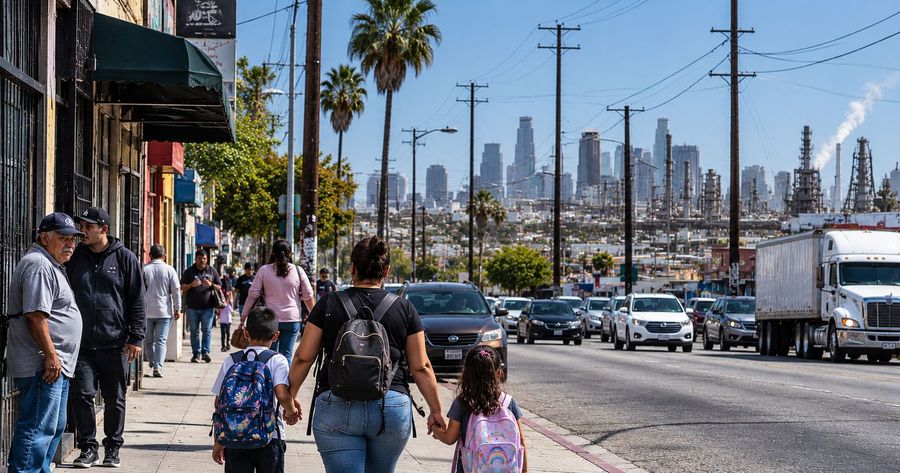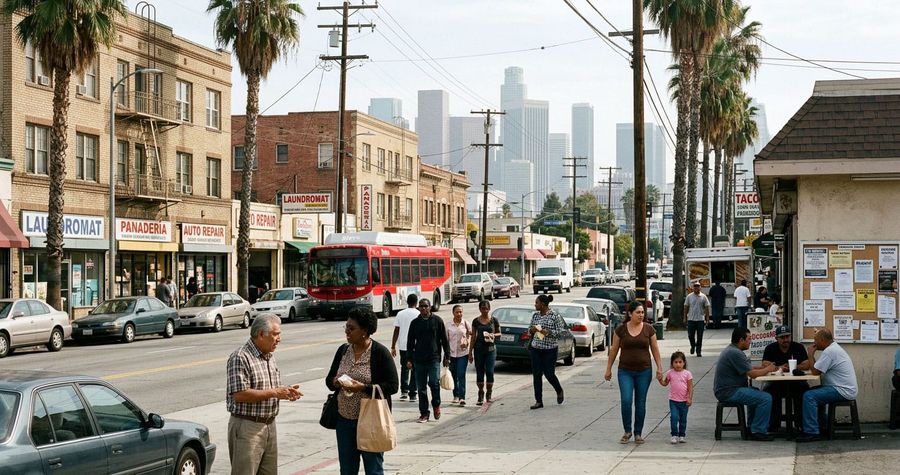

This week on The Signal, California voters face two very different ballot questions about how public resources should serve their communities. Proposition 44 would require certain community health clinics to spend at least 90% of their revenue on health care services. Proposition 1 would authorize $11.25 billion in bonds for affordable housing and veterans' home loans. We hear arguments from both sides of these two consequential measures.

This is viewer supported news. Please do your part today.
TRANSCRIPT
This is a rush transcript. Copy may not be in its final form.
00:00:00:00 - 00:00:11:13
MUSIC INTRO
The whole run by a handful of greedy bankers and CEOs who nobody elected. What can possibly last?
00:00:11:15 - 00:00:16:21
MUSIC INTRO
I'm going to tell you the numbers and. What you really are. And let me.
00:00:16:21 - 00:00:56:03
DINO
Know some callers. Hello. Welcome to another edition of The Signal. News, information and analysis. I'm your host, Dino, here on Kpfk, 90.7 F.M., Los Angeles. And of course, our friends at 98.7 FM Santa Barbara. Our family out in 93.7 FM San Diego, and all my homies over at 99.5 Ridgecrest, China link are listening. And of course the friends family and my distant third cousin are on the other side of the planet who listens on kpfk.org.
00:00:56:05 - 00:01:21:12
DINO
Yeah, and by the way, folks, you can always go back and listen to any of the programs that are broadcasting on this, fabulous radio station Kpfk 90.7. What is that, like three months? Right. I think it's three months. Right? Three months of archived programs on the website kpfk.org. So make sure you tune in and check that out.
00:01:21:12 - 00:01:46:09
DINO
And all the great programs, that are on this broadcast. You know, today we're going to a key part stay the course with our special series, politics, Tacos and Beer. The three things that I enjoy the most, actually, not really beer, but it made it was a cool thing when we came up with that name. Right? So yeah, we're going to stay the course.
00:01:46:11 - 00:02:22:10
DINO
It's Saturday, October the 24th, and we're just ten days away. In fact, when I look at the Congress countdown.com, in case you didn't know that existed, somebody had the, the luxury of time and availability to come up with a website that comes down the 2026 midterm election. And as of right now, this very minute, according to Congress dot Congress countdown.com, there is approximately ten days, 12 hours and 57 minutes, 46, 45, 44 and so on.
00:02:22:12 - 00:02:43:16
DINO
Before we hit the November 3rd election. And yeah, ballots are in the mailbox. Some of you already have I have mine. Campaign mailers are piling up. I have 10,365 just from last week alone, and a lot is on the line, folks. A lot is going on. So today we're going to take a closer look in this special series of politics.
00:02:43:16 - 00:03:16:05
DINO
Tacos and beer. Two ballot measures that you'll be deciding on here in California. Proposition 44, the measure that would put new spending rules on community health clinics. Joining us will be Doctor John Murphy, chief medical officer, at La Clinica, in the Bay area. And then we're also going to be taking a look at proposition one, the 11.25 billion veterans and affordable housing bond with, Doug Shoemaker, senior advisor on the yes on prop one campaign.
00:03:16:07 - 00:03:41:23
DINO
So, you know, lots going on. We're going to be covering these two segments or these two issues on today's episode. But before we get into it, I want to remind everybody, all right, those of you that are longtime supporters, long time listeners, we have a special event coming up. KPFA presents a fusion celebration and all star benefit, folks, a concert at, a live concert at the Alex Theater here in Glendale, California on Wednesday, October 28th.
00:03:42:00 - 00:04:11:09
DINO
That's about a week less than a week away, with, a 7:30 p.m. storytime and a reception at 530 that allow you actually an early access for soundcheck. Incredible lineup. Rock legend Jackson Browne, fusion pioneer Stanley Clarke, John Densmore and, Robby Krieger of The Doors, percussionist Sheila E, who I had a crush on. We're not that big an age difference, and I'm not going to lie, I'm going to go just to meet Sheila E.
00:04:11:11 - 00:04:29:14
DINO
Yeah, I can't say that I can now. Okay, I won't say that. You didn't hear me say that. I had a crush on Sheila E. Absolutely not. Okay. And on that, and on that note, I mean, I want to say it again and again and again. Just don't let her say it or hear it, because I just might show up.
00:04:29:14 - 00:04:57:20
DINO
And I don't know myself. There you go. I know, I just heard you're listening. Sheila. I'm on my way, girl. I am on the way again. That's next week, October 28th, 7:30 p.m. VIP reception starts at Cinco train time at 530. I will be there at 445 looking for Sheila. The historic night Honors Independent Radio celebrates the 50th anniversary of Stanley Clarke's iconic recording of School Days again.
00:04:57:20 - 00:05:21:15
DINO
VIP reception at 530. Come meet us all. A bunch of us will be there and, you know, we'll be digging the vibe. That's kpfa.org/benefit to buy a ticket. And one more thing. One more props, you guys. I was really excited, to attend last night. The L.A. times 101 best restaurant announcement. It was really good. 101 restaurants named.
00:05:21:15 - 00:05:46:11
DINO
It's officially. It's out. You can find it on their website. I'm not going to go through it, but I do want to acknowledge and and, say congratulations. So I'm going to give you the top five. Number five, Beirut Korean cooking. Came in that the number five spot dozens more, which of course, many of you in the area, especially foodies, you know, about the incredible dozens more are in, Eagle Rock.
00:05:46:13 - 00:06:10:06
DINO
And, you know, one of my personal favorites, whole Bosch, with my buddy, silver to set dinner came in at number three, and I believe last year was a number one restaurant in L.A.. Keto. Keto came in at number two. And a newcomer to the restaurant scene in L.A. in general. Leo, from a Swedish chef, Marcus Jordan.
00:06:10:06 - 00:06:33:08
DINO
Mark. Kind of, came onto the scene and took it by storm number one. And Los Angeles time 101. Best restaurant. Congratulations to everybody. Thank you, for such a great event. And, the food was amazing, man. I ate well, I ate well, you guys, and, Sly. Sly said I came in with a big smile.
00:06:33:08 - 00:06:59:22
DINO
Well, that's from all the great food. So with that said, you know what? Again, folks, we're now at ten days, 12 hours, 53 minutes to election time. And let's just, you know, let me take a few minutes to paint a picture for you all. All right, let's turn attention to the elections, because we're now just, you know, days away, the political landscape continues to change, particularly when it comes down to the control of Congress.
00:07:00:00 - 00:07:28:08
DINO
And there's some pretty significant news coming out of Washington. According to our friends over at the Cook Political Report, one of the country's leading nonpartisan political analysis publications, Democrats are now in a considerably stronger position to take back control of the House of Representatives. And their latest analysis, we see that another 19 congressional races have shifted and the Democrats favor 19 races.
00:07:28:08 - 00:08:03:20
DINO
Folks, that's the know even spans for the bilingually challenge. Now, let me be clear. Obviously, these are not election results. They're not necessarily predictions. These are projections based on the political climate, the political environment, polling, campaign spending and of course, competitiveness of individual congressional districts. Right. But the trend is unmistakable. Republicans are losing ground. And the Democrats are expanding the number of seats favorable, leaning, almost on a day by day basis.
00:08:03:22 - 00:08:30:11
DINO
And what does that mean? Right. Let's look at the numbers briefly. There are 435 seats in the United States House of Representatives. Folks, the party needs 218. A party needs 218 to control that chamber. Democrats are now favored in 220 congressional districts. Republicans are favored in 198, and that leaves 17 races classified as Tossups. We're talking of coin.
00:08:30:13 - 00:08:56:13
DINO
We're talking neither party has a clear advantage. Think about that for a minute. Democrats are already favored in more seats, and they need to win the majority without having to count on winning any of those 17 toss up races. So this is going to be indeed a transformative election. Not only outcome, but clearly election year in general.
00:08:56:15 - 00:09:17:12
DINO
Now, what's driving a lot of this? Well, you know, many of it, of course, is the economy. You know, things are rough out there. And of course, there's the influence of the 34 time felony convictions of Donald J. Trump or trying to figure out the best way to say that the 34th time convicted president Donald J. Trump.
00:09:17:12 - 00:09:51:20
DINO
That seems to, you know, really sour everything he touches when he goes anywhere across the country as he's, diligently doing so. And let's not forget the Musk factor. This cat has dumped $442 million into this campaign. He is now the single most what was it was the headline. The largest donor in the history of election. The single largest donor in the history of elections in this country with $76 million just in the past 30 days.
00:09:51:21 - 00:10:22:10
DINO
The past month alone. That's significant, folks. So as we head into November, there's a hell of a lot at stake. Control of Congress, the future of Trump's legislative agenda, and whether Democrats can regain enough political power to challenge his administration over the next two years. And while much of the national attention is focused on Washington, voters here in California have some pretty consequential decisions of their own.
00:10:22:12 - 00:10:46:00
DINO
And that is what we're talking about today. Beyond choosing who represents us, we're being asked to weigh in in a series of ballot propositions, some of which we've covered already. We've covered one side, another side, you know, we've had them together at the same time. Today we're going to go back to covering the other side of an initiative or two initiatives that we've already already covered.
00:10:46:06 - 00:10:51:10
DINO
So let's bring the conversation back home right.
00:10:51:12 - 00:11:28:15
DINO
Proposition 44 would require community health clinics that serve low income patients to spend at least 90% of their revenue on what the measure calls health care services. Supporters say that's about accountability. In fact, we had, one of the chief authors here just a short while back as he discussed this and other initiatives that are supporting opponents, including clinics, doctors and both the state Democratic and Republican Party say it's so badly written it would cut patient care.
00:11:28:17 - 00:11:38:01
DINO
Joining us now is Doctor John Murphy, chief medical officer at La Clinica, a nonprofit community health center in the Bay area. Doctor Murphy, welcome to the signal.
00:11:38:02 - 00:11:53:23
DR. JOHN MURPHY
Yeah. Thank you so much for having me on our Mundo. It's really a pleasure to be here today. Really exciting time. With the elections coming up. There's obviously a lot of corporate money, in politics. And listener powered radio has never been more important. So it's really a delight to be with you here today.
00:11:53:23 - 00:12:16:08
DINO
Wonderful. Hey, I appreciate the pitch, Doctor Murphy. That's awesome man. And yeah, listen, as I was sharing just a few minutes ago, I mean, let me pull up my note again is, my producer handed it to me. Mask alone, 442 million. 76 million. And in the last 30 days alone. But, you know, Doctor Murphy, let's let's start off with the basics, right.
00:12:16:10 - 00:12:40:07
DINO
For folks who are just hearing about this, and there is a lot. Let's be honest, right. Not a lot of us are policy wonks. Political wonks like yours truly and everybody who works on this show. Not a lot of us have heard of what prop 44 is. So give us the, you know, public radio description. What are we talking about when we describe prop 44?
00:12:40:09 - 00:13:07:15
DR. JOHN MURPHY
Yeah, absolutely. So we'll talk about some of the nuts and bolts of prop 44. We might start with community health centers. Community health centers have enjoyed bipartisan support, often from across the political spectrum. We deliver care to almost 6 million folks in California, 5.8 million. So about 1 in 6 Californians. And probably we know some people that, are served by community health centers.
00:13:07:16 - 00:13:34:08
DR. JOHN MURPHY
We're present from San Diego to Arcata, north and south, east and west. And we're the primary care home for a lot of folks also provide, mental health services. Dental services, wraparound services, a lot of other support, for people who would otherwise have a very hard time accessing health care services. So that's a bit about, community health, prop 44.
00:13:34:10 - 00:14:03:14
DR. JOHN MURPHY
I would say the intent of prop 44, appears to be really, forcing community health centers to spend a certain amount specified amount on, quote unquote, health care services. I think the concern on the part of, people who run community health centers, people who work in community health centers. And, we think this is something that would be concerning to people who receive their care at community health centers, in the broader community in general.
00:14:03:16 - 00:14:29:03
DR. JOHN MURPHY
Is that what is defined as health care services? Right. Is is, very narrow. And, our concern is that if prop 44 were to pass, it would have dramatic, unintended consequences of forcing hundreds of community health centers across the state to close. I'll give a quick example of something that people may not consider a health care service.
00:14:29:03 - 00:14:51:10
DR. JOHN MURPHY
So, just yesterday, an oversize truck drove by one of our clinics in the heart of East Oakland and pulled down a bunch of communication wires. So we had our security guards out there trying to get wires off an AC transit bus to get Foothill open. We had our facilities manager, out there trying to get wires off the sidewalk and coordinate with Oakland fire.
00:14:51:12 - 00:15:10:11
DR. JOHN MURPHY
Those services, according to the authors of proposition 44, are not aligned with health care services, but they're critical. Okay, to keeping a clinic open. So, what our concern is that there are some arbitrary targets, that really would, necessitate sweeping cuts.
00:15:10:13 - 00:15:38:08
DINO
Yeah. So you know, we actually did have a chance to speak to, De Regan a short while back. So, who is one of the proponents, if not the proponent of this and advocated and, you know, his argument is that, look, $0.90 every dollar should go to patient care. You know, one of the things that I believe we asked him, well, while he was here with us is, well, yeah.
00:15:38:10 - 00:16:08:01
DINO
What the hell gets to define patient care for me? One of the things that concerned me in researching this and some of the staff here at the Signal was there's something as simple as, interpretation services that caught my attention and some immigrant heavy communities that could be in jeopardy, considering that, you know, one of the things that they're saying is that 90% of every dollar should go to patient care, not to other ancillary services.
00:16:08:02 - 00:16:29:06
DINO
Now, for those that are saying, well, wait a minute, it's patient care. What's wrong with that? You're just pointing out that it's not just, patient care and isolation. There's all these other support services that go towards building that. What's your response to those who don't quite seem to get that or understand that this is not just a single issue.
00:16:29:06 - 00:16:33:05
DINO
It's a holistic approach to understanding health care.
00:16:33:07 - 00:16:57:22
DR. JOHN MURPHY
Yeah, exactly. Great question. So community health centers really prioritize providing whole person care. And so, people have eyes, people have teeth. People have a soul. People have mental health. There's so much more to providing really quality health care, than that health care provider, in an exam room with, with the patient. That's really important.
00:16:58:00 - 00:17:24:14
DR. JOHN MURPHY
But there's so many social drivers of health. We really want to make sure that we're taking care of the whole person. And it takes it takes a team to do that. It also, we operate in health care. And health care is a highly regulated, industry. It's a very expensive industry. And so part of our concern is that the tools that we need to provide good patient care are not considered, quote unquote, direct health care or direct health care services.
00:17:24:16 - 00:17:49:05
DR. JOHN MURPHY
I think something else to highlight is that, those health centers are locally operated. We are, regulated, heavily regulated. We're in a heavily regulated industry, and our boards are composed, 51% or more, patients of consumers of of the health care services. So, we already have quite a lot of regulation. We already have, quite a few eyes on us.
00:17:49:07 - 00:18:01:18
DR. JOHN MURPHY
I think that part of the, concern is that if we're forced to make broad cuts, that that's going to affect people, that's going to, really be a detriment to the quality of care that we provide.
00:18:01:20 - 00:18:26:00
DINO
My guest is Doctor John Murphy, chief medical officer at La Clinica in the Bay area, discussing the no. On prop 44 campaign and Doctor Murphy, opponents say the measure would, count things like, you know, and I mentioned this already interpreters, patient navigators, transportation help. And you can actually machines as administrative which they say only 10% of that should be applicable.
00:18:26:01 - 00:18:36:06
DINO
Can you give us an example, a real world example in your case over at La Clinica, have something that could land on the wrong side of this line?
00:18:36:08 - 00:19:05:01
DR. JOHN MURPHY
Yeah. I think you've given a couple really good examples. Our health care safety net is under systematic attack by the by the federal government. Currently, and there are systematic attacks on Medicaid to reduce the number of people who can pay off Medicaid. Work requirements are coming on January 1st, so work requirements. As a reminder, folks on, Medicaid will have to, meet certain requirements to, retain Medicaid.
00:19:05:03 - 00:19:35:09
DR. JOHN MURPHY
There's more cost shifting to the state. And these really unpalatable, provisions are all going into effect after the midterms. And also, our immigrant communities are, under attack. Literally, we have public charge. We have pera, so there's quite a few policy issues that we're contending with. So we're getting into an increasingly complicated, environment where we're going to rely on a patchwork quilt of programs to get people coverage.
00:19:35:11 - 00:19:59:13
DR. JOHN MURPHY
And it takes, like you had mentioned earlier, enrollment coordinators, navigators to get people signed up for this patchwork quilt of health care, coverage that we're going to have to put together. So, if this were to pass, you'd have fewer people, employees helping people, qualify for services and people would have larger cash pay balances, interpreters.
00:19:59:13 - 00:20:18:13
DR. JOHN MURPHY
So we pay for a lot of interpretation. Services. And, that could take a hit. Security staff, janitorial. Wow. We want our facilities to be safe. We want them to be clean and hygienic and, pass muster, and all of those would be under threat if prop 44 were to go through.
00:20:18:15 - 00:20:42:00
DINO
We're speaking on the no. On prop 44 side of the conversation around this particular initiative. Community and clinic spending measure. My guest is Doctor John Murphy, chief medical officer of the clinic out in the Bay area who's really painting, if I can be honest. Doctor Murphy, it's a bit grim. I mean, that doesn't sound good. Doesn't sound right.
00:20:42:01 - 00:21:06:21
DINO
And that's just an editorial on my part. We, of course, are not on one side or the other. We again, did have representatives on the yes on prop 44, comment on this initiative. And Doctor Murphy, a Berkeley research group study cited by your campaign, it estimates that somewhere around 1.7 billion would be poured from community health centers in the first year alone.
00:21:06:23 - 00:21:10:21
DINO
Are we talking potential closures in some communities?
00:21:10:23 - 00:21:29:23
DR. JOHN MURPHY
Yeah, absolutely. There's there's no question that some community health centers would have to close. I think, you know, being an, listener powered radio, you're, very well aware of some of the cuts that have come our way. And, and then the community health center sector, this would be even more drastic cuts than we have faced so far.
00:21:30:01 - 00:21:50:15
DR. JOHN MURPHY
I think something else to highlight is that, if our clinics were to close, then people would have to drive further for care, using gas money that they probably don't have given the cost of gas and access care in emergency rooms and urgent care. And that would impact everybody, not just people who are served by community health centers.
00:21:50:17 - 00:22:13:11
DR. JOHN MURPHY
So we feel it would have far reaching effects. I think that the other, aspect of this to highlight is that as community health centers close, if prop 44 were to go into effect or to be passed, the community health centers are drivers, were major employers in our communities. And so in the Fruitvale, we're one of the larger employers and other counties where where we operate.
00:22:13:13 - 00:22:30:01
DR. JOHN MURPHY
We're a very significant employer. And, we are a pipeline for people to, get trained up and, to go get more certifications and, to advance. And, and that pipeline could really be impacted if our clinics have to close.
00:22:30:03 - 00:22:59:05
DINO
Doctor Murphy, when we had the folks from the prop 44, the proponents of this, which is again, SEIU United Health, what is it? U h w you know, one of the comments that stood out, one of the allegations made, I don't know how true this is, but, that 30, anywhere from 30 to 40% of the revenue goes towards management or executive pay.
00:22:59:07 - 00:23:18:01
DINO
Is there a real accountability problem there? And if so, what's the alternative? How do we address that issue? That is clearly, one of the drivers for folks like SEIU who are saying, wait, wait a minute, are you paying this guy 30 or 40%? That's why we're doing this. What's the response to that?
00:23:18:03 - 00:23:36:14
DR. JOHN MURPHY
Well, that's a that's a powerful argument. And I tell you what, you know, I'm a I'm a doctor. I'm not a policy wonk. You know, I'm not an accountant. So I'm, I can really focus on the impact. Sure. I think the other piece that we talked about, impact of prop 44, were to pass.
00:23:36:16 - 00:23:58:00
DR. JOHN MURPHY
I think the other, piece that's really important for people to understand is that the way that prop 44 is written? Let's just take at face value that 30%, most of that is not going to upper management. Most of that is going to security. It's going to janitorial, it's going to, keep systems that help us provide really high quality patient care.
00:23:58:00 - 00:24:14:13
DR. JOHN MURPHY
It's going to I it it's going to tax keeping computers going. It's going to infrastructure. It's going to those it would affect those things that keep our, clinics safe and safe and, strong. So,
00:24:14:15 - 00:24:15:02
DINO
Yeah.
00:24:15:04 - 00:24:28:13
DR. JOHN MURPHY
I think, yeah, what I can focus on is the is the impact. And just like how broadly written this is, right in health services that are essential for providing whole person care would be roped into this administrative expense.
00:24:28:15 - 00:24:54:13
DINO
Doctor Murphy. And on your end, particularly with the patients you see out in the Bay area, you know, one of the things that caught my attention when I first knew this was coming out. And of course, again, we cover politics here regularly. If not exclusively, especially during election year. And this this came across my desk multiple times. And that's the potential impact on immigrants working families.
00:24:54:13 - 00:25:17:13
DINO
A lot of these small community clinics, are it's the only accessible medical services for a lot in the immigrant community. That's here. And what how many of that community do you serve? What's the potential impact and already targeted persecuted community like the immigrant community today?
00:25:17:15 - 00:25:49:01
DR. JOHN MURPHY
Yeah, really, really a fantastic question. And the immigrant community is, definitely facing a number of challenges. And we wouldn't want prop 44 passing to be another one of those challenges. So our we serve about 83,000 patients across three, Bay area counties, Contra Costa, Solano and Alameda. So we're like clinica de la Rosa. We were, started by, some conscientious objectors, from University of California, who set up in, a repurposed laundromat in, in the Fruitvale.
00:25:49:02 - 00:25:49:18
DINO
Oh.
00:25:49:20 - 00:26:14:22
DR. JOHN MURPHY
Yeah. And, and then grew to serve, over 80,000, patients and have about 1200 employees. And I think something else to highlight, about prop 44, is that it would really target and make, expansion really difficult, you know, and at the time that, like, clinica de la Raza was founded 55, 56 years ago, serving a couple hundred patients was a big deal, and it was really important.
00:26:15:00 - 00:26:27:16
DR. JOHN MURPHY
But it's just, I could imagine if a prop 44 and passed 50 years ago, we'd still be serving a couple hundred patients. Just the opportunity cost is kind of staggering. What I would say. Go ahead and, sorry, sorry.
00:26:27:18 - 00:26:29:02
DINO
No no no no go go go.
00:26:29:03 - 00:26:47:05
DR. JOHN MURPHY
But, yeah. So we're looking at De La Rosa. We serve, a lot of folks who are immigrants. And then also through the generations, our patient base is, is aging with us, which is and staying with us, which is great. We want them to be able to continue to stay with us.
00:26:47:07 - 00:27:22:02
DINO
Sure, Doctor Murphy, so let me see if I'm getting this right in my, you know, 20, almost 30 years of of media experience here and listening to you describe the challenges, do a medical profession or chief medical officer elect clinic in the Bay area serving multiple counties, 83,000 patients. What I'm hearing you describe is that this potential proposition could a limit availability be potentially limit expansion.
00:27:22:04 - 00:27:45:01
DINO
On top of already limiting availability and potentially close clinics leading to, possibly impacting the most the communities that are being most persecuted now, immigrant communities, not necessarily just Latinos, but immigrants in general. Is that an accurate description of what we just discussed?
00:27:45:03 - 00:27:48:11
DR. JOHN MURPHY
Yeah, absolutely. Really couldn't have said it any better myself.
00:27:48:13 - 00:28:09:10
DINO
So make the last make the final pitch as we close out. Doctor John Murphy, chief medical officer, clinic in the Bay area. When we talk about the no. On prop 44 campaign, of which you are a part of speaking to us on that behalf. You got a minute to give us the final pitch?
00:28:09:12 - 00:28:29:14
DR. JOHN MURPHY
Yeah, absolutely. So thank you so much for the opportunity to be here. I think you gave a great summary of the impact of proposition 44. Would have we just urge your listeners to, to be informed. I think part of that being informed is to take a look at the very broad coalition, supporting the no on 44 campaign.
00:28:29:16 - 00:28:55:08
DR. JOHN MURPHY
We have, educators, we have health care providers. We have a broad spectrum of health care providers. And we have, certainly a number of, of our patients, patients across the state. But it's a very broad coalition. And, for exactly the reasons that you described as the impacts would be, immense and the impacts would be disproportionately affecting those people who are, already under attack.
00:28:55:10 - 00:29:17:09
DINO
My guess has been, Doctor John Murphy, chief medical officer at large clinic in the Bay area, speaking on the no. On prop 44 community clinic spending measure. And Doctor Murphy, one final, question. Where can people learn more if they want to look at their website, look at your website one final time before deciding on how to vote on this proposition.
00:29:17:09 - 00:29:20:02
DINO
Give us the socials or the website.
00:29:20:04 - 00:29:29:18
DR. JOHN MURPHY
Yeah, yeah, for sure. There's a lot of information out there on the no on 44, campaign, and we can get you that website afterwards. You can get that, to to your audience.
00:29:29:20 - 00:29:48:13
DINO
Wonderful. Well, I want to thank you very much for joining us. And when we come back, we'll talk about proposition one, the biggest housing bond California has seen in years, with Doug Shoemaker, who's already on standby. You're listening to The Signal news, information and analysis here on Kpfk, 90.7 FM. Doctor Murphy, thank you for being with us.
00:29:48:15 - 00:29:49:14
DR. JOHN MURPHY
Thank you so much, Armando.
00:29:49:16 - 00:30:17:12
DINO
Welcome back to The Signal. News, information and analysis. I'm your host, Dino, here on the airwaves of 90.75 FM, 98.7 FM, Santa Barbara, 93.7 F.M. San Diego, and of course all the Homies over at 99.5 Ridgecrest, China Lake and all of you tuning in that, by, last estimate, we have the potential reach of something like 20 million people, and of course, only 17.
00:30:17:12 - 00:30:41:16
DINO
Listen. And six of those are my family members. So that tells you everything about this political program. But, not to worry, because I don't want to, scare off, our next guests, Doc Shoemaker, who's coming on to talk to us about the. Yes on prop one measure that everybody in that 20 million, group of people that I just talked about is going to have an opportunity to vote on, right?
00:30:41:18 - 00:31:10:21
DINO
So, yeah, joining us now is Doug Shoemaker. Doug's a senior advisor on the Yes on prop one campaign. He's also senior advisor with the Turner Center for Housing Innovation. And he teaches housing policy at Good Old School, UC Berkeley, from 2001 or 2024, Doug was president of Mercy Housing California, a nonprofit affordable housing developer with offices. Actually, had offices here in L.A., Bay area, Sacramento, and of course, everywhere on the internet.
00:31:10:21 - 00:31:30:03
DINO
Right. I always say, look, man, if you're on the internet, you are have an office there as well. Before that, he led housing and community development work in the San Fran area under, then Mayor Gavin Newsom. Somebody comes back to the scene of the signal. Doug, welcome to the signal.
00:31:30:04 - 00:31:32:13
DOUG SHOEMAKER
Hey, thanks for having me. I really appreciate being on here.
00:31:32:15 - 00:31:53:05
DINO
Hey, man. Listen, we appreciate you joining us. I know that we're down to crunch time. Hold on. Let me take a look at the clock. According to the Congress countdown clock. Ladies and gentlemen, we are now ten days, 12 hours and 27 minutes away from November 3rd. That's a whole roughly 30 minutes later since I first mentioned the clock.
00:31:53:05 - 00:32:11:09
DINO
I think I'm gonna use this for the next episode to Sly. I kind of like this whole countdown thing, right? As my producer yells at me, keep going with the segments. Stop counting elections. Okay, Doug, a lot of folks are opening their ballots right now, man. They're looking at it. And my son says to me the other day, dad, what's the story with, prop one?
00:32:11:09 - 00:32:20:17
DINO
And of course I say, man. She said, hey, tune in to the program. We're going to be covering it. Right? In plain language, Doug, what does prop one actually do.
00:32:20:19 - 00:32:48:08
DOUG SHOEMAKER
While prop one is, in my mind, the most important, measure on the ballot, it provides $11.25 billion for affordable housing. And what that would do is leverage federal investment and private investment, local investment, to build 40,000 new affordable homes, assess 20,000 new first time homebuyers, and assessed 40,000 students at UCS and CSU's over the next 55 years.
00:32:48:10 - 00:33:01:23
DOUG SHOEMAKER
So if you aren't somebody who's struggling with affordable housing, I guarantee you have somebody in your family or a friend who is. And this is, in my mind, our best opportunity. And, we about it.
00:33:02:01 - 00:33:22:15
DINO
Yeah. So, Doug, California passed housing bonds before. This is not new and not necessarily even new to to housing, just bonds in general. It's a thing, right? Not only here but across the country. California passed housing bonds. In 2018. Again in 2024. Why do we need another one?
00:33:22:17 - 00:33:43:20
DOUG SHOEMAKER
Yeah. Well, this is one of the main ways that the state of California chooses to fund affordable housing. I mean, it'd be great if there was an ongoing revenue stream at the state level, but as I'm sure a lot of your listeners know, you know, the state budgets under a lot of pressure with all the federal cuts from the Trump administration on Medicaid and all the other things we're dealing with, there really isn't a lot of money for affordable housing at the state level.
00:33:43:20 - 00:34:11:15
DOUG SHOEMAKER
I mean, we in fact, the state spends less than 1% of its budget on affordable housing. So the 2018 funds were all spent. They made a huge difference. There was a giant spike in affordable housing production, but that money is pretty much gone. And so we have 40,000 affordable homes waiting for funding to get built. They are pretty much, permitted lots of them here in Los Angeles, Los Angeles City, Los Angeles County, just waiting for state funding in order to get built.
00:34:11:15 - 00:34:18:11
DOUG SHOEMAKER
And obviously, you know, we've got lots of people waiting to move into those homes. And so that's why we need this bond.
00:34:18:13 - 00:34:45:06
DINO
Now, the official title of this particular initiative, Veterans An Affordable Housing Bond Act of 2026, claims that it's going to be a total of about 11.25 billion. That's 10 billion for state housing programs, repaid from the general fund, plus 1.25 billion for Cal Bet home loans. You know, the biggest piece of this is about 7.2 billion.
00:34:45:07 - 00:34:57:22
DINO
I hope I'm not confusing folks with all these numbers going specifically to affordable rental housing, who actually gets to live in these apartments, and how long do they get to stay affordable?
00:34:58:00 - 00:35:20:03
DOUG SHOEMAKER
Yeah, well, I'm glad you asked that. So in L.A. County, well, first of all, there's lots of reasons to describe what we're talking about. But basically these are working people, by and large, who just can't afford the rents in Los Angeles. Anybody who's lived in this county or this city for a long time knows, you know, incomes don't grow rapidly, but rents and home prices have gone crazy, right?
00:35:20:03 - 00:35:42:21
DOUG SHOEMAKER
So if you're thinking about sort of who's a typical person living in one of these buildings might be a family of four that's earning less than $83,000 a year. That's the what we call very low income in the in the terminology of the, of, of affordable housing. And so that's sort of the typical audience. But it could be anyone from a one person household all the way up to a 4 or 5 person household.
00:35:42:23 - 00:35:46:11
DOUG SHOEMAKER
And that's, and that's really who the bond is, is targeted to.
00:35:46:13 - 00:36:09:02
DINO
Now, you you've worked in this industry before. I'm sorry. So you've worked in this industry? In fact, you ran, Mercy Housing California for more than a decade, with offices, including here in the city of L.A. From the builder side of things, how does the state bond money work with federal tax credit and local dollars to get building actually done?
00:36:09:02 - 00:36:15:16
DINO
I mean, how do give us a block to repay me a picture? Yeah. How does this kind of become reality?
00:36:15:18 - 00:36:36:02
DOUG SHOEMAKER
Yeah. So I worked for a nonprofit called Mercy Housing Officer down on Grand Avenue over by California Hospital, and we would look through the look throughout the L.A. basin, you know, try and find housing to build work with cities like Long Beach or LA. And we would typically by a site, start design and get to a place where we were ready to build it.
00:36:36:04 - 00:36:59:00
DOUG SHOEMAKER
There are state funds available, sometimes. And when they're not your project just sits and waits for those state funds to be available. When they become available, you apply for them if you're lucky enough to get them. And oftentimes there's five, six, seven developers applying for one award. But the competition is fierce. If you've got a great project, you get it.
00:36:59:02 - 00:37:16:20
DOUG SHOEMAKER
And then with, now the state has got this really fantastic one stop shop set up. So if you get one award, you get the next award. It's supposed to be seamless. And then with that, you get these things called federal low income housing tax credits, which are tax credits that bring investors into pay for affordable housing. And with that, you build the affordable housing.
00:37:16:20 - 00:37:26:11
DOUG SHOEMAKER
And that's how the vast majority of affordable housing all around Los Angeles and the county gets built. And the great thing about it is it stays affordable for 55 years. That's the.
00:37:26:16 - 00:37:27:11
DINO
That's the term.
00:37:27:11 - 00:37:48:17
DOUG SHOEMAKER
Requirement. So and many nonprofits and some for profits will keep it affordable for much longer. So you know you serve one household. They move on another household moves in. So over the course of time you might serve 4 or 5 households during that 55 year period. So it's really phenomenal. And and for that reason when you think about this bond, it's really going to assist over 500,000 households.
00:37:48:17 - 00:38:02:03
DOUG SHOEMAKER
That's our estimate over the course of time. More like a million and a half people in California will benefit from this bond. So you think of it as an investment in the infrastructure of affordable housing in L.A.
00:38:02:05 - 00:38:28:06
DINO
But indeed, it's an investment in the community's investment and the working and the workforce, the labor market. I mean, you know, speaking to the issue we just had with Doctor John Murphy, Chief Medical Officer of La Clinica, talking about the no. On prop 44 campaign. You know, this goes beyond and I you know, I was just excited when this particular episode worked out this way because I think in many regards, these issues are complementary.
00:38:28:06 - 00:38:48:02
DINO
On the one hand, you want to keep, medical services flowing for low income communities. And in this case, we're talking about housing affordability, housing availability. And at the end of the day, I think those two are very much connected. So props to, our producer nella, who, you know, hustled this segment together and brought it together.
00:38:48:02 - 00:39:13:11
DINO
Thank you. Nala. Power to you, girl. We're speaking with, the veterans and Affordable Housing bond. My guest is Doug Shoemaker, and he's with the yes on prop one campaign. And, Doug, our listeners include a lot of work and families. We just touched on that. Farm workers, low wage workers. Prop one is specifically for them to the tune of.
00:39:13:13 - 00:39:37:07
DINO
How does that work out? How are we going to decide what community gets what? Because one of the things that and I'm kind of jumping ahead here as much as, are we still don't try not to do this. Critics have said, well, you're misleading folks because this is being called the Veterans Bond, and only, according to critics, a 1.25 billion of the 11 billion goes to veterans.
00:39:37:07 - 00:39:42:19
DINO
So why call it that? I don't know tomato, tomato. What's the response?
00:39:42:21 - 00:40:04:08
DOUG SHOEMAKER
I mean, look, veterans are going to be major beneficiaries of this bond, just like families, farm workers, etc.. That is the name of the bond. And veterans are major beneficiaries of it. I think we're not apologizing for that. I think that's a significant aspect of what the bond is intended to do. And the Corvette program is a great program.
00:40:04:08 - 00:40:25:14
DOUG SHOEMAKER
And, that's the only one that is only targeted the vets. But veterans are beneficiaries of many of the other programs in this bond. I think anybody who knows in L.A. County knows the problems we have with veterans and homelessness in our state. There's a significant chunk of money to serve people that have experienced homelessness and historically that has gone a lot towards veterans.
00:40:25:14 - 00:40:45:05
DOUG SHOEMAKER
But veterans are eligible for virtually every type of program in this bond. But if you asked earlier, just sort of like, how does that we figure out what goes for what? Right? So what the legislature and the governor's office really put together was the greatest hits of affordable housing. These are the programs that have made the biggest difference in our state home worker and homeownership programs.
00:40:45:05 - 00:41:06:16
DOUG SHOEMAKER
A farmworker program called the Joe Serna Program. And that's a new programs here, the student housing program. I drive by, one of the Cal State campuses on a regular basis, and I see campers and RVs housing students. And that seems like to me what we're doing to to to basically to house our, our students, these days.
00:41:06:22 - 00:41:21:00
DOUG SHOEMAKER
And it seems like a crime. So this is one of the first times we've actually seen student housing in the bond to the tune of $350 million. That's a new program. And to my mind, one that's greatly needed because that's our future, and we got to do something about it.
00:41:21:02 - 00:41:51:16
DINO
Now, let me do a little bit of housekeeping, and I'm thinking, I made a I should have maybe done this before we started. Just to put this in perspective for our listeners, folks. So it's a we're talking about a state bond in California, which is a way for the state government to actually borrow large amounts of money from investors, which could be you could be, you know, the staff here at the signal, to pay for long term infrastructure projects such as schools, parks, water systems, affordable housing.
00:41:51:16 - 00:42:28:11
DINO
At one point, you heard me describe this is not the first, nor will it be the last. Right. And these are used to repay these programs, that, over several decades, sometimes with interest, much like a giant mortgage. Right. And again, just for our own edification and our listeners, you know, this is, voter approved, most major state level bonds, specifically general obligation bonds, require approval of California voters, which is why this is on your initiative, on this, state wide ballot before, the state can issue them once approved by voters, folks.
00:42:28:11 - 00:42:56:18
DINO
Right. Once you approve or don't. But if you were to approve this bond, the state sells bonds to financial investors, banks, funds, individuals to get cash upfront for construction projects. Now, what does repayment of these bonds look like? The state pays back the investors over a long period of time, typically 2040 years, using principal and interest. And finally, for a general obligation bonds.
00:42:56:18 - 00:43:21:22
DINO
The money used to make these yearly payments comes out of the state's main budget, the general fund, which is supported by state income corporations and sales taxes. So, you know, this is why these issues become so critically important, because, as Doug is pointing out, as we're pointing out here on the signal, these are genuinely, truly investments. Am I right, Doug?
00:43:22:00 - 00:43:39:04
DOUG SHOEMAKER
You're absolutely right. And look, I mean, the alternative to not borrowing this money is to do nothing, right? And I think that that means you see more and more people leaving our state unable to afford it. I've got two kids in their 20s. I worry about where they're going to live in California. So this is a bond that doesn't raise taxes.
00:43:39:04 - 00:43:51:03
DOUG SHOEMAKER
But it is. We had we do have to pay back the borrowing and we pay that back from the general fund. And I think the tradeoff is worth it, because this is an investment in our future in California and investment work from people all over the state.
00:43:51:05 - 00:44:11:07
DINO
You know, it's funny you say that. You know, I, my youngest is off in college at another state. And, just this past week, she says to me, Doug, you know, dad, I was looking at just what it cost to live out here. And, you know, oh, my God. I mean, I don't know if I might go back home and I'm thinking, oh, hell yeah, I get it.
00:44:11:12 - 00:44:32:06
DINO
And that's. Need you to come back home though, right? But you know, she was pointing out just the cost of living is so significant here that. Yeah, if you don't have that investment, then what does the future look like? Speaking of which, the legislative analyst says that the cost to the general fund is about 5 to 600 million a year for 25 years.
00:44:32:06 - 00:44:52:12
DINO
Hey. Well, hey, what's a what's 500 million here? They're, budgets as tight as they are. One of the things that when we were doing one of the prep meetings for this episode, in this segment, you know, somebody said, and I almost wrote it verbatim here and there, and things tighten up in this state right now that is borrowing the best way to go about it.
00:44:52:12 - 00:45:05:02
DINO
And we got into this whole conversation about bonds and how they work. But, you know, to our intern who said, I don't know, do you know, is borrowing the way to go right now? What do you say to that?
00:45:05:04 - 00:45:21:18
DOUG SHOEMAKER
Yeah, I mean, look, I think it would be great if we weren't borrowing, but I said earlier, like, we only spend 1% of the state's budget on on housing. And if we don't borrow this money in this bond, we are simply not going to be investing in affordable housing in our in our state at any, any level. That's going to make a difference.
00:45:21:18 - 00:45:36:14
DOUG SHOEMAKER
And so for your kid in mind, we just moved back into the house. If we don't have a future for California, I think we have to invest in our in our families. We have to. And that's I work with people. We have to invest in our young college students and our farm workers. And that's what prop one does.
00:45:36:16 - 00:45:56:20
DOUG SHOEMAKER
And so I know you asked me earlier what what where do you get more information. And so if folks are interested in learning more, they can get a yes on prop one. Wkyc.com. Yes on on california.com. But I think this is a vote for our future. And I really hope that the listeners tuning in agree with me and feel like that's, that's the kind of borrowing that makes sense to do.
00:45:56:22 - 00:46:01:12
DINO
Well, you know, and I appreciate the pitch. We'll come back to it. But let me ask you one more question. If you have a minute.
00:46:01:12 - 00:46:08:20
DOUG SHOEMAKER
Okay, Doug, the answer is I'm an Aquarius. I know you've been watching.
00:46:08:22 - 00:46:33:23
DINO
My, my producer. Now let's shaking her head. That's right up your alley. Nala. That's all you got? Doug, you know, one of the things we've covered, housing here extensively, we've covered the homelessness crisis. I mean, we are a public affairs news program. We cover these issues regularly. And you know, you've been on the other side on the development side, housing.
00:46:34:01 - 00:47:02:04
DINO
You know, even some supporters in our research said that, yes, one bond like this won't solve the crisis. This is a crisis that we're in. In your experience, observations, work. Doug, what else needs to happen, man? What what else does this state the our voters need to consider, think about, look towards the future, as I suspect many other ideas will be coming in the years to come.
00:47:02:06 - 00:47:06:18
DINO
To better understand what else is needed.
00:47:06:20 - 00:47:31:00
DOUG SHOEMAKER
Well, he's been busy on housing, right? I mean, you've had measure early that misery. You've got this new La Casa housing agency. There's been a ton of reform at the state level of all these school rules. So we're about to see if, if in my opinion, a prop one passes, we're going to see a major, major explosion of affordable housing, growth in, in L.A. region.
00:47:31:02 - 00:47:52:13
DOUG SHOEMAKER
And we need to keep that push. So I think, for, for your listeners, I think part of it is just being pro housing and pro affordable housing, being able to say to folks, we got to make room for neighbors. We gotta we gotta find a way to, understand that if we don't build stuff in our neighborhoods for the people that are our friends and neighbors, where are they going to go?
00:47:52:15 - 00:48:13:08
DOUG SHOEMAKER
And if you're living in near downtown or whatever, and you've got a friend commuter from the high desert, and that's an awful way to have to raise a family or do whatever it is you're doing. So we have to make room. And, there's a lot of technical pieces to it, but part of it is just really opening yourself up to the reality that, like, yeah, there are like some inconvenience just having more housing around you.
00:48:13:08 - 00:48:27:02
DOUG SHOEMAKER
But the reality is we really have to commit ourselves to the notion that we have to make room for our neighbors. And this prop line is a great way to pay for it and make sure that we can keep people around us that, are part of our lives and our families.
00:48:27:04 - 00:48:43:18
DINO
You know, we have one comment. We every time we do topics like this, you know, folks are always excited to comment, ask questions. What's the listener comment? My my producer signaling me to take this comment? All right. You know, listener.
00:48:43:18 - 00:48:45:20
MUSIC INTRO
You're on the air.
00:48:45:22 - 00:49:12:07
DINO
Oh, what, did we lose her? Okay. Well, you know what? Let's, we I think we might have lost our caller. Okay, give me the, final pitch, man. You got a minute? You are with the, proposition one? Yes. On prop one, veterans and affordable housing. Bond dog. Shoemaker. Give us the final pitch, why should I?
00:49:12:09 - 00:49:34:04
DOUG SHOEMAKER
Thanks for having me on again. Yes, on prop one. We think it's, affordability with accountability. This is, fantastic bond measure. That is going to produce 40,000 new affordable homes, up to 20,000 new first time homebuyers. It's just 40,000, students over the next 55 years, all without raising your taxes. If you want to know more about it.
00:49:34:06 - 00:49:42:00
DOUG SHOEMAKER
Yes, on prop one KGW.com. And we really appreciate it. And I hope the folks that are listening get out there and cast their votes. Thank you so.
00:49:42:00 - 00:49:52:09
DINO
Much. That was yes on prop one. Cacaa. My guest has been, Doug Shoemaker. For the years on prop one side. I thank you for being with us. We appreciate the.
00:49:52:09 - 00:49:54:09
DOUG SHOEMAKER
Time. Good night. Appreciate it.
00:49:54:11 - 00:50:30:23
DINO
Great. So, folks, here it is, man. Look, you know, we on this program cover these topics because we fundamentally believe this is important for you to be informed, for you to understand, what is going on every week on this program? We hear from workers who are doing everything right. They're showing up, they're working long hours. We hear from residents and community members who are advocating and representing the best they can for the communities they are part of.
00:50:31:01 - 00:51:05:04
DINO
They're putting off doctors because they can't afford the visit. They're putting off groceries because they can't afford to pay for them. The truth of the matter is, ladies and gentlemen, that this country right now is in a state of crisis. The administration at the federal level has been attacking poor communities, working class communities, workers, immigrants, and just about anybody who's not making millions and billions, across the board.
00:51:05:06 - 00:51:15:22
DINO
And this is why it's so important that you take the free educational services that this station provides kpfk.org.
00:51:16:00 - 00:51:42:12
DINO
A multitude of programs on the air here and get informed, listen carefully. Listen to what's being advocated. We've had the yes on prop one. We've had the nos. We've had the yes on, you know, prop this and the no on prop that we try our best to bring you the best news, information and analysis so that you can make an informed decision.
00:51:42:14 - 00:52:10:10
DINO
Today we talked about two of those choices. We're working families get their health care where they can afford to put a roof over their head in ten days. Wait a minute. Let me look at the clock. Here we go. Stand standby. According to the clock countdown clock, we are now ten days, 12 minutes. Excuse me. Ten days, 12 hours and seven minutes away from the November 3rd election.
00:52:10:12 - 00:52:39:08
DINO
So it is imperative that in the next ten days, you get to say what is the best and next course for this country, for the city and for the state. Read your ballot, talk to your neighbors, talk to your coworkers, listen to Kpfk, listen to, the archives. Or, you know, many of you may be interested in what some of the social media channels and respected organizations out there are advocating for.
00:52:39:08 - 00:53:01:16
DINO
But the important thing is that you get out to vote. This particular program, we've been doing our best for the last year, roughly. I think we started our news coverage last December and we launched, politics. That was in beer a few months later. And we've been doing this ever since. We covered the primaries, and we're now here down to the final episode next week.
00:53:01:18 - 00:53:26:18
DINO
As a programing note, we will be looking at, one final rundown. We'll be talking a little bit about the mayor's race with Nithya Rahman and Mayor Karen Bass. We're going to, we've invited both offices, to join us one final time. Either are themselves representatives, but we're also very interested in hearing what community advocates are having to say.
00:53:26:20 - 00:53:51:10
DINO
Look, the elected officials, whether it's bass or ramen, have been on the airwaves at nauseum. We've seen them everywhere, anywhere, and just about any platform you can find them. But what is a community saying? And that is something of great interest to us. So we'll be bringing you a little bit of that. And then, once the elections are up, we're going to bring you a special program that we're working on.
00:53:51:10 - 00:54:18:04
DINO
This is another programing note. That will take a little peek from the signals perspective on the crisis that is sexual assault on college campuses. That is something that we have in the works will be bringing you that, soon as well. So with that said, I want to invite you all to share with us if you have any, comments, gripes, grievances, praises or glorification.
00:54:18:06 - 00:54:37:21
DINO
I invite you to send us an email at production at politics Tacos and beer.com. That's where you can reach me. Let me know. If you have a pitch idea, if you want to be on the show, you got to make a good pitch, folks. Just because you have something to say doesn't make it good. Radio. Trust me, I'm reminded of that all the time.
00:54:38:02 - 00:55:07:16
DINO
You can also talk to my producer directly a Barbara, or for me, it's nella, a Barbara, a Barba r a@kpfk.org and you know, again pitches once the election is over, we're going to go back to regularly program public affairs news, information and analysis. With that said, I'm going to close out the hour. I want to thank, both my guests who were with us today.
00:55:07:18 - 00:55:36:11
DINO
No, under the prop, no. One prop 44, community clinic spending measure. Guest doctor John Murphy, chief medical officer of La Clinica, who was with us. And I also want to thank the Jason prop one gas veterans and affordable housing bond guest, Doug Shoemaker. I want to thank our producer, Nola Barbara Sly rivers, our audio engineer production support staff, Oliver Quintana, Fabian Montez, and every other, staff and member here@kpfk.org.
00:55:36:16 - 00:55:58:07
DINO
One more time, folks. I want to make this pitch clear. Make sure you join us next week for a fusion celebration, the all star benefit concert live at the Alex Theater in Glendale on Wednesday, October 28th. Yours truly will be there. Nala will be there. Sly will be there. The whole Kpfk family will be there. We're going to be chillin, partying.
00:55:58:07 - 00:56:22:19
DINO
With the incredible lineup that features rock legend Jackson Browne, fusion pioneer Stanley Clarke, John Densmore and Robby Krieger of The Doors, percussionist Sheila E, Sheila E. Do you guys hear that? Yes. I am going to go meet Sheila E. Hey, those. Don't laugh at me, sly old people. I mean, you love to sly and and of course.
00:56:22:19 - 00:56:23:06
DINO
Vocalist.
00:56:23:06 - 00:56:48:23
DINO
Michelle Coltrane, bassist resource. So please join us next week. At the historic, Alex Theater. The doors open at 530 for a VIP reception. The show starts at 730, and you can come and boogie with us. I'm your host, Dino. I want to thank you all for joining us. And again, one more time. Production at politics tacos and beer.com.
00:56:48:23 - 00:56:56:19
DINO
You can reach me there. Thank you. And we'll see you next week. Don't forget to go out and vote. Stay tuned. The car shows coming up next.
00:56:56:21 - 00:57:01:14
MUSIC INTRO
I won't be fighting against an outside.
00:57:01:16 - 00:57:06:15
MUSIC INTRO
Guy that people that want to get.
00:57:06:17 - 00:57:30:23
MUSIC INTRO
Inside my pockets. La la la la la la. Me and thought I was just going to get you. Yeah, that's my thing. He never get it, I said. Look. I'm sorry. I ain't no la la la la song. I'll get them all. As you all know.
00:57:31:01 - 00:57:34:01
MUSIC INTRO
Senor el Presidente. Look at that.
00:57:34:02 - 00:57:37:07
MUSIC INTRO
Salami. Get that smoothie fat in.