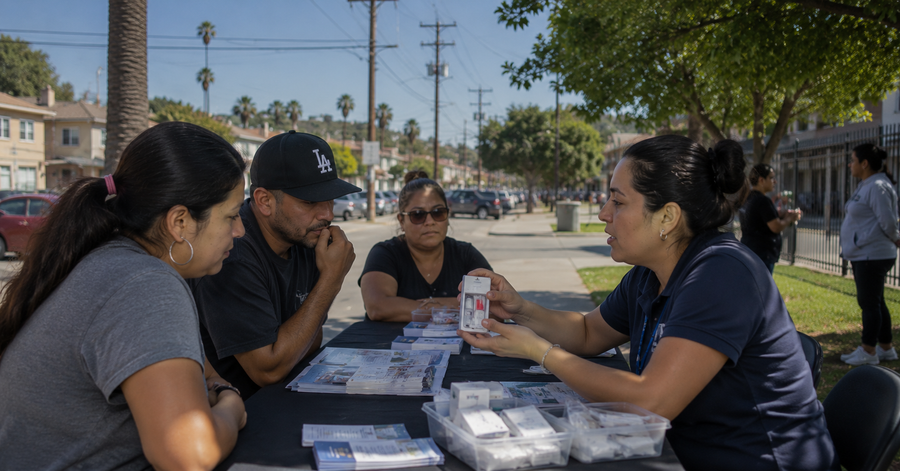
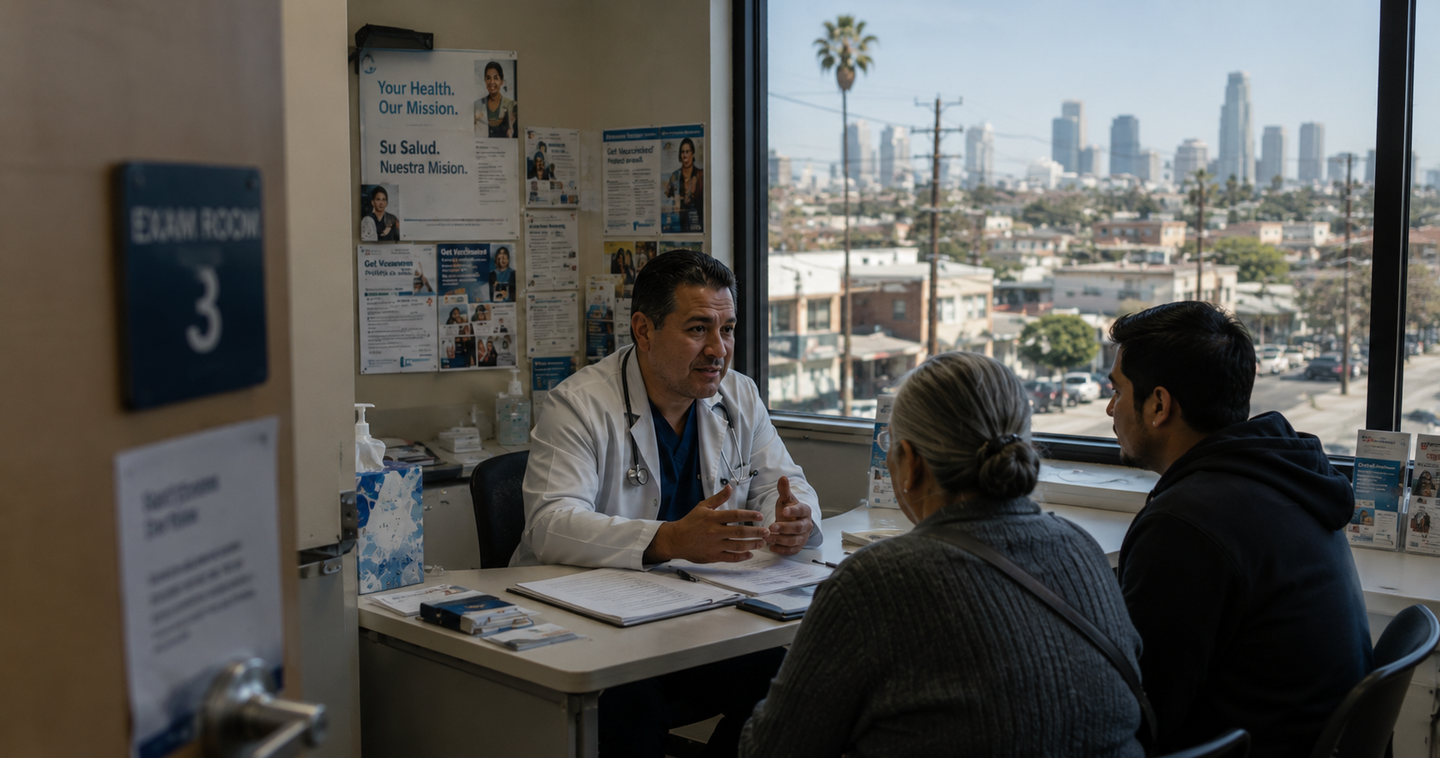
This week on The Signal, California’s health care system faces two very different policy fights. We examine a program bringing internationally trained physicians into underserved communities and the stalled effort to expand it. Then, Proposition 40 puts a one-time 5% tax on billionaires before voters, raising billions for health care while sparking a fierce debate over taxes, investment and the future of California’s safety net.

This is viewer supported news. Please do your part today.
TRANSCRIPT
This is a rush transcript. Copy may not be in its final form.
00:00:00:00 - 00:00:03:12
MUSIC INTRO
I'm going to tell you what I'm using.
00:00:03:14 - 00:00:18:10
MUSIC INTRO
But you really only have to remember that you're two words. You got to do something. You can do it. Just so you know, she's going to be. I am.
00:00:18:12 - 00:00:59:06
DINO
And on our relay stations. Right. Are their signals. That includes 98.78 FM, Santa Barbara, 93.7 FM San Diego, and of course, over with our friends over at 99.5 Ridgecrest, China Lake. And you can always hear us on kpfk.org. Now and for 60 days after the broadcast where you can have, our archived programing there. Now, we've got a full hour for you today, and we're looking at two very different California policy fights that in their own way, come back to a similar question.
00:00:59:08 - 00:01:30:08
DINO
How does California respond when the systems we have aren't meeting the needs of the people who live here? First, we're going to talk about the California doctor shortage. Yep. There's a shortage of doctors, particularly serving low income immigrant communities, low income communities in general. And overall medically underserved communities. There are qualified physicians trained outside of the United States who could just as easily come in and support and help.
00:01:30:10 - 00:02:05:17
DINO
Not just locally, in countries around, but all across. And it's a difficult thing for them to do. They just can't come in. There's qualified physicians, and the path to practicing medicine in California can be extraordinarily difficult. Assembly Member David Alvarez, from the San Diego area, tried to address this with legislation AB 2386. The California Physicians Expansion Act and the legislation advanced through much of the legislature before stalling earlier this month in Senate appropriations.
00:02:05:19 - 00:02:29:13
DINO
We'll be speaking with Assembly Member Alvarez later in the show. And get to the bottom of that. We're then, we're actually going to start the program with talking with, Doctor Ilan Shapiro of Ultimate Health Services to hear about the program already bringing physicians from Mexico into Southern California community health centers and helping this very group of people that we just talked about.
00:02:29:15 - 00:02:53:14
DINO
So the big question we're going to be asking, you know, once we talked to Doctor Shapiro about this incredible program, if there is such a program and if there is such a political effort to expand this program to help communities, why didn't they move forward? We're then going to go to another very, second half hour, another very controversial issue.
00:02:53:16 - 00:03:20:20
DINO
Big California debate. Proposition 40, the California billionaire tax. Now, this is one of those topics, folks, that has spurred a lot of conversation indeed, during our preproduction meeting here in the studio. You know, we we got into a conversation about, yes. No, maybe. So, you know, my my engineer, Sly reminded me earlier that what comes from nothing.
00:03:20:22 - 00:03:42:17
DINO
What is it again? Sly. What? Well. Go ahead. Remind me what it is. He said what comes from nothing leads to nothing. Was that. Is that the Reuters? Okay, there it is. Check this out. Now, this is Sly's response to me when I was asking him about, whether or not this was a good idea.
00:03:42:19 - 00:03:47:16
MUSIC
Nothing from nothing. If nothing.
00:03:47:18 - 00:04:06:04
DINO
And then, you know, Sly's position was. Yes. Tax them. Tax them all. You know, while others here and around the studio were saying, well, wait a minute, you know, let's look at the potential implications of such a policy. Now, what is this? Right. Let's say it's a proposal to impose a one time 5% tax on the wealth of California's billionaires.
00:04:06:04 - 00:04:32:13
DINO
And we have many of them potentially generating tens of billions of dollars, much of it, if not the overwhelming majority of it towards health care. Now, supporters say money is desperately needed in the face of enormous federal health care cuts. Opponents say California could end up driving some of its wealthiest taxpayers out of the state, and as such, losing billions in future investments in tax revenue.
00:04:32:15 - 00:05:12:06
DINO
Some of the opposition is coming from places that you might not expect. In fact, my producer and I were, out yesterday at the Hollywood Bowl checking out a great program by Gustavo Dudamel and friends of his. One of his going away fiestas. And I was surprised that, the attention that, my or our previously our previous promo SLI we were and the, you know, out there enjoying the show and doing at the intermissions a, group of, professionals, our allies, colleagues and listeners of the show came by to say hello, and they're like, you know why?
00:05:12:06 - 00:05:29:15
DINO
Why are you having this topic on it's so bad. It's so this it's so that. And, you know, I'm sitting there thinking, you know, every once in a while, we have a topic on this show that generates a whole lot of attention even before we go on the air. And this is one of those topics. I've received phone calls.
00:05:29:15 - 00:05:55:05
DINO
I received text messages. I swear to God, I got a messenger pigeon with a note attached to its foot that said, you know, this is a bad idea. And indeed we have, I think a majority of our listeners, folks that have strong progressive values, who say tax the billionaires, let's do it. So it's a it's an issue that has, in fact, divided, many in the state of California.
00:05:55:06 - 00:06:24:14
DINO
Many of the actually, liberal left progressive, folks here in California, including the audience of yours truly are. That said, well, put these arguments directly to Dave Reagan, president of SEIU United Healthcare Workers West and one of the principal forces behind proposition 40. So that's all I had. But as I said, first, we're going to start addressing this issue of the doctor shortage problem.
00:06:24:16 - 00:06:30:12
DINO
Doctor shortage. Did you know that the slide did you know that we have a doctor shortage problem here. Right.
00:06:30:14 - 00:06:31:10
DINO
Now.
00:06:31:12 - 00:07:01:22
DINO
So here's the thing folks. California has this problem. We don't have enough doctors for the size of this kind of the population we have here in California, across the state, and particularly in low income, rural and immigrant communities. There simply aren't enough physicians to meet the need. The shortage becomes even more pronounced when we're talking about doctors who speak the language of their patients and understand the communities they're serving.
00:07:02:00 - 00:07:33:12
DINO
Again, as I mentioned earlier, Assembly Member David Alvarez attempted to address part of that problem with the piece of legislation AB 2386, the California Physicians Expansion Act. The legislation, rather, would have expanded on this existing California program that allows qualified physicians from Mexico to practice in community health centers. It also would have established a pathway for other internationally trained physicians to receive provisional licenses and practice in California.
00:07:33:14 - 00:08:03:15
DINO
The idea was relatively straightforward, but it stalled. Joining us now to tell us about the program that already exists is Doctor Ilan Shapiro of Alta mental Health Services, a physician and a longtime public health advocate whose work has focused extensively on Latino and immigrant communities and on expanding access to culturally responsive health care and, in fact, part of a program I'm managing a program that does indeed invite doctors, to common practice medicine here.
00:08:03:15 - 00:08:06:10
DINO
Doctor Shapiro, welcome to the Signal.
00:08:06:11 - 00:08:34:05
ILLAN SHAPIRO
Thank you so much for the opportunity. And very exciting. Very excited to actually talk about this, because sometimes and right now, with everything that we're hearing of the changes in California MVC, we make sure that our families are fed, that we're okay and we're moving forward. But sometimes things get complicated and there's things that we can start making better for the future if we do it right now.
00:08:34:07 - 00:08:50:13
ILLAN SHAPIRO
And that's one of the problems that we're having across the US, and also especially here in California, that, well, if you want to go to a kidney, you need to have a doctor, someone that actually will take care of you. And right now the stats are not looking good. Shiny.
00:08:50:14 - 00:09:03:12
DINO
So tell us about this program. Shapiro. What exactly. So tell us about the program. What what exactly is the program? How does it work and where is it actually operating normally?
00:09:03:14 - 00:09:26:14
ILLAN SHAPIRO
Assembly member of Fire Bowen, around the early 2000, had an idea to actually bring Mexican physicians to areas that were lacking of doctors, and that was actually a coalition of community clinics, mostly rural community clinics that said, well, we need doctors to take care of the patients because they're not going away. We need to help them.
00:09:26:16 - 00:09:55:08
ILLAN SHAPIRO
We need to do something. And the idea was to bring Mexican physicians for three years to these, underserved areas. That way, they can serve be part of a part of the community that will be, checked by the, you know, the Mexican counterparts, but also, like, monitored by their local clinics and with a combination at the beginning with UC Davis and also some observations and management from UC San Francisco.
00:09:55:10 - 00:10:16:18
ILLAN SHAPIRO
Then that way, you know, our patients will be served. We'll be monitoring because there was a lot of doubts on on, you know, like if there if we prefer I was a US grad. So, are they ready to do that part of the language barriers. And we needed to answer all those questions. And it started with, the idea of bringing 30 Mexican physicians.
00:10:16:20 - 00:10:50:19
ILLAN SHAPIRO
And that was that was in 2000, from 2000, probably until 20 1918, there was no movement. There was, you know, like the law was there but needed like a centralized, office. And there was simply no movement. But afterwards in 2019, that actually started to move. And we brought, 30 physicians, Mexican physicians from pediatrics, internal medicine origin, and family practice to serve our communities.
00:10:50:19 - 00:11:00:15
ILLAN SHAPIRO
And the initial four clinics, was one to, the via Salinas and to the, Benito and also altamente where I work.
00:11:00:15 - 00:11:31:23
DINO
And so I'm glad you brought up this issue. And it's sometimes a concern. You know, there May 1st could argue that there's legitimate, there's a legitimate cause there to, to, to ask these questions. But that's this issue, this misconception that somehow these there are exist lower medical standards. So when you do bring over these doctors, what training, what licensing, what screening did they actually go through to ensure that they met any and all qualifications to practice medicine here?
00:11:32:01 - 00:12:04:04
ILLAN SHAPIRO
I love the question. And I'm going to give you a little bit of background of how many doctors we have already of international make our graduates that we have here right now in the US, 25% of all the physicians that you have in the US come from outside the US. Wow. Then we already know and we have hard data that, you know, that we actually serve as international make our graduates in areas, underserved areas, rural areas or urban areas that usually a lot of the US grads are not there.
00:12:04:05 - 00:12:30:00
ILLAN SHAPIRO
Actually, if you see the stats, we are very well represented in all these areas because we understand the culture, the language, and we know how to work, then, you know, that part was clear from the beginning. The other part was to make sure that they were board certified in their country, in Mexico, to establish, you know, there were a lot of questions on, you know, like in the residency was equally effective as the US one.
00:12:30:02 - 00:12:56:12
ILLAN SHAPIRO
And, you know, I, I argue that 100%. Yes. But when you did hard data, and with the observations from UC Davis, from the Mexican counterpart, that was UNAM, the largest, public university that we have in Mexico. Both of them concluded that, you know, on the initial cohort that it makes a huge difference. The quality of care is exactly the same one.
00:12:56:14 - 00:13:22:19
ILLAN SHAPIRO
There were no other, you know, like red flags of any kind. And the patients were extremely happy because they were taking care of in their language with someone that understood where they were coming from. And that actually helps when you're treating diabetes, high blood pressure, giving vaccines, all that stuff actually matter because the cultural aspect of it, and also the place of having the same language, makes a huge difference.
00:13:23:01 - 00:13:48:16
DINO
And you know what? I know I totally can appreciate that. I mean, this is an issue that we deal with regularly on any broadcasts or communications, format where the issue of translation, is it literal, is it colloquial or is it, you know, how do we communicate in effective and meaningful way? And so let me ask you, I mean, you know, so we have some of this countries and indeed Mexico's top universities collaborating.
00:13:48:18 - 00:14:08:18
DINO
25% of doctors are already from outside. There's multiple clinics. I mean, this seems to be working. This seems to be, you know, really producing results. How have the community members themselves responded when engaging in their language? What have you heard from the patients?
00:14:08:20 - 00:14:48:08
ILLAN SHAPIRO
It's quite interesting because at the moment when you go to a clinic, you're expecting the the regulatory thing, right? You know, like someone that will take care of you. We actually most of the community clinics, we need to have someone to translate or systems to translate. Then, you know, the language part is there. But when you have a doctor that understands your country, understands, you know, your your defeats, you know that these or herbs that you use, to cure things or certain, cultural aspects of medicine or the way that you were involved in that part, they are extremely happy and they feel at peace because the language is there.
00:14:48:08 - 00:15:11:11
ILLAN SHAPIRO
But also they understand, you know, like, by the way, you know, our little grandma, are you taking those two seaters or or only your medicines and those things actually make a huge difference, because even though we take herbs and we think, you know, natural remedies, all of them also can actually have issues or actually benefits on the medications that we regulate using them.
00:15:11:11 - 00:15:42:05
ILLAN SHAPIRO
Knowing all this, these little details make a huge difference. And from from the point of understanding how the system works in our own country and how it works here and and creating that bridge, it's crucial to have communities that are healthier, because when you come here, it's a it's a way different healthcare system. There's, you know, even you know, we make sure we have a lot of issues, but there's actually a centralized public health service.
00:15:42:07 - 00:16:19:05
ILLAN SHAPIRO
They can, you know, you can access to it. It's not perfect at all. But here, understanding that there's no centralized there's no public health care system, then it changes a lot of the issues. And when you have someone that will help you from the referral part of this, from understanding your medications in the language that you need to use it, because sometimes, you know, they send the prescription and it's in English and, you know, like that's not not helpful if they are only monolingual Spanish or, you know, like starting to understand English, then you have all these little barriers that at the moment you have a provider, a physician is coming from Mexico
00:16:19:05 - 00:16:25:10
ILLAN SHAPIRO
or actually Latin America. Just to expand that point. Sure, the patients do better.
00:16:25:11 - 00:16:56:22
DINO
Doctor Shapiro, stay with us because I want to bring in, our other guests, Assembly member David Alvarez, into this conversation. Assembly Member Alvarez is the author of AB 2386 The California Physicians Expansion Act. The bill would have expanded on the existing licensed Physicians from Mexico program, while creating a broader pathway for internationally trained physicians to practice here in California under establish requirements and oversight, some of which you've already heard.
00:16:56:22 - 00:17:23:04
DINO
Doctor Shapiro shared with us. There was, you know, some of this states, countries, indeed, countries, most esteemed universities collaborating with Mexico's most esteemed universities to ensure that regulations requirements permit all of that good jazz is met and therefore ensure the quality of health care with the added benefit of what Doctor Shapiro is describing, which is being able to understand a patient where they come from.
00:17:23:06 - 00:17:55:14
DINO
You know, all the little the nuances that come sometimes with having patients who are accustomed to a cultural component of medicine. Well, Assembly Member Alvarez, this bill, went through the Assembly. It advanced through Senate events through multiple chambers, but unfortunately stalled earlier this month. And Senate Appropriations Committee Assembly member Alvarez represents California's 80th Assembly district in San Diego, County and Assembly member.
00:17:55:14 - 00:17:57:15
DINO
Welcome to the signal.
00:17:57:17 - 00:18:12:20
DAVID ALVAREZ
You know, thank you so much for having me. It's really an honor to be on here and that you're talking about this very important issue for our community. It's great to hear your Doctor Shapiro. It's an tastic ally and friend and supporter of the community when it comes to this. Thank you for having us.
00:18:12:21 - 00:18:33:12
DINO
But thank you, Assembly Member David Alvarez. Now, here's I'm going to I'm going to give it to you simple and straightforward. When I listen to, you know, as a research, looked into this topic and then talking to Doctor Shapiro now for the last few minutes, to me, this is a no brainer. I mean, it's working. It's like, what the hell happened here?
00:18:33:12 - 00:18:54:13
DINO
Your legislation, AB 2386, which made it through multiple rounds in the Assembly, Senate, what have you. Right. The process we've actually covered this with some of your colleagues in the past and what that process is like. But at some point, your colleagues, somebody said, maybe this is not a good idea. Maybe they said, this is not a good idea.
00:18:54:13 - 00:18:57:02
DINO
Now walk us through what happened.
00:18:57:04 - 00:19:25:16
DAVID ALVAREZ
Yeah, yeah. Thank you. For again, this is truly public service. And as we try to do things in government that sometimes are really, overly complicated, for a variety of reasons, democracy works that way. But in this case, yes, we had something that was moving through the process. It looks like it may be getting to the finish line, but I would have to say it this phase obstacles along the way, it wasn't easy to go from one step to the next and one committee to the next.
00:19:25:18 - 00:19:51:05
DAVID ALVAREZ
I try to summarize it this way. Sure, to you and me, maybe as people who aren't doctors, who aren't working in clinics or hospital settings, this concept makes a lot of sense. California needs, you know, 11 million people in California. That's a quarter of the population, by the way, don't have adequate access to physicians. That's a data that's independent by a California health care foundation.
00:19:51:07 - 00:19:58:05
DAVID ALVAREZ
That's data. But you and I probably hear from friends and family who say, hey, I can't get in to see a doctor. And I could see you say.
00:19:58:08 - 00:19:59:13
DINO
Oh, my God, the.
00:19:59:15 - 00:20:20:04
DAVID ALVAREZ
Reality that people are facing, it's a it's a fact. It's not just an opinion. Another report by the year 2030, we estimate that there needs to be 8000 more physicians to meet the needs of basic needs in our community. We know we are not on the path to accomplishing that. So we know that this is happening. You know that it's going to get worse.
00:20:20:10 - 00:20:40:07
DAVID ALVAREZ
So like we should be doing something about it. To your point, like this makes no sense. What I've come to learn and maybe Doctor Shapiro can appreciate this as well, is, first of all, there's always a lobby. There's always a group, there's an industry. There's people who may not see things the same way.
00:20:40:07 - 00:20:40:21
DINO
Sure.
00:20:40:23 - 00:21:06:04
DAVID ALVAREZ
And what happened to us with this is, folks who have been making regulations, helping pass laws over the course of, you know, years and years in California. Saw this as something that was not aligned to previous practice. Just to put it that way, things have been done a different way. You don't just allow people from outside the country to come and practice medicine.
00:21:06:06 - 00:21:32:14
DAVID ALVAREZ
We have our own set of rules and we think everybody should follow those set of rules. And I think that's what this, to put it simply, as someone who's, you know, unsophisticated in the medical world, myself and I acknowledge that that's what happened, people felt that this was a maybe a little bit too much, too quickly in terms of how things are done today and creating a change, allowing doctors who currently cannot practice in California to practice in California.
00:21:32:19 - 00:21:58:12
DAVID ALVAREZ
My argument is, look, if you have a prepared doctor, you put them through the scrutiny of of any set of rules. They go to the practice they have, the education they should be able to do this. In fact, the program from the existing program for medical is for 20 years. Doctors have already do this in California because there are 20 doctors doing this has proven that is a model that works and so we were just saying, hey, that model has been proven.
00:21:58:14 - 00:22:13:02
DAVID ALVAREZ
Let's now expand it to that more California instant access to it. And unfortunately, as you described through the process of government in the legislature, unfortunately, we come to the end this year. We have to continue to pursue it next year.
00:22:13:08 - 00:22:36:18
DINO
Okay. So that was my next question. And by the way, for for our audience. And we are already getting, you know, messages about this. So who oppose this, is our understanding. The California Academy of Family Physicians, CFP, was one of those. The Medical Board of California, I understand, was another primary and opposition to this. And for those, you know, for our audience who have been with us now for a while, many of you have.
00:22:36:20 - 00:22:58:17
DINO
We've covered legislation and various policy, including, you know, regularly we cover, legislative, bills. And, you know, there's all these push pull factors. You have advocates, you have people in opposition, you have lobbyists that are a dime a dozen. You can throw a nickel out in California outside the Capitol and find a dozen lobbyists, who will run for it.
00:22:58:17 - 00:23:21:00
DINO
So, you know, and these things do happen. But amazingly to this next question, Assembly member, what's next? Right. Help us understand when when does a bill become a two year bill? When does it have a second chance? Added? Because again, this is an issue that, you know, based on what we're hearing can work because it's already work.
00:23:21:02 - 00:23:39:11
DAVID ALVAREZ
Yeah. So here's the way I think it's going to the next steps are going to happen. So you question first question when can the bills continue. We are at the end. So we get elected every two years in the legislature. And so the length of session we call session which is equivalent to like how much Congress last.
00:23:39:12 - 00:23:58:15
DAVID ALVAREZ
It's two years. Sure. When that comes to an end and build it up to come to an end, August 31st is our last day. We can't do anything else until the new legislature gets elected in November by the voters. And then we get sworn in December, and then the new two years begin. So that is the the next available window for us to do something.
00:23:58:20 - 00:24:24:21
DAVID ALVAREZ
I do want to point something out, though, because you were trying to expand the program, but there is a second component of that to, families in many places and in Central Valley Salinas and some, in L.A. area and others, there are already doctors in California that are under this program that because of the way the law is and we were trying to change, they will be losing their ability to continue to practice in California next year.
00:24:24:23 - 00:24:40:05
DINO
Wait a minute, wait a minute. I'm sorry to interrupt. Assembly member Alvarez, are you telling me that those positions that were already here practicing, helping these communities are now no longer going to be.
00:24:40:07 - 00:24:59:06
DAVID ALVAREZ
Yes, there are 28 of them. And over the course of starting next year, starting in 2027, because the original program is a temporary program, they're allowed to come here on a temporary. That's what my bill was trying to do is say they've been here temporary. They've proven they can do the work. Let's let them stay permanently. God.
00:24:59:07 - 00:25:17:23
DAVID ALVAREZ
So that's no longer an option. The bill's dead. And so far, those 28 doctors and all the families that they take care of at some point within the next year or two years to they all expire different times. It depends on when they got here. They will have to return back to Mexico and they will not be able to continue practicing medicine here.
00:25:18:01 - 00:25:41:23
DAVID ALVAREZ
So we were trying to extend them into a permanent basis. So, I tell you that because my goal will be early when I get back in it. Well, is the voters reelect me? I will be bringing back another bill, when I get back in December, and I get sworn in to say, hey, for these 28 doctors, we have to do what's called an emergency legislation.
00:25:42:01 - 00:26:01:02
DAVID ALVAREZ
Okay, it can take effect as soon as it goes through the legislative process. And as the governor cited, because typically, if you remember in your listeners, remember, laws take effect January 1st of the next year, right? Well, for all the doctors that are expiring in 2027, they would all lose their license if we use a typical process.
00:26:01:04 - 00:26:26:23
DAVID ALVAREZ
So we have to use an emergency process. So I'll be bringing forward legislation to at the minimum, get those doctors the ability to stay on a permanent basis and then build on the second part, which is let's allow more doctors to come, because this obviously has worked and, allow them to come through a new process that doesn't make them cycle in and out and doesn't have like at some a time limit for them to, to, to not be able to practice.
00:26:26:23 - 00:26:37:07
DAVID ALVAREZ
You got to see components, but most important one being those who are being taken care of as 20 doctors, they lose, they have the risk of losing those doctors in their care in the next few years.
00:26:37:08 - 00:27:01:05
DINO
Wow. So so let me go back to you, Doctor Shapiro. And, you know, let me let me read you both. We're speaking with Doctor Ilan Shapiro of Ultimate Health Services, discussing a program that, he works with a part of that has visiting physicians here in California providing crucial key medical services for underserved communities, immigrant communities, a program that has demonstrated success.
00:27:01:07 - 00:27:33:17
DINO
And, also with Assembly member David Alvarez of the San Diego area, who attempted to pass legislation that would have extended this program and in fact, opened up new doors that, unfortunately were stalled. And the legislature and we're looking to, have, Assembly Member Alvarez possibly bring that back next year, according to what he just shared with us, Doctor Shapiro now that we're hearing that some of this program will not be extended, these 28 doctors that are currently here providing crucial medical services.
00:27:33:19 - 00:27:43:11
DINO
How are you all preparing for this potentially catastrophic shift where all of a sudden folks are not going to have their doctor anymore?
00:27:43:12 - 00:28:06:05
ILLAN SHAPIRO
The first part is that, sadly, we we knew that, you know, that that even though that we were trying we needed to prepare for we weren't the actual law right now. Then, the hardest part, you know, like the, the good news is that, you know, like those patients will be taking care of. The sad news is that it's very hard to replace.
00:28:06:05 - 00:28:28:15
ILLAN SHAPIRO
And right now with us, we have seven amazing doctors and physicians that are taking care of the elderly, the kids, our parents, our family members. And there's not going to be there. And when you establish a relationship with a doctor and the way that they work, it's it's something that will be difficult for, for all of us.
00:28:28:16 - 00:28:52:03
ILLAN SHAPIRO
And we're trying hard to, you know, make sure that that transition is smooth, that we already have someone on the, you know, that will actually take care of those patients, but leaves a whole it leaves, you know, like it's kind of any relationship when you have a really good relationship and you're enjoying the company of each other and suddenly it goes away, it will have, I got there.
00:28:52:05 - 00:29:10:13
DINO
Sure, sure. So, Doctor Shapiro, if folks want to learn more about this program, want to learn more how they can support what comes now in the interim, as Assemblymember Alvarez, takes another crack at it next year, where can folks, our audience learn more about this program? And you.
00:29:10:15 - 00:29:36:22
ILLAN SHAPIRO
There's a couple of websites that there are actually not centralized at, inside of the California medical board that actually spells out, was a program about the Mexican physician program. And there's really no good sector that we can actually share. Like, if I don't go to this website, they will tell everything, but we're doing, making sure that we're up to date in social media.
00:29:36:23 - 00:29:58:02
ILLAN SHAPIRO
We have a lot of information and flowing there for future doctors, for the current doctors, and also for the community. Then if they actually follow us at Ultimate Health Services or, at Dr. Underscore Shapps, I can gladly answer any questions for future doctors or current doctors or anybody in the community that may want to engage.
00:29:58:03 - 00:30:12:19
DINO
And Assembly member, David Alvarez, if folks want to stay in touch with your office, find out what comes next. At the end of the year or early next year, where can folks learn more about your continued efforts in the legislature?
00:30:12:21 - 00:30:32:16
DAVID ALVAREZ
I appreciate that, you know, actually, I had a community coffee this morning and I had a soda from Mexico, from Chicago University come to my coffee and say, I've been here. You want to do this? I'm currently going through this really arduous process. I would love to be able to tell my story of how I am prepared to serve your community.
00:30:32:18 - 00:30:52:00
DAVID ALVAREZ
Right now she goes to Tijuana to be a doctor, but she lives over here in San Diego. And so, I hope to hear I think we have to put sort of a face to the story so that legislators and medical board and others understand that these are real people, that, our institutions need to be addressed.
00:30:52:02 - 00:31:12:14
DAVID ALVAREZ
And so I would love to hear from people. Thank you for giving us an opportunity. I'm at Alvarez and for San Diego, SD, for all my, different social media handles. You can reach out to me if you have a story. If someone who's going to say the same thing is struggling to, they're a doctor, they're a accomplished doctor.
00:31:12:14 - 00:31:29:00
DAVID ALVAREZ
And they got somehow they are, wanting to come to serve here or they are here and they can even practice as doctors because of the way the system is. I would love to hear those stories that will help us, educate and make sure that we actually get this right and get this law approved next year. Thank you.
00:31:29:02 - 00:31:58:03
DINO
Assembly Member David Alvarez, author of AB 2386, the California Physicians Expansion Act, and Doctor Ilan Shapiro of Ultimate Health Services. Gentlemen, I want to thank you both for joining us and for helping us understand what's at stake here. Coming up next, we're turning to another major California policy fight, proposition 40, the so-called billionaire tax. It's a proposal to impose a one time 5% tax on wealth of California billionaires, with tens of billions of dollars potentially at stake on both sides.
00:31:58:03 - 00:32:10:03
DINO
Apparently, supporters say it's about protecting health care and essential services. Opponents say it could drive wealth out of the state. We're going to dig into this and on both sides of the debate, stay with us. We'll be right back.
00:32:10:09 - 00:32:13:21
MUSIC INTRO
To get most to my.
00:32:13:21 - 00:32:40:01
DINO
Podcast. Welcome back. You're listening to The Signal News, information and analysis. I'm your host, Tino. So California voters will decide a pretty extraordinary question this coming November. Should the state impose a one time tax on the wealth of billionaires to help offset billions of dollars in federal cuts to health care and other programs? That is essentially what proposition 40 would do.
00:32:40:03 - 00:33:06:18
DINO
The measure would impose a one time 5% tax on Californians with more than $1 billion net worth. So this is something that's targeting the billionaire class. Supporters estimate that roughly 200 people would be affected, that is to say, 200 billionaires are in the state and argue the tax could generate approximately 100 billion over five years, with 90% of the proceeds directed towards health care.
00:33:06:20 - 00:33:31:02
DINO
Interestingly enough, you just heard the first segment where we're talking about access to health care and then that particular case, you know, a doctor visiting program that is serving low income communities, primarily immigrants, and folks that, are being served that otherwise weren't being served. The proposal comes in response to enormous federal reductions in medical and Medicaid and other safety net programs.
00:33:31:03 - 00:33:59:03
DINO
Supporters warn those cuts could mean millions losing coverage, higher insurance calls, hospitals and clinics closing, and significant health care job losses here in California. But proposition 40 also has produced some unusual, unusual political battle lines. Governor Gavin Newsom opposes it. So does the Teachers Association, the State Building and Construction Trades Council and other organizations that would normally be expected to support progressive taxation.
00:33:59:05 - 00:34:24:01
DINO
In fact, in this very program, we spent part of our production meeting before we went on air, going back and forth on this very issue. And I do want to share and I want to share this. So the David was on the line. I'll let you do some in a second. Those, you know, just last night, as I was talking about earlier in the opening of the show, you know, while attending an event with my producer in L.A., you know, we had a small audience of folks that came by and said, why do you have David Ray?
00:34:24:01 - 00:34:50:04
DINO
You know, and he's going to push people out. And then we had other folks saying, the hell with that. Tax them all. And, you know, rarely do we get that kind of attention where before the broadcast, you got folks blowing us up. Text, email messages on this issue. All that to say that this is not a normal run of the mill political issue where you have one side or another.
00:34:50:06 - 00:35:18:21
DINO
The nonpartisan Legislative Analyst's Office says both sides of the equation deserve attention, and estimates that tax would likely generate tens of billions of dollars, although exactly how much is difficult to predict, while also warning that California could lose hundreds of millions of dollars or more every year in ongoing tax revenue. If billionaires respond with leaving the state now, Sly says, they know they're not going anywhere.
00:35:18:23 - 00:35:41:01
DINO
Nella says, I don't know, maybe. Maybe not. I'm kind of sitting in the middle because, well, at the end of the day, I'm the one here on the mic that's going to take all the flack on one side or the other, which is why we're going to bring in our guests, joining us to make the case for proposition, for them to answer some of those criticisms so that I don't get beat up for having this topic, is Dave Reagan, president of SEIU United Healthcare Workers West.
00:35:41:06 - 00:35:45:03
DINO
Dave, thanks for making my broadcast a little difficult.
00:35:45:05 - 00:35:48:02
DAVE REAGAN
Well, I'm happy to be here. You know, thank you for having me.
00:35:48:07 - 00:36:13:04
DINO
SEIU, UAW represents approximately 120,000 health care workers throughout California and has been one of the principal forces, if not the principal force behind proposition 40. So, you know, Dave, let's let's jump right in. Right. Let's start with the basic issue. Why proposition 40? What's the problem you're trying to solve? And why is it going after these billionaires?
00:36:13:04 - 00:36:14:14
DINO
The answer.
00:36:14:16 - 00:36:47:08
DAVE REAGAN
Sure. So is, you know, Dino, a year ago, on July 4th, President Trump signed the so-called one big beautiful bill. And that primarily did two things. It was the largest ever attack and defunding of the American health care system that we've ever seen. $1 trillion over the next decade is being eliminated from basic, you know, care programs across the country.
00:36:47:10 - 00:37:25:02
DAVE REAGAN
And the vast majority of that money is being redistributed, redistributed to the wealthiest Americans in the form of another tax cut for the people who need it the least. In California, that's going to cause a $100 billion reduction in health care funding. Everyone across the political spectrum, including Governor Newsom, agrees. When these cuts get fully implemented in 2027, 3.5 million Californians are going to lose health insurance, 150,000 frontline workers are going to be laid off.
00:37:25:04 - 00:37:50:21
DAVE REAGAN
Over 20 million consumers, including you and I, are going to be paying higher premiums, deductibles and co-pays. And we're going to put a $25 billion a year hole in the California state health care budget. We've never seen anything like this. And when you're talking about $25 billion a year, you know, there's only so many places you can go to get that.
00:37:50:23 - 00:38:24:14
DAVE REAGAN
And what proposition 40 very specifically does, it says there are a little over 200 billionaires in California who are among the richest people in the world, whose wealth has grown enormously over 150% in the past three years, and for a one time, 5% tax that would generate $100 billion over the next five years, we can backfill all of the cuts that are going to be triggered by President Trump's one big bill.
00:38:24:16 - 00:38:51:04
DAVE REAGAN
It doesn't affect anybody else. We acknowledge this is a, you know, a temporary five year solution. But when you're facing a crisis, a five year solution is better than a no year solution. And the worst thing we could let happen is for 3.5 million people to lose health care coverage. And, you know, people suffer unnecessarily, unnecessarily and literally die in too many instances.
00:38:51:04 - 00:39:08:01
DAVE REAGAN
So that's what we're putting in front of voters that will be on the ballot on November 3rd. And as you said, this is the first specific tax that's ever been put in front of people, not just anywhere in the United States, but anywhere in the world. Okay.
00:39:08:07 - 00:39:37:18
DINO
Okay. Great. And you know what? I'm glad you mentioned, Governor Newsom's argument that in part, you actually has mentioned Governor Newsom, according to the governor of California, already depends disproportionately on a relatively small number of very wealthy taxpayers. He cited the Legislative Analyst's Office that said that it's likely that at least some billionaires would leave California in response to this tax, and estimates that it could reduce state income tax revenues.
00:39:37:20 - 00:39:48:12
DINO
The opposition essentially says you're trading recurring revenue for one time. What somebody one critic said one time sugar high. Are they wrong?
00:39:48:14 - 00:40:18:06
DAVE REAGAN
They are wrong. And with all due respect to the governor, he knows better. So here's the truth. Billionaires in California pay 2.5% of the total of California income tax. The difference between billionaires and the rest of us is that they don't rely on wages and salaries. Their wealth is all tied up in financial assets like stocks. And that stuff is beyond the reach of our current tax system.
00:40:18:08 - 00:41:03:20
DAVE REAGAN
Seven years ago, in 2019, the 200 or so billionaires in California collectively had $700 billion in wealth. Today, it is $2.4 trillion. Their wealth has more than tripled in the last seven years, and billionaires pay substantially lower effective tax rates than teachers and firefighters and construction workers and health care workers. That's the real scandal. And again, with all due respect to Governor Newsom, I think we all understand he wants to be the next president of the United States and the people he is asking to fund his campaign are the billionaires, including people like Sergei Brin and Peter Thiel.
00:41:03:21 - 00:41:24:07
DAVE REAGAN
And unfortunately, I think the governor is really conducting himself as a, you know, a candidate with a political problem, not a governor with a health care problem. We need to avoid the collapse of our health care system in California. And that's what's at stake. On November 3rd.
00:41:24:09 - 00:41:48:00
DINO
And David, one of the other areas that the governor and others have pointed to, is this issue that other unions are against. You ought to be more accurate. I think would, better be characterized not with you. Some have, in fact, stay neutral. Here's where the here's where this gets politically interesting. Right? This isn't simply billionaires versus organized labor.
00:41:48:02 - 00:42:19:00
DINO
The California Teachers Association opposes proposition 40. The State Building and Construction Trades Council has opposed SEIU California, the statewide organization representing roughly 750,000 workers, of which you, as an affiliate, decided to remain neutral. Some of those unions share the concern that if, well, let wealthy taxpayers leave, the resulting decline in the general fund would eventually hurt schools, public employees, public safety, and other services.
00:42:19:02 - 00:42:24:10
DINO
So why are significant parts of organized labor not buying your argument?
00:42:24:12 - 00:42:56:00
DAVE REAGAN
Well, the first thing I think we all have to acknowledge is that two weeks ago, proposition 40 gained the support of the California Labor Federation. The largest groups, you know, the umbrella group of unions in California, over 1300 local unions and national unions. So the truth is, there's a handful of exceptions. And you named some of them. But the truth is, organized labor is overwhelmingly united, rightfully so, behind proposition 40.
00:42:56:02 - 00:43:31:07
DAVE REAGAN
And, you know, I think it's, again, unfortunately true that Governor Newsom, he's got a different agenda. And but unfortunately, he is out of step with all of the public polling shows us is 80% of registered Democrats support proposition 40. 70% of union members in California support proposition 40, including 63% of teachers. So, you know, there's a handful of political insiders in Sacramento that are playing the inside game.
00:43:31:09 - 00:43:59:11
DAVE REAGAN
And I think that's why most Californians and most Americans are increasingly, you know, frustrated and maybe even worse than that, with politics as usual. And what we have to stay focused on is if we do nothing on November 3rd, if we don't pass proposition 40, millions of people lose health insurance. Everybody agrees on this. But proposition 40 is the only solution on the table.
00:43:59:13 - 00:44:26:13
DAVE REAGAN
That's why we gained the support of the California Democratic Party, which Governor Newsom is the ostensible head of. Right. And that's why we gain the support of the California Labor Federation, because most people understand the billionaires have never had it better in California and in America than they have it right now. And this is a common sense, reasonable, one time tax to prevent a collapse of the California health care system.
00:44:26:15 - 00:44:58:11
DINO
We're speaking with Dave Reagan, president of SEIU United Healthcare Workers West in California's, building their tax proposition 40, of which, Dave and the union are leads, are one of the top leaders on this. And, you know, Dave, the politics and the billionaire counteroffensive is a big here. You mentioned, co-founder Sergey Brin, who alone has reportedly committed something like 100 million to political efforts opposing, the wealth tax and supporting measures that could undermine it.
00:44:58:13 - 00:45:22:09
DINO
Other billionaires have added their millions as well. Supporters? Well, look, what they're saying is that, in fact, they've authored additional propositions. And this is one thing that I have to tell you. My 30 years of covering, politics and issues, you know, you gotta love California for its propositions, opposing propositions, and then the cousin proposition and the, you know, the aunt proposition from down the street and around the corner.
00:45:22:14 - 00:45:45:12
DINO
You have that going on for you, right? We have two additional propositions, 41 and 42. That attack proposition 40 from opposite directions. Now, let me see if I can take a crack at this, because our, research team of, energy drink fueled, interns is what they gave me. Here's what they said to me. I said, Dino, this is what you need to say to the audience.
00:45:45:12 - 00:46:17:23
DINO
Proposition 40, ask voters whether California should impose a one time, 5% tax on billionaires to raise tens of billions of dollars. Proposition 41 and 42 attack it from opposite directions. Prop 41 attacks how the money can be spent. Prop 42 attacks the state's ability to impose the kind of wealth tax in the first place. And if either competing measure passes with more votes than prop 40, it could prevent prop 40 from taking effect.
00:46:18:05 - 00:46:35:18
DINO
All that to say, Sly and Nello, my prediction I know they're looking at me, and they're certain questions from the audience that we are looking at, hundreds of millions of dollars going into these political efforts. And at the end, we might end up with nada. Talk to me about the opposition.
00:46:35:19 - 00:47:12:14
DAVE REAGAN
Well, you're absolutely right. And, you know, let's start with Sergei Brin, one of the 2 or 3 wealthiest people in the world. He has already spent about $125 million of his personal gargantuan fortune. Chump change due to work, chump change to him, right? Including filing props. 41 and 42. Here's what I think your audience has to understand. Proposition 40, the underlying billionaire tax is, specifically applies to 200 billionaire individuals in California.
00:47:12:18 - 00:47:44:11
DAVE REAGAN
Nobody else. Proposition 41 and 42, we call them the poison pills or the revenge mints because they're meant to confuse people. And potentially undermine 40. They go well beyond that. Not only do they, if adopted, would they undermine prop 40, they also undermined other existing revenue streams and other existing authority that the people in the legislature have to make basic budgeting decisions.
00:47:44:13 - 00:48:10:04
DAVE REAGAN
The point of that is that it is tremendously irresponsible and reckless for Sergey Brin and the other billionaires, not just to want to fight proposition 40, but to throw the baby out with the bathwater, so to speak. These folks are so used to never being told no and always getting what they want, that they it's not enough for them to oppose prop 40.
00:48:10:06 - 00:48:39:15
DAVE REAGAN
They're willing to put all kinds of existing structures into, jeopardy! And I think that is horrible. And that's why I think there's overwhelming consensus that 41 and 42 need to be, defeated. But having said all of that, under the law in California, if proposition 40 gets more votes than 41 and 42, even if all three passed, the one that gets the most votes controls.
00:48:39:17 - 00:49:12:05
DAVE REAGAN
And so that's our job. It's very clear and straightforward. It is time that the billionaires come a little bit closer to paying what you and I and other regular working folks pay in taxes. The real scandal is they pay far, far less. And it's like the story that Warren Buffett, the famous famous investor, used to tell all the time that his secretary, who made less than $100,000 a year, pays a higher effective tax rate by quite a lot than one of the five richest people in the world.
00:49:12:09 - 00:49:48:05
DAVE REAGAN
That's the real story. And the health of Californians. Millions of people, including 15 million folks who are covered by Medi-Cal. And in your previous segment, you know, this is the largest health insurance program, not just in California, but in America. Medicaid. Right. And the idea that we're willing to scuttle something to 15 million people depend on here, including, you know, super majorities of people of color, children, women, and 80 million people over the country.
00:49:48:07 - 00:50:09:05
DAVE REAGAN
This really is, we think, a critical threshold moment, not just in California, in America. And let's just dispense with this idea that billionaires are victims. They are not victims. They are the biggest beneficiaries of this. The economy and the society we have. And it's time for them to help us solve a common problem.
00:50:09:10 - 00:50:35:21
DINO
David's saying, time to pay up. We're speaking with Dave Reagan, president of SEIU United Healthcare Workers West and Proposition 40, the billionaire tax. David, Dave, you brought up our previous segment, and I want to connect proposition 40 to another measure that SEIU was behind. That's as if not as if we don't have enough to confuse our audience. Proposition 44, because I think there's a legitimate criticism here that deserves an answer.
00:50:35:23 - 00:51:06:09
DINO
Proposition 40 is essentially making the case that California's health care safety net is facing a potentially devastating loss of federal funding, and that we need extraordinary measures to bring in new revenue to protect health care, especially for low income Californians. At the same time, SEIU is sponsoring proposition 44, which could require federally qualified community health centers to spend at least 90% of their revenue on health care and mission related services.
00:51:06:11 - 00:51:34:17
DINO
Here's the kicker community clinic leaders argue that the formula could actually squeeze things like translation services, which is so important. We just heard Doctor Shapiro and Assembly Member Alvarez talk about the essential, the need, the that exists and being able to communicate effectively with doctors, but they're eliminating that program, you know, transportation issues, outreach technology and other services is particularly important in low income communities.
00:51:34:17 - 00:52:00:15
DINO
So the question here is, is help me reconcile those two things. Why should voters support proposition 40 to raise billions of dollars to protect health care safety nets, while SEIU, you know, simultaneously backing another measure that the community clinics themselves are saying, yo, this could financially destabilize parts of our system, if not even potentially lead us to close.
00:52:00:17 - 00:52:32:05
DAVE REAGAN
No, it's a great question. So let me give a two part answer. And here's the first one. Proposition 40 the billionaire tax to help restore cuts, including to federally qualified health centers, across California. And by the way, in the last 90 days, there have been the we have seen the closure of seven federally qualified health centers in Los Angeles County alone because of these funding cuts and preparation for even more devastating cuts.
00:52:32:07 - 00:53:04:16
DAVE REAGAN
So we all see this freight train coming at us. When proposition 40 passes, it will help those seven clinics reopen. It will provide funding to the community clinic world that they all agree is disappearing. But for some reason that is incomprehensible to us. The leadership of the community clinic political organization is opposed to proposition 40. Our belief is they're just carrying water for Gavin Newsom, for Governor Newsom.
00:53:04:18 - 00:53:41:01
DAVE REAGAN
We think that's unfortunate. So that's the first part. The second part is that proposition 44 requires this. Federally qualified health centers spend 90% of their revenue on direct patient care services. With all due respect to what you just cited, that is not true about translation services. What we think needs to end in community clinics is we don't need bloated fundraising staffs that frequently don't even raise as much money, as it costs to operate them.
00:53:41:06 - 00:54:14:09
DAVE REAGAN
We don't need management heavy, you know, non direct care staffs at community clinics. And we don't need to see the kind of inflated salaries and executive compensation that we see. And there's a lot of good things about ultimate, but there is no reason that a community clinic system like ultimate should be paying the CEO $2 million a year, and that individual also has, you know, lots of members of his family on the payroll.
00:54:14:11 - 00:54:42:08
DAVE REAGAN
So I think we got to look at all of this, but we're the organization that is looking to restore funding to this targeted system that that serves 8 million Californians. We want the community clinics to join with us on that. And we need a public commitment that we're going to spend the money the taxpayers put forward on patient care services, not on unnecessary bureaucracy and inflated management salaries.
00:54:42:10 - 00:54:59:12
DINO
Dave, I want to thank you for joining us today. Let us know where can our audience learn more about proposition 40, about the work that you all are doing on all of the policy efforts that you have underway? Where can folks, tune in and learn more?
00:54:59:14 - 00:55:24:02
DAVE REAGAN
Sure. Yes. On prop 40.com is our campaign website. We're you know, talk to a local union, talk to, you know, an elected official, but please go to our website. Yes, on 40.com. And we're happy to connect people with the campaign and help us get out the vote. And let's stop a collapse of the health care system in California this November.
00:55:24:04 - 00:55:37:00
DINO
Dave Reagan, president, SEIU, United Healthcare Workers West, I want to thank you very much for joining us here on the segment. We look forward to following this proposition. And, maybe have you back on the program after the November election.
00:55:37:02 - 00:55:40:00
DAVE REAGAN
That'd be great. Thank you very much, Dino, and thanks for what you do.
00:55:40:04 - 00:56:20:19
DINO
Thank you. So, folks, listen, as we wrap up, you heard two, two very different policy debates today, but there's a common thread running through both. California is often very good at identifying its problems. We know we don't have enough doctors in too many communities. We know access to health care remains deeply unequal. We know federal cuts could prevent even greater pressure on health care systems that are already struggling to meet the needs of millions of California, but we also know that there's always multiple efforts, legislative or otherwise, that are looking to address all of these questions and sometimes at the same time overlapping and indeed sometimes canceling each other out.
00:56:20:21 - 00:56:42:18
DINO
Ultimately, public policy isn't just about identifying what we want. It's about deciding what we're willing to pay for, what tradeoffs we're willing to accept, and whether the solutions we're proposing actually get us to where we want to be or need to be. Those are the questions worth asking, and we'll keep asking them here. I'm Dino, it's been a pleasure serving you.
00:56:42:18 - 00:57:04:01
DINO
This is a signal. News, information and Analysis on Kpfk, 90.7 FM, Los Angeles. I want to thank all our guests, Assembly member David Alvarez from San Diego, Doctor Ellen Shapiro of Ultimate Health Services, and Dave Reagan of SEIU United Health Care Workers West. And thank you all for listening. I want to thank Nella Barbara, my wonderful producer who gets everything going every Saturday.
00:57:04:01 - 00:57:10:07
DINO
And our engineer, Sly River, stay with us, our friends from the car show coming up next. See you next week and see you.
00:57:10:07 - 00:57:16:17
MUSIC OUTRO
O signal president. Look