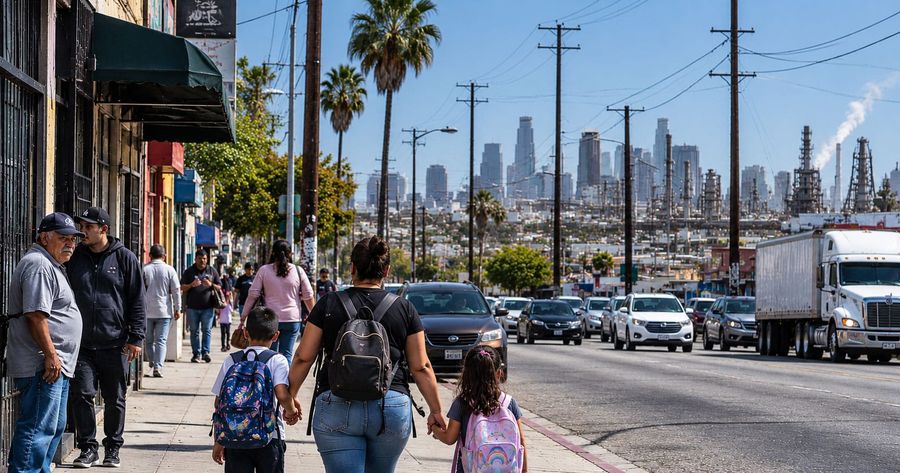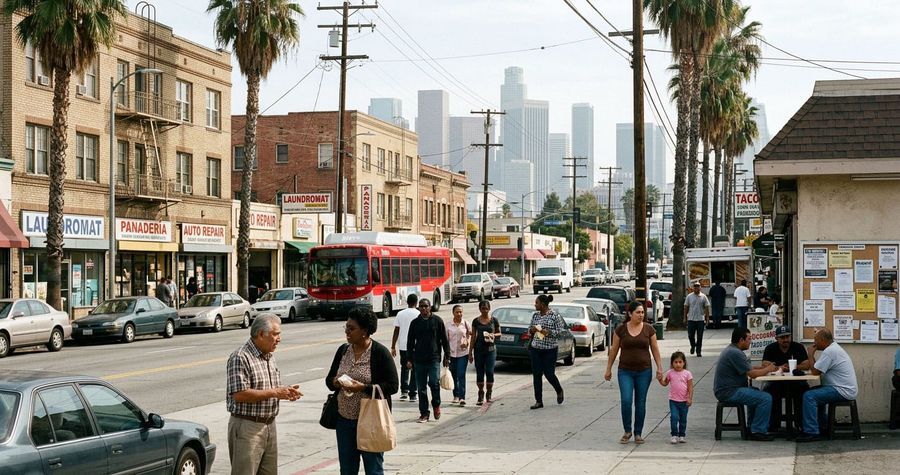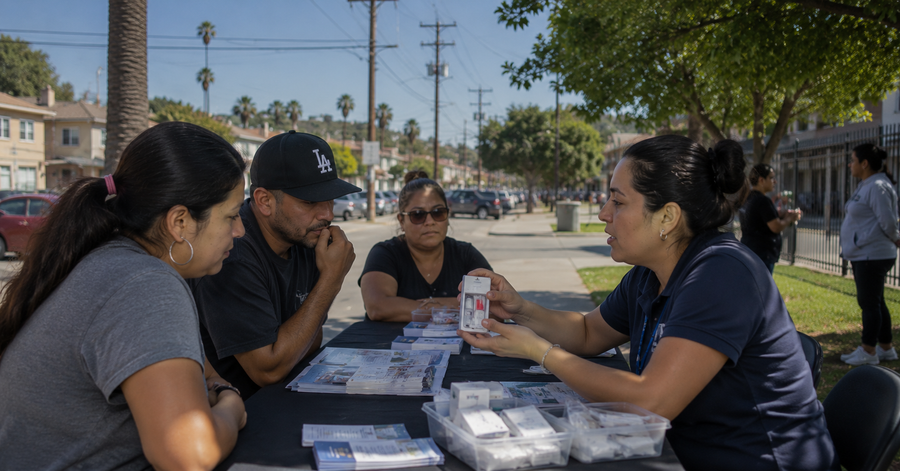

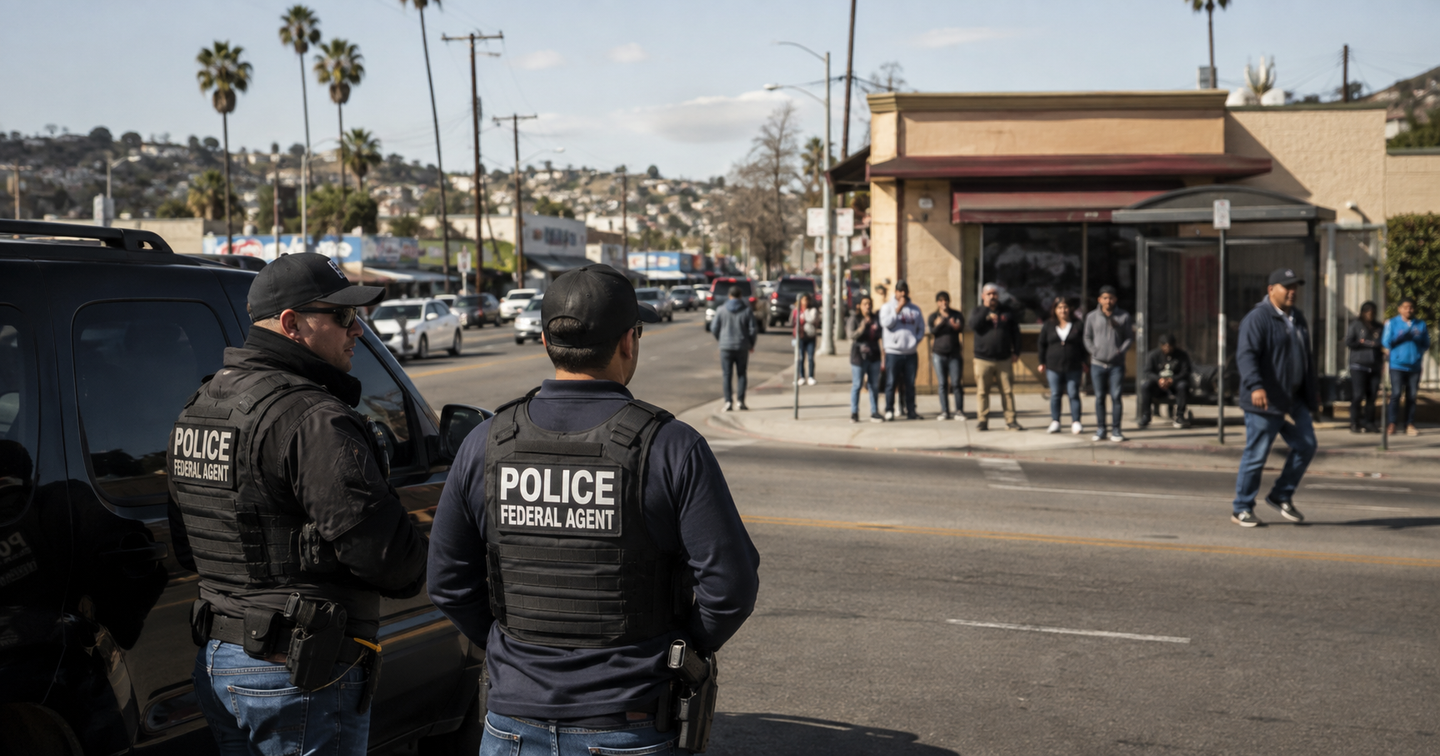
This week on The Signal, we examine the growing fight over immigration enforcement in Southern California. A federal lawsuit challenges allegations of unlawful arrests and racial profiling, while new reporting from inside Adelanto detention center raises questions about food, water, medical care and court-ordered reforms. We also speak with State Senator Sasha Renée Perez after her detention oversight bill was halted in Sacramento. Aired live on KPFK 90.7 FM Los Angeles, on August 15, 2026.
This is viewer supported news. Please do your part today.
TRANSCRIPT
This is a rush transcript. Copy may not be in its final form.
00:00:01:01 - 00:00:01:05
MUSIC INTRO
What?
00:00:01:05 - 00:00:12:05
MUSIC INTRO
The whole run by a handful of greedy bankers and CEOs who nobody elected. What can possibly last?
00:00:12:06 - 00:00:15:19
MUSIC INTRO
I'm going to tell you what I'm going to say.
00:00:15:21 - 00:00:23:12
MUSIC INTRO
But you really only have to remember you're two words.
00:00:23:14 - 00:00:26:10
MUSIC INTRO
Come on.
00:00:26:12 - 00:01:04:06
DINO
Hey, Los Angeles, welcome to another edition of The Signal. News, information and analysis. I'm your host, Dino, and I want to welcome all our listeners from all our listening areas, including 98.7 FM, Santa Barbara, 93.7 San Diego, 99.5 Ridgecrest, China Lake, and of course, online@kpfk.org and all across Southern California. And here at home in L.A.. By the way, slide, did you know that when you put together all of those listening areas, our total reach is somewhere just north of 20 million people, 20 million people.
00:01:04:06 - 00:01:26:06
DINO
Now, you know, of course, only 19 of those are listening to this program. That's of course, a joke, but we know that there's at least three folks listening right now, one of which is my mama, and the other one is my neighbor. So with that said, welcome to this other, this another edition of The Signal here on Kpfk in Los Angeles.
00:01:26:07 - 00:01:51:04
DINO
We're going to, jump right in this week because, you know, today we're covering yet again, this important issue that is immigration. It's going to be the thread running through much of this program, not because we're an immigration program or a news immigration program, but because that is what's happening right now in this country. A big ticket, hot ticket item.
00:01:51:06 - 00:02:20:15
DINO
And this week we had tremendous developments on this front in multiple areas, which is why, once again, we'll be bringing you some important updates, including including, bringing back State Senator Sasha Perez, who, was here with us last week talking about SB 995, a bill that would have helped, help regulate what's happening inside some of these detention centers.
00:02:20:17 - 00:02:45:05
DINO
And, just a few days ago, the, Assembly Appropriations Committee, I believe it was, ended up killing that bill. And we're going to find out why. We're also going to be, talking to, Ryanne Mena of the Southern California News Group, who as many of you have heard on this program before, is a reporter that regularly covers these detention centers, particularly Adelanto.
00:02:45:10 - 00:03:15:22
DINO
She'll be giving us an update on that. And we're also going to bring in Sandra Bhatnagar from ACLU, Southern California, to give us an update on the Vasquez Perdomo federal court case, which itself had some important developments this week. And we'll be waiting to hear on a decision coming out of the district court. Any time now. But first, we're going to get started with Andrea Valdez of Gallo News, a Sacramento reporter and regular contributor to this program.
00:03:16:00 - 00:03:40:14
DINO
And she herself has been very busy since we last brought her on during our special politics Tacos and beer segment covering the politics of California. So we're going to go from Sacramento to federal courts to Adelanto, ice Processing center, and then back to Sacramento with State Senator Assessor Ron Perez. But let's, yeah, let's get started with Andrea to help us set up this table.
00:03:40:16 - 00:03:49:19
DINO
We're going to bring in Andrea with color news and walk us through some of the latest developments coming out of the Sacramento area. And Andrea, welcome back to the Signal.
00:03:49:21 - 00:03:51:20
ANDREA VALADEZ
Hey, I know I'm always good to be here.
00:03:51:22 - 00:03:58:14
DINO
No thank you. And by the way, on behalf of the crew here, we want to wish you a happy belated birthday.
00:03:58:16 - 00:04:00:06
ANDREA VALADEZ
Oh, wow. Thank you.
00:04:00:08 - 00:04:25:04
DINO
We'd sing it, but I believe we would be violating some sort of, copyright laws or something, right? Yeah. I'm getting a good a couple of head nods. There are. So, Andrea, you recently reported, let's let's start in San Bernardino, where you recently reported that the city council was prepared to consider a new Justice Department grant program offering potentially tens of millions of dollars for policing and surveillance.
00:04:25:06 - 00:04:53:16
DINO
But there was a major condition attached. Participating cities would have to support federal law enforcement operations, including immigration enforcement. Then I, that item was ultimately pulled from the council agenda, and it remains unclear whether it will return. So the question for you, as somebody who's covered this, what exactly happened there and what does this tell us about the pressure local governments are facing when federal funding becomes tied to cooperation with immigration enforcement?
00:04:53:18 - 00:05:26:14
ANDREA VALADEZ
Right. So, yeah, what happened there was the San Bernardino chief of police, Darren Goodman, he submitted this resolution, this agenda item to the city council, basically asking them to allow him to apply to the grant, for the city. So, like you said, cities that were selected for the grant would have received, you know, millions and millions of dollars to implement certain priorities that are, you know, set out by the Department of Justice.
00:05:26:14 - 00:05:55:19
ANDREA VALADEZ
So these are things like hiring and retaining police officers, purchasing surveillance funding so that those are things like drones and artificial intelligence cameras and systems. But really, the top line priority there, and in fact, it was the number one priority laid out in the grant was that cities that are selected must agree to in or help law enforcement operations, including immigration enforcement.
00:05:55:21 - 00:06:00:21
DINO
Now, do we know why this was eventually pulled back?
00:06:00:23 - 00:06:37:08
ANDREA VALADEZ
I think there are you know, there are some guesses. I spoke with the public information officer with the city of San Bernardino, and, and that was on August 5th. So I reported on the story August 4th, on August 5th, the day that the council was supposed to hear this item and vote on it, it was pulled. And that could be most likely is directly from the backlash and the outrage that the city council got when we started reporting on this, when this became known, there was a lot of, especially on social media.
00:06:37:08 - 00:06:58:07
ANDREA VALADEZ
There was a lot of backlash, a lot of people very upset that the council would even consider this. And I do want to say, since then, in the last few days, the city council has said they will not take up the item they will not vote on it. The city will not be applying to this grant so that, you know, public backlash did work.
00:06:58:09 - 00:07:00:13
ANDREA VALADEZ
The council is not going to be touching this now.
00:07:00:18 - 00:07:28:13
DINO
So it sounds like, in the case of San Bernardino, one point for the community, at least in that particular issue. So another, topic, I believe last week you reported on a broader package, of bills that were being advanced or advocated for on behalf of the California Latino Legislative Caucus aimed at increasing transparency, accountability, protections inside immigration detention facilities.
00:07:28:13 - 00:07:48:05
DINO
And I chuckle because this has been a hot topic here today, in fact, and we'll be covering it later in the hour. But just before we went on air, we had folks who became aware of this topic around SB 995 being killed in the, I believe it was the Assembly Appropriations Committee, but we'll skip that for now.
00:07:48:07 - 00:08:18:08
DINO
We do, however, have a few other bills SB 423 from Lina Gonzalez dealing with transparency and access to detention facilities that seems to have cleared, appropriations SB 942 Ana Caballero essentially creating a civil detainees bill of rights that seems to have cleared, and two additional bills, including 2465 and 1633, both on the Assembly side from Ortega and Haney, respectively.
00:08:18:10 - 00:08:43:22
DINO
Which the one would restrict certain state grants, loans and tax credits for businesses tied to private detention, and the other would impose 50% gross receipts tax on private detention operators. And all of these seem to have cleared. So the question here, Andrea, and your read on this and haven't reported on this, when you look at these bills collectively, what what is Sacramento trying to do here.
00:08:43:23 - 00:09:13:09
ANDREA VALADEZ
Yeah. So it's pretty clear Democratic lawmakers specifically are really trying to do anything they can and use any resource they can, whether that be, like you mentioned, Lena Gonzalez's bill, to pull those 901 records to using tax policy to try to hit hit them where it hurts, so to speak, and really collect back some of that money that these pension owners are making.
00:09:13:11 - 00:09:43:15
ANDREA VALADEZ
Or lawmakers are just trying to do anything at this point that can kind of rein in what private detention owners are doing in their centuries. What we're seeing out of centers like Adelanto and Otay Mesa. But you know, the real question here is, and something that the Latino Caucus has touched on is they are hopeful that all of these bills will apply to all detention centers, even the ones that are owned by the federal government.
00:09:43:15 - 00:10:04:18
ANDREA VALADEZ
Right. It's unclear if they will apply, because that that is federal land and federal oversight. But they have made it clear they are ready to defend these laws in court if they do get passed and signed by the governor eventually. And I think we're going to be seeing a lot more lawsuits and a lot more court fights over this.
00:10:05:00 - 00:10:31:21
DINO
And it does sound like there is some speculation that indeed, the Department of Homeland Security has purchased some of these, some of these properties to actually bypass or avoid what you're pointing out, which is a good as an excellent point, which is, is state law applicable on otherwise, federal land? And just to put it in context, the Department of Homeland Security purchased the or Di Messer Detention Center in San Diego for a whopping $739 million.
00:10:31:21 - 00:10:57:23
DINO
The California City Detention Facility in Kern County for a comfortable $732 million, and the core civic for roughly 1.5 billion, dollars. So this is something that we'll be keeping an eye on and, hopefully, come back to you once we start finding out whether or not these laws will indeed be applicable. We did mention, one bill from the package that didn't make it through.
00:10:57:23 - 00:11:19:05
DINO
And again, we will have Senator Sasha Rene Perez joining us shortly. And that's the SB 905 from Senator, Sasha Perez. Any indication on your end as to why that bill was, and we'll be asking this of the senator, but why was that one conveniently left out?
00:11:19:07 - 00:11:46:04
ANDREA VALADEZ
Yeah, well, the word on the street here is that that one did come down to expenses. It's it's a it was in the Appropriations Committee. So the Appropriations Committee deals with bills that will have a fiscal impact on the state. So the official line is maybe it was just too expensive, right. I'm sure I'm sure, Senator, but as will have more to say about what she feels about that, a lot of these bills are expenses.
00:11:46:05 - 00:11:52:03
ANDREA VALADEZ
So it's interesting that that is one that was left out. She was lobbying for that for a long time. So.
00:11:52:05 - 00:12:14:20
DINO
Yeah, we had her here just last week. And when we heard the news, over the week, we immediately reached out and she's agreed to join us shortly. Interestingly enough, when we promoted this particular bill, I actually had a call come through earlier and somebody, saying asking very specifically, can you please tell us who killed that bill because this particular voter was very upset?
00:12:15:01 - 00:12:40:13
DINO
We'll be coming back to that. And one more great story. Just I think earlier this week as well, headline help wanted leave now, Andrea, walk us through this latest story, I think. Had you published this maybe a day or so ago, I might be wrong. About the historical context. Is this unique? You know, historical context of the immigrant experience here in California?
00:12:40:13 - 00:12:50:07
DINO
Mexican workers were recruited when their labor was needed, particularly through the Placidia program, and then became targets for removal. Tell us about that.
00:12:50:09 - 00:13:15:12
ANDREA VALADEZ
Yeah. So I had, an opportunity to see the the new exhibit. Help wanted leave now, a day before it opened to the public. And. Yeah, like you said it, it mainly focuses on the bracero program and how mainly Mexican workers were recruited here during and after World War two, when the country and the state were experiencing heavy labor shortages.
00:13:15:14 - 00:13:45:15
ANDREA VALADEZ
These workers really built this state, especially, and then a few years later, President Eisenhower mass deported these same workers that, you know, the country once so desperately needed. And it was it was very eye opening, the way that the exhibit circles back to the mass deportations of today. And, you know, the Trump administration has pointed to Eisenhower's campaign as a model for its own agenda.
00:13:45:17 - 00:14:08:13
ANDREA VALADEZ
So it really was interesting to see just how much history repeats itself. And it was it was very eye opening, a little bit devastating. I would encourage anyone to go check it out. There's a lot of really important information there that I think we should all just be aware of and remember.
00:14:08:15 - 00:14:31:10
DINO
And Andrea, what do we have to look forward to in the coming days, with your, your work? And once again, we're talking with Andrea Ballard is our reporter. Sacramento reporter from Color News, who joins us periodically to give us the latest coming out of Sacramento. I know that we have elections yet again coming up, and we'll be resuming our series politics, Tacos and Beer, where you in the past have joined us.
00:14:31:10 - 00:14:38:16
DINO
But is there anything in particular we need to look forward to or should be looking forward to as you continue to do your reporting?
00:14:38:18 - 00:15:00:15
ANDREA VALADEZ
Yeah, we'll definitely down the line. A lot of election coverage, actually have had the Fed on Steve Hilton. We're just here in Sacramento, once again kicking off their midterm campaigns. So there will be a lot more of that. I will be doing kind of more of a break down on which bills passed appropriations and which bills kind of got the ax.
00:15:00:15 - 00:15:08:00
ANDREA VALADEZ
There was a lot there, as I'm sure you can imagine. Yes. Yes. Lots of information to come.
00:15:08:02 - 00:15:27:13
DINO
Well, we'll be coming back to you. When we were thinking about, this week's episode and we knew that the, the appropriations, Act's, deadline was coming up. Yeah. I mean, gosh, what is it? Hundreds and hundreds of bills coming out of Sacramento. And where do you even start? So we appreciate you that summary of all of this.
00:15:27:13 - 00:16:06:08
DINO
Bill Carlo news reporting from Sacramento and covering immigration, California politics and the policies shaping immigrant communities across the state. Thank you, Andrea, for joining us. We hope to have you back soon. And folks, stay with us. I will continue this conversation when we come back. We move from Sacramento to California. Politics and the history of immigration enforcement and federal courts will be joined by Sandra Bhatnagar from the, who's the executive director of the ACLU of Southern California, for an important update on the Vasquez Perdomo case, the landmark case challenging the Trump administration's immigration enforcement practices here in Southern California.
00:16:06:10 - 00:16:26:03
DINO
And this week, there was a hearing, in federal court. And the plaintiffs have now asked the federal court to intervene over what they say is widespread pattern of unlawful warrantless arrests and discriminatory enforcement. This is an issue we've covered extensively on this program. So stay with us. We'll be right back after this break.
00:16:26:03 - 00:16:59:09
DINO
You're listening to The Signal news, information and analysis. I'm your host, Dino. We now turn to the case. Or to a case we've been following closely on this program from. Its very. From the very beginning. The Vazquez Perdomo case, the federal lawsuit challenging the Trump administration's immigration enforcement operations here in Southern California. Now, as a matter of full disclosure, I am currently working with an organization during the week that is a plaintiff organized a plaintiff organization or plaintiff in this suit.
00:16:59:11 - 00:17:29:06
DINO
But today here, we're covering this, from the, perspective of the signal news, information and analysis. At the core of this particular case is this fundamental question can federal immigration agents stop somebody based on what they look like? The language they speak? The kind of work that they do or where they happen to be, whether it's standing at a particular location or maybe, outside of a carwash or another location of that sort.
00:17:29:08 - 00:17:56:06
DINO
The plaintiffs argue that Ice and Border Patrol have engaged in a widespread practice of unlawful stops, warrantless arrests, and racial and occupational profiling, particularly targeting Latino workers and the immigrant community at large. And this case has already traveled quite the road. The plaintiffs initially won protections in federal court. Last year, those protections were largely upheld in the Ninth Circuit Court of Appeals.
00:17:56:08 - 00:18:38:10
DINO
Then the Supreme Court stopped and through a well-known now shadow docket where they kind of do a lot of their secret work, I would say, stayed the lower court's order while the litigation continued. But the case didn't end there. Discovery continued. Attorneys obtain additional government records, internal communications, depositions, and evidence from the enforcement operations, and they say they now have evidence that shows a much broader pattern of behavior, much more than just a handful of isolated incidents where indeed, violations of people's rights have occurred.
00:18:38:12 - 00:18:58:02
DINO
Their argument now is that the evidence demonstrates an ongoing pattern and practice of unconstitutional enforcement. Joining us to break all of this down, is Chandra Bhatnagar, executive director of the American Civil Liberties Union, the ACLU of Southern California. Chandra, welcome to the Signal.
00:18:58:04 - 00:19:00:01
CHANDRA BHATNAGAR
Thank you. Dino, thank you so much for having me.
00:19:00:03 - 00:19:18:14
DINO
So let's start with Thursday, having given our focus. And again, we've been covering this since it started over. Now a year ago. In fact, we just came up on that year anniversary, I believe. So let's start with Thursday. What happened in court and what were the plaintiffs asking the judge to do?
00:19:18:16 - 00:19:40:03
CHANDRA BHATNAGAR
Absolutely. Before I answer that, I did want to take a moment to acknowledge the passing of the great Samuel Pass. Who we lost very recently. He was an advocate for justice, for victims of police brutality. He was a former board member of the ACLU National board, as well as of, the ACLU of Southern California board of directors.
00:19:40:05 - 00:19:59:02
CHANDRA BHATNAGAR
And he spent decades of his life fighting these kinds of fights, defending immigrants, defending, victims of governmental abuse, and fighting for justice and equality. So I did want to acknowledge Sam's passing and, his important legacy, and memory. And we honor him by conducting this work and never giving up the fight for justice.
00:19:59:04 - 00:20:22:12
DINO
And my condolences to you and the entire ACLU team. Yes, indeed. Someone was, a longstanding, early, experienced civil rights, trial attorney here based in Los Angeles. Longstanding member of the community, wishing, the ACLU family and his family the best of, wishes during this time.
00:20:22:14 - 00:20:45:02
CHANDRA BHATNAGAR
Thank you. And in his honor, let me say a little bit about what we were asking for in on Thursday. So we were essentially asking the court, the justice as background and as you your outstanding outline in the beginning, spoke to, we were asking the judge to block what are unlawful and warrantless arrests.
00:20:45:04 - 00:21:11:04
CHANDRA BHATNAGAR
So, as background, before an officer, an immigration officer is allowed to make a warrantless civil immigration arrest, they have to establish two things. The first thing they have to establish is that they had a probable cause, that the person is unlawfully present. And then the second thing that they have to establish is that the person is likely to escape before those agents can get a warrant.
00:21:11:06 - 00:21:34:19
CHANDRA BHATNAGAR
And it is importantly not an Or it is an end, meaning both of those forms have to be satisfied before they are empowered to make an arrest. And what we were arguing is that they have not been doing that, and they've been making unlawful arrests throughout Southern California. And your viewers and, folks who are in our communities have experienced that for 14 months.
00:21:34:19 - 00:22:01:09
CHANDRA BHATNAGAR
For 14 months, we've been saying they're making unlawful arrests. For 14 months, we've been saying they're engaging in racial profiling. And the government has denied it the entire time. But as you as you also mentioned, the information that we've unearthed in our discovery, and the evidence that the government's own evidence that they've provided establish those incontrovertibly that they have, in fact, been engaging both in racial profiling and in, unlawful arrests.
00:22:01:09 - 00:22:03:13
CHANDRA BHATNAGAR
And so that's what we were asking the judge to take up.
00:22:03:15 - 00:22:36:15
DINO
So then what? Walk us through this. Right. So compared to last year, right when the original case went to had its district court victory, then the Ninth Circuit, then the Supreme Court, by the way, for listeners who may not recall or, our new listeners who have chimed in since the last time we covered this particular case, can you give us a very brief overview of what is the shadow docket, where this case, particularly for lack of better terms, lost or had it stay before?
00:22:36:17 - 00:22:59:15
CHANDRA BHATNAGAR
Sure, sure. So I'll take it back kind of from a calendar year standpoint. Last summer, the Trump administration begins their assault on immigrant communities, really putting Southern California in the crosshairs, and they unleash ice in our communities. They devastate, folks. They tear families apart. They grab people from their workplaces. We all live through this. We all know what happens.
00:22:59:16 - 00:23:28:07
CHANDRA BHATNAGAR
This lawsuit was filed initially on behalf of farm workers, car carwash workers, day laborers, other folks who were directly impacted and who were courageous enough to stand up and say this is unlawful, this is unjust, and we're going to resist this. We sought something called the temporary restraining order, which is an order that the court grants when the abuse is so, egregious that you don't you can't wait for the trial or the litigation to take place.
00:23:28:07 - 00:23:47:16
CHANDRA BHATNAGAR
You can't wait for the trial to happen. You need immediate action by the courts to stop the practice that was granted. And that was upheld by the Ninth Circuit, which the appellate which is the appellate court, that heard the district courts, you know, kind of after the government appealed the district court's decision, the Ninth Circuit upheld that decision.
00:23:47:18 - 00:24:09:23
CHANDRA BHATNAGAR
The shadow docket is the Supreme Court's docket where they take up matters like this, not on the merits, but they essentially review the record. And they haven't. They don't form a judgment on what the actual result of the case is going to be in that shadow docket without an opinion. The the Supreme Court issued a stay on that temporary restraining order, meaning that it was no longer in effect.
00:24:10:01 - 00:24:33:10
CHANDRA BHATNAGAR
And then there was a concurring opinion by Justice Kavanaugh, a very infamous opinion by Justice Kavanaugh, speaking only for himself, not speaking on behalf of the court, where he, used language that many folks would, conclude was an endorsement of the validity of the constitutional validity of racial profiling. He's since walked that back. We can get into that a little bit, but that is not the voice of the court.
00:24:33:15 - 00:25:09:03
CHANDRA BHATNAGAR
And that was simply a stay on the TRO. That happened in September of last year, right? Since September of last year, we have obtained a voluminous amount of information from the government through the discovery process in the litigation. And we are now, submitting a request for a preliminary injunction with that information until. And what does that information we we have 113 arrest records that we reviewed, and 80% of those arrest records contained no flight risk, assessment or had just kind of random language that, that they just use all the time.
00:25:09:03 - 00:25:36:17
CHANDRA BHATNAGAR
We can call boilerplate to justify the pretextual nature of that, of that, behavior. So essentially, we've discovered that agents are arresting people without asking basic questions about their jobs, about their families, about their homes, any type of community that is unlawful. And this is not a situation where the government doesn't know what they're supposed to do. It is them being aware of what their obligations are and choosing to ignore them and choosing to evade them.
00:25:36:19 - 00:25:50:14
CHANDRA BHATNAGAR
And this also contradicts what the lawyers for the government have been telling the court throughout this time that the government is actually doing so. It's both breaking the law and it's misrepresented the court misrepresenting to the court your compliance with the law.
00:25:50:19 - 00:26:38:03
DINO
And, Chandra, let me remind you, Chandra Bhatnagar is executive director of ACLU Southern California. We're discussing the Vasquez Perdomo litigation. The landmark court case that seeks to address the federal government, the administration's unlawful arrest of, in this case, Southern California, folks in particular, some many, if not most in the Latino community, who have become targets of the administration, who is sharing with us, Chandra, sharing with us that a review of recent records, 113 arrest records in particular, over 80% have shown that indeed, there has been some form of violation of these individual rights that folks or otherwise afforded, by the, laws of this country.
00:26:38:08 - 00:27:17:07
DINO
And, Chandra as we look at what the plaintiffs in this case are now arguing, and this is simply this collection of isolated encounters. But the evidence seems to demonstrate, as you pointed out, a widespread pattern in practice. And the record shows that about what is the record telling us? What can we be concluding from? By the way, folks, these are now public, files, federal court files and hearings are generally public by default, and most can be, access through the federal court, space pacer system or even physical files, if you so choose to do so.
00:27:17:09 - 00:27:36:00
DINO
But what is it that, what happens next? Right. We've through the discovery process, you've discovered that there is indeed a consistent pattern of illicit conduct by these agents. What is it that the judge is expected to do? And when.
00:27:36:02 - 00:28:08:21
CHANDRA BHATNAGAR
That's that's a great question. They can, you know, personally, I would want to emphasize that the, the government, the RFI is ongoing. First of all, just the folks know that the decision of the Supreme Court to stay that temporary restraining order, we are continuing with the case. We are arguing and we are fighting. And if it's reassuring at all, and I think it is sometimes because we we know that these things are happening, and then we hear then the denials from the government, the evidence we've obtained from the government corroborates what our communities have said all along.
00:28:09:01 - 00:28:49:20
CHANDRA BHATNAGAR
I really want to emphasize that because it's important that citizens are empowered to know that their voices matter, that people are documenting things that are happening and sharing that information. And for folks to be aware that this is a fight that is continuing. So the next steps after Thursday's argument, are really important to note that the judge did preview a tentative ruling that she was, considering issuing, which would be favorable to us, as the plaintiffs and the communities, including a dissent, tentative decision, that would certify a class protecting people in the Central District of California who have been arrested without a warrant, and without the required escape risk
00:28:49:20 - 00:29:09:22
CHANDRA BHATNAGAR
assessment. That is a tentative, ruling. No. Until it becomes an official ruling. So it's not a final order. Sure. So we are awaiting the court's actual written decision, which will incorporate the arguments that took place on Thursday. We hope that that will come soon. We expect in the coming weeks or months, that the, that the order would be issued.
00:29:09:22 - 00:29:39:06
CHANDRA BHATNAGAR
So that's the immediate thing. Beyond that, the communities, it's really crucial in this moment where we're confronting authoritarianism, that communities remain engaged and our fight continues. We need all of you to be part of that fight, and we need to fight that fight on multiple fronts. So I really appreciate the opportunity to speak about this case and the broader struggle, because it's so important that our our communities are educated and informed and given the tools to be advocates for equality, that we know that they can't be.
00:29:39:06 - 00:30:12:23
DINO
You know, Sandra, let's let's fast forward right. This is the morning of and we you everybody gets the email that says, you know title judge ruling. And, this may be the most important question that folks are listening. Again, we do have some listeners that are super dedicated in fact, I was getting phone calls here in the studio before we went on air about our next forthcoming segment with, Senator, State Senator Susan Wynette Perez and her bill, SB 905.
00:30:13:01 - 00:30:38:05
DINO
And, you know, we always get folks who say, I, you know, I need to know, you know, they're on that Mark Anthony status where they need to know ASAP. So if the courts grant this preliminary injunction, the plaintiffs are asking for what actually changes on the ground. What would Ice and Border Patrol be prohibited from doing? And what, what would they still be allowed to do?
00:30:38:06 - 00:31:10:05
CHANDRA BHATNAGAR
So that's a great question. The where the court to grant a preliminary injunction, the if and if the government were to comply with that preliminary injunction, it would require that all of the arrests that are made are actually lawful, and it would dramatically reduce the number of people who were being taken into custody by the government because they'd actually have to follow the law, they'd actually have to follow the Constitution, and it would ensure that people are treated more fairly than they are currently.
00:31:10:10 - 00:31:35:00
CHANDRA BHATNAGAR
And it would reduce, racial profiling as well. And I do want to emphasize we didn't argue the racial profiling, point on Thursday that will be argued in September. And, hopefully we'll have an opportunity to speak about that as well. You know, but the evidence that we've unearthed over the past many months and you're part of this, this, struggle, and have been such a great partner.
00:31:35:02 - 00:31:56:11
CHANDRA BHATNAGAR
We the record, the arrest records, the body camera footage, the, recordings and transcripts of text messages, things of that nature. These are all things that we obtained. And I'm not going to use the racial slurs, but there was a racial slur that they use, which is an old one that goes all the way back to the present program.
00:31:56:11 - 00:32:16:23
CHANDRA BHATNAGAR
As I heard your, prior guest talking about referring to people of Mexican and, and Latin American ancestry, that's a slur that they're using in text messages. We're going to go pick up these blanks and and round them up. There's another slur that is one that folks may not even be familiar with. It's called talk. And I will use that one because it's something that folks should understand.
00:32:17:05 - 00:32:36:02
CHANDRA BHATNAGAR
That is the sound of a flashlight striking someone over the wall. So I ask you a question what how prevalent is the culture of abuse in a law enforcement agency where the sound of that abuse is so widespread that it has its own slur?
00:32:36:05 - 00:32:38:18
DINO
Right, right right right right right. Oh my God.
00:32:38:22 - 00:32:55:04
CHANDRA BHATNAGAR
How widespread is it that the speaker of that or the texture of that understands that slur and the person who receives it also understands that slur. So everyone knows what that sound is and how that refers to people. How dehumanizing is that?
00:32:55:06 - 00:33:17:11
DINO
Right? Well, chatter, we're going to have to leave it there. This is incredible an incredible update. We appreciate you joining us, Chandra, about Nigar, executive director of the ACLU of Southern California, joining us, following this past Thursday's federal court hearing on the Vasquez freedom case. Sandra, we definitely want to have you back as this case develops and maybe when we do get the ruling, you can join us and give us an update them as well.
00:33:17:12 - 00:33:18:21
CHANDRA BHATNAGAR
It be my pleasure. Thank you again.
00:33:18:23 - 00:33:34:04
DINO
Thank you. Folks. Stay with us. When, when we return, we'll be joined by Ryanne Mena, who is actually going to give us an update on what's going on down in other Orlando as we continue this conversation, the special hour dedicated to all things, attacks on the people by the
00:33:34:04 - 00:34:04:04
DINO
I'm your host Tino. Joining us now is Ryan Manna, reporter with Southern California News Group. And we want to take a sharp turn back to the Adelanto detention center. Ryan is one of the reporters who has consistently covered, this facility and this topic in general. And this facility in particular, is privately operated by the Geo Group under contract with the federal government over the last several months, we've heard increasingly disturbing accounts from people being held there.
00:34:04:04 - 00:34:40:16
DINO
And in fact, it's Ryan's reporting who has brought us firsthand. Information that she has not only interviewed folks, both, through correspondence writing, but also video in which she has shown us the type of conditions they're experiencing, there, over the last several months, we've heard, not only of insufficient food, but sanitation problems, isolation issues, problems with access and clean water, and, unfortunately, multiple deaths in custody here in California.
00:34:40:18 - 00:35:08:14
DINO
There's been several deaths in some of these detention centers. Last month, U.S. District Judge Sunshine, Suzanne Sykes issued a sweeping preliminary injunction ordering immediate changes at Adelanto. Among other things, the court ordered 24 access to clean water, adequate food and sanitation, improvements to medical care and disability accommodations, among others, to help us, get this update going.
00:35:08:16 - 00:35:20:06
DINO
Is Ryanne Mena, a crime and public safety and immigration reporter with the California Southern California News Group? Rather, she's been covering Orlando extensively. Ryan, welcome back to the Signal. How are you?
00:35:20:08 - 00:35:22:19
RYANNE MENA
Thank you for having me back. Well, thank you.
00:35:22:21 - 00:35:40:16
DINO
So, Ryan, it's been a couple of weeks since Judge Sykes ordered the immediate changes. Based on the folks that you're talking to, give us, give us, some insight on what your experience and what you're hearing from folks inside. Has anything changed?
00:35:40:18 - 00:36:07:17
RYANNE MENA
Yeah. So I've been talking to numerous people detained inside the Atlanta Ice detention center, asking them if they've seen any changes since judge Sunshine. Sunshine Sykes ordered these wide, major and immediate improvements, including clean drinking water, 24 hour access to clean drinking water, nutritious foods, other things. And people have told me that nothing has changed, that they are still receiving.
00:36:07:19 - 00:36:21:07
RYANNE MENA
They still have to wait 4 to 5 hours, to get drinking water, that they're still being served small portions of food that are sometimes spoiled or undercooked.
00:36:21:09 - 00:36:32:10
DINO
Your news organization actually obtained specimens, if I understand, if I, if I read correctly and had experts examined that, walk us through what you found.
00:36:32:11 - 00:37:07:13
RYANNE MENA
Yeah. So we obtained, a water sample from the Ottawa Ice Detention Center that contained fly larva, drain, fly larva that were fat that were taken from the Ottawa to ice processing center. And we were we took those to vector control experts who identified them as drain fly, larva. And, you know, people inside a long tail are telling me that these are the larva, the worm like specimens that are found in the drinking water.
00:37:07:15 - 00:37:35:02
RYANNE MENA
And, you know, people know everyone inside all along to have access to commissary to actually buy their own water bottles. So people who don't have the means to purchase clean drinking water are forced to drink this allegedly contaminated water. One person told me that he filtered the drinking water with his underwear, and that he. A few specimens of these alleged larva were found well.
00:37:35:04 - 00:38:00:04
DINO
And now the water is obviously disturbing enough. And what's been reported and what your news organization has discovered. But your reporting also suggests that this is simply a water problem. You're hearing about food, medical care, sanitation, access to recreation when you put everything together. What picture a detainees painting for you? As to what everyday life is like, there.
00:38:00:06 - 00:38:24:05
RYANNE MENA
Everyday life in Adelanto, is monotonous and it's always the same. And people are getting very little sleep. So people are woken up typically they say at around 5:00, for breakfast and people, the last count. So there are these counts that happen, like 4 or 5 times a day where people inside are locked in their cells while everyone is counted.
00:38:24:05 - 00:38:45:09
RYANNE MENA
And the last count of the day happens at like 1 a.m.. So people are getting like four hours of sleep on a regular basis, and people, people, people inside tell me that people often go hungry because they're not food served in a food, and that the food that they are served is, you know, as I mentioned earlier, spoiled or undercooked.
00:38:45:09 - 00:39:09:01
RYANNE MENA
People have told me that when they're served chicken, that it's, you know, kind of raw. Oh my God. And, you know, medical, medical care is another the biggest issue. One of the biggest issues I've heard from inside Adelanto to a delayed medical care, people receive that it takes weeks to see a doctor and that if you're experiencing a medical emergency, that even then facility workers don't respond promptly.
00:39:09:01 - 00:39:17:02
RYANNE MENA
That takes ten 15 minutes. Even when people are lying on the ground needing help. So life inside auto that people tell me is very difficult.
00:39:17:04 - 00:39:49:21
DINO
We're speaking with Ryan Mann, a crime and public safety and immigration reporter with the Southern California News Group. She's been covering Adelanto extensively, speaking directly with detainees, their families and documenting conditions inside the facility. She's sharing with us some of the direct reporting or direct, evidence and documentation she's been gathering by way of interviews, including video interviews, in which folks have described the conditions inside Adelanto, with everything from water, food and access to, medical services.
00:39:49:21 - 00:40:21:09
DINO
Something that, Ryan, something that you've recently, commented on or spoke to has been this idea of of living in a constant state of fear inside this facility. We've already had multiple deaths connected to various facilities across the country, including Adelanto. What are detainees telling you about this fear factor, particularly when it comes down to, getting medical attention or when they're sick or injured and sometimes they don't get any of this?
00:40:21:14 - 00:40:23:23
DINO
What is that like?
00:40:24:01 - 00:40:47:20
RYANNE MENA
Yeah. Over recent months, several people inside Adelanto told me that they're afraid that they're going to die inside. You know, they hear about these that's occurring in other facilities across the country, and they're worried that they're going to be the next in custody ice death because of the conditions inside, because of the lack of urgent medical care, home to medical care that people receive inside, that's not happening.
00:40:47:20 - 00:40:52:18
RYANNE MENA
And so people are worried that, you know, they're going to be the next one.
00:40:52:20 - 00:41:11:03
DINO
So as we close, Ryan, and again, I want to thank you for joining us. You know, we now have a federal court saying these conditions have to change. We're supposed to have independent monitors being put in place. At the same time, the federal government is appealing the injunction, arguing that many of these standards are already being met.
00:41:11:03 - 00:41:31:13
DINO
And in fact, our next guest, who will join us very soon, State Senator Sasha Rene Perez, actually was looking to mitigate some of these issues in one of her bills or the bill that sought to do this, unfortunately, seems to be stalled in the, Appropriations Committee. But back to your report. And what should we be watching out?
00:41:31:15 - 00:41:43:16
DINO
In the next coming weeks, whether it's from your reporting or in general, to determine whether or not this court hearing is likely to happen, or is there anything you can point us to or our listeners to to keep an eye out for?
00:41:43:18 - 00:42:17:19
RYANNE MENA
Yeah. Well, I would suggest paying attention to the news around this ongoing lawsuit. With the preliminary injunction, what happens next with this, with the suit. And I would also be paying attention to news reports from journalists like myself who are covering the Orlando facility, because we're the ones who are talking to people inside who are getting the news of what's apparently happening inside, what's actually going on in the ground, despite, you know, what the government says is happening inside, which is a, you know, stark contrast to what people tell me is happening inside.
00:42:17:21 - 00:42:27:10
DINO
Ryan man, a news reporter with Southern California News Group. Ryan, if folks want to follow you or learn more about your reporting, where can they do that?
00:42:27:12 - 00:42:35:04
RYANNE MENA
Yeah, people can find more of my work on my Instagram @ryanne_mena, or on the DailyNews.com.
00:42:35:06 - 00:42:58:19
DINO
Thank you, Ryanne Mena, for joining us. We here at The Signal do follow your work, which is how we've connected. We look forward to having you back. Thanks. And keep up the reporting. Okay, folks, we're gonna now transition to our next guest, who I understand is on hold. And I want to, thank, state Senator Sasha Renée Pérez for joining us once again.
00:42:58:19 - 00:43:25:08
DINO
I know we had you just last week. We were, covering the news of your bill, SB 995, which, well, unfortunately, has been held in Appropriations Committee, effectively stopping the bill from moving forward this year. And before I ask you to give us a recap on what that bill was, I do want to share with you, Senator, that we had a caller when we did a forward promotion of this segment.
00:43:25:10 - 00:43:42:03
DINO
We had a caller call in the studio, and they said to me, you know, make sure you tell everybody who held up this bill and so you seem to have the support of the community out there. Welcome back to the Signal. Senator Sasha and I. Perez.
00:43:42:04 - 00:43:47:09
SASHA RENÉE PEREZ
Thank you. Thank you for having me, Dana. I really appreciate it. And excited to be back on.
00:43:47:11 - 00:44:18:12
DINO
So, Senator, let's start there. Remind us what your bill I mean, I don't know if you've had a chance if you had a chance to listen to our previous two segments, I in fact, the whole program has in part inspired by this topic, we rededicated, in fact, we I think we were able to get you on the line and your stuff not just yesterday, but we were able to redesign the program this week to cover both the Vazquez Perdomo immigration case, which is in part leading to these arrest leading to these detention centers.
00:44:18:14 - 00:44:25:17
DINO
And then, of course, this bill. But walk us through what the bill was intending to do, had it passed.
00:44:25:19 - 00:45:19:20
SASHA RENÉE PEREZ
So my bill, SB 995, the Mr. McCone Justice Act, would have created an oversight and regulatory framework at the state level to enforce against privately operated detention facilities across the state. And it would have been really key because it would have given California Department of Public Health the authority to be able to enter these facilities, ensure they are meeting basic public health and public safety standards, issue fines and citations, and when we see repeat offenses, allow for California Department of Public Health to communicate to their insurance companies that these companies are no longer in compliance with basic state regulations around public health and public safety code.
00:45:19:22 - 00:45:45:22
DINO
Now, Senator, let's get into what's underneath this decision. Right. I understand that, walk us through very briefly, if you can, Senator, what this process is like right away, I think our most of our audience, you know, certainly our team here at The Signal follows politics enough to understand that a bill is introduced. It goes to these different committees, and it's eventually voted on on one chamber, another chamber.
00:45:46:00 - 00:45:52:05
DINO
Give us the ABCs of what this process is like and where and why. Sometimes these bills are held up.
00:45:52:07 - 00:46:17:05
SASHA RENÉE PEREZ
Yeah. So the appropriations process and, and both houses is a little bit like a black box. And so and that's part of the reason why I think members of the public find it so confusing. What happens is all of the bills that come to that committee, they need to be pulled out of, what we refer to as the suspense file.
00:46:17:05 - 00:46:40:00
SASHA RENÉE PEREZ
If they are, if they are at a cost over a certain amount of money. And so, so ball a bill is not pulled, then it dies in appropriations. And so what happens is there is an appropriations hearing. Each member that has bills before that committee will have their bills read the bills that are read, make it out. And the bills that are not read do not make it out.
00:46:40:00 - 00:47:07:07
SASHA RENÉE PEREZ
They're held in committee and they go on to die. And so that is part of the reason why the decisions that happen in appropriations can feel so confusing to folks and even to the authors. Oftentimes, I have to tell you, for myself, me and my entire team were completely shocked and blindsided by this decision. We didn't have any sort of indicator that this bill was going to die.
00:47:07:07 - 00:47:38:14
SASHA RENÉE PEREZ
It received unanimous support on the Senate floor, including from Republicans. The Senate, the former Senate minority leader of the Republican Party, moved the bill in the Senate House Committee. We had a very, very, private, powerful conversation about the need for us to take action as a state in this space. We had no opposition. It was really, really shocking to see, this bill be killed.
00:47:38:16 - 00:47:56:10
DINO
Now, this is an interesting and I appreciate you given us that, walking us through that because as we when we first heard about it, we too were really caught off guard by this because that's been a quick picture for the audience. And what makes this so interesting is the assembly chair, if I understand correctly, is Buffy Wicks.
00:47:56:12 - 00:48:18:09
DINO
Is that is that right? In the she has a demonstrably progressive record, particularly on immigrant and civil rights. But, you know, so a lot of us caught us, as you said, we were quite caught by, by surprise. Here's the thing that kind of is catching me a little bit off guard here, Senator. You tell me if this is something I might.
00:48:18:09 - 00:48:49:22
DINO
Am I swimming upstream on this? The decision to stall SB 995 should also be measured by the cost of doing nothing right. The Assembly Appropriations Committee may calculate what stronger oversight of immigration detention centers cost to state. I get that, but where is the calculation for the cost of inaction? Every delay carries its own price. I mean, the continued risk of health, safety, due process, basic human dignity inside these detention facilities.
00:48:49:22 - 00:49:15:23
DINO
We just heard from a reporter who's describing her video documentation of folks finding worms in their water. You know, the cost of inaction. It allows existing problems to compound and potentially become more difficult and expensive to correct. And it means losing an opportunity right now to establish meaningful accountability at a time when immigrant detention and enforcement is expanding.
00:49:16:01 - 00:49:42:11
DINO
So when somebody such as the chair in this case, you know, chair, Wicks decides to stop this, is there any recourse, is there something that the audience or the community can still do to support such a thing? Because, again, the cost of inaction is infinitely a lot more expensive, especially considering people are dying in these detention facilities.
00:49:42:13 - 00:50:14:16
SASHA RENÉE PEREZ
You know, do you know, you're going to make me emotional with everything that you just said? Because I could not have said it better myself. The cost of inaction is insurmountable. And it is not just the people that are dying inside of these facilities. It is the people that are still sitting there that are suffering. You know, Matthew McCone, who this bill is named after, has gone out of her way to introduce me to individuals that she met during her time while she was detained at the California City Detention Center.
00:50:14:18 - 00:50:41:18
SASHA RENÉE PEREZ
And you know what I've heard directly from them, as well as other people that I've met all across the state that have been held in these facilities, is that this bill for them was a major sign of hope. And, you know, something that they could look towards to say, there's going to be justice here for me. There's going to be justice here for the people that are still held inside and who wanted to see something done here.
00:50:41:20 - 00:51:05:19
SASHA RENÉE PEREZ
I, you know, I but what people will tell you is that the Appropriations Committee process, right. It's it is one that is making an assessment based off of cost. And that is sort of that is how we are supposed to approach that process. And so the California Department of Public Health did find that this bill would have a high cost.
00:51:05:19 - 00:51:28:03
SASHA RENÉE PEREZ
We saw that they priced it at too high of a cost. And so my office actually pushed back and gave more accurate numbers. We sat down and we did an assessment ourselves to argue that we thought that they were assessing it way too high, but we also made the case exactly as you just said, that we cannot place a cost on saving human lives.
00:51:28:05 - 00:51:55:04
SASHA RENÉE PEREZ
And that's what nine, nine, five is trying to do now in terms of next steps and what can be done. You know, I'm continuing to follow up with my leadership to ask about what happened here and to say that we need to take action. We cannot just allow this bill to die. That is simply unacceptable to me. And people might tell you that the rules are that that's it and that nothing else can take place.
00:51:55:06 - 00:52:23:10
SASHA RENÉE PEREZ
Well, I have watched during my short time in Sacramento over the last 20 months, that that building is willing to move mountains, to waive rules, to do things differently when it wants to get something done. And I cannot think of a more pressing issue, a more pressing humanitarian issue impacting our entire country as well as our state than this one.
00:52:23:12 - 00:52:47:01
SASHA RENÉE PEREZ
So we need to take action, and I am not going to let this go. I am so hurt and so shocked and flabbergasted, and I refuse to allow for us to just say, well, that's it and it's over. It is not over. We are going to continue to push, and we're going to continue to fight every single step of the way.
00:52:47:01 - 00:52:52:02
SASHA RENÉE PEREZ
I want to see something done this year, and I'm going to make sure that that happen.
00:52:52:05 - 00:53:34:14
DINO
And, Senator, I applaud I applaud your courage. Because we know we've covered this topic here on the signal. There's additional billions coming into this operation that we are we know we are expecting the administration to dump, billions of dollars additional dollars into these operations. That will inevitably lead to a lot more persecution, a lot more incarceration, a lot more detention in the facilities that our reporter Ryan Menor has demonstrated prove to us are deficient, particularly at the intersection of public health and the well-being of individuals.
00:53:34:14 - 00:53:57:04
DINO
So, I too I'm a bit flabbergasted that this, did not go through, what does happen. So let's let's for a second, as we prepare to, go out here, Senator, what does happen if, in fact, the leadership in the appropriation committees decides not to pull this out, which they still can? We know that they still can't do that.
00:53:57:06 - 00:54:03:22
DINO
But if they decide not to, it's held into now what is called a two year bill. Is that accurate?
00:54:04:00 - 00:54:11:21
SASHA RENÉE PEREZ
Well, no. So that that is another, another part of of the issue with this. We are at the end of the two year cycle.
00:54:11:21 - 00:54:12:09
DINO
Already at.
00:54:12:10 - 00:54:43:04
SASHA RENÉE PEREZ
The time. Oh man. Yes. And so this any all bills need to make it off of the floor, into the governor's hands by August 31st. That is the deadline. And that's the deadline that we are working with. If there's not action taken this year, we will need to take it next year. But I, I believe in the depths of my soul and in my gut that this was a mistake.
00:54:43:06 - 00:55:17:18
SASHA RENÉE PEREZ
And I want to see what can be done for us to take action here. And so our office is reaching out or reaching out to leadership to say this is an urgent crisis. And, you know, I've already heard I've had over 100 people contact me on social media just completely shocked that this bill died. There were people that traveled up from Los Angeles to speak during committee hearings that watched the Senate Health Committee like, nobody anticipated this happening, and certainly not me.
00:55:17:18 - 00:55:26:00
SASHA RENÉE PEREZ
So I, I, I am going to work to see what we can do in these next two weeks.
00:55:26:02 - 00:55:46:11
DINO
Well, Senator, how can the community, how can the dino nation here at the signal, learn more about this? Where can they reach out if in fact they do? And just as a matter of, for transparency, our office did contact committee chair, late yesterday, and, as of time of broadcast, we had not heard back.
00:55:46:11 - 00:56:02:07
DINO
We will once again reach out, during this next week and hopefully be able to talk to the committee chair on this issue. But for now, where can our members of the Dino Nation reach out and support a bill? Or if they have question?
00:56:02:09 - 00:56:35:23
SASHA RENÉE PEREZ
You know, I would say if you are passionate about this issue, if this issue resonates with you of SB 995, the missing the Con Justice Act was a bill that you cared about. Reach out both to leadership as well as to the governor's office, and let them know that you want to see California take action on this issue, that California needs to do everything in its power to create oversight and regulation of these private detention facilities, and that this is an issue that you care deeply about.
00:56:35:23 - 00:56:49:10
SASHA RENÉE PEREZ
It will make a difference. It will make an impact. And if you're interested in reaching out to our office to, express their support, want to submit a letter to us, please do that as well. Wonderful.
00:56:49:10 - 00:57:09:13
DINO
And with that, I want to thank, Senator Self-serving Perez, for joining us once again. And thank all our listeners, our crew, our staff, Sly rivers, our producer, our Nella Barbara, who is pushing me out of the studio as we speak. And thank you all for tuning in on this, latest episode of The Signal. We'll see you next week on the House, Dino.
00:57:09:15 - 00:57:14:15
DINO
Stay tuned for the conversation.
00:57:14:17 - 00:57:17:02
MUSIC INTRO
Yes, I love being cast.
00:57:17:02 - 00:57:25:10
MUSIC INTRO
I sympathize more just bring some homes that do it, and some people might be. And listen.