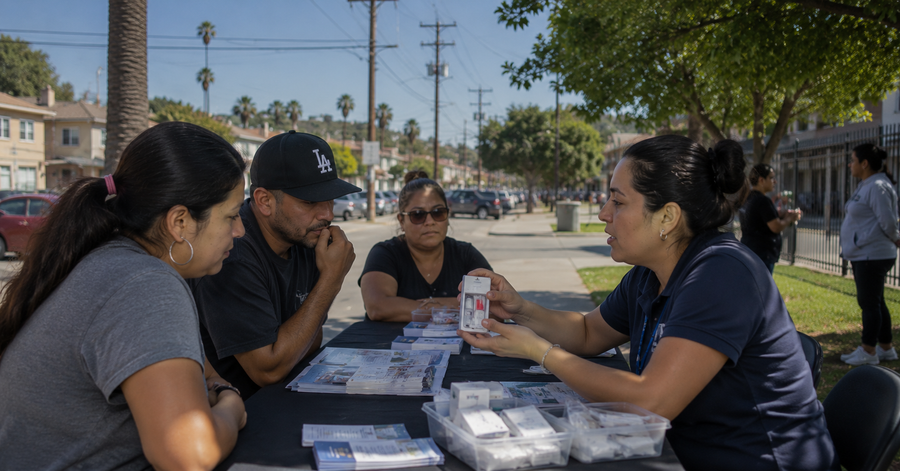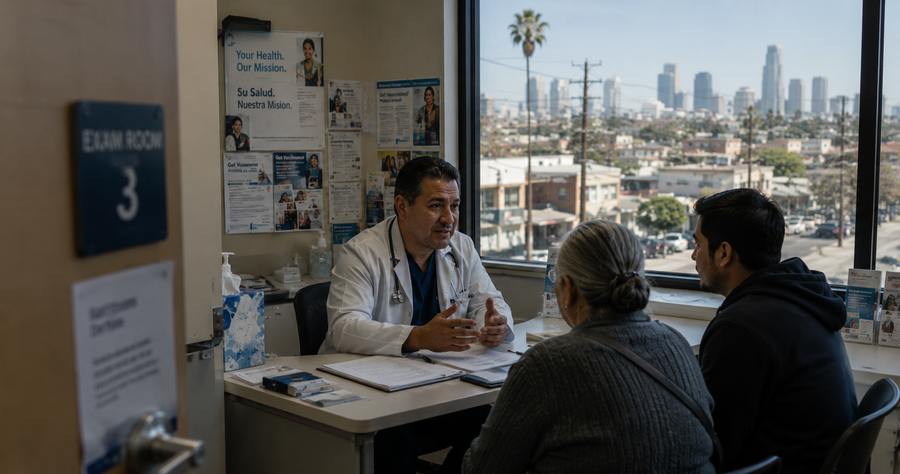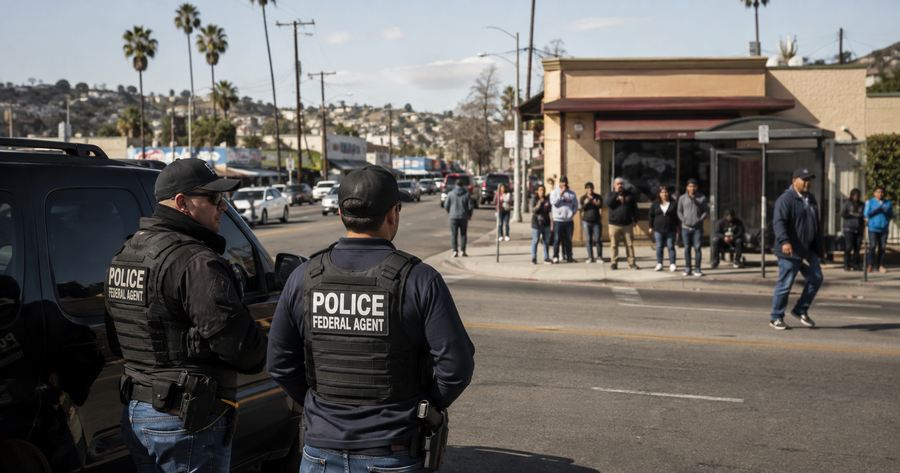

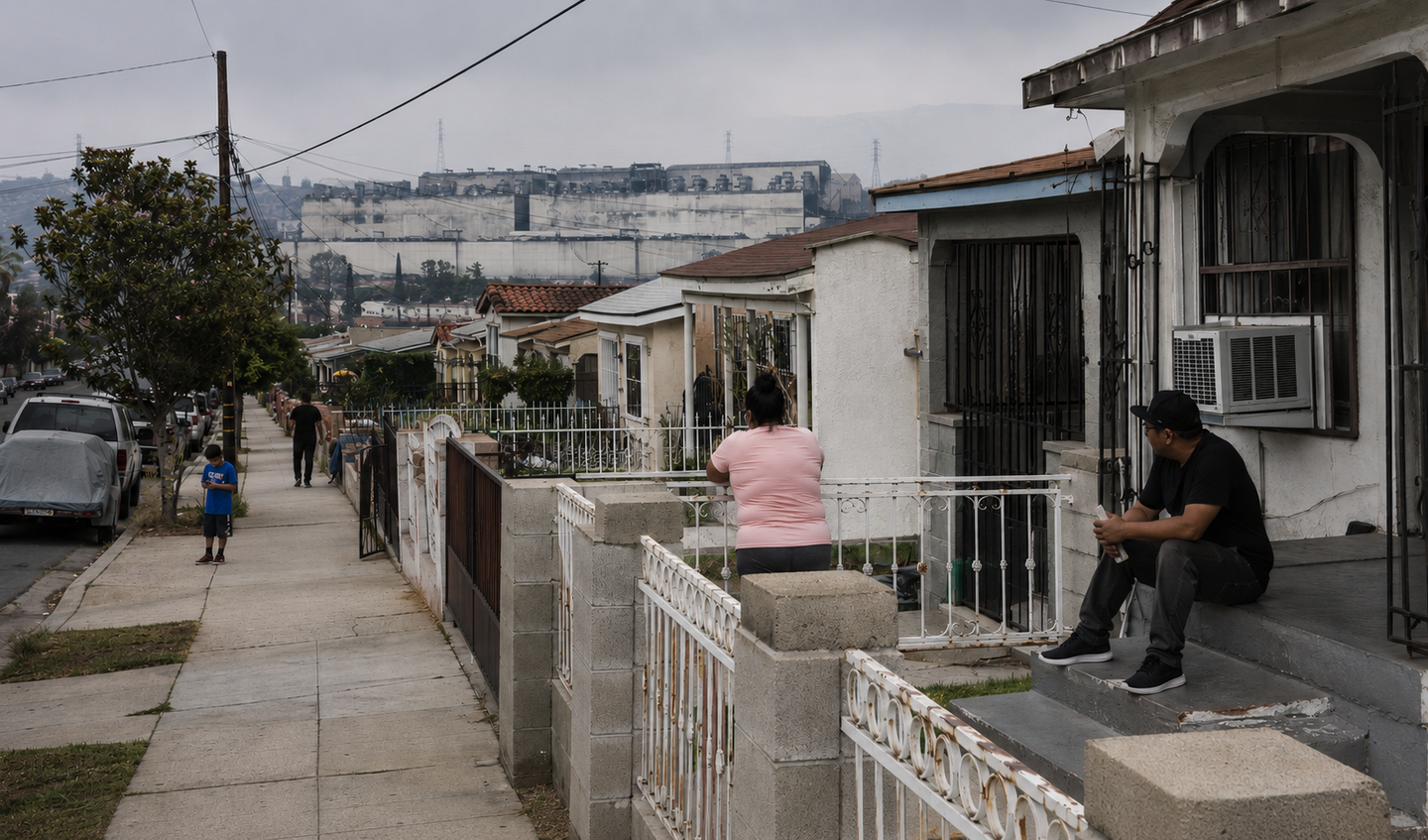
This week on The Signal, two conversations that look nothing alike end up asking the same question. Nora Preciado of the Mexican American Policy Alliance previews a binational summit in Mexico City, where 200 leaders will tackle trade, migration, and deportee reintegration. Then, East Side Parents Against Privatization's Jasmine Garcia and Armando Soto report from the ground in East LA, months after the Lineage Logistics fire, still demanding the warehouse close for good. Aired live on KPFK 90.7 FM Los Angeles, on July 18, 2026.

This is viewer supported news. Please do your part today.
TRANSCRIPT
This is a rush transcript. Copy may not be in its final form
00:00:00:00 - 00:00:12:09
MUSIC INTRO
The whole run by a handful of greedy bankers and CEOs who nobody elected. What can't possibly last?
00:00:12:11 - 00:00:12:22
MUSIC INTRO
I'm going to tell.
00:00:12:22 - 00:00:15:23
MUSIC INTRO
You what I'm saying.
00:00:16:01 - 00:00:24:09
MUSIC INTRO
But you really only have to remember I took two words.
00:00:24:11 - 00:00:46:07
DINO
Hey, Los Angeles, welcome back to another episode of The Signal. I'm your host, Dino. So, hey, listen, today we have a great show lined up for you. We're going to be covering a couple of different topics. Now, today, we're going to cover two conversations that, on the surface look very different, but both come down to the same question y'all.
00:00:46:08 - 00:01:15:14
DINO
And that is who has a seat at the table and who's still fighting for one. First, we'll be joined by Nora Preciado of the Mexican American Policy Alliance. Now, this is a very interesting group, a great group, I think. I've been following their work now for about a year, and these folks are bringing together a summit, a gathering, a meeting, a conference of this, again, Mexican-American policy alliance that's happening in Mexico City.
00:01:15:16 - 00:01:51:08
DINO
And by last accounting, we'll talk to Nora shortly. There was something close to 200 people coming together. And we're talking elected officials. We're talking community stakeholders, organizational leaders, advocates, all sorts of folks from across the ideological political spectrum. Indeed, across the United States. And they're going down there to meet with their counterparts. We're talking and other elected officials and other stakeholders and community groups, etc., and they're going to have a very important conversation.
00:01:51:10 - 00:02:19:15
DINO
And that is in a conversation grounded on what does binational collaboration look like between two nations that one could describe right now is certainly, not in the best of relationships. And we'll get into that. A quick programing note. I do want to say, you may have heard us, share that, Assembly Member David Alvarez was going to be joining us.
00:02:19:17 - 00:02:36:18
DINO
It looks like he may not be able to join us after all, but dig this, right? That doesn't matter, because we got the boss of bosses over at the Mexican American Policy Alliance. No other will be joining us, and we're going to carry that conversation, and she's going to let us know why all of this, makes for good jazz.
00:02:37:00 - 00:03:07:12
DINO
Then in the second part of our, program, we're going back part of our ongoing series on the lineage logistics fire and the disaster that now dreaded company. No. Look, listen. That thing is still going on. The fire may be out, but the impact on on community continues, and it's being felt across the board. We have a special group, East Side Parents against Privatization.
00:03:07:14 - 00:03:28:06
DINO
Jasmine Garcia is here with us. And Armando Soto from the community as well is here with us. And we're going to get an update on where things are, how they see the development of the so called clean up. Which, yes, I shouldn't say so-called it is happening, but is it happening fast enough? How is the community being impacted?
00:03:28:06 - 00:03:54:00
DINO
We'll get into that, a little bit more. So let's go ahead and get started, y'all. So, you know, for those of you, I want to welcome everybody who's listening online@kpfk.org. And I want to welcome all our listeners in all our signal areas. 98.7 FM, Santa Barbara, 98, 93.7 FM, San Diego, and of course, 99.5 FM Ridgecrest, China.
00:03:54:00 - 00:04:20:10
DINO
Lee now, quick programing note for all our, signal fans and family, I do want to let you know and remind you this week. I think it's on Tuesday. Sly. Right. The, Tuesday or what's not Tuesday? I'm being told the, Kpfk front dry begins. Now, listen, this is an invaluable resource. Has been around now for, what, 60 years?
00:04:20:10 - 00:04:55:13
DINO
Since 1959, and more than ever, you may have heard this week PDX, it has announced that he's coming after activists and advocates and others out there who simply think different. And this is an invaluable resource because it is on this broadcast station that has been around for 60 years, where someone like me can bring on now consistently for the last 4 or 5 weeks, members of the community to talk to you about what's being impacted or the impact there have on us.
00:04:55:13 - 00:05:24:07
DINO
An example, the lineage logistics wire. So, you know, be ready. You know, let's let's support public media. Let's support public radio, public radio for the masses. That is, such a vitally important, issue to support. I myself again, part of the programing note will actually not be here, next week, in part because the wonderful people at the Mexican American Policy Alliance, said, hey, listen, you have an invitation.
00:05:24:07 - 00:05:43:11
DINO
And of course, I said, what can I bring my my recorder and can I talk to folks and can I interview people? And Nora was gracious enough to say, sure, why not? And part of the reason why I will not be here next Saturday. But please tune in. You'll be here for some special programing, fun, dry programing and again, please support.
00:05:43:13 - 00:06:11:20
DINO
So without further ado, let's get into this conversation with my dear guest. Not a pressure though. And you know, let's set up let's set the scene here folks. Let's talk a little bit before we get into this with note, the relationship, the relationship that is right now between Mexico and the United says now, in my view, as a political scientist, throw a little, little, title drop there.
00:06:11:22 - 00:06:55:20
DINO
I would describe this relationship as one that is tense, very complicated, but fundamentally indispensable. The two countries remain deeply connected through trade, manufacturing, migration, security, and, of course, millions of families living on both sides of the border. At the same time. The relationship is under considerable strain. The Trump administration continues to pressure Mexico, pressure Mexico over issues. As we all know, immigration issues of fentanyl and the drug war, organized crime, and the future of the Usmca, the trade agreements.
00:06:55:20 - 00:07:26:04
DINO
And of course, let's not get into all the various complications and challenges associated with this country's insistence on, carrying, tariff war on the Mexico side. You know, Mexican President Claudia Sheinbaum has cooperated where I think she believes it benefits Mexico and has certainly pushed back strongly on some occasions against threats to Mexican sovereignty and the treatment of Mexican nationals here in the United States.
00:07:26:09 - 00:07:59:16
DINO
So this isn't a relationship that is in collapse, but it is increasingly a transactional relationship, with cooperation continuing alongside public disagreements and at times very public disagreements. Political pressure on both sides of the, of the border. You know, we now know that, some on the right and Mexico have been emboldened, so much so that there's now seems to be an increase in the political attacks that maybe, Claudia signed by and president of Mexico, had not seen.
00:07:59:20 - 00:08:35:20
DINO
Certainly, and not at the level that she's seeing now. So it is this under this particular context that I think projects like the Mexican American Policy Alliance, are forming and I think provide a great opportunity for us to better understand the importance of building these type of relationships. This is happening, July 22nd through the 24th in Mexico City under the theme Thriving Together Advancing US-Mexico partnerships for Shared Prosperity.
00:08:35:22 - 00:09:00:00
DINO
It is an invitation only gathering, but that doesn't matter. Why? Because we're going to bring you the Cheese Man on the back end discussion. Why? And who's there and talk about why this is relevant to us. So joining us to unpack this is not a but a Seattle co executive director of the Mexican American Policy Alliance. And she's going to walk us through why this organization is doing this.
00:09:00:02 - 00:09:04:18
DINO
Now. And Nora welcome back to The Signal. You've been with us before.
00:09:04:20 - 00:09:06:21
NORA PRECIADO
Yes. Thank you so much for the invitation.
00:09:06:23 - 00:09:28:16
DINO
So no, no. Yeah. Let's, let's let's unpack this a bit. You know, walk me through the formation first and foremost of Mapa. Right. One day, you and your colleagues are co-executive directors and others are sitting around, sipping on a cup of mescal, and somebody said, let's create Mapa. How did this happen?
00:09:28:18 - 00:10:08:16
NORA PRECIADO
Well, I think in an era of divisive rhetoric and actions, as you mentioned at the intro, the work of Mapa is essential. The Mexican American Policy Alliance, or Mapa, is a binational organization that is built to strengthen that relationship between the United States and Mexico. Our work is aiming to do this by supporting policy advocacy, holding summits and convenings that promote that binational collab collaboration and building a network of community elected officials, philanthropic and business leaders that are committed to advancing that relationship with California.
00:10:08:16 - 00:10:11:13
NORA PRECIADO
Obviously leading the way now.
00:10:11:15 - 00:10:39:18
DINO
Okay, that part there. You know, California plays a key role in this overall relationship, not just with with Mapa, as I understand, but of course, with the United States and Mexico, and its relationship and now this particular year's conference. Tell us about the theme behind it. What, why this particular theme? And as I said, you guys, have said, thriving together, advancing as Mexico partnership.
00:10:39:20 - 00:10:45:09
DINO
You gave us a description of how this came about. But why this particular theme this year?
00:10:45:11 - 00:11:26:07
NORA PRECIADO
I think the vision behind this year's summit is really to move past and dialog about our joint challenges and really focus on building on what we started last year and taking advantage of the opportunities ahead to build a more prosperous future together. Mexico in the US. I think that theme builds on that summit of last fall, and since then, we've really made a commitment to listen to community leaders and launched a national listening tour where as part of this strategic conversations with the elected officials, community, labor and business leaders, we were working to shape our work plan and the summit agenda.
00:11:26:07 - 00:11:43:01
NORA PRECIADO
So for this summit in particular, the, the vision is to turn those conversations into actions, real recommendations and partnerships on issues like trade, workforce development, immigration and education, among other issues.
00:11:43:03 - 00:12:25:05
DINO
Now, again, as a programing note, I know that many of you may have heard our promo indicating that, one of not colleagues would be joining us. His schedule has become a bit more complicated. And as such, Assembly Member David Alvarez will not be joining us. But on this topic of, binational collaboration, I think you bring up a very important point, with regard to the value, the tremendous value that is being able to forge your own relationships, especially in the absence or as I described earlier, in this climate where, the relationship can be described as tense, complicated, and fundamentally indispensable, yet fundamentally indispensable.
00:12:25:10 - 00:12:47:10
DINO
No doubt walked me through who is attending this the last time we checked in, leading up to this program. At the time, I believe you said that you guys were like at 170, almost 200 people, which, by the way, getting 200 people to go to a foreign country to talk policy and politics, to talk shop essentially on how to make things better for all.
00:12:47:12 - 00:13:00:07
DINO
Hey, kudos, man. That's pretty bad. Cool. Like bad ass. I meant, who's the who's attending? Give me give us an idea of who's, a part of this process.
00:13:00:09 - 00:13:32:15
NORA PRECIADO
Yeah, I know we're super excited. We have, about 200 participants, but from both the U.S. and Mexico coming to Mexico City next week in addition to my Map leadership, we're going to have a large number of elected officials from states like California, Illinois, Nevada, Texas, Arizona, New Mexico representative from Mexico's Ministry of Foreign Affairs and the U.S. Department, as well as leaders across many sectors that we mentioned, labor, business, philanthropy, civil society.
00:13:32:17 - 00:13:49:04
NORA PRECIADO
All of our panelists at the panel, at the conference represent really important stakeholders from advocacy, business, philanthropy, academic institutions on both sides of the border. So we're really excited to welcome all of them and engage in a number of discussions.
00:13:49:05 - 00:14:18:16
DINO
Now, as a policy wonk myself, and in this program, we cover a lot of policy issues, policy topics indeed. We have our, political series, politics tacos and Beer, where we cover specifically, not only elected officials campaigns. And of course, we are in the campaign year. What are some of the key policy themes that you are planning for this particular, event?
00:14:18:18 - 00:14:46:03
NORA PRECIADO
We have a really robust agenda this year. But a few things that stand out. I think for me and your audience, probably we have immigration and how we support immigrants in the US, as well as the reintegration in Mexico of those who have been deported. That's front and center. We also have a focus on economic issues, trade and where the U.S, Mexico cooperation goes next, which is especially timely.
00:14:46:03 - 00:15:09:07
NORA PRECIADO
Right now because, as you know, because of the Usmca, the trade agreement between the US, Mexico and Canada, which is up for a mandatory review this year. And we're also digging into workforce development, trying to make it easier for professionals, regardless of their where they got their training to help them provide important services in both sides of the border, in both regions.
00:15:09:09 - 00:15:39:00
NORA PRECIADO
Another key priority for Mapa has been higher education. And our higher education agenda includes promoting and expanding faculty and student exchanges between us and Mexican universities. We're also excited that this year we're going to have a session on culture and the arts as a form of soft power, and how those bring people together in a way that opens minds and sometimes hearts, which is really important for that relationship.
00:15:39:02 - 00:15:59:09
NORA PRECIADO
And I think finally, we're just excited, particularly me, we're having a panel to discuss electoral issues. And the important role as well, that as you mentioned before, local government can play in binational work, state governments. So all of that will be some of the, the things that stand out from the agenda.
00:15:59:11 - 00:16:39:16
DINO
You know what I appreciate, I appreciate the particularly this issue of reintegration rate for the for those of you listening in or asking yourself what what exactly are talking about, Dino, you know, reintegration refers to, given the current political climate that we're in, when folks are repatriated, back in the case of Mexico, you know, what happens sometimes in some cases, and unjustly so, I would say people are being kidnaped, picked up out of the streets at home or what have you, and being forced, in many cases to a country that they've never been to or haven't been to since they were children, perhaps, or haven't been there in 20, 30, 40
00:16:39:16 - 00:17:09:14
DINO
years. And so this becomes a very huge problem, in many cases. Now, you know, in our own research here at the scene, one of the things that, we've come to understand, we've come to understand about, the reintegration issue is that, you know, early on when a lot of the deportation issues really started, Mexico was, quite frankly, not fully prepared for what became an influx of, folks coming in.
00:17:09:16 - 00:17:37:16
DINO
But by now or at this point, rather, Mexico has created a program, I believe it's called Mexico to Brazil. Mexico hugs him, where returnees are receiving temporary shelter, food, medical and even psychological attention to help, navigate what is, an otherwise, very traumatic experience. You know, some folks need basic help, like where do you find your birth certificate?
00:17:37:17 - 00:18:07:17
DINO
How do you go from the place in which you've returned to and, you know, to your actual place of home, the federal government has also worked, with the employers to identify immediate job openings, including support on short term assistance and sustained reintegration. So this is an issue that, we've been looking at, carefully. So when you brought this up, you know, it just kind of jarred my memory on a lot of these conversations.
00:18:07:17 - 00:18:32:18
DINO
So I really appreciate. And it's something that maybe we'll be able to cover further, in the coming weeks here on the signal. Yeah. Not, I'm Mike. Yes. Let me reintroduce you. My my guest is not a person. The other co-executive director of the Mexican American Policy Alliance. And this launched last year with an inaugural summit in Mexico City, bringing together lawmakers, advocates, philanthropists, organizers and business leaders from both countries.
00:18:32:20 - 00:18:58:23
DINO
This year's summit builds on that experience, and it's running through July 22nd through the 24th and Mexico City under this theme of Thriving Together Advancing US-Mexico partnerships for Shared Prosperity. And not as, walking us through some of the organizing that is going on behind this and know that what does, what does success look like on a conference like this?
00:18:59:01 - 00:19:41:21
NORA PRECIADO
I think for us, it looks like two things. First, walking away with actionable recommendations, things like just what you were touching on the Migrant Protection and Reintegration, on collaborations and advancing workforce licensing and just creating stronger relationships across different sectors, which will help us carry the work forward to next year. And I think second, as part of success is just the ability to allow 200 participants from such a diverse, group of folks the opportunity to meet each other, to share their experience, their knowledge, to build relationships and really strengthen that commitment to this work.
00:19:41:21 - 00:19:46:09
NORA PRECIADO
I think that's what would be a successful summit format for.
00:19:46:11 - 00:20:14:16
DINO
A lot of the one of the major themes here, you why the you mentioned that this year you expanded to the cultural component, having a little bit more on that front. And, you know, sometimes, you know, for, for your host here, I, I would think this is automatic, right? I mean, many of the participants are of Max, Mexican origin.
00:20:14:18 - 00:20:22:13
DINO
Why the cultural component to help me understand that, help our audience understand why that is so important right now.
00:20:22:15 - 00:21:00:18
NORA PRECIADO
I think it's a big part of identity, the identity of the Mexican diaspora in the US, the identity of Mexicans in Mexico, and what we share in that, joint sort of identity. We wanted to ensure that we were touching on language, culture, art as, something that is really underpinning our relationship as well. So it isn't just, different sectors, different issues, but it's just the identity that we share, to different degrees depending on where you were born, and how you were raised either here or in Mexico.
00:21:00:20 - 00:21:26:23
NORA PRECIADO
And we really it's one of my favorite panels because, it's titled Soft Power in the Time of Walls. And I think sometimes we think about power and leveraging that power or taking advantage of that power in policy, only things like trade, education. But we forget that there's this shared identity that really creates a grounding, for all of us to kind of see each other as part of this larger weekend.
00:21:26:23 - 00:21:38:04
NORA PRECIADO
This larger family that has to work together must work together in order to ensure prosperity for both sides of the border, in all communities, in each country.
00:21:38:06 - 00:22:07:12
DINO
Now, you know, let me let me throw a curveball into this conversation for us, particularly the role California's playing in this. Right? The relationship between California, Mexico runs deep. Both economically, politically and economically. Mexico is California's largest export market, and it's the second largest overall trading partner with approximately somewhere almost $100 billion and two way trade.
00:22:07:14 - 00:22:47:07
DINO
California exported nearly 35 billion and goods to Mexico and 2025, including electronics, transportation equipment, machinery processing, food. Indeed, Mexican owned businesses also support more than 13,000 jobs here in California and the California Baja region. Is also one of the single, cross-border economies, one of the largest cross-border economies in the entire, border region, especially in manufacturing, agriculture and tourism logistics, and increasingly in what is called clean technology.
00:22:47:09 - 00:23:18:18
DINO
Politically, the relationship is, close practically, generally friendlier than the current relationship, let's say, between Mexico City and Washington. California cannot conduct foreign policy independently. Right. But it does work directly with Mexican federal government and states like California, Sonora on issues of trade, climate policy and zero emissions on issues, regarding infrastructure, we're talking water pollution. All of these things.
00:23:18:20 - 00:23:30:05
DINO
What role and why was there such an emphasis? Maybe I already answered my own question, but why California? What's the emphasis in California as far as Map is concerned?
00:23:30:07 - 00:24:06:19
NORA PRECIADO
I think you're correct. Mexico. It's California's most important trade partner. And as you pointed out, that relationship touches, everything jobs, investment, agricultural, manufacturing, technology, which is exactly why conversations like the one we're having and we will have at the summit matter well beyond just border. Border, politics. And to your point, it is true that state and local governments can move faster and more directly than federal policy sometimes, and it allows to build partnerships on things like economic development, infrastructure and innovation.
00:24:06:20 - 00:24:39:12
NORA PRECIADO
I think we're going to have a panel on expanding the knowledge exchange between U.S. and Mexican universities as well, which is kind of a concrete example of that state level bridge building. And I do also want to add we talked about immigration for a second, but in some ways that conversation is also kind of a misnomer, because when we're talking about the integration and, reintegration of of deported Mexicans in Mexico or the protection of folks here, we're talking about a whole host of issues, right?
00:24:39:12 - 00:25:08:22
NORA PRECIADO
It's one piece. Immigration is one piece of a much larger relationship. That includes trade, education, workforce mobility. So you were talking about the opportunities that there are to Mexico and other programs. That's what we're talking about. How do we integrate them and take care of, access to health care, housing? How do we ensure that, you know, their rights are protected, that they have opportunities for, mobility and their job to be able to find jobs?
00:25:08:22 - 00:25:28:14
NORA PRECIADO
And the same is here in the United States. How do we ensure that we're protecting those folks? All of these pieces are really intertwined. So I just wanted to point that out because I think when we talk about immigration, people think, status is kind of the only issue, but it's so much broader than that. And all those conversations are going to be happening at the summit.
00:25:28:16 - 00:25:49:01
DINO
And I'm just so happy to hear that, because I think how when you make such an excellent point, right. Sometimes, you know, we become didactic in our approach to some of these conversations and issues. And we only see one thing, you know, clearly an indication of what the narrative oftentimes what the narrative, the prevailing narrative is, is, which is, you know, the otherness.
00:25:49:01 - 00:26:14:19
DINO
Right? This, folks, this these folk are bad. These folk are good, these are accepted. They're not. So I appreciate you, expanding on that, my guest is not a part of the other co-executive director of the Mexican-American Policy Alliance, an attorney by, trade, and not as we close out. So looking ahead, what do you see are some the potential greatest, opportunities here?
00:26:14:20 - 00:26:20:21
DINO
And also, what are some of the challenges that you anticipate with this project?
00:26:20:22 - 00:27:03:15
NORA PRECIADO
Well, I think that the the challenges are what we're just seeing overall. Right. The again, the, impetus to continue to divide and to, forget about how interconnected, the U.S. and Mexico, relationship is really across a whole host of issues that are impacting people on both sides of the border. And what we're hoping is really that by growing the tent bigger and adding all these different, leaders, all the different perspectives and voices, we can come up with some shared solutions that work for, folks in the US, as well as just in Mexico that can really strengthen this relationship.
00:27:03:17 - 00:27:12:20
NORA PRECIADO
Whether it's federal to federal, federal to state, with all the different actors participating and, and helping build that relationship.
00:27:12:22 - 00:27:38:15
DINO
Well, we're looking forward to getting the, the update once, we, or you all come back, and I want to close out with this, folks. Look, California, Mexico are economically interdependent, culturally inseparable, and politically cooperative, even as to, federal policies in Washington continue to create instability and pressure along, the border. And, you know, note, I want to thank you.
00:27:38:17 - 00:28:03:15
DINO
Thank you for joining us and for helping listeners understand not just what my past is, but helping us lay a framework for an ongoing conversation that, we hope to carry here on this program that helps build a better and stronger understanding of what bilateral binational collaboration looks like. And with that, I say thank you again for joining us and hope to have you back once you return.
00:28:03:17 - 00:28:19:23
DINO
Coming up next, we shipped from Sacramento, Mexico, California, all things politics, and we come back home with an update on lineage logistics. And our guest, from the East side, Parents Against Privatization. Yeah. Stay with us. We'll be right back.
00:28:20:01 - 00:28:40:00
DINO
Welcome back to The Signal. News, information and analysis. I'm your host, Dino. So we now move to this ongoing series we've been covering here on the signal, with our friends in our community members from Boyle Heights in East L.A.. Over the last 4 or 5 weeks, we've had, I think, one segment each show.
00:28:40:00 - 00:29:01:21
DINO
Right? Sly? I think it's been one segment each. So, for the last 4 or 5 weeks. And that's part of our commitment. Not because this is a topic that look that I have any special affinity towards. You know, this is a devastating topic. Our communities are being impacted, and that is what public radio does. Public radio for the masses by the people, for the people.
00:29:01:21 - 00:29:47:01
DINO
This is why this station has been around for 60 years. We provide these opportunities. We want our communities to be informed, but more importantly, we want to hold people accountable. We want to get this word out. So they're not just members of the community can get the latest update, but those in power, those who are governing these, decisions, these political disasters, these environmental crisises, are aware and informed beyond just the community town halls, of which we'll get into a little bit here, you know, so we're going to talk about, we're going to talk to our two guests, Jasmine Garcia and Armando Soto, members of the Eastside Parents Against Privatization.
00:29:47:03 - 00:30:03:03
DINO
But first, let me give you guys a little update. So far, what we've been able to gather and our team of, researchers here on the signal, our energy drink feud, that's the only thing we give them. We lock them into a room, we feed them energy drinks and say, give me something to share with the community once we're on air.
00:30:03:03 - 00:30:29:20
DINO
And this is, this is what we've, discovered right in the last, I think, 48 hours. Right. So South Coast AQ, MD has issued initial logistics, six notices of violation just this past week alone after receiving get this more than 900 order complaints from residents. Inspectors confirm that the rotten garbage like orders were coming from the fire damage warehouse.
00:30:29:22 - 00:30:53:01
DINO
As if you need a listen, folks, you can drive one two blocks off the street off the freeway. You can smell this. I can tell you firsthand. I on the way here to the studio, I drive right by there. Potential civil penalties range from 1000 to $75,000 per day. Now, this is $1 billion corporation. I'm sure they have no problem paying these fees.
00:30:53:01 - 00:31:30:12
DINO
The bigger question is this why? Why is $1 billion corporation, billion dollar corporation taking so long to address, mitigate, these problems? So per day, they can be fined 1000 to $75,000. On Friday, Friday evening. So what? Yesterday and lineage. A formal demand letter required more than two dozen additional order control measures. Those include sealing decomposing food inside, treating trucks, carrying waste with order neutralize or scrubbing waste loading areas.
00:31:30:12 - 00:32:01:16
DINO
Apply an order neutralizer, improving container containment during transportation and disposal, lineage must submit its implementation plan by next Tuesday or this coming Tuesday. Rather, the company says, cleanup, began July 6th, and it intends to beat Mayor Karen Bass 45 day cleanup. But, there's still no publicly confirmed date for the complete removal of the food.
00:32:01:16 - 00:32:30:14
DINO
And what are we talking about? Well, 85 million pounds, that have actually been removed, but there are millions of pounds remain. And can you imagine? Look, I'm thinking back to the old school days when I had a science experiment growing in my refrigerator in college, and that, you know, that stunk up the whole place. My entire room, if not the entire apartment, for that matter, was just, you know, wrecked.
00:32:30:19 - 00:33:00:11
DINO
But now imagine millions and millions and millions of pounds. So with that said, I want to welcome my two guests, again from East Side parents against Privatization. Armando Soto is a community member from unincorporated this Los Angeles who lives there. Armando is also going to be, talking to us, in his native language. And for the bilingually challenge, we are going to have our second guest, Jasmine Garcia, community member and also a member of Eastside Parents Against Privatization, help with the translation.
00:33:00:11 - 00:33:03:04
DINO
Welcome to you both. To the signature, Armando Bonito.
00:33:03:09 - 00:33:04:11
ARMANDO SOTO
Gracias.
00:33:04:13 - 00:33:15:23
DINO
So, Jasmine, let's start off with you. You all have been very active in the community for some time. Tell us about the East Side parents against Privatization.
00:33:16:01 - 00:33:41:10
JASMINE GARCIA
Yeah. So we're a group, a grassroots, group, of parents and educators. And we formed, our group, based out of a need, to protect and advocate for public education. As you may know, public education has been under attack nationally, for quite some time. And so, you know, we formed this group, to respond to those needs.
00:33:41:12 - 00:33:57:12
JASMINE GARCIA
And, you know, and we've been doing that. But this issue. Right, because we live in the community, you know, we decided that we needed to take action, and start organizing around this issue because we see the need and we see that it's impacting a lot of people.
00:33:57:14 - 00:34:14:23
DINO
Now, when we talk about the community and the community that, makes up, the parent group, we're talking parents, moms and dads, neighborhood. I mean, give me a description of. Yeah, who is who is what the membership made up of.
00:34:15:00 - 00:34:41:04
JASMINE GARCIA
Yeah. So, you know, when I, when we started the group. Right, the, I, my daughter was only five years old, and the, the other members of the group. Right. It's also mostly mothers. And, you know, their some of them, their children are still young, but some of them, they're, you know, throughout the years have gotten older, and, and also educators, right, educators who've been there, teaching for decades and are very invested in the community.
00:34:41:06 - 00:35:05:10
JASMINE GARCIA
And so it really is just a grassroots, collective of people, who really, believe in public education and, you know, came together as a need, to protect it. And we see that, throughout, you know, different states. We see that, what is happening to public education, whether it be with the voucher system or, you know, schools.
00:35:05:12 - 00:35:24:12
JASMINE GARCIA
Basically closing, right. There are some districts. Right. And so we know that it's been under attack for, for quite some time. And so that is why we we decided to form and start pushing back. There was at the time, charter growth. Right. And so we, you know, we began to organize and, and really, you know, just out of our time.
00:35:24:12 - 00:35:45:20
JASMINE GARCIA
Right? Nobody we don't get paid. We're not a nonprofit. There are no, there's no funding that we receive. Right? It's really just, people that live in the community, you know, some of us live in East Los Angeles. I live in East Los Angeles. Some of the other members live in Boyle Heights, but we're all local, residents and, came together for, public education to protect it.
00:35:45:23 - 00:36:06:19
DINO
And I got to tell you, man, I mean, kudos to you all, man. Mad prompts because, you know, I actually went to school in Boyle Heights. And, you know, I have lifelong member of the L.A. community and lived in and, or again attended school in the Boyle Heights area. Back when there was, RTD number, the bus system.
00:36:06:19 - 00:36:07:21
JASMINE GARCIA
Oh, yeah.
00:36:07:23 - 00:36:38:03
DINO
I used to take the public bus for like an hour and a half. Anyway, and I am so motivated, inspired, impressed, by just the level of activity the community has come out, you know, as somebody who does this program, you and I get to interview politicians and community leaders, advocates, academics. We had, a Stanford professor last week talking about, what it means to be incorporated, right?
00:36:38:06 - 00:37:07:21
DINO
City versus unincorporated East L.A. but then there's the resilience. Then there's the passion. As you said, look, we don't get paid, but we're active members of our community. And we've talked to so many folks out of East L.A.. What has been your experience, Jasmine, when we talk about the response, particularly elected officials, you know, I've heard folks now and we're going to get into the July 8th event at Stevenson Middle School.
00:37:07:22 - 00:37:18:07
DINO
Yeah. But before we get into that, you know, as a member of the community, what has been your observation when we talk about elected officials responding to your needs?
00:37:18:07 - 00:37:42:04
JASMINE GARCIA
Yeah, the response I, you know, if I could describe it, you know, has in one word is, failure. You know, what happened? During, you know, a disaster, an environmental disaster. The response, right, was, was very limited. Folks needed to be evacuated from day one. They weren't evacuated. And that is a big problem, right?
00:37:42:04 - 00:38:04:18
JASMINE GARCIA
Because our community deserved, like any other community, to be evacuated. And from there, you know, that that was the initial response. And that sort of has been, what we've seen throughout. Right? So there was no evacuation. There's been, you know, some resources, right, that are out there. Some officers, elected officers have responded a little quicker than others.
00:38:04:18 - 00:38:28:20
JASMINE GARCIA
Right. But it hasn't been enough. You know, there's been air purifiers, there's been, you know, some, assistance, right, with, like, food. But it it does. It's not enough to what? You know, the residents need and the amount that, you know, the level of impact that they've had to go through. Right? So they were, for eight days, right?
00:38:28:20 - 00:38:51:12
JASMINE GARCIA
They, just lived there throughout all these toxic fumes, right? Breathing and breathing in all these toxic fumes and and, you know, until now, right now is the smell, right? It's a foul. Smell that. I live, 3.5 miles away from there, and it still reaches my house. Right. So, folks like Armando, who live three blocks away from the warehouse, right?
00:38:51:14 - 00:39:13:10
JASMINE GARCIA
24 hours in the day, they're smelling, rotting food. And so this is why we, you know, we had to do something as a group, right? You know, we saw what was going on to our community, so we had to respond, two weeks after the fire. Right. We, started door knocking. And when when I started door knocking, I started hearing the stories of people not feeling well.
00:39:13:10 - 00:39:33:19
JASMINE GARCIA
They were feeling sick. They'd gone to emergency rooms. Right. And to my surprise, elected officials had not knocked on their door, you know, now, there were some some resource fairs and all of that. But I didn't hear that every door had been knocked and provided the proper resources that had not happened. And I know it because I knocked on those doors.
00:39:33:19 - 00:40:04:15
DINO
And it seems as if in the midst of this tragic, event and this failure on the part of some elected officials more than others, they still expected people to come to them as opposed to them coming to the door and saying, what do you need? And this is one thing that we've heard. In fact, last week we covered this on this program, how some community members are saying, look, I've had lawyers, more lawyers come to my home saying, hey, I can represent you, and then even some politician.
00:40:04:15 - 00:40:29:19
JASMINE GARCIA
And, you know, if a group of moms, right, and educators can knock on many doors, right, right. After two weeks after a fire that was, you know, blazing and it caused so much toxic, you know, fumes to go out throughout our community. I think agencies, elected offices, not everybody can do that. If we can do that, they can do and they should have done it.
00:40:29:21 - 00:41:01:23
DINO
Absolutely. So let's talk a little bit about, before we come to you, the government is Contigo Armando a little bit more. I want to hear one more thing. I want to ask you about one very important event that happened, on July 9th at Stevenson Middle School. There was a community townhall where the understanding was that, everybody was going to get an update on the limits, cleanup and recovery effort, but it ended up being quite a different type of event.
00:41:02:01 - 00:41:28:11
DINO
I was there myself. I do want to say that I attended this and unfortunately, more than 200 people were reportedly turned away at the auditorium who, in all fairness, had reached capacity. But members of the community, marched, for about a mile from the warehouse carrying signs, chanting lineage UN, conservation. Some briefly push past security.
00:41:28:11 - 00:41:54:11
DINO
And again, I was like, hey, power to you guys. I mean, this is awesome. This is pretty dope. And, came into the building and demanded to be heard inside. Mayor Karen Bass struggled to speak, over what could only be described as a resounding, you know, challenge to her not only administration, but to even just her presence.
00:41:54:13 - 00:42:18:07
DINO
She struggled to speak over booze and shouting lineage chief operating Officer Jeff Rivera was met with chants of liar! Residents rejected the company's claim that the current air monitoring showed the neighborhood was, was safe and clear, including the city, which made the same claims and other agencies. And I want to set the picture. I want to paint the picture for, for my listeners.
00:42:18:09 - 00:42:47:21
DINO
Just imagine a junior high school, middle school, auditorium which seats a couple of hundred people. Do you have this, you know, a couple of, desks and the front part of the auditorium. Interestingly enough, none of the politicians were sitting there. They were actually sitting on the front row and, you know, they started going one by one up to a moderator podium, which I believe was from the mayor's office.
00:42:47:23 - 00:43:03:17
DINO
Given this almost like, your next type of report, only to eventually end up in a moment in which the mayor said, okay, it's time to listen, tell us about that, day. And you guys came in and demanded.
00:43:03:17 - 00:43:21:04
JASMINE GARCIA
To be me. Well, you know, I want to backtrack to, like, leading up to the town hall, right? We did a lot of outreach. And when we came to the doors, folks didn't know about the town hall. They were also, you know, another another, issue that was happening with that is that you needed to register for the town hall that shouldn't have been the case.
00:43:21:04 - 00:43:41:19
JASMINE GARCIA
Right. So we we invited the community to come out right to meet us. And we did March. So by contra la prioritization along with ace. Right. The lines of California's for coming empowerment. We, had Dornoch so many residents and we marched, to Stevenson Middle School, to the town hall. And, you know, we knew there was lines of people out there.
00:43:41:19 - 00:43:59:12
JASMINE GARCIA
And so we knew we weren't going to get in. Right. But we had all the most impacted people with us. And what we did is that we we just marched in, we marched in, and what we started chanting was, we want to we want to shut it down right? So folks were chanting, you know, what do we want?
00:43:59:12 - 00:44:25:14
JASMINE GARCIA
You know, shut down right when? Now. Because that is when we need them to close. Now, you know, from the very beginning of this environmental disaster, we heard from the mayor. Mayor bass, right, that, the smoke wasn't toxic. And so. But, you know, we know that it was we know as residents, it was I live, like I mentioned, 3.5 miles in my nose and my eyes, like, you know, I was my it was irritating me.
00:44:25:14 - 00:44:47:21
JASMINE GARCIA
Right? So, like, folks like Armando Soto sitting next to me, a resident lives three blocks away. We knew, you know, that folks were getting even more impacted. You know, that live immediately next to the warehouse. And so, you know, when folks came, they could a lot of people didn't get in. And the folks that did, you know, they were in there, like you said, booing and, you know, all of that.
00:44:47:23 - 00:45:17:19
JASMINE GARCIA
But at the end, the left are with no answers, no commitments to close the warehouse, a commitment right of like that. They would clean in about 45 days. But, you know, we know that if you do the math, that's not going to happen. Right. And so, they were no commitment to, an environmental report. They talked about vouchers, you know, but they didn't talk about a very comprehensive, solution to, housing relief.
00:45:17:19 - 00:45:36:19
JASMINE GARCIA
Right. Folks, like I said, were not evacuated from day one, and there hasn't been real, real, tangible resources that, really can help out the residents that live there. I mean, you know, air purifiers by now, you have to change the the filters on the air purifiers. That's what we're hearing, right? Because, you know, they.
00:45:36:19 - 00:45:38:18
DINO
Didn't provide extra filters. Right? This is something that, you.
00:45:38:18 - 00:46:03:22
JASMINE GARCIA
Know, and and, you know, one filter for a house, right. It doesn't do anything. And like a $250 gift card to food for less or some, it doesn't. It's like, you know, the the response, hasn't been, you know, like the it hasn't minimal, right? It hasn't met the, the urgency and the, the level of of disaster.
00:46:03:22 - 00:46:08:21
JASMINE GARCIA
Right. And it just, it has it hasn't really responded to the needs of the community.
00:46:08:23 - 00:46:29:06
DINO
Armando Soto, let me turn to you. You have been a member of the community. You've been living there, for a while. And I, as I understand, you've recently become active. Armando, and didn't do it. Regardless of the loss, I can, I see, even though I spoke with him as a, a participant in this process.
00:46:29:07 - 00:46:29:23
DINO
Con la comunidad.
00:46:29:23 - 00:46:39:14
ARMANDO SOTO
No, si tengo practicamente muy poco, pero tengo viviendo. 19 años en esa area.
00:46:39:16 - 00:46:51:10
JASMINE GARCIA
Yeah. So he's been, you know, he started, organizing with us recently, right. He joined our press conference but also joined, the, the town hub. But he's been living in, in that area, in that community for 19 years.
00:46:51:12 - 00:47:06:00
DINO
Armando. Two with us cannot get to this block. Is the circles done is done. Not see that. C'est la experiencia at the end of this. I wonder you live about three blocks from the community. Give us your experience. What it's like living there right now.
00:47:06:05 - 00:47:38:18
ARMANDO SOTO
We know there's a lack in this whole interview with Primero Tuvimos Kelly. They are con Alamo con bastante more they know they suffer cartel fuego la segunda rete. Estamos levanto con Los valores unfettered stand fuerte fuertes. The product to show up at their most cost. Algunas areas rattus rattus e base s location stuff rectangle moment.
00:47:38:20 - 00:48:01:08
JASMINE GARCIA
Yeah. You know, at the beginning of the fire, Armando, had to deal with all the smoke, right? All the toxic fumes. And now they're dealing with the foul odor, the foul smell, the stench. Right. And also dealing with flies, with rats, and all of that infestation that's coming from, you know, spoiled food, meat, rotting meat.
00:48:01:13 - 00:48:04:04
JASMINE GARCIA
And this is like, millions of tons of Freddy meat.
00:48:04:08 - 00:48:26:15
DINO
And let me. That's important to note this, folks. You know, look, I get annoyed when I have a few, flies flying around me at, at the at the at the house barbecue at the gate in the cellar. We're dealing with billions of flies, navigating the situation or man causes tener una moccasin for dando de la the run de la goodness up in at Thomas hablando de beyond the Moskos.
00:48:26:16 - 00:48:37:16
DINO
But those those Armando kids look at the asphalt at team and two comunidad and two para two familia. What is it that you need the most Armando as a resident right now?
00:48:37:18 - 00:49:21:00
ARMANDO SOTO
Lo, come and tell me a la reunion community and la Stevenson. No, no mas sesame. ESA parte de la la gente esta la de la compania. La principal is selling pay or sentiment or sentiment e se la compania para no tender después otro tipo de accident de igual pure e as if Alta okay, las autoridades ponga an essential atencion a la gente kabi Vamos a you must Canada las personas majority say that.
00:49:21:02 - 00:49:49:15
JASMINE GARCIA
Yeah. I ran those shared right that during the townhall. His public comment, was that they there's needs to be an immediate and thorough cleanup of the lineage warehouse and also that, you know, we to prevent a future disaster like this, the warehouse needs to be permanently closed and that agencies need to respond adequately, to elderly, to the elderly community.
00:49:49:18 - 00:50:07:00
DINO
Now, Jasmine, what are the things that you all said while there? And I saw this firsthand myself. I from both Armando and you, you are probably the only and correct me if I'm wrong, there might be others, but the only community group that's actually saying shut it down. No more of this place.
00:50:07:00 - 00:50:32:09
JASMINE GARCIA
Oh, yes. You know, we know that the elected officials did not commit to a permanent closure. We know that, there are community groups while they have one, you know, great demands. Right? I believe we're the only, group, you know, organization, or grassroots group, rather, that is saying, you know, we want our number one demand is a permanent closure of the where of the lineage warehouse.
00:50:32:11 - 00:51:05:20
JASMINE GARCIA
Now, we also have other demands, right? Like the, rapid, cleaning and thorough cleaning of the site. And, you know, we would have liked to have seen some housing, immediate housing relief for folks. And although we also agree with other organizations that there should be an environmental report, we are the you know, the group that is saying we need to ensure, that lineage warehouse permanently closes and that, you know, we bring some a little bit that would bring a little bit of justice to our community.
00:51:05:20 - 00:51:28:14
JASMINE GARCIA
Right? It wouldn't entirely right, because we know that this was such a huge disaster that nothing that they can do, right, can repair ever the health of the folks who had to breathe that for eight days. And then the aftermath. Right. So we know that right now, there are things that the government can do. Right. And the government agencies to permanently, close the lineage warehouse.
00:51:28:14 - 00:51:53:15
JASMINE GARCIA
It is a public health hazard. And therefore should be treated as such. Now, from the very beginning, you know, Mayor Bass was saying that the fumes were not toxic. So it did the urgency from folks. Right? The response, it just we didn't feel that they felt like, what we were seeing and living. Right. They that they actually respond in the proper way.
00:51:53:15 - 00:52:18:15
JASMINE GARCIA
Right. So there is a public, health hazard and therefore, you know, they need to respond accordingly. There are violations that, you know, that merit, a closure. And, and we know that, you know, it has to be done now because if we allow, this, big corporation to reopen, right. We know something a chemical they had there was ammonia.
00:52:18:15 - 00:52:44:19
JASMINE GARCIA
And that puts people's lives at risk, right? We don't want another of these disasters to happen in our community. And, by not closing it, you know, it puts us all at risk again. Now, any, any business or any corporation, that puts the, the, the public's health at risk at that level. Right. Should be closed, should be shut down.
00:52:44:21 - 00:53:20:21
DINO
Armando, look, estamos some suitable minutos. Joseph. Okay? I just want just politicas put them in those, programa. You so, you know, say, you know, certain long term improvement. But the kesselman circuit is only doing this the moment Indian oportunidad. Armando, I know that, some of our elected officials tune in to the program periodically. I know that some of their staff to an an especially when we let them know, some stuff upstairs like yet and viendo, calls to mensajes para.
00:53:20:23 - 00:54:07:00
ARMANDO SOTO
Para Los politicos. Okay. Now shall we then K necesitan de la comunidad in las personas give you an la comunidad para okay. Well, one I will throw a career in ellos si una de las cosas q tienen s k cuando quieren Sullivan la foto esta en raison de la comunidad. Yeah yeah Aretha Carlos necesitamos no toma nation ni medidas protest para la comunidad content de nos gustaria k fueron Audi de este Torah para Q Como esta a no law Elon Musk cars you cannot say will be then kia la comunidad Latina a Atlantis Espanyol.
00:54:07:02 - 00:54:09:02
ARMANDO SOTO
No vida Nicole Vida.
00:54:09:05 - 00:54:12:21
DINO
No no I say cuando crosses.
00:54:12:23 - 00:54:13:18
ARMANDO SOTO
A case.
00:54:13:20 - 00:54:31:03
JASMINE GARCIA
That elected a manager shared that elected officials come to us for, you know, when they want to be reelected. They're there for the photo up, but when we need them. Right. They need to show up and be present and respond accordingly. Because, you know, as a community, we won't forget their response.
00:54:31:03 - 00:54:42:04
DINO
Jasmine, we have 30s left. Give me your final message. As I said, we have folks listening. What do you want? To make sure that they know that they listen to? Go for it.
00:54:42:06 - 00:55:06:10
JASMINE GARCIA
Yeah, we know we want to invite other organizations and community to stand with us and also call on their elected officials, that to demand that they permanently close the lineage warehouse and that they, also respond to the need to the community and, and really hold lineage accountable and pressure them to do a faster and thorough cleanup.
00:55:06:14 - 00:55:19:08
JASMINE GARCIA
And we do have some folks have that have joined us like these, like some of the teachers from UCLA or, you know, even though school board member Doctor Rivas has. But we want we need other folks like them to to join us.
00:55:19:08 - 00:55:21:07
DINO
And where can they learn more about it?
00:55:21:09 - 00:55:45:19
JASMINE GARCIA
Well, we do have a Facebook page. Is I brothers contra la privatization. And, you know, they can find us on their messages there. We have been canvasing, we've been doorknocking we plan to continue, so we will come to them. Right? Just like other folks having come to them, we are the ones that are coming to the community and to try to, you know, just make sure that we do have justice for for our community.
00:55:45:23 - 00:56:08:05
DINO
And with that, I want to thank Jasmine and Armando. Thank you both for joining us here on The Signal for giving us, our listeners direct look at what organizing and recovery actually looks like on the East side. Today's show folks pulled us in two different directions, and they end up in the same place. A conversation about political power, representation, and the ties between community and those in power.
00:56:08:06 - 00:56:29:02
DINO
The conversation about community in East L.A. in particular, still fighting to be heard months after the last, challenge. And when weeks, after the next one, a different rooms, different microphones, but the same question underneath it all. Who gets the seat at the table? I want to thank everybody for tuning in to the signal quick program.
00:56:29:02 - 00:56:44:09
DINO
A reminder will be off next week. Please tune in to the fund drive supporters. I want to thank Sly rivers, my producer Annette LaBarbera Fabian Montes for production support. Stay tuned for the car show. We'll see you the week after next saying.
00:56:44:09 - 00:56:46:05
MUSIC INTRO
You.
00:56:46:07 - 00:56:52:19
MUSIC INTRO
Never know. Five years on. And I said I don't yet have friends. I want you to get up the side