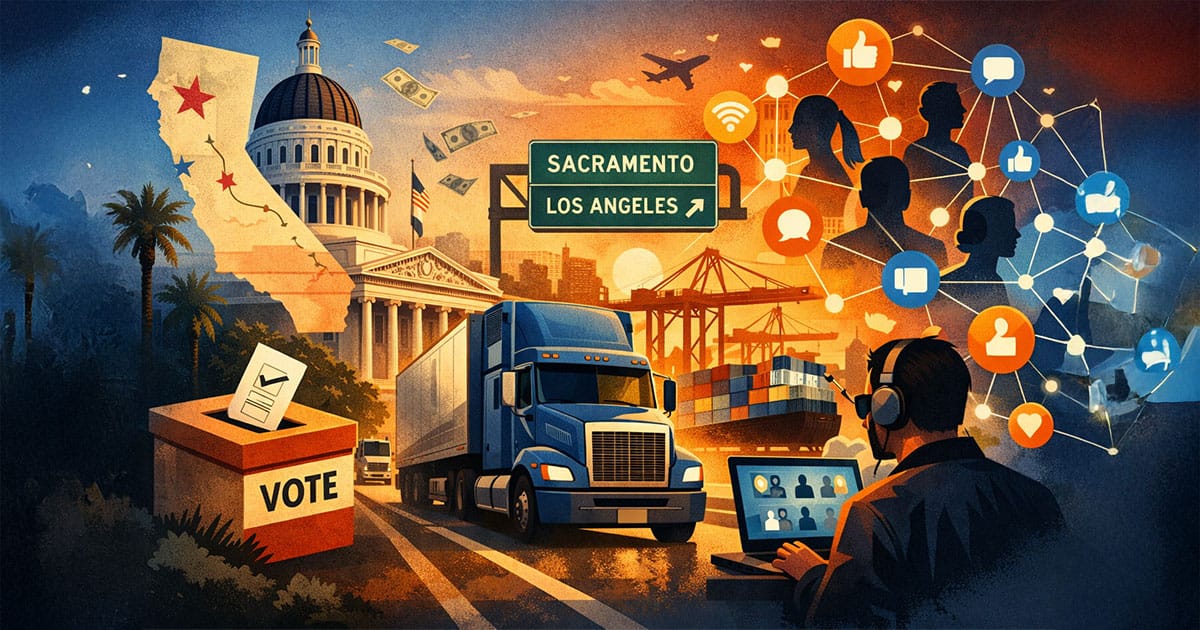
From Sacramento power plays to supply chain disruptions and the rise of digital organizing, this episode of The Signal connects the dots shaping life in Southern California. We break down California’s crowded governor’s race, stalled wildfire recovery funds, and a federal rule that could sideline thousands of immigrant truck drivers. Plus, a look at how social media networks are evolving into real-world organizing tools. Aired live on 90.7 FM KPFK Los Angeles on March 2026.
This is viewer supported news. Please do your part today.
This is a rush transcript. Copy may not be in its final form.
TRANSCRIPT
00:00:00:13 - 00:00:12:15
MUSIC INTRO
The whole run by a handful of greedy bankers and CEOs who nobody elected. We can't possibly last.
00:00:12:17 - 00:00:16:06
MUSIC INTRO
I'm going to tell you another change.
00:00:16:08 - 00:00:18:19
MUSIC INTRO
But you really only have to remember to tour.
00:00:18:21 - 00:00:42:15
DINO
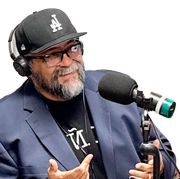
Good afternoon, Los Cyclers. Welcome to another episode of The Signal on Kpfk 90.7 and FM. I'm your host, Dino. Every week on this program, we take a step back from the noise of the news cycle and try and understand what is actually happening in our politics, our economy, and more importantly, our communities. We have three conversations lined up for you today.
00:00:42:17 - 00:01:08:03
DINO
But before we get into that, I do want to take a minute and actually apologize. We had previously promoted that this particular episode was going to have the L.A. City Attorney, Heidi Feldstein, Sorto, attending as well, but unfortunately, she had to cancel as a last minute responsibility came up. But we wish you luck, and we look forward to coordinating with her office to bring her back and one of the episodes.
00:01:08:05 - 00:01:30:07
DINO
So with that said, as I said, we have some great conversations lined up for us. We're going to head to Sacramento. State politics often feel distant from the day to day life of those of us here in the Los Angeles area. And to be fair, our greatest Southern California community, Kpfk, that only broadcast on 90.7 of them, but it's on 98.7 FM Santa Barbara.
00:01:30:07 - 00:02:04:01
DINO
What's up, Santa Barbara, 93.7 FM in San Diego. What Up San Diego and 99.8 FM Ridgecrest, China Lake. What is happening China Lake. So we'll be joined by journalist Andrea Valdez from Gallo News. To help us break down some of the stories that are coming out of Sacramento, in particular, those involving, wildfire recovery funding. And, of course, one of the big ticket items, you know, the whole run for mayor, we saw, over the week that, you know, the the campaign is saturated.
00:02:04:01 - 00:02:32:05
DINO
We have about 1365 Democrats running for governor, and that is squeezing the opportunities, for a Democratic governor. Fast and tight. And we might, some say, even possibly end up with a Republican governor as a result. So we get a little bit into that. Then we're going to shift over to a federal policy issue, one that could affect the immigrant workers and the trucking industry.
00:02:32:05 - 00:02:58:12
DINO
A new rule from the federal Motor Carrier Safety Administration is expected to change. And, you know, it's going to determine who can obtain a commercial driver's license in the U.S.. We'll be joined by Edgar Ortiz from the California Immigrant Policy Center to help us understand what the rule says. And then we're going to close out the show with a special topic, something that I've found fascinating for quite some time.
00:02:58:14 - 00:03:19:12
DINO
And that is this issue of the rise of digital communities, social media communities. You know, we all, many of us, certainly this show and many of us that are affiliated to it, as well as those of you that are, out there listening, you know, media, social media has created new ways for people to connect, share information, mobilize quickly.
00:03:19:14 - 00:03:59:00
DINO
And, my guest, Anthony de Peachey, is, you know, he's fascinating cat, who has developed a system of communication through these forums. One in particular called Soul Cloud, in which he does this rapid response communications project. I thought that it was something special to us here in the local community. And it turns out this brother has activated and built this system, one in each state in the country.
00:03:59:02 - 00:04:22:05
DINO
And he goes even further in about three continents, including continent of Africa, Asia, Europe and even Australia. I was like, man, okay, so we're going to have Anthony talking to us and again one more time before we move forward. I do want to mention that our planned conversation with the Los Angeles City attorney, Heidi Feldstein, Sotto, had to be rescheduled.
00:04:22:07 - 00:04:55:03
DINO
At the request of her office. There's a last minute change. So, like, to, the city attorney. We'll see you soon. So let's get into it, y'all. California politics moves quickly, and sometimes the most important developments are happening hundreds of miles away in this nice little town called Sacramento. From elections, to disaster funding decisions made in the state capital, ripple outward and affect communities across the state, including right here in Southern California, Southern California.
00:04:55:05 - 00:05:17:09
DINO
And to help us understand what is happening and some of the more recent stories, in particular, written by our guest, Andrea Valadez, reporter with columnist Carlo News. Carlo News, who's been covering some of the latest developments in California politics and has joined us in the past. Andrea, welcome back to The Signal Power.
00:05:17:09 - 00:05:20:18
ANDREA VALADEZ
No, no, I'm very happy to be back. Thanks for having me.
00:05:20:19 - 00:05:41:02
DINO
Well, thank you for doing what you do. Not just only as a journalist, but these topics in particular and indeed to the, news organization that is Carlo news for, having you folks cover these type of topics that I think are very important. So let's get into it, Andrea. Let's start let's start a little broadly first.
00:05:41:02 - 00:05:49:05
DINO
Right. What are some of the biggest political stories coming out of Sacramento right now that listeners here in Southern California should be paying attention to?
00:05:49:07 - 00:06:12:12
ANDREA VALADEZ
Right. Well, you know, right now there's a lot of talk about gas prices, given the war in Iran and what legislators can do, what they are or are not doing to help lessen that burden for Californians. We all know how tough gas prices are. There's still also a lot of anti. I suppose, making their way through the legislature that people can keep a look out for.
00:06:12:14 - 00:06:23:15
ANDREA VALADEZ
And then, of course, midterms are slowly but surely creeping up and there's a lot of elected offices that are, you know, going to be up for grabs. So campaigns are really starting to gear up right now.
00:06:23:17 - 00:06:53:08
DINO
And before we get into some of the stories that you've recently covered, and why we, asked you back on the signal, I just want to say, this morning when I was leaving or actually making my way out of my little town in the southeast side, headed out here to the station, my local gas watering hole or gas hole, I should say, hand for cash, not credit, but for cash purchase.
00:06:53:10 - 00:06:58:18
DINO
The lowest price point for regular unleaded was 579 per gallon.
00:06:58:19 - 00:06:59:20
ANDREA VALADEZ
Well.
00:06:59:22 - 00:07:25:12
DINO
Now, if you goes premium and I'm looking at the picture because I, I'm at the red light. I never ever, ever do this. Folks. You shouldn't do it either. Use your phone while you're driving. But I made this single exception because I'm sitting there. I'm looking at the at the, the banner or whatever it is that, the gas stations have cash price for a single gallon at my local Chevron was 619.
00:07:25:12 - 00:07:37:00
DINO
And if you pay with a credit card, 629 how in the hell is that whole Make America Great Again thing working for us? Right? But I digress.
00:07:37:02 - 00:07:39:13
ANDREA VALADEZ
I know it's a struggle for everyone, right?
00:07:39:13 - 00:08:07:05
DINO
And looking for transparency. I also have the luxury of driving, an EV car that that I actually steal from my daughter every once in a while because, you know, she's not using it. But, no, it's going to be paying and it's going to continue to be painful. But let's get into one of the stories that you recently covered that looks at the California governor's race and the fact that several Democratic candidates are just flat out saying, Charlie, man, I'm not going anywhere.
00:08:07:07 - 00:08:18:03
DINO
I'm in it to win. I don't care if I'm coming at 2 or 3, five, 10%, you know, support. And I'm going to stay in what is happening there.
00:08:18:05 - 00:08:40:07
ANDREA VALADEZ
Yeah. So the big story last week was that the California Democratic Party chair, Rusty Hicks, he wrote basically an open letter to all of the candidates. And he very strongly encouraged candidates that don't seem to have a viable path to victory and that are polling very low. He told them to drop out or at least be prepared to drop out and endorse another candidate.
00:08:40:09 - 00:08:57:02
ANDREA VALADEZ
As the June 2nd primary gets closer. And in response, the majority of the candidates that we can assume who's speaking to decide that letter and they still registered and they still put their names on the ballot. So, yes, they are refusing to drop out even if they're polling low.
00:08:57:04 - 00:09:11:21
DINO
Man. And so these candidates, you know, they're choosing to stay in the race even as the field becomes crowded. What, what's the potential impact of that?
00:09:11:23 - 00:09:37:12
ANDREA VALADEZ
Well, you know, California has a top two system, which I don't know if a lot of people know, but the top two system means that in every race, including the race for governor, the two candidates who received the most votes in the primary are the two candidates on the official November ballot. So the worry is. And the reason Hicks wrote his letter is that there is a concern that is so many Democrats stay in the race.
00:09:37:14 - 00:09:47:10
ANDREA VALADEZ
They are risking splitting the vote, which could lead to two Republicans on the November ballot, which could potentially mean California has a Republican governor next.
00:09:47:12 - 00:10:28:19
DINO
So let's let's break it down for our audience. So we have, I don't know, I'm trying to think of, how many, total candidates. I think it's ten candidates. And yeah, if we have, you know, one with 5%, one with 10%, one with 20%, another with 14%, so on and so forth. It is it is there's a potential there that if nine were to drop out and have those percentage points, and I'm just completely blaming this best case scenario, we'll drop out and all their support shifts to that one person, and then you end up with more than 50% you you got yourself a viable candidate.
00:10:28:19 - 00:10:43:19
DINO
But in this case, it is very entirely possible that, they are staying they also keep their relative percentage points. And in the end, the two highest are the Republicans. As such, they run for governor. Is that what we're talking about?
00:10:43:21 - 00:11:04:05
ANDREA VALADEZ
Yes. Essentially, there are a lot of more polls coming out each day that passes, and it is looking more likely like it will be one Democrat, one Republican. But, you know, if all these Democrats stay in the race and consolidate, don't consolidate their power as a party. It is very possible that there won't be any Democrats on the ballot at all.
00:11:04:07 - 00:11:27:08
DINO
Wow. So that's what that means for the voters and the dynamics of this primary election. What are some key areas that we need to look out for? I know that there's a lot more polling. In fact, Rusty Hicks and team decided to up front some polling, some additional polling. Any idea on what that's about and what should we be looking out for in the next couple of weeks on this topic?
00:11:27:10 - 00:11:56:05
ANDREA VALADEZ
Well, there will be a lot of televised debates coming out. Actually, that's another story I'm working on. There is an, ABC news debate coming up soon. And none of the candidates of color were invited to be on the debate because they are polling very low. And that's another big conversation happening right now. So I would just say read up, see what all these candidates positions are and see, you know, who you might want to support.
00:11:56:11 - 00:12:19:10
DINO
And I'm glad you brought that up. I did not follow some of these social media complaints. When Rusty Hicks, the president of the Democratic Party, did say, you know, is it doesn't go unnoticed that, a bunch of, another white guy is telling a bunch of other mostly people of color to get out of the race so that they can allow white folks to run for it.
00:12:19:10 - 00:12:47:04
DINO
So, interesting little, side note, Andrea, another story that you reported on involves Governor Gavin Newsom criticizing, former, now disgraced, troglodyte, security, Christie, known as Homeland security. I shouldn't call her a troglodyte. That was horrible. I apologize, Secretary gnome troglodyte. And, regarding.
00:12:47:04 - 00:12:48:20
ANDREA VALADEZ
Her.
00:12:48:22 - 00:12:58:13
DINO
We got into delayed wildfire wildfire funding that she has held back and, you know, walk us through what this topic is.
00:12:58:15 - 00:13:31:03
ANDREA VALADEZ
Yes. So, and her time as the head of Homeland Security, Kristi Noem, implemented a new policy where every contract, grant or disaster award over $100,000 required her personal signature. Now, a lot of experts kind of push back on this, because $100,000 for DHS is really pennies, right? But subsequently, she never signed the over $500 million in recovery aid that California requested after the devastating fires in Los Angeles last January.
00:13:31:05 - 00:13:41:21
ANDREA VALADEZ
So now that Kristi Noem is no longer in her position, Governor Newsom is calling on DHS and FEMA to release that funding, to help survivors and to help recovery efforts.
00:13:41:23 - 00:14:10:12
DINO
And that is, and that is obviously why this, is so important with, with our community here in Southern California who have been dealing with wildfire recovery. So, you know, this is an interesting side topic, maybe something we'll revisit at a later time. Because, you know, one of the arguments that we can we have heard time and again is this issue of a lack of, rapid response to some of the victims of a fire.
00:14:10:13 - 00:14:36:20
DINO
And yet here we have $500 million in recovery aid essentially being held down by the federal administration. All the while, we have local communities, local advocates, and in many cases, let's be honest, those that are seeking to turn this political are saying, well, you're not doing enough. But is it fair to say that part of the reason not enough is being done because $500 million is being held up?
00:14:36:22 - 00:15:05:00
ANDREA VALADEZ
I mean, yet there the legislature approved billions to help with the recovery. But like you and I both know, and a lot of your listeners know, there's still a lot of work left to do. In those $500 million would surely help. But, you know, I even reached out to FEMA and got a statement from them and their spokespeople spokesperson said, quote, contrary to claims, there are no systemic delays in funding, which, of course is a direct contradiction to what the governor's office is saying.
00:15:05:00 - 00:15:08:05
ANDREA VALADEZ
Right. So, you know, there is there's a big disconnect there.
00:15:08:10 - 00:15:28:18
DINO
Okay. So, if you have a few more minutes and there are two more quick questions that I just burning and, and, my little overhead and as you probably know, it's, it's actually very big had. But let me go through this. Right. What does this dispute right. What does this dispute say about the relationship between Charlie and the feds right now?
00:15:28:20 - 00:15:51:23
ANDREA VALADEZ
Well, I mean, I think it just goes to show how fractured that relationship is. Right? And on top of the delayed FEMA funding, there's also over 33 billion in funding that California is still waiting for Congress to approve. And Governor Newsom has gone in-person to Washington, D.C., to ask for congressional help. He's asked President Trump for assistance, and that aid is still not coming in.
00:15:51:23 - 00:16:01:12
ANDREA VALADEZ
So it is definitely unfortunate that this disaster is, like you said, so widely politicized. And survivors and communities are really feeling the brunt of that.
00:16:01:17 - 00:16:23:18
DINO
So let me see if I if my math is mapping here. I'm a political scientist, didn't do well in math, but if I understand correctly, 500 million in recovery aid being held up, 33 billion in FEMA. So as I do the math here, 33,000,000,033 billion, 500 million that's supposed to go to Southern California is not coming in.
00:16:23:20 - 00:16:27:21
DINO
Wow. I mean, now that deserves more like a damn.
00:16:27:23 - 00:16:39:15
ANDREA VALADEZ
Yeah. And I mean, it's been over a year now, right? Since these fires broke out. So it's it really paints not a very pretty picture of the relationship between California and the federal government.
00:16:39:17 - 00:16:51:15
DINO
So, Andrea, as we look, as we look towards these, what is it? Not so distant future. What are you working on? What should we be looking for in Sacramento?
00:16:51:17 - 00:17:09:09
ANDREA VALADEZ
Oh, I mean, I know I sound like a broken record, but the June primary is going to be here a lot sooner than we think. Yeah, and there's there's a lot at stake. It's not just electing a new governor. It's all of our assembly members, some of our senators and attorney general and just so many other elected officials.
00:17:09:09 - 00:17:18:22
ANDREA VALADEZ
So campaigns are really going to be gearing up. And, you know, I think folks should be paying attention and looking into these candidates and seeing who ultimately, that they want to represent them.
00:17:19:00 - 00:17:39:11
DINO
Andrea Valla, this Carlo news reporter, the unofficial, the signal correspondent coming to us on what's happening in Sacramento and how those decisions ultimately shape our communities here in Southern California. Andrea, was great having you back. I'm going to reach out to you again, girl, bring you back and talk to us about please do.
00:17:39:12 - 00:17:40:01
ANDREA VALADEZ
Yes.
00:17:40:03 - 00:17:40:15
DINO
All right.
00:17:40:17 - 00:17:42:00
ANDREA VALADEZ
Thank you for having me.
00:17:42:02 - 00:17:59:15
DINO
Wonderful folks. Stay with us. We're going to take a brief break. We're going to come right back with Edgar Ortiz from the California Immigrant Policy Center under his new California driver's license rules. And how, how is that going to impact our communities and the immigrant, and immigrant workers?
00:17:59:17 - 00:18:01:18
MUSIC INTRO
Be right back. You are listening to you.
00:18:01:18 - 00:18:03:21
MUSIC INTRO
Really all you have to remember to.
00:18:03:22 - 00:18:09:05
MUSIC INTRO
Talk to a signal. There's a signal.
00:18:09:07 - 00:18:21:05
MUSIC INTRO
Coming with mighty Dino only on Kpfk, 90.7 FM, Los Angeles.
00:18:21:07 - 00:18:29:21
MUSIC INTRO
I'm here as fellow as I live. And on Monday, send your.
00:18:29:23 - 00:18:35:11
MUSIC INTRO
Tone. And I said I cannot get it inside and let you get up outside.
00:18:35:11 - 00:18:39:10
MUSIC INTRO
Of la maladie. And like I say, if you say hi.
00:18:39:12 - 00:19:03:05
DINO
Welcome back to The Signal. News, information and analysis. I'm your host, Dino. I like that promo. It's the closest I've ever come to feeling like a superhero. The mighty Dino. You know, when I was a kid, I was a huge fan of superhero. Still am. Some would even say, at my age, especially when I'm wearing my superhero t shirts, like, you know, Batman, Superman, all that good stuff.
00:19:03:07 - 00:19:24:06
DINO
It this is the only time I've ever felt like a superhero after 45 years, and I'm not. That's my age, and I'm sticking to it. That and and, as I look at my production crew behind the glass when I go to a store and the doors open by themselves, it's like one superhero coming through that in this promo that, that you guys put together.
00:19:24:08 - 00:19:55:05
DINO
Welcome back again to Kpfk, 90.7 FM, The Signal news, information, analysis. Joining me now, Edgar Ortiz from the California Immigrant Policy Center. And you know, we're turning now to this policy change that could affect immigrant workers and the transportation industry. A new rule from the Federal Motor Carrier Safety Administration, expected to go into effect soon. I believe actually, this coming week, will change the rules governing non domiciled commercial driver's licenses.
00:19:55:05 - 00:20:24:19
DINO
We'll get into what that means shortly. But they're also, known as CDOs. Advocates say that the rule could exclude many immigrants, including individuals with TPS, Dhaka asylum status and other visas from obtaining a CDL moving forward. This matters, folks. This matters because immigrant workers play a major role in the trucking and logistics industries that keep this country's supply chain moving.
00:20:24:21 - 00:20:49:00
DINO
You know, we've known this for a long time in the restaurant industry and the service provider industry warehouses, and, you know, the trucking and logistics. So to help us understand what this rule means, we're joined by Edgar Ortiz from the California Immigrant Policy Center, an organization that works on immigrant policy and advocacy across the state. Edgar, welcome to the Signal.
00:20:49:02 - 00:20:51:15
EDGAR ORTIZ
Hey, good afternoon, Dino. Thank you so much for having me.
00:20:51:17 - 00:21:04:22
DINO
Wonderful. So, hey, Edgar, let's, let's let's get into the simple the basics here. Right. What exactly is this new rule from the Federal Motor Carrier Administration? And what does it change?
00:21:05:00 - 00:21:16:04
EDGAR ORTIZ
Thank you so much for the question. If I may, I'd like to first take a step back and share a bit about what the m c fm, CFR is for listeners who might be hearing this name for the first time.
00:21:16:04 - 00:21:17:03
DINO
The federal border.
00:21:17:05 - 00:21:17:15
EDGAR ORTIZ
On.
00:21:17:17 - 00:21:21:06
DINO
Your safety administration got it covered.
00:21:21:08 - 00:21:47:02
EDGAR ORTIZ
Yes. In a nutshell, the FM CSA is an agency under the federal Department of Transportation that sets the rules and regulations for the trucking industry. It also includes setting requirements for commercial driver's licenses, which you need if you want to work in this industry. Now back to your question. The FM, CSA published a new rule last month, which is actually going to go into effect this upcoming Monday.
00:21:47:04 - 00:22:21:06
EDGAR ORTIZ
And what this road does is going forward, it's going to prohibit states from issuing non domiciled commercial driver's licenses to new categories of immigrants. This would include not just people who are undocumented, but will also cover individuals like you mentioned who have TPS doc, visas or who are assigned leaves and refugees. That's about 194,000 individuals across the country that are going to start to gradually lose their CDL and also, in turn, their ability to earn a living.
00:22:21:08 - 00:22:23:10
EDGAR ORTIZ
As soon as their licenses expire.
00:22:23:11 - 00:22:50:15
DINO
194,000 individuals, these are mostly individuals, and if I understand correctly, and I might be assuming here, when I think of the the oversight of MXM, fm, CSA, I live actually in the southeast area, over near Long Beach. And of course we have the port. I navigate the, Interstate 710 and I see these, you know, large trailer trucks.
00:22:50:15 - 00:23:02:07
DINO
Right. And, that's a significant amount of people. I'm assuming that this is primarily one of the primary industries that we're talking about that will be affected. Is that safe to say?
00:23:02:09 - 00:23:34:14
EDGAR ORTIZ
Yes, absolutely. And this is a significant number of individuals who are going to be impacted, from the 194,000 individuals I mentioned, about 61,000 of those, reside in California. Actually, some folks might have seen this in the news from last week, but there were already 13,000 people in California who lost their licenses because of an administrative error that the Department of Motor Vehicles or the DMV, created last December.
00:23:34:14 - 00:23:58:11
EDGAR ORTIZ
And the DMV tried to fix this issue and return their licenses in time before the new rule was set to go into effect. But the FM CSA responded by pausing California's ability to issue licenses going forward. So those 13,000 individuals, who were probably using these licenses for many years to work in the industry, are no longer able to drive these trucks.
00:23:58:13 - 00:24:23:23
EDGAR ORTIZ
And then there's another 48,000 that still have their licenses in California. But because of the new rules, they could lose their licenses in, gradual, loss of licenses over the coming year. So in total, that's the one that's about 61,000 individuals who will no longer be able to work in the industry, actually.
00:24:24:02 - 00:24:58:12
DINO
So I actually I mean, I'm doing the math here. It sounds like it's actually going to be a lot more. So let me get this straight right. The federal administration is, during this very difficult period that we're all living in, is looking to change the rules that will directly impact 194,000 essential drivers, 61,000 of which reside in California, along with already 13,000 that lost their jobs due to an administrative error.
00:24:58:12 - 00:25:22:11
DINO
And before that could get fixed, they came in and said, no, if you, and along with an additional 48,000 that are in continued jeopardy, that's a whole lot of people that are essential to us having a good way of life, whatever that means these days. What potential impacts are we looking at here?
00:25:22:13 - 00:25:49:09
EDGAR ORTIZ
Very significant, both to the individuals who are about to lose their licenses and also to the economy as a whole. The trucking industry, which, in fairness, has had its own history of worker mistreatment and unsafe working conditions, is an industry where a lot of people have looked to secure employment over the years, and these people have invested considerable training, time and labor in order to make a living in this industry.
00:25:49:09 - 00:26:34:12
EDGAR ORTIZ
And they deliver all types of cargo from food, gas, furniture, heavy equipment and anything else that you can think of that is going to be on wheels and taking away these individuals ability to work is just one piece of this federal administration's broader, immigration enforcement and deportation strategy. The immigration raids are the thing that, arguably the highest profile thing, but there's also been this other, more sort of indirect effort that includes now these new rules are CDL to take away people's ability to work through what's called the documentation.
00:26:34:14 - 00:27:05:09
EDGAR ORTIZ
And so by taking away people's ability to work, you're limiting their ability to earn enough income to pay for themselves and their loved ones. Critical needs like housing, health care, food, forcing them to go into even greater debt. And what the administration wants at the end of the day is to squeeze people so hard that they have no way of being able to stay safe or economically secure in the country to where they are.
00:27:05:10 - 00:27:15:01
EDGAR ORTIZ
And the self, deporting essentially. Right. So this is just one piece of this broader strategy that the administration's been implementing now for the past several months.
00:27:15:06 - 00:27:52:20
DINO
So we're talking about, on the one level, the this act of persecution, selective persecution of mostly people of color, mostly immigrants, poor working class folks who are part of this indirect and systemic documentation. And I'm glad you brought this up because, you know, for a while, many of us I think certainly as we were covering the Ice raids and the attacks on our communities here, one of the things that I kept hearing was this concern that these type of vicious, rather public attacks that we were seeing on social media and across television and they're still happening.
00:27:52:20 - 00:28:16:16
DINO
I mean, they've begun to kill American citizens. That's not, that's a statement of fact. But what we're seeing now is this more systemic approach, right? We have the forward facing public, attacks that everybody knows, but we also have this systemic approach in which, they're documenting. Many people don't realize how important immigrant workers are in the trucking and logistics industry.
00:28:16:16 - 00:28:26:02
DINO
And so I could see why the administration would go after this. Can you talk us to you walk us through about the role they play in this industry in particular?
00:28:26:03 - 00:29:05:14
EDGAR ORTIZ
Yeah, absolutely. And I'll just add really quickly that this is all things that were telegraphed ahead of time to the, project 2025 playbook, many, folks in far right circles and more nativist, organizations have been putting together, which is going after immigrants in this much more comprehensive way under the Trump to point out administration. And this is something that's going to affect all of us, regardless of your immigration status, the role that immigrant workers play in the trucking and logistics industry is incredibly significant.
00:29:05:15 - 00:29:32:09
EDGAR ORTIZ
I think you were talking about this in the beginning, but we can't just talk about trucking in a silo, right? It's an industry that inextricably connected to any type of sector that lives off of the cargo that drivers transport, warehousing, retail, grocery, logistics, even insurance. Insurance plays a big role in ensuring that workers, trucks and cargo are able to be secured.
00:29:32:11 - 00:30:01:21
EDGAR ORTIZ
Every one of those is going to be impacted. The 61,000 workers who are set to lose their licenses, that's not an insignificant number, as you know fully well, that's going to impact the state's entire supply chain, which will lead to delays in critical goods making their way across the country. And will also inevitably lead to increases in the cost of goods services, further exacerbating the affordability crisis that we're currently dealing with.
00:30:01:21 - 00:30:04:10
EDGAR ORTIZ
And if I could just add one last thing to highlight.
00:30:04:12 - 00:30:08:03
DINO
Please, could we have time? Go ahead.
00:30:08:05 - 00:30:29:16
EDGAR ORTIZ
Oh. Thank you. These are workers that you can just easily replace. If this is an industry that's known for having very rigorous training requirements, these people are consummate professionals in their work and losing 61,000 drivers. You're not just going to get 61,000 new drivers, at the snap of your finger.
00:30:29:18 - 00:30:55:22
DINO
Right? Right. Talk to me about the, the pushback, right? The legal and the policy pushback happening right now from advocates and lawmakers, advocates such as yourself. And by the way, let me let me reintroduce you, Edward. This is with the California Immigrant Policy Center. And we're talking about this new rule from the Federal Motor Carrier Safety Administration, FMC, S.A., that's expected to go into effect, I believe, on Monday.
00:30:55:22 - 00:31:44:16
DINO
That will change the rules governing non domiciled commercial driver's licenses, commonly known as CDOs. And what essentially that does is that it creates a system of documentation for those who work in the trucker logistics industry, basically removing their ability to earn a responsible, living, but not only that, they are essential in every sense of the word workers and part of the system that allows not only California, but indeed the entire, country to, to sustain itself, to live, to produce, because it is through these industries, that we are able to get goods and services come through.
00:31:44:20 - 00:31:58:02
DINO
So, Edgar, what is the pushback? What is organizations like yours, the California Immigrant Policy Center and lawmakers doing to push back on this? It's coming in on Monday, 48 hours from now.
00:31:58:04 - 00:32:19:22
EDGAR ORTIZ
Yeah. Three things I'll just share really quickly. At the federal level, the AfL-CIO, the American Federation of Teachers and Public Citizen filed a lawsuit to prevent the rule from going into effect. You just said the number of hours. That's how much time we have between now and then to see if a judge will grant the request to pause the implementation of the final rule.
00:32:19:22 - 00:32:49:01
EDGAR ORTIZ
So that's something we're continuing to monitor at the state level. There is a bill right now that Assembly member Doctor Jasmeet Bains has introduced to try and give a little bit more advance notice to individuals with CDL in the event that they are set to lose theirs. And then lastly, in regards to state and local advocates, my organization is also in conversations with partners to try and identify both short term and long term solutions.
00:32:49:02 - 00:33:01:05
EDGAR ORTIZ
We can advance in California to support the workers and their families during this time of critical need. And if anyone's listening, that would love to partner on this, or if you have members who are working on this, please don't hesitate to reach out.
00:33:01:06 - 00:33:09:13
DINO
And what what kind of solutions or mitigating, opportunities are you guys creating?
00:33:09:15 - 00:33:11:08
EDGAR ORTIZ
I'm so sorry. Could you repeat that? Yes.
00:33:11:10 - 00:33:19:19
DINO
So, what are you guys doing to try and support drivers? Those that may be impacted.
00:33:19:20 - 00:33:51:12
EDGAR ORTIZ
Yeah. So we have been in conversations with other organizations like the Asian Law Caucus and the Sikh Coalition, which have been doing a lot to provide resources and education for workers who are navigating this transition. I highly recommend that if, somebody knows someone with a CDL or if you yourself have a non domiciled CDL, and we definitely continue to check the DMV website for updates on the new processes for, reapplying for one.
00:33:51:13 - 00:34:16:00
EDGAR ORTIZ
And according to the Asian Law Caucus, if you have, currency, the all right, now definitely check the status of it online to make sure that it is current. And if you have been having some issues caused by the DMVs or the, there are the Asian Law Caucus right now has been working to provide guidance for workers on how they can get that corrected and be able to continue driving with their current license.
00:34:16:00 - 00:34:25:09
EDGAR ORTIZ
So for the time being, I would say those are some of the best things that we can do to support individuals while we still come up with a longer term assessment of what we can do to help workers.
00:34:25:11 - 00:34:36:21
DINO
You know, again, I don't think I asked and I don't know that we we've covered this. What exactly is the federal administration saying is the reason for this?
00:34:36:23 - 00:34:40:06
EDGAR ORTIZ
What is the TSA looking to do with it now? Yeah.
00:34:40:06 - 00:34:52:02
DINO
Why are they why are they changing the rules? What is you know, what is their rationale? What is their argument in support of changing these rules and documenting these individuals?
00:34:52:04 - 00:35:25:02
EDGAR ORTIZ
Yeah. So this is part of a much broader strategy for the administration to essentially turn public opinion against all immigrant communities, regardless of status. And they have been really leveraging a lot of recent things that have come up in the news around the industry. And they have been basing this off of no concrete data whatsoever, just completely unsupported falsehoods to say that we need to make the roads safer.
00:35:25:04 - 00:35:47:19
EDGAR ORTIZ
But this is not going to make the roads any safer, and it's only going to take away families and workers livelihoods. And it's going to have a very detrimental impact on the economy as a whole. And so this is consistent with the administration's just, completely unconscionable and unsupported efforts to continue demonizing immigrants.
00:35:47:21 - 00:36:16:01
DINO
Indeed. And, you know, my producers are sharing information with me here in the studio that, among other arguments, the FMC argues that some state licensing agencies have not properly verified the records of non domiciled applicants, allowing drivers with dangerous driving histories to obtain commercial licenses. I mean, I'm going to call B.S. anybody who's ever, gone through, a licensing process here, certainly in California.
00:36:16:03 - 00:36:48:22
DINO
I imagine it's a lot more stricter for a commercial driver's license than it is for, little me and I getting my license, among other things, are saying that, they're looking to prevent fatalities, improve safety standards, combating drug and alcohol use. You know, again, we can get into the minutia of that, but, I think it's consistent with a pattern of behavior on the part of the administration that has consistently driven by, what only can be described as the stuff to come out of balls.
00:36:49:04 - 00:37:05:08
DINO
So with that, said, Edgar, how do people get involved? How do they learn more about it? Where can they, join you and the, California Immigrant Policy Center to help out in support? Give us these socials, the website.
00:37:05:10 - 00:37:28:05
EDGAR ORTIZ
Yeah. Please follow us on social media for continued updates on this unfolding situation, as well as other issues that my organization has focused on. And we also have a list there that people can sign up for to get updates in that way as well. We focus on issues relating to economic justice, housing, public benefits, and also detention and deportation as well.
00:37:28:05 - 00:37:40:20
EDGAR ORTIZ
So if this is something where you would like to consider working with us, or if you want to stay abreast of new developing policy updates, we're here to support you. Also, please check us out online.
00:37:40:22 - 00:38:03:06
DINO
Thank you. My guest has been, Edgar Ortiz with the California Immigrant Policy Center as we, win this town. Thank you for breaking down the complicated federal policy and what it could mean, the changes in this federal policy and what it could mean for not only workers, but industries across the country. I'm going to tell you when I'm.
00:38:03:08 - 00:38:05:13
ANNOUNCER
As this escuchando, but you really.
00:38:05:18 - 00:38:08:01
MUSIC INTRO
Have to remember to work.
00:38:08:03 - 00:38:21:17
MUSIC INTRO
Towards the signal. Con el poderoso vino solo por copy of the car. No. Venta punto at the FEMA Los Angeles.
00:38:21:18 - 00:38:26:10
MUSIC INTRO
Not just the American government.
00:38:26:12 - 00:38:31:05
DINO
There we go. We went bilingual on that one.
00:38:31:06 - 00:39:17:00
DINO
Oh, man. So, yeah. Listen, fascinating stuff. Right? Scary stuff indeed. How our communities continue to be under attack and by our communities. I'm talking about, nationwide. Worldwide. Which brings me to this next segment of ours. I got excited about this topic. It's a topic that we've thrown around. We put it in the, the signal parking lot a while back, as we were covering some of the rapid response work that was happening last year, around our communities, not only are being informed, educated, and empowered, but, having an opportunity to activate, respond, react to what was going on and let's go.
00:39:17:00 - 00:39:46:03
DINO
Let's be honest, it goes beyond just being in a reactive mode. It we're also talking about, being proactive. Which brings me to this next topic of ours. For much of modern history, folks, people learned about the world through a handful of mediums. This has been an evolutionary process. In the beginning we had newspapers, we gradually moved to radio and later television shaped how people became informed about what was happening, to them, around them and so forth.
00:39:46:05 - 00:40:16:19
DINO
And the early days of the internet, we we began to see something new emerge online communities forming around shared interests, shared causes. Over time, those communities began to organize and mobilize people in ways that were faster and more connected than anything else had existed before. Today, social media can move information across the world in seconds, microseconds and create networks of people that are able to coordinate, action almost instantly.
00:40:16:23 - 00:40:45:08
DINO
In fact, I remember at the time, I was actually, working in Chiapas, Mexico, when the these, uprising happened there and when that resistance first use the internet to issue out communication. At that time, I was the first social justice revolutionary group to do so, to use the internet and be able to, put out their communiques.
00:40:45:10 - 00:41:11:03
DINO
And within weeks and months, you had an entire global community coming into Chiapas, yours truly included, and witnessing for the first time this unique, process of a global community rallying around events happening in a foreign country to talk about how these digital communities are shaping modern organizing. We're joined by Anthony de Apache. He is, you're going to love this one, Sly.
00:41:11:05 - 00:41:17:07
DINO
You ready? This brother has a very special title, right? Besides being a badass, he is a.
00:41:17:07 - 00:41:17:23
DINO
Man.
00:41:18:01 - 00:41:35:23
DINO
He is a movement cheerleader who works to nurture relationships online and real life for collective liberation. Right. Well, we got Anthony. You got the whole crew, the production crew behind the glass, lifting fingers, lifting fists. Welcome to the sick.
00:41:36:01 - 00:41:38:07
ANTHONY
Thank you brother. Great to be here, Anthony.
00:41:38:07 - 00:41:49:14
DINO
So for people who may not know your work and they're going to know about it after today, tell us about the communities and networks that you're helping bring together. And let's start here locally. And so Cal.
00:41:49:14 - 00:41:50:07
ANTHONY
Yeah what's.
00:41:50:07 - 00:42:05:19
DINO
Your So Cal solidarity. Take me through the yeah. Take me through to the very beginning. One day Anthony sit there drinking a cup of coffee. Maybe having a glass of whiskey. And he says, Anthony, start this, walk us through that moment.
00:42:05:21 - 00:42:37:14
ANTHONY
Okay. So, we had moved back to California. My wife's from Ontario area in an empire, and I was feeling kind of lonely. I wasn't plugged into, you know, community of, activists and comrades and so I started a chat. The first one was, sending melon Vine. But anyway, it was like a Palestine take off, I think.
00:42:37:14 - 00:43:04:04
ANTHONY
But but the point of the story, we felt like it was local folks. And it evolved into this chat that you've been in for a while now, and, and, Yeah, we've just been, you know, creating community and uplifting mutual aid. Actions, you know, not trying to replace in-person organizing, but rather enhancing it, you know, deepening it.
00:43:04:09 - 00:43:31:22
ANTHONY
And especially, for folks, you know, who just aren't able to get out in person all the time, whether they're disabled or, you know, there's just limitations. It's really helpful, I hear, and I know to be able to just that, you know, your fingertips, have that encouragement and, and that kind of ability to, to strategize, you know, again, not really getting into anything, spicy because we know that meta is not a safe place for that.
00:43:31:22 - 00:43:39:14
ANTHONY
But, but yeah, just kind of building relationships and uplifting things that were already public like, yeah, mutual aid and actions and so on.
00:43:39:19 - 00:43:53:07
DINO
So, so you started this particular chat so Cal solidarity. Yeah. And walk me through what the what's the the the what do people see when these kinds of chats. Yeah. Evolve.
00:43:53:09 - 00:44:25:17
ANTHONY
Sure. So I mean they're it's, you know, comprised of individuals of groups. We're not affiliated with any specific, you know, entity. But but obviously the folks that are, you know, on the ground that have been organizing for a long time, in our area, you know, are we want to center them, we want to include them. And and so that's been a big part of it is just, you know, trying to, figure out, who has the bandwidth, you know, to engage in this way, who finds it helpful, who does in, you know, settings and basic ground rules.
00:44:25:17 - 00:44:56:04
ANTHONY
Right. Because meta loves conflict, loves to you know, put us in dynamics with each other that are just toxic. And so, you know, a lot of it's and honestly, I'll tell you, but a lot of it's been just me stepping back, right? Not being as like, obsessed with, monitoring or, you know, maintaining everything and really more of, like, getting the right folks in who want to use it, who have the ability to, you know, who would like to engage this way and, and kind of, you know, deputizing that.
00:44:56:04 - 00:45:21:18
ANTHONY
And that's been our model, with the other chats as well. And, and they're not only like geographic. I like how you mentioned interest because, you know, yeah, we talk about like, or we have, you know, groups for like things like Star Wars or whatever, but it's all centered around, you know, lefty, things. And, and it's just ways to kind of, you know, take back a lot of the, ground and momentum that, conservatives had because, you know, ultimately.
00:45:21:18 - 00:45:51:10
ANTHONY
Right, these institutions that we're fighting, whether it's, you know, the police, the army or whatever, it's like they are incredibly good at building community. You know, sharing mission and stealing, you know, values and folks. And, and so it's like so much of this is, I think, unappreciated, because it's, you know, soft, it's so to speak, it's like, you know, more about relationships or friendships even, rather than like, you know, militant, you know, direct action.
00:45:51:10 - 00:46:08:05
ANTHONY
But like, you're uplifting. It is helpful for folks that are, you know, doing this work to have a place like this where they can laugh and, and players to, to speak, and, and, support one another. So that's kind of the spirit of it, I would say.
00:46:08:05 - 00:46:25:06
DINO
And then tell me, is there any one particular chat I know that and, you know, for those of you who are listening, I myself, joined this a while back, you know, being in public radio or being in media, you know, I have 1001, messages,
00:46:25:08 - 00:46:26:09
ANTHONY
You so you.
00:46:26:11 - 00:46:52:13
DINO
Use it comes to me. Of course. You got the proverbial page for a story. I want to be on the show. And every once in a while, you know, something stands out of of the many different chats that you all monitor, a so-called solidarity that continues to inform. And. Yeah. Is there one that stands out to you that, you know, your go to your, you know, look, I see the chats come through and there's some that I am quick to tune into and say, oh, let me check this out.
00:46:52:15 - 00:47:00:18
DINO
And others that, okay, I might get back to it later, but what's one that stands out to you of the folks that support and use your platform.
00:47:00:20 - 00:47:03:23
ANTHONY
You're saying members of the chat, your messages.
00:47:04:01 - 00:47:08:08
DINO
The well members who are active on an ongoing basis?
00:47:08:10 - 00:47:48:07
ANTHONY
Yeah. So, I mean, there's some folks here in the IEEE, I don't know, I gotta guess, like Ontario United for Liberation is a, community that our friend, Ben Reynoso, has, you know, helped cultivate. And those folks have been, you know, a nice, I think, example of the hybrid model that we're talking about, where, you know, they're plugged into the digital sphere, so to speak, but they're also, you know, weekly out, in the community protesting and, you know, holding elected officials accountable, just doing, you know, the work, and all the different ways that, that it needs to be done.
00:47:48:09 - 00:48:06:02
ANTHONY
Another gentlemen you may be familiar with is, Adam Smith. He's a musician, in LA, and he goes to, like, public comments and cop watches and and, yeah, he's he's a dear friend. Yeah. I'm just scrolling through here like.
00:48:06:04 - 00:48:09:09
DINO
No justice for Chaz now.
00:48:09:11 - 00:48:33:15
ANTHONY
Yeah. About that one. Yeah, yeah. So, I don't have all the details. You know, front of mind right here, but basically, you know, there was, Yeah, there is a, black man who was incarcerated and, you see, unjustly, you know, it's not a new jail, but it's definitely an important one. And and so this page is.
00:48:33:15 - 00:48:39:01
ANTHONY
Yeah. On that stream of, like, cop watching and holding, you know, the, perpetrators.
00:48:39:01 - 00:48:39:06
DINO
Of cop.
00:48:39:07 - 00:49:05:04
ANTHONY
Advocates sort of safe. Yeah. The lawyers, everyone accountable. You know, just in a way that's, appropriate. And and, like, you know. Yeah, just mobilizing folks, to protest and to, hearing for jazz. Yeah. Yeah, that's, a good example of somebody who was, you know, using or, campaign, you know, that's using the space really effectively, because they're just, you know, constantly putting things out there and they're engaging.
00:49:05:04 - 00:49:22:10
ANTHONY
Right? Because it's not just people can say, oh, spam or whatever, but it's like, if you have a relationship with people, you know, then it's different. If you're uplifting them as well and it's mutual, you know, then and it's less, annoying, I would say. Also on that note of, of like you said, all the chats, it is very helpful.
00:49:22:11 - 00:49:34:16
ANTHONY
It's a little PSA here, but two mute chats, particularly on Instagram or I guess, you know, wherever you're at, because yeah, I have like hundreds. And so it is absolutely overwhelming otherwise.
00:49:34:16 - 00:49:58:08
DINO
And so let's talk about, we're talking social media movement building with Anthony Peachey, who's an administrator of a project here in Southern California. So Cal solidarity and actually goes way beyond. But before I go into that, Anthony is our resident movement cheerleader, nurturing relationships online and in real life for collective liberation. Anthony, this started as a project.
00:49:58:08 - 00:50:21:06
DINO
When you came back, with your wife, you started engaging activating communities and today, today, social media, this project of yours is now in Europe, Asia, Africa, Australia, across every single state in the US. I mean, damn well done. Wow.
00:50:21:08 - 00:50:22:05
ANTHONY
Yeah. Tell us.
00:50:22:07 - 00:50:35:03
DINO
I mean, how in the hell did you go from. I'm feeling a little bored to let me be, I don't know, I would yeah. I say, the most prolific coordinator organizer in the world now.
00:50:35:05 - 00:50:57:20
ANTHONY
You can say that I appreciate the kind of. But but the reality is just that, like, you know, it's the cheerleading. It's the, you know, encouragement. And I'm. Yeah, addicted to I say, nurturing this, like, community and, and, you know, I'm raising up folks or whatever, you know, uplifting folks that are already, you know, doing amazing work and have been for years in these different spaces.
00:50:57:20 - 00:51:21:04
ANTHONY
So, you know, I, I, studied under like, Professor Robin Kelly, UCLA and like, I always approach organizing with the acknowledgment that folks have been innovating and leading, you know, frontline impacted communities have been leading forever. And I'm grateful to be in community. I'm grateful to cheerlead and and support. And so that's, you know, how I want to set the tone.
00:51:21:04 - 00:51:44:12
ANTHONY
And that's all right. But but the reality is just that. Yeah. That there are so many folks that do want to connect that haven't, you know, been able to, I guess, with people in their state and their country, in their area and, and so, you know, yeah, we we're not like I said, we're unaffiliated. Right. But we love any group that is doing organizing.
00:51:44:12 - 00:52:16:06
ANTHONY
So whether it's, PSA or, you know, what is it for us? So like there's just SDS, there's so many groups and even, you know, here, that are doing amazing work and, and that people just need to, you know, meet that they need to encounter and feel safe to, you know, engage with and, and so a lot of this is just, disarming or, you know, defining like the, the awkwardness of, you know, reaching out to your local organizers and, and getting in touch, you know, it's just trying to.
00:52:16:07 - 00:52:19:13
ANTHONY
Yeah. Bridge that gap and and so. Yeah.
00:52:19:15 - 00:52:20:14
DINO
And then there's the.
00:52:20:14 - 00:52:22:20
ANTHONY
Sponsor study guide. But, you know, let.
00:52:22:20 - 00:52:43:22
DINO
Me ask you. So social media, one of the things that we're able to mobilize quickly, but it can also sometimes create noise. And the biggest problem that we have today is, you know, misinformation, disinformation. How do you navigate that? I imagine it's a challenge for you as much as it is for all of us who are consumers of media.
00:52:43:23 - 00:53:11:08
ANTHONY
Yeah, yeah. I mean, I again, I think going to the source, so to speak, is really helpful because we have folks on the ground in all these different communities. When stories come out, I can immediately go to somebody at least 1 or 2 in whatever state, whatever city. And I can ask, you know, what are you hearing? You know, and even if they don't know, they're going to apply that same rigor that you described to, you know, their process of just connecting with folks and, and, you know, seeing what's going on.
00:53:11:08 - 00:53:41:00
ANTHONY
And, and then, you know, we're going to respond that way. And, and I will say on that note that that like it's been horrible. Obviously the kidnaping, the, you know, ice, assault on our communities. But but it has been really beautiful that is a good example of just like the accountability in terms of like, you know, documenting the atrocities, but also, again, you know, coordinating for mutual aid and and, you know, mobilizing people for protests, like specifically around the issue of, immigration justice, of abolishing Ice.
00:53:41:00 - 00:53:59:15
ANTHONY
And and so, you know, it has been good to see it really reminds me of, like, the encampments because that was the only time where where that was or excuse me, where there was this much momentum and, and, you know, just sort of shared urgency. I would say nationally, and it's, encouraging for sure.
00:53:59:15 - 00:54:09:17
DINO
So, so the million dollar question, how do people, our audience, the, right wingers who are monitoring how do you like.
00:54:09:19 - 00:54:13:08
ANTHONY
How do the vetting we have vetting process. Good.
00:54:13:08 - 00:54:17:13
DINO
Okay. How do people get involved? They want to learn more about your.
00:54:17:14 - 00:54:17:19
ANTHONY
Your.
00:54:17:19 - 00:54:19:20
DINO
Social media engagement strategies.
00:54:19:22 - 00:54:49:23
ANTHONY
I'm Anthony the future or the party's on, on all the places. So, you know, Anthony really deep, I think is the harder one and and just, you know, drop me a line. I'm very responsive, like, I'm, I know I'm going through my, you know, inboxes as much as I can and, and, but, yeah, if you send me, you know, a message that you're curious about what the hell I'm talking about, I will happily, help you find and check out, you know, group, that may be right for you.
00:54:49:23 - 00:54:53:10
ANTHONY
And, Yeah, I'm just grateful to be in community with,
00:54:53:12 - 00:55:11:23
DINO
Social media and movement building with Anthony Beachy. The, Yeah, I thought I had some dope, titles in the past, I've been called the, coastal supervisor. The mental health, the metal metal patch. And yet I used to walk around with my own, salsa band in case I wanted to break out into dance. But now this one.
00:55:11:23 - 00:55:34:07
DINO
Take Anthony. Department and nurturing relationships online and in real life collective liberation. Anthony, thank you for joining us and sharing this perspective on how digital communities are shaping movements across the country. And in your case, across continents and indeed the world. Thanks for being with The Signal. We'll talk to you again soon.
00:55:34:09 - 00:55:49:04
ANTHONY
Thank you so much.
00:55:49:06 - 00:55:51:11
Unknown
I'm going to tell you the numbers that.
00:55:51:13 - 00:55:53:14
ANNOUNCER
You are listening to, but you really only.
00:55:53:14 - 00:55:55:05
MUSIC INTRO
Have to remember to.
00:55:55:07 - 00:56:00:13
ANNOUNCER
Talk to a signal. There's a signal.
00:56:00:15 - 00:56:12:13
MUSIC INTRO
Coming up with Mighty Dino only on Kpfk, 90.7 FM, Los Angeles.
00:56:12:15 - 00:56:13:12
MUSIC INTRO
I need.
00:56:13:12 - 00:56:39:16
DINO
Us. So welcome back. As we wrap up today's program, today's conversation reminds us that forces shaping our communities operate at many different levels. Your right. Whether it's a reporter from Sacramento, giving us the information we need to make informed decisions or, you know, Anthony, mobilizing activists by way of social media chats. We're not talking just, you know, a social media page and a website.
00:56:39:16 - 00:57:06:23
DINO
Now we're talking, organized chats, or federal rules that affect workers across industries. The world is becoming more interconnected every single day. And why this matters for all of us. One thing remains constant when people stay informed and engage, they are better equipped to shape the future of not only their individual life experiences, but our community as a whole as a whole.
00:57:07:01 - 00:57:31:05
DINO
I want to thank our guest today, Andrea Valdez from Carlo News, Edgar Ortiz from the California Immigrant Policy Center. And Anthony, for joining us to talk about the evolving world of digital organizing. I also want to thank our producer, Arnie LaBarbera, our studio engineer and board of Sly rivers, and our visiting board, Hope and soon to be also supporter Bick.
00:57:31:07 - 00:57:54:16
DINO
Right. Yeah, they could be joining us. Also and, hey, listen, you've been listening to The Signal news, information and analysis here on KPFA 90.7. If I'm your host, you know, stay informed, stay engaged, and keep asking questions. Coming up next here on Kpfk, my homies from the car show.
00:57:54:18 - 00:57:59:19
MUSIC INTRO
Government in general. Any the US?